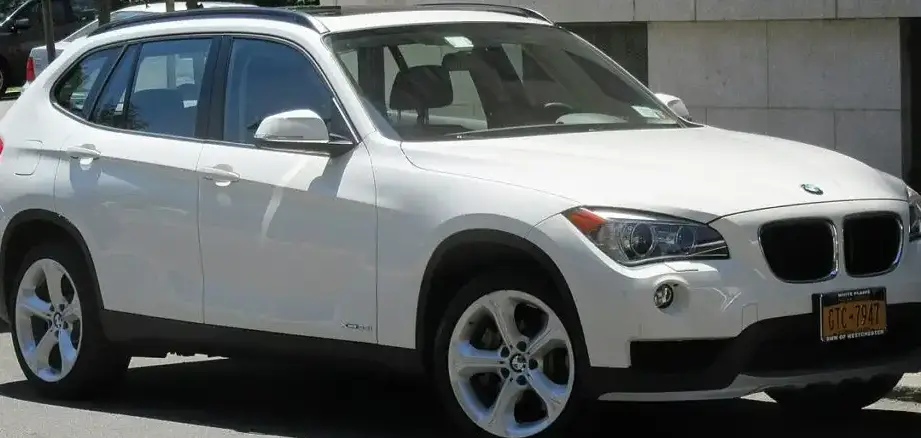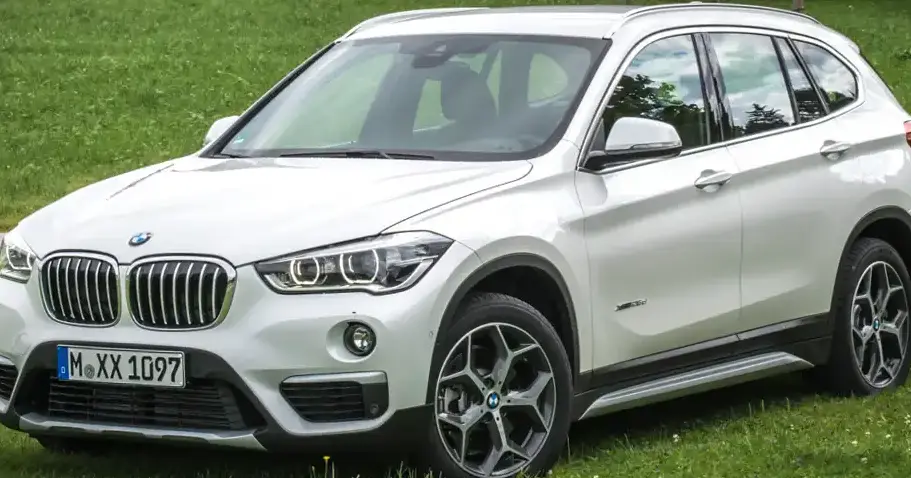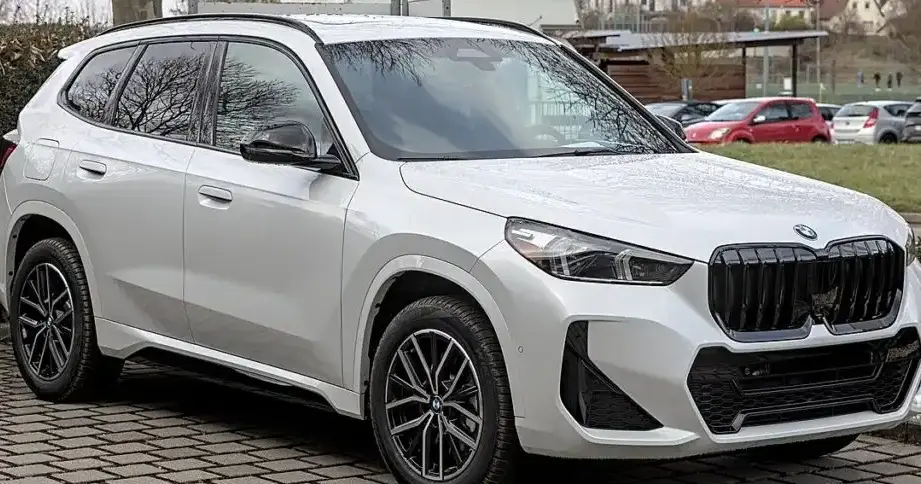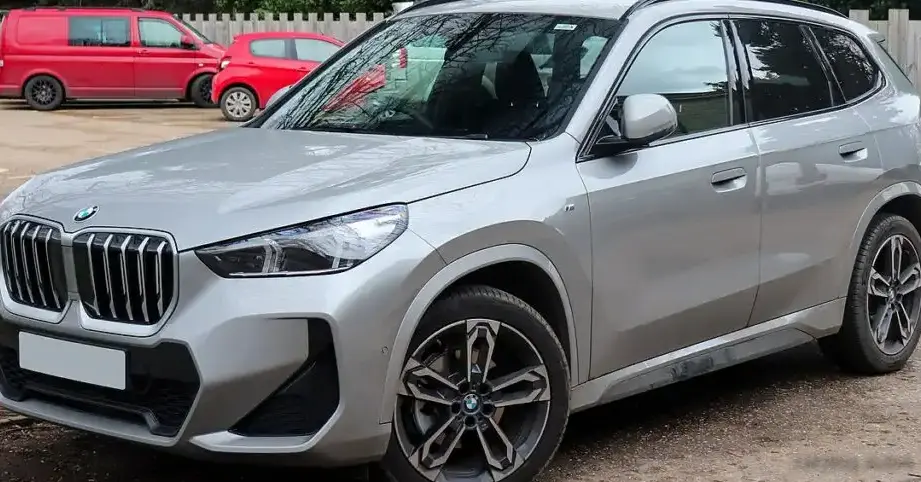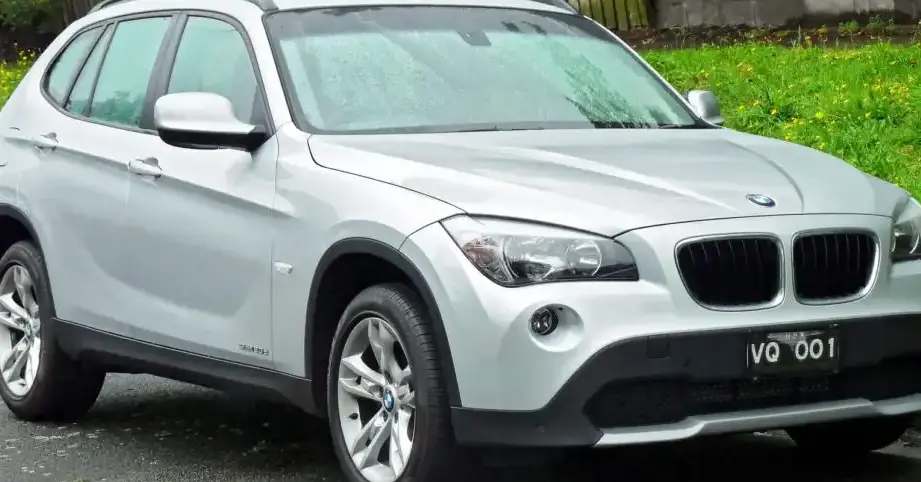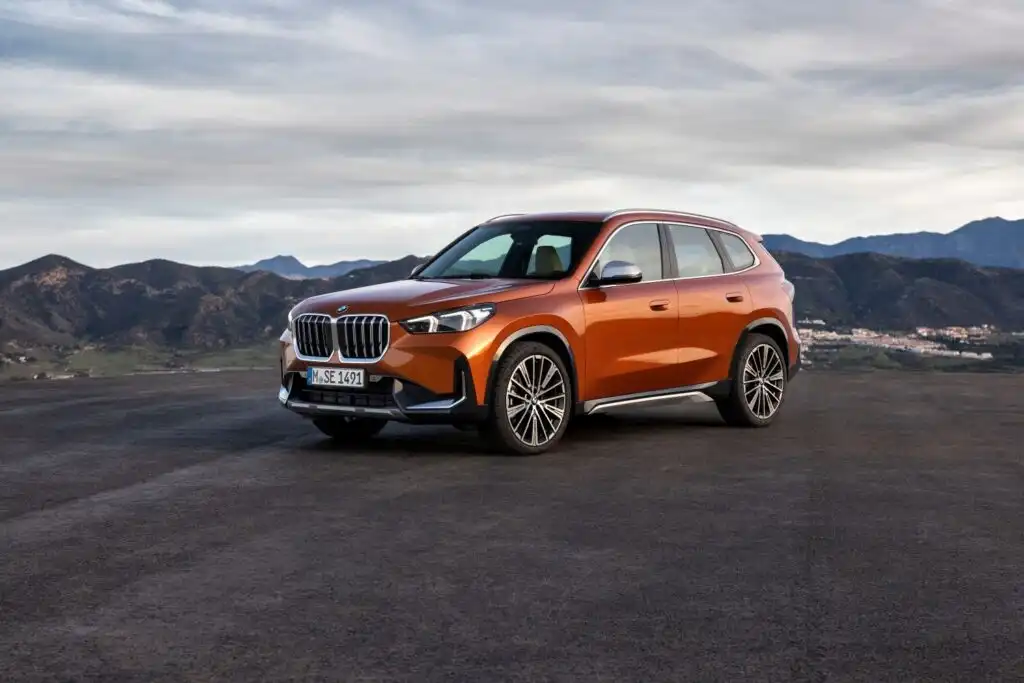
The BMW X1 (U11) 20d, a compact Sports Activity Vehicle (SAV), entered production in November 2022 as part of the third generation of the X1 series. This variant combines a 2.0-liter turbocharged diesel engine with a 48-volt mild hybrid system and BMW’s xDrive all-wheel-drive system, paired with a 7-speed Steptronic automatic transmission. Positioned as a mid-range offering within the U11 X1 lineup, the 20d balances fuel efficiency, respectable performance, and all-weather capability, appealing to buyers seeking a practical and refined crossover. It represents BMW’s continued push towards electrification, even in its diesel offerings, and caters to European markets where diesel remains a popular choice.
Technical Specifications
| Brand | BMW |
| Model | X1 |
| Generation | X1 (U11) |
| Type (Engine) | 20d (163 Hp) Mild Hybrid xDrive Steptronic |
| Start of production | November, 2022 |
| Powertrain Architecture | MHEV (Mild Hybrid Electric Vehicle) |
| Body type | SAV |
| Seats | 5 |
| Doors | 5 |
| Combined fuel consumption (WLTP) | 4.8-5.4 l/100 km (49 – 43.6 US mpg, 58.9 – 52.3 UK mpg, 20.8 – 18.5 km/l) |
| CO2 emissions (WLTP) | 127-142 g/km |
| Fuel Type | Diesel |
| Acceleration 0 – 100 km/h | 8.6 sec |
| Acceleration 0 – 62 mph | 8.6 sec |
| Acceleration 0 – 60 mph | 8.2 sec |
| Maximum speed | 210 km/h (130.49 mph) |
| Emission standard | Euro 6d |
| Weight-to-power ratio | 10.4 kg/Hp, 96.4 Hp/tonne |
| Weight-to-torque ratio | 4.2 kg/Nm, 236.7 Nm/tonne |
| Battery voltage | 48 V |
| Battery technology | Lithium-ion (Li-Ion) |
| Battery location | Under the trunk |
| Electric motor power | 19 Hp |
| Electric motor Torque | 55 Nm (40.57 lb.-ft.) |
| Electric motor location | Integrated into the transmission |
| System power | 163 Hp |
| System torque | 400 Nm (295.02 lb.-ft.) |
| Power | 150 Hp @ 4000 rpm |
| Torque | 360 Nm @ 1500-2500 rpm (265.52 lb.-ft. @ 1500-2500 rpm) |
| Engine layout | Front, Transverse |
| Engine Model/Code | B47C20B |
| Engine displacement | 1995 cm3 (121.74 cu. in.) |
| Number of cylinders | 4 |
| Engine configuration | Inline |
| Cylinder Bore | 84 mm (3.31 in.) |
| Piston Stroke | 90 mm (3.54 in.) |
| Compression ratio | 16.5:1 |
| Number of valves per cylinder | 4 |
| Fuel injection system | Diesel Commonrail |
| Engine aspiration | Twin-power turbo, Intercooler |
| Valvetrain | DOHC |
| Engine oil capacity | 6.5 l (6.87 US qt | 5.72 UK qt) |
| Kerb Weight | 1690 kg (3725.81 lbs.) |
| Max. weight | 2260 kg (4982.45 lbs.) |
| Max load | 570 kg (1256.63 lbs.) |
| Trunk (boot) space – minimum | 500 l (17.66 cu. ft.) |
| Trunk (boot) space – maximum | 1545 l (54.56 cu. ft.) |
| Fuel tank capacity | 45 l (11.89 US gal | 9.9 UK gal) |
| Max. roof load | 75 kg (165.35 lbs.) |
| Permitted trailer load with brakes (12%) | 2000 kg (4409.25 lbs.) |
| Permitted trailer load without brakes | 750 kg (1653.47 lbs.) |
| Permitted towbar download | 80 kg (176.37 lbs.) |
| Length | 4500 mm (177.17 in.) |
| Width | 1845 mm (72.64 in.) |
| Width including mirrors | 2104 mm (82.83 in.) |
| Height | 1642 mm (64.65 in.) |
| Wheelbase | 2692 mm (105.98 in.) |
| Front track | 1592 mm (62.68 in.) |
| Rear (Back) track | 1593 mm (62.72 in.) |
| Front overhang | 875 mm (34.45 in.) |
| Rear overhang | 933 mm (36.73 in.) |
| Ride height (ground clearance) | 205 mm (8.07 in.) |
| Drag coefficient (Cd) | 0.27 |
| Minimum turning circle (turning diameter) | 11.7 m (38.39 ft.) |
| Drivetrain Architecture | ICE and electric motor drive front wheels, rear drive via clutch |
| Drive wheel | All wheel drive (4×4) |
| Number of gears and type of gearbox | 7 gears, automatic transmission Steptronic |
| Front suspension | Spring Strut, Transverse stabilizer |
| Rear suspension | Independent multi-link spring suspension with stabilizer |
| Front brakes | Ventilated discs |
| Rear brakes | Ventilated discs |
| Assisting systems | ABS (Anti-lock braking system) |
| Steering type | Steering rack and pinion |
| Power steering | Electric Steering |
| Tires size | 205/65 R17 |
| Wheel rims size | 7J x 17 |
Powertrain & Engine Architecture
The heart of the X1 20d is BMW’s B47C20B 2.0-liter inline-four cylinder diesel engine. This engine utilizes a common-rail direct injection system, delivering fuel at extremely high pressure for optimized combustion. A twin-scroll turbocharger with intercooling enhances power output and responsiveness. The engine also features BMW’s variable valve timing (VANOS) and variable turbine geometry (VTG) technologies to improve efficiency and reduce emissions. The mild hybrid system, consisting of a 48-volt starter-generator, provides a power boost of 19 hp and 55 Nm of torque, assisting the engine during acceleration and allowing for smoother start-stop operation. The 7-speed Steptronic automatic transmission is a torque-converter type, known for its smooth shifts and efficiency. It’s programmed to prioritize fuel economy in normal driving conditions but can quickly downshift when more power is needed.
Driving Characteristics
The X1 20d Automatic delivers a comfortable and refined driving experience. While not overtly sporty, the 163 hp and 400 Nm of combined torque provide adequate acceleration, achieving 0-60 mph in approximately 8.2 seconds. The mild hybrid system contributes to a noticeable reduction in turbo lag and provides a subtle boost during acceleration. The Steptronic transmission shifts smoothly and efficiently, although it can sometimes feel hesitant when requesting rapid downshifts. Compared to higher-output X1 variants like the xDrive20i (gasoline) or the more powerful diesel options, the 20d prioritizes fuel economy over outright performance. The all-wheel-drive system provides excellent traction in various weather conditions, enhancing stability and confidence.
Equipment & Trim Levels
The X1 20d typically comes standard with features such as BMW’s Live Cockpit Plus (digital instrument cluster and infotainment system), automatic climate control, and a suite of safety features including lane departure warning and forward collision warning. Interior upholstery is generally a combination of cloth and synthetic leather, with options for full leather available. Trim levels can vary by market, but common options include upgraded audio systems, panoramic sunroofs, and parking assistance packages. The standard dashboard configuration features a minimalist design with a large central touchscreen display.
Chassis & Braking
The U11 X1 utilizes a front-wheel-drive based architecture with an all-wheel-drive option. The front suspension consists of a MacPherson strut setup with a transverse stabilizer bar, while the rear features a multi-link independent suspension, also with a stabilizer bar. This configuration provides a good balance between ride comfort and handling. The braking system consists of ventilated discs on all four wheels, providing ample stopping power. Anti-lock braking system (ABS) and electronic stability control (ESC) are standard features.
Market Reception & Comparison
The BMW X1 20d has been well-received in European markets, where diesel engines remain popular due to their fuel efficiency and torque characteristics. Critics have praised the X1’s spacious interior, comfortable ride, and refined driving experience. Compared to the gasoline-powered X1 variants, the 20d offers significantly better fuel economy. However, it lacks the outright performance of the more powerful engines. Against competitors like the Audi Q3 and Mercedes-Benz GLA, the X1 20d holds its own in terms of refinement, technology, and overall value.
Legacy
The B47 engine family, including the B47C20B used in the X1 20d, has proven to be relatively reliable, although some early versions experienced issues with timing chain wear. The mild hybrid system adds a layer of complexity, but BMW has addressed potential issues through software updates and improved component design. As a used car, the X1 20d represents a good value proposition, offering a blend of practicality, efficiency, and BMW’s renowned build quality. Its long-term reliability is expected to be good, provided it has been properly maintained.