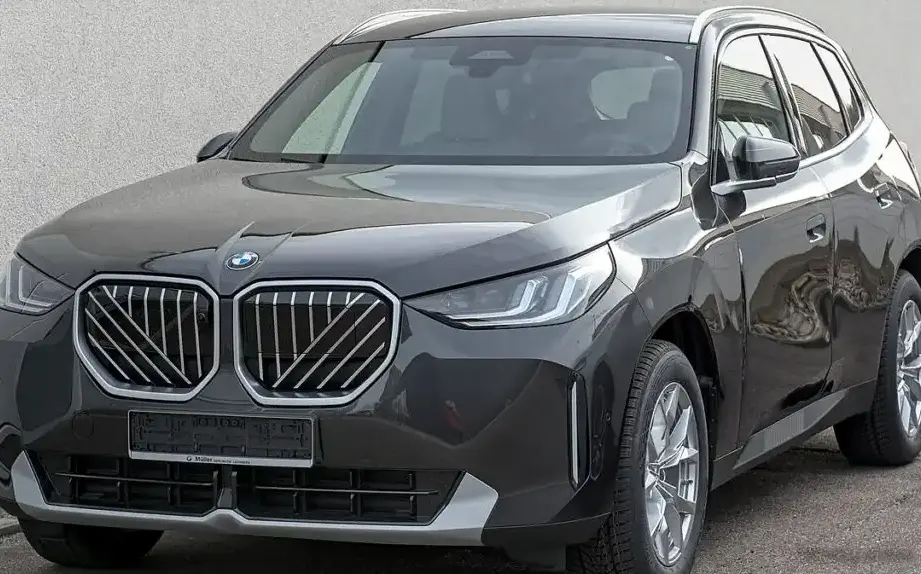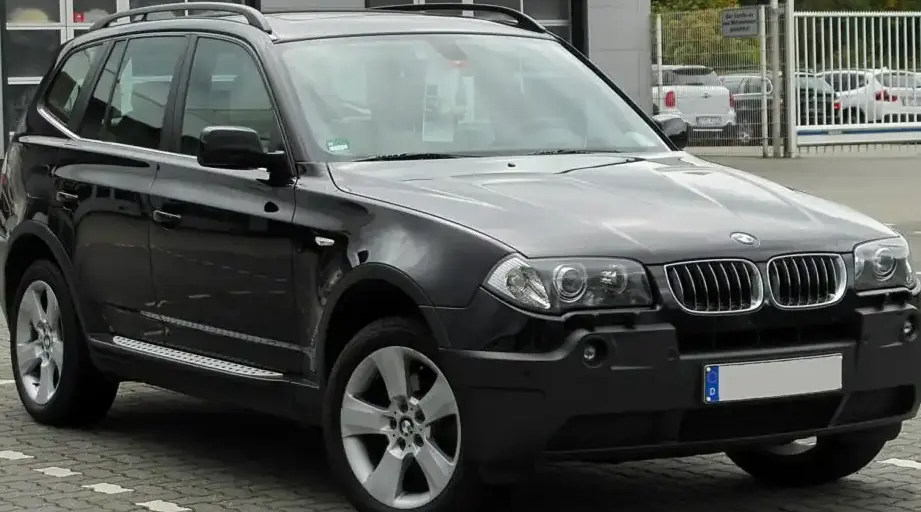
The BMW X3 (E83) 3.0d Steptronic, produced from 2004 to 2006, marked BMW’s initial foray into the growing compact luxury SUV segment. Positioned as a mid-range offering within the E83 X3 lineup, it served as a bridge between the entry-level 2.0d and the performance-focused 3.0i gasoline models. This diesel-powered X3 aimed to deliver a balance of fuel efficiency, respectable performance, and the driving dynamics synonymous with the BMW brand, primarily targeting European markets where diesel engines were highly favored. It was constructed on BMW’s ‘Compact’ platform, sharing numerous components with the E46 3 Series.
Technical Specifications
| Brand | BMW |
| Model | X3 |
| Generation | X3 (E83) |
| Type (Engine) | 3.0d (218 Hp) Steptronic |
| Start of production | 2004 |
| End of production | 2006 |
| Powertrain Architecture | Internal Combustion engine |
| Body type | SUV |
| Seats | 5 |
| Doors | 5 |
| Fuel consumption (economy) – urban | 11.2 l/100 km (21 US mpg, 25.2 UK mpg, 8.9 km/l) |
| Fuel consumption (economy) – extra urban | 7.1 l/100 km (33.1 US mpg, 39.8 UK mpg, 14.1 km/l) |
| Fuel consumption (economy) – combined | 8.6 l/100 km (27.4 US mpg, 32.8 UK mpg, 11.6 km/l) |
| Fuel Type | Diesel |
| Acceleration 0 – 100 km/h | 7.7 sec |
| Acceleration 0 – 62 mph | 7.7 sec |
| Acceleration 0 – 60 mph | 7.3 sec |
| Maximum speed | 210 km/h (130.49 mph) |
| Weight-to-power ratio | 8.8 kg/Hp, 113.2 Hp/tonne |
| Weight-to-torque ratio | 3.9 kg/Nm, 259.7 Nm/tonne |
| Power | 218 Hp @ 4000 rpm |
| Power per litre | 72.8 Hp/l |
| Torque | 500 Nm @ 1750 rpm (368.78 lb.-ft. @ 1750 rpm) |
| Engine layout | Front, Longitudinal |
| Engine Model/Code | M57D30 |
| Engine displacement | 2993 cm3 (182.64 cu. in.) |
| Number of cylinders | 6 |
| Engine configuration | Inline |
| Cylinder Bore | 84 mm (3.31 in.) |
| Piston Stroke | 90 mm (3.54 in.) |
| Compression ratio | 17:1 |
| Number of valves per cylinder | 4 |
| Fuel injection system | Diesel Commonrail |
| Engine aspiration | Turbocharger, Intercooler |
| Engine oil capacity | 7.5 l (7.93 US qt | 6.6 UK qt) |
| Coolant | 10.4 l (10.99 US qt | 9.15 UK qt) |
| Kerb Weight | 1925 kg (4243.9 lbs.) |
| Max. weight | 2355 kg (5191.89 lbs.) |
| Max load | 430 kg (947.99 lbs.) |
| Trunk (boot) space – minimum | 500 l (17.66 cu. ft.) |
| Trunk (boot) space – maximum | 1560 l (55.09 cu. ft.) |
| Fuel tank capacity | 67 l (17.7 US gal | 14.74 UK gal) |
| Length | 4569 mm (179.88 in.) |
| Width | 1853 mm (72.95 in.) |
| Height | 1674 mm (65.91 in.) |
| Wheelbase | 2795 mm (110.04 in.) |
| Front track | 1524 mm (60 in.) |
| Rear (Back) track | 1542 mm (60.71 in.) |
| Ride height (ground clearance) | 200 mm (7.87 in.) |
| Drive wheel | All wheel drive (4×4) |
| Number of gears and type of gearbox | 5 gears, automatic transmission |
| Front suspension | Coil spring |
| Rear suspension | Coil spring |
| Front brakes | Disc |
| Rear brakes | Disc |
| Assisting systems | ABS (Anti-lock braking system) |
| Steering type | Steering rack and pinion |
| Power steering | Hydraulic Steering |
| Tires size | 235/55 R17 |
| Wheel rims size | 8.0 J X 17 |
Powertrain & Engine Architecture
The X3 3.0d Steptronic’s powertrain centers around the M57D30, a 3.0-liter inline-six diesel engine. This engine, a cornerstone of BMW’s lineup in the early 2000s, is highly regarded for its robustness and substantial low-end torque. It employs a common rail direct injection system, delivering fuel at extremely high pressure for optimized combustion efficiency. The M57D30 incorporates a single variable geometry turbocharger (VGT) and an intercooler to boost both power output and overall efficiency. The engine generates 218 horsepower at 4000 rpm and a significant 500 Nm (368 lb-ft) of torque, readily available from just 1750 rpm. This engine is coupled with a 5-speed automatic transmission – marketed as ‘Steptronic’ by BMW – engineered for smooth gear changes and efficient power transfer. However, this transmission wasn’t particularly focused on sporty performance, prioritizing comfort and fuel economy over rapid shifts.
Driving Characteristics
The X3 3.0d Steptronic delivered a comfortable and competent driving experience. The ample low-end torque from the M57D30 engine provided strong acceleration in typical driving scenarios, simplifying overtaking maneuvers and highway merging. While the 0-60 mph time of approximately 7.3 seconds was respectable for its era, it wasn’t a particularly quick SUV. The automatic transmission, while smooth, could feel somewhat hesitant compared to the available manual transmission, particularly during more enthusiastic driving. The gear ratios were calibrated for fuel efficiency rather than outright performance. BMW’s all-wheel-drive system (xDrive) ensured excellent traction in diverse weather conditions, enhancing stability and driver confidence.
Equipment & Trim Levels
The X3 3.0d Steptronic generally came standard with a solid array of features. These typically included automatic climate control, power windows and door locks, a CD stereo system, and alloy wheels. Leather upholstery and wood trim accents were often standard as well. Optional extras encompassed a sunroof, a navigation system, an upgraded audio system, and parking sensors. Trim levels were relatively straightforward, with most variations arising from the selection of optional packages. The 3.0d Steptronic occupied the mid-range position within the X3 lineup, offering an upgrade in performance and refinement compared to the base 2.0d models.
Chassis & Braking
The E83 X3 utilized a MacPherson strut front suspension and a multi-link rear suspension, striking a balance between ride comfort and handling prowess. The suspension tuning leaned towards comfort, yet still provided a reasonably controlled driving experience. Braking was managed by disc brakes on all four wheels, complemented by ABS (Anti-lock Braking System) as standard equipment. The braking system was adequate for the vehicle’s weight and performance characteristics, though not overtly sporty. Stabilizer bars were fitted to both the front and rear axles to minimize body roll during cornering.
Market Reception & Comparison
The X3 3.0d Steptronic received generally positive reviews from automotive journalists. It was lauded for its comfortable ride quality, potent diesel engine, and practical interior layout. However, some critics pointed out that the automatic transmission could feel somewhat sluggish and that the X3 didn’t offer the same level of driver engagement as some of its competitors. In comparison to the 2.0d X3, the 3.0d delivered significantly more power and torque, making it a more enjoyable vehicle to drive, especially when carrying passengers or towing. Compared to the 3.0i gasoline version, the 3.0d offered superior fuel economy, albeit with slightly less peak power. The diesel variant also tended to retain its value better in European markets.
Legacy
The M57D30 engine, powering the X3 3.0d Steptronic, has proven to be remarkably durable and reliable over the long term, assuming proper maintenance. These engines are known to surpass 200,000 miles with consistent servicing. Potential issues can include turbocharger wear, fuel injector problems, and glow plug failures. The 5-speed automatic transmission, while generally dependable, may experience valve body wear over time. Today, the X3 3.0d Steptronic represents an accessible entry point into BMW ownership, offering a combination of luxury, practicality, and fuel efficiency. It continues to be a popular choice for buyers seeking a capable and reliable compact SUV.