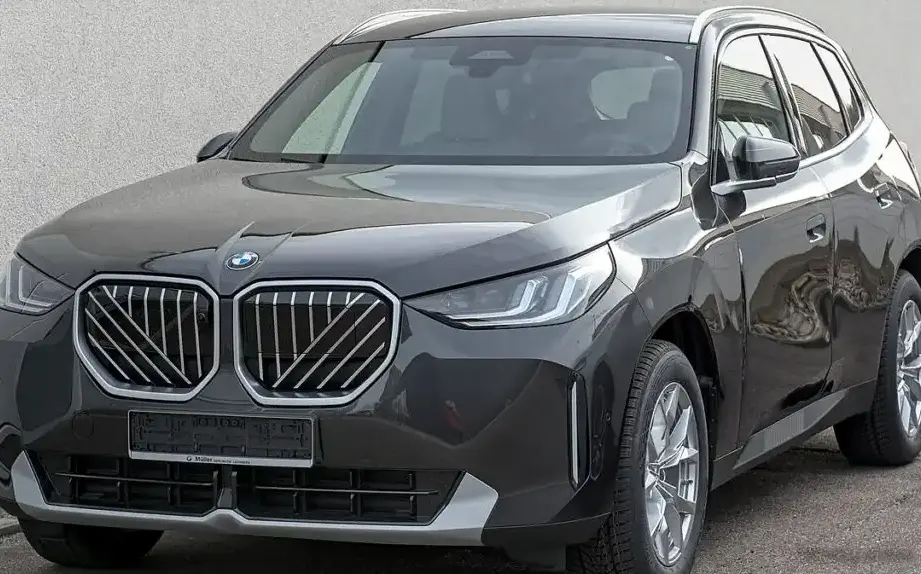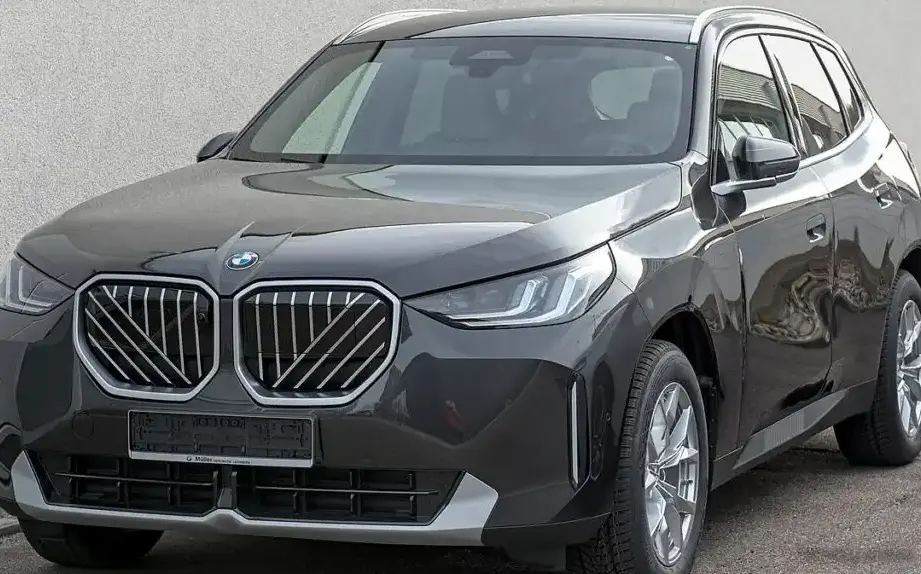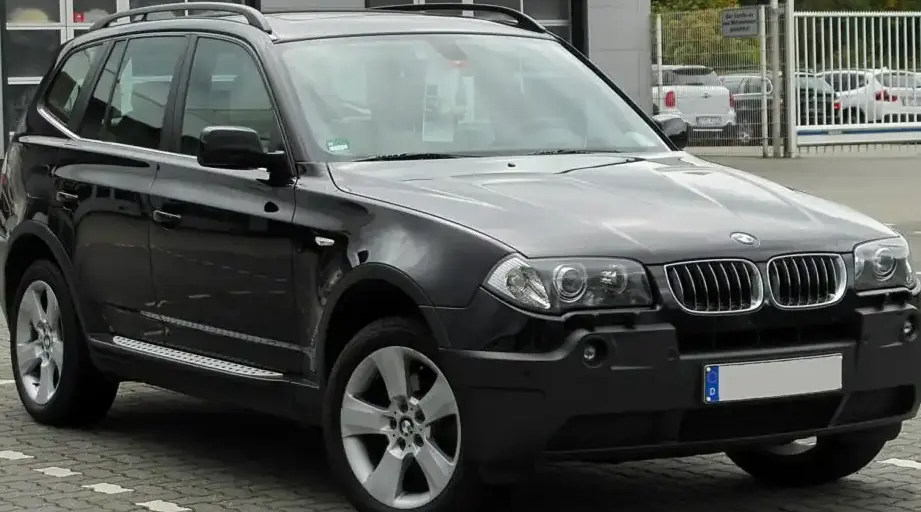
The BMW X3 (E83) facelift 18d xDrive, produced from 2009 to 2010, represented an entry-level diesel option within the second generation of BMW’s compact luxury SUV. Positioned below the more powerful 20d and 30d variants, the 18d aimed to offer a balance of fuel efficiency and practicality for European buyers, where diesel engines held significant market share. This model utilized the updated styling cues introduced with the 2006 facelift, incorporating revised headlights, taillights, and front/rear bumpers. It was a key component of BMW’s strategy to broaden the X3’s appeal and compete effectively in the growing compact SUV segment.
Technical Specifications
| Brand | BMW |
| Model | X3 |
| Generation | X3 (E83, facelift 2006) |
| Type (Engine) | 18d (143 Hp) xDrive |
| Start of production | 2009 |
| End of production | 2010 |
| Powertrain Architecture | Internal Combustion engine |
| Body type | SUV |
| Seats | 5 |
| Doors | 5 |
| Fuel consumption (urban) | 7.9 l/100 km (29.8 US mpg, 35.8 UK mpg, 12.7 km/l) |
| Fuel consumption (extra urban) | 5.2 l/100 km (45.2 US mpg, 54.3 UK mpg, 19.2 km/l) |
| Fuel consumption (combined) | 6.2 l/100 km (37.9 US mpg, 45.6 UK mpg, 16.1 km/l) |
| CO2 emissions | 165 g/km |
| Fuel Type | Diesel |
| Acceleration 0 – 100 km/h | 10.3 sec |
| Acceleration 0 – 62 mph | 10.3 sec |
| Acceleration 0 – 60 mph | 9.8 sec |
| Maximum speed | 195 km/h (121.17 mph) |
| Emission standard | Euro 5 |
| Weight-to-power ratio | 12.2 kg/Hp, 82.2 Hp/tonne |
| Weight-to-torque ratio | 5 kg/Nm, 201.1 Nm/tonne |
| Power | 143 Hp @ 4000 rpm |
| Power per litre | 71.7 Hp/l |
| Torque | 350 Nm @ 1750-2750 rpm (258.15 lb.-ft. @ 1750-2750 rpm) |
| Engine layout | Front, Longitudinal |
| Engine Model/Code | N47D20C |
| Engine displacement | 1995 cm3 (121.74 cu. in.) |
| Number of cylinders | 4 |
| Engine configuration | Inline |
| Cylinder Bore | 84 mm (3.31 in.) |
| Piston Stroke | 90 mm (3.54 in.) |
| Compression ratio | 17:1 |
| Number of valves per cylinder | 4 |
| Fuel injection system | Diesel Commonrail |
| Engine aspiration | Turbocharger, Intercooler |
| Engine oil capacity | 5.2 l (5.49 US qt | 4.58 UK qt) |
| Coolant | 9.4 l (9.93 US qt | 8.27 UK qt) |
| Kerb Weight | 1740 kg (3836.04 lbs.) |
| Max. weight | 2265 kg (4993.47 lbs.) |
| Max load | 525 kg (1157.43 lbs.) |
| Trunk (boot) space – minimum | 480 l (16.95 cu. ft.) |
| Trunk (boot) space – maximum | 1560 l (55.09 cu. ft.) |
| Fuel tank capacity | 67 l (17.7 US gal | 14.74 UK gal) |
| Max. roof load | 75 kg (165.35 lbs.) |
| Permitted trailer load with brakes (12%) | 1800 kg (3968.32 lbs.) |
| Permitted trailer load without brakes | 720 kg (1587.33 lbs.) |
| Permitted towbar download | 80 kg (176.37 lbs.) |
| Length | 4569 mm (179.88 in.) |
| Width | 1853 mm (72.95 in.) |
| Height | 1674 mm (65.91 in.) |
| Wheelbase | 2795 mm (110.04 in.) |
| Front track | 1538 mm (60.55 in.) |
| Rear (Back) track | 1556 mm (61.26 in.) |
| Ride height (ground clearance) | 201 mm (7.91 in.) |
| Drag coefficient (Cd) | 0.34 |
| Minimum turning circle (turning diameter) | 11.7 m (38.39 ft.) |
| Approach angle | 23.9° |
| Departure angle | 21.8° |
| Ramp-over (brakeover) angle | 17.2° |
| Wading depth | 500 mm (19.69 in.) |
| Drive wheel | All wheel drive (4×4) |
| Number of gears and type of gearbox | 6 gears, manual transmission |
| Front brakes | Ventilated discs |
| Rear brakes | Ventilated discs |
| Assisting systems | ABS (Anti-lock braking system) |
| Steering type | Steering rack and pinion |
| Power steering | Electric Steering |
| Tires size | 215/60 R17 |
| Wheel rims size | 8J x 17 |
Powertrain & Engine Architecture
The heart of the X3 18d xDrive was the N47D20C, a 2.0-liter inline-four diesel engine. This engine was a significant development for BMW, representing the second generation of their modular diesel engines. It featured a common rail direct injection system operating at pressures up to 1,600 bar, contributing to improved combustion efficiency and reduced emissions. The N47 engine also incorporated a variable geometry turbocharger (VGT) with an intercooler, optimizing boost pressure across the engine’s operating range. The engine produced 143 horsepower at 4,000 rpm and 350 Nm (258 lb-ft) of torque between 1,750 and 2,750 rpm. The engine’s block was constructed from cast iron, while the cylinder head was made of aluminum. The 6-speed manual transmission was standard, providing a balance between fuel economy and driver engagement.
Driving Characteristics
The X3 18d xDrive, with its 143 hp and manual transmission, offered a respectable, though not exhilarating, driving experience. Acceleration from 0-60 mph took approximately 9.8 seconds, and top speed was limited to 195 km/h (121 mph). The engine’s torque delivery was its strong suit, providing ample pulling power for everyday driving and overtaking maneuvers. However, compared to the more powerful 20d and 30d models, the 18d felt noticeably slower, particularly when fully loaded or tackling steep inclines. The xDrive all-wheel-drive system provided excellent traction in various weather conditions, enhancing stability and confidence. The manual gearbox, while offering more driver involvement than an automatic, had a slightly long throw.
Equipment & Trim Levels
The X3 18d xDrive typically came equipped with a reasonable level of standard features. These included automatic climate control, power windows and mirrors, a basic audio system, and alloy wheels. Safety features such as ABS, traction control, and multiple airbags were also standard. Optional extras included a sunroof, leather upholstery, navigation system, and upgraded audio systems. The interior design was functional and well-built, reflecting BMW’s commitment to quality. The standard upholstery was cloth, but leather options were available. The dashboard layout was straightforward and easy to use, with logically placed controls.
Chassis & Braking
The X3 E83 utilized a MacPherson strut front suspension and a multi-link rear suspension, providing a comfortable ride and good handling characteristics. The 18d model typically featured slightly smaller brakes compared to the higher-powered variants, with ventilated discs on all four wheels. The steering was precise and well-weighted, offering good feedback to the driver. The xDrive all-wheel-drive system distributed power between the front and rear axles as needed, optimizing traction and stability. The suspension was tuned to prioritize comfort over outright sportiness, making it a suitable choice for long-distance driving.
Market Reception & Comparison
The X3 18d xDrive was generally well-received by automotive critics as a practical and fuel-efficient option within the compact SUV segment. It was praised for its comfortable ride, spacious interior, and capable all-wheel-drive system. However, some critics noted that the engine lacked the punch of its more powerful siblings. Compared to the X3 20d, the 18d offered lower running costs but sacrificed performance. Against competitors like the Audi Q5 and Mercedes-Benz GLK, the X3 18d held its own in terms of build quality and driving dynamics, but its fuel economy was comparable to other diesel offerings in the class.
Legacy
The N47 engine, while generally reliable, became known for potential timing chain issues in later years. Regular oil changes and preventative maintenance are crucial for ensuring the longevity of this powertrain. Today, the X3 18d xDrive represents an affordable entry point into BMW ownership. Well-maintained examples can still provide years of reliable service, making them a popular choice in the used car market. The combination of fuel efficiency, practicality, and BMW’s reputation for build quality continues to appeal to buyers seeking a compact luxury SUV.