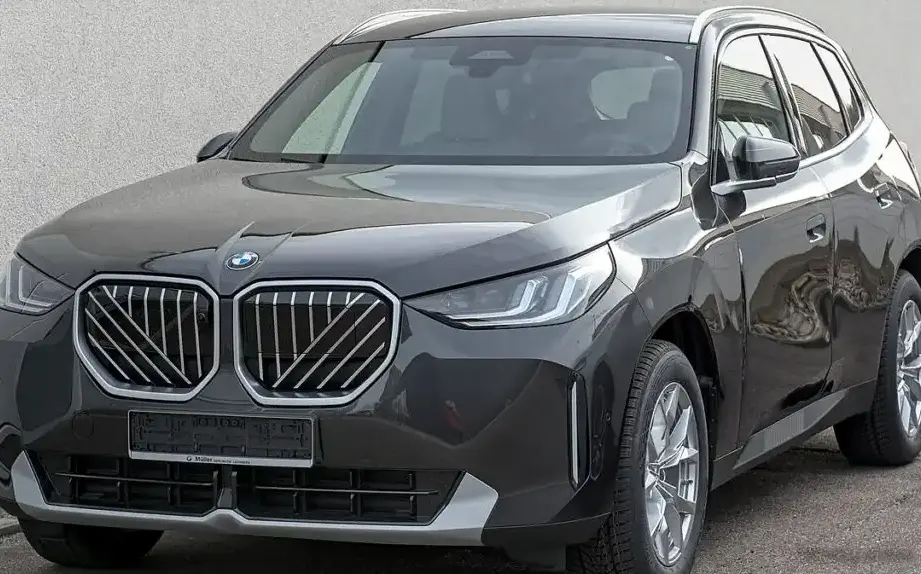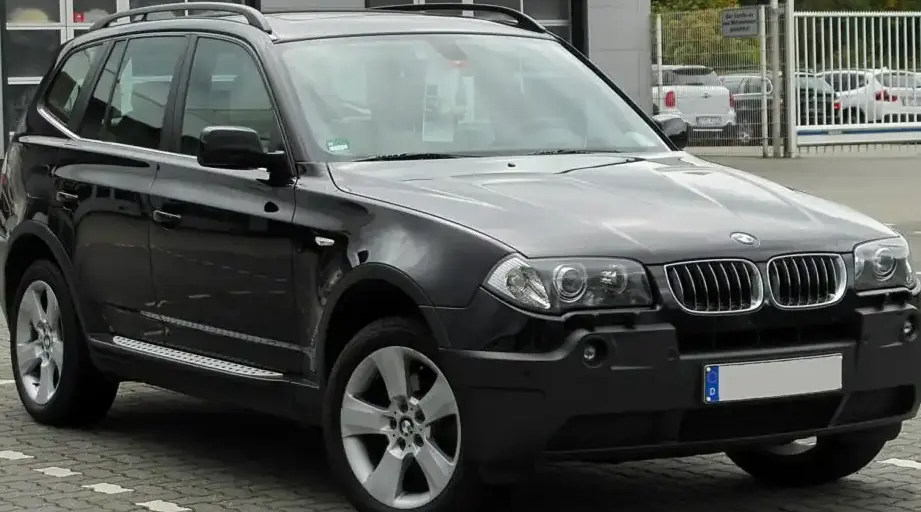
The BMW X3 (E83) facelift 2.0d, produced from 2006 to 2007, represented BMW’s entry into the burgeoning compact luxury SUV segment. This variant, powered by the M47D20 engine producing 150 horsepower, occupied a crucial position in the X3 lineup, offering a balance between fuel efficiency and respectable performance. It was positioned as a more economical alternative to the higher-powered gasoline engines and the more performance-oriented diesel variants, appealing to buyers prioritizing practicality and running costs. The E83 X3, as a whole, was BMW’s first attempt at a dedicated SUV, built on a modified 3 Series platform (E46) and aimed at competing with vehicles like the Acura RDX and Audi Q5.
Technical Specifications
| Brand | BMW |
| Model | X3 |
| Generation | X3 (E83, facelift 2006) |
| Type (Engine) | 2.0d (150 Hp) |
| Start of production | 2006 |
| End of production | 2007 |
| Powertrain Architecture | Internal Combustion engine |
| Body type | SUV |
| Seats | 5 |
| Doors | 5 |
| Fuel consumption (urban) | 9.6 l/100 km (24.5 US mpg) |
| Fuel consumption (extra urban) | 5.9 l/100 km (39.9 US mpg) |
| Fuel consumption (combined) | 7.2 l/100 km (32.7 US mpg) |
| CO2 emissions | 191 g/km |
| Fuel Type | Diesel |
| Acceleration 0 – 100 km/h | 10.2 sec |
| Acceleration 0 – 62 mph | 10.2 sec |
| Acceleration 0 – 60 mph | 9.7 sec |
| Maximum speed | 198 km/h (123.03 mph) |
| Emission standard | Euro 4 |
| Weight-to-power ratio | 11.6 kg/Hp |
| Weight-to-torque ratio | 5.3 kg/Nm |
| Power | 150 Hp @ 4000 rpm |
| Torque | 330 Nm @ 2000 rpm (243.4 lb.-ft. @ 2000 rpm) |
| Engine layout | Front, Longitudinal |
| Engine Model/Code | M47D20 |
| Engine displacement | 1995 cm3 (121.74 cu. in.) |
| Number of cylinders | 4 |
| Engine configuration | Inline |
| Cylinder Bore | 84 mm (3.31 in.) |
| Piston Stroke | 90 mm (3.54 in.) |
| Compression ratio | 17:1 |
| Number of valves per cylinder | 4 |
| Fuel injection system | Diesel Commonrail |
| Engine aspiration | Turbocharger, Intercooler |
| Valvetrain | DOHC |
| Engine oil capacity | 5.3 l (5.6 US qt | 4.66 UK qt) |
| Coolant | 9.6 l (10.14 US qt | 8.45 UK qt) |
| Kerb Weight | 1745 kg (3847.07 lbs.) |
| Max. weight | 2265 kg (4993.47 lbs.) |
| Max load | 520 kg (1146.4 lbs.) |
| Trunk (boot) space – minimum | 480 l (16.95 cu. ft.) |
| Trunk (boot) space – maximum | 1560 l (55.09 cu. ft.) |
| Fuel tank capacity | 67 l (17.7 US gal | 14.74 UK gal) |
| Max. roof load | 75 kg (165.35 lbs.) |
| Permitted trailer load with brakes (12%) | 1700 kg (3747.86 lbs.) |
| Permitted trailer load without brakes | 720 kg (1587.33 lbs.) |
| Permitted towbar download | 80 kg (176.37 lbs.) |
| Length | 4569 mm (179.88 in.) |
| Width | 1853 mm (72.95 in.) |
| Width including mirrors | 1987 mm (78.23 in.) |
| Height | 1674 mm (65.91 in.) |
| Wheelbase | 2795 mm (110.04 in.) |
| Front track | 1538 mm (60.55 in.) |
| Rear (Back) track | 1556 mm (61.26 in.) |
| Front overhang | 821 mm (32.32 in.) |
| Rear overhang | 953 mm (37.52 in.) |
| Ride height (ground clearance) | 201 mm (7.91 in.) |
| Drag coefficient (Cd) | 0.35 |
| Minimum turning circle (turning diameter) | 11.7 m (38.39 ft.) |
| Approach angle | 23.9° |
| Departure angle | 21.8° |
| Ramp-over (brakeover) angle | 17.2° |
| Wading depth | 500 mm (19.69 in.) |
| Drive wheel | All wheel drive (4×4) |
| Number of gears and type of gearbox | 6 gears, manual transmission |
| Front brakes | Disc |
| Rear brakes | Disc |
| Assisting systems | ABS (Anti-lock braking system) |
| Steering type | Steering rack and pinion |
| Power steering | Electric Steering |
| Tires size | 215/60 R17 |
| Wheel rims size | 7.0 J x 17 |
Powertrain & Engine Architecture
The heart of the X3 2.0d was the M47D20, a 2.0-liter inline-four diesel engine. This engine was a mainstay in many BMW models of the era, known for its relatively robust construction and decent fuel economy. The M47D20 utilized a second-generation common rail direct injection system, delivering fuel at extremely high pressures for improved combustion efficiency and reduced emissions. A turbocharger with an intercooler was employed to boost power output, providing 150 horsepower at 4000 rpm and 330 Nm (243 lb-ft) of torque at 2000 rpm. The engine featured a double overhead camshaft (DOHC) valvetrain with four valves per cylinder. The 6-speed manual transmission was standard, providing a good balance between fuel efficiency and driver engagement. While an automatic transmission was available, it was less common and often criticized for its sluggish shifts compared to the manual.
Driving Characteristics
The X3 2.0d, with its 150 hp and manual transmission, offered adequate performance for everyday driving. Acceleration from 0-60 mph took around 9.7 seconds, and top speed was limited to 198 km/h (123 mph). While not particularly sporty, the engine provided sufficient torque for comfortable cruising and overtaking. The manual gearbox allowed for greater driver control, but the relatively long gearing emphasized fuel economy over outright acceleration. Compared to the more powerful X3 3.0d or the gasoline-powered variants, the 2.0d felt noticeably slower, particularly when fully loaded. However, its lower weight and efficient engine contributed to better fuel economy, making it a more practical choice for those prioritizing running costs.
Equipment & Trim Levels
The X3 2.0d typically came with a reasonable level of standard equipment. This included air conditioning, power windows, power mirrors, and a basic audio system. Safety features such as ABS, traction control, and multiple airbags were also standard. Interior upholstery was typically cloth, although leather options were available. Optional extras included a sunroof, upgraded audio system, navigation system, and heated seats. Trim levels varied depending on the market, but generally, the 2.0d represented the entry-level X3, with more luxurious features reserved for the higher-powered models.
Chassis & Braking
The X3 E83 featured a MacPherson strut front suspension and a multi-link rear suspension, providing a comfortable ride and decent handling. The 2.0d models typically had smaller brakes compared to the more powerful variants, with disc brakes on all four wheels. ABS (Anti-lock Braking System) was standard. The all-wheel-drive system (xDrive in BMW terminology) provided enhanced traction in various weather conditions. The suspension was tuned for comfort rather than outright sportiness, but the X3 still offered a reasonably engaging driving experience for an SUV.
Market Reception & Comparison
The X3 2.0d was generally well-received by critics as a practical and fuel-efficient option in the compact luxury SUV segment. It was praised for its comfortable ride, spacious interior, and standard features. However, some reviewers criticized its relatively modest performance compared to its rivals and the sometimes-sluggish operation of the available automatic transmission. Compared to the X3 3.0d, the 2.0d offered significantly lower running costs but lacked the same level of performance. Against competitors like the Acura RDX and Audi Q5, the X3 2.0d offered a compelling combination of value, practicality, and BMW’s renowned driving dynamics.
Legacy
The M47D20 engine, while generally reliable, is known to have some potential issues, including injector failures and turbocharger wear. Regular maintenance, including oil changes and injector cleaning, is crucial for long-term reliability. Today, the X3 2.0d can be found on the used car market at relatively affordable prices. It remains a popular choice for buyers seeking a practical and fuel-efficient luxury SUV. Its relatively simple mechanicals and readily available parts make it a relatively easy vehicle to maintain, although finding a well-maintained example is key. The X3 E83, including the 2.0d variant, laid the foundation for BMW’s successful expansion into the SUV market.