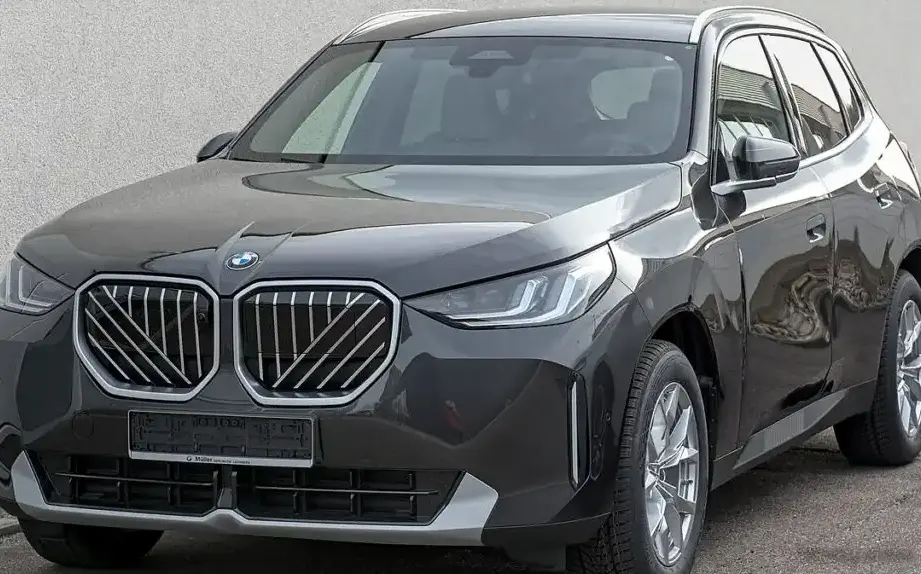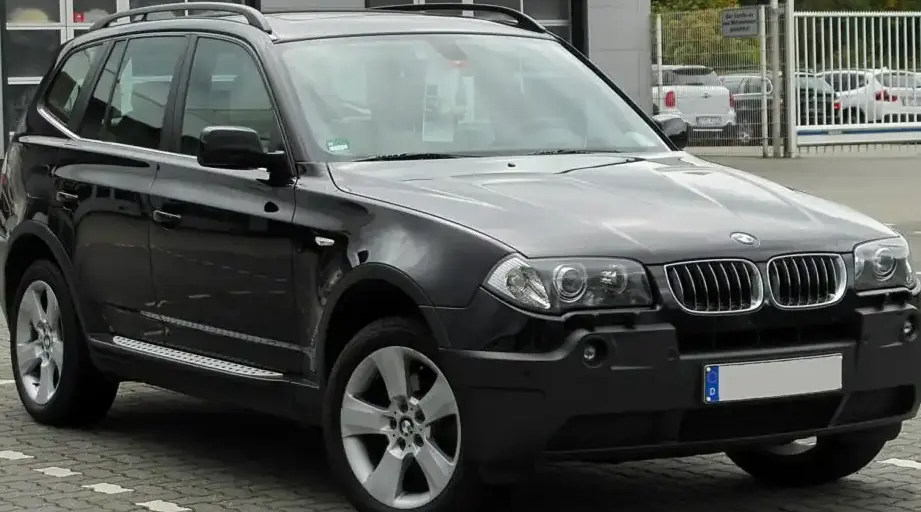
The BMW X3 (E83) facelift 2.0d Steptronic, produced from 2007 to 2010, represented BMW’s entry point into the burgeoning compact luxury SUV market in Europe and other global markets. Positioned as a more affordable alternative to the larger X5, the E83 X3 aimed to deliver a blend of practicality, driving dynamics, and BMW’s signature brand prestige. The 2.0d variant, powered by the N47D20C engine and paired with a six-speed automatic transmission (branded ‘Steptronic’), was a key volume seller, appealing to buyers prioritizing fuel efficiency and ease of use over outright performance. This model sat in the lower-mid range of the X3 lineup, below the more powerful 3.0d and 3.0si models, and above any base level trims offered in certain markets.
Technical Specifications
| Brand | BMW |
| Model | X3 |
| Generation | X3 (E83, facelift 2006) |
| Type (Engine) | 2.0d (177 Hp) Steptronic |
| Start of production | 2007 |
| End of production | 2010 |
| Powertrain Architecture | Internal Combustion engine |
| Body type | SUV |
| Seats | 5 |
| Doors | 5 |
| Fuel consumption (urban) | 8.3 l/100 km (28.3 US mpg, 34 UK mpg, 12 km/l) |
| Fuel consumption (extra urban) | 5.8 l/100 km (40.6 US mpg, 48.7 UK mpg, 17.2 km/l) |
| Fuel consumption (combined) | 6.7 l/100 km (35.1 US mpg, 42.2 UK mpg, 14.9 km/l) |
| CO2 emissions | 178 g/km |
| Fuel Type | Diesel |
| Acceleration 0 – 100 km/h | 9.2 sec |
| Acceleration 0 – 62 mph | 9.2 sec |
| Acceleration 0 – 60 mph | 8.7 sec |
| Maximum speed | 205 km/h (127.38 mph) |
| Emission standard | Euro 5 |
| Weight-to-power ratio | 9.8 kg/Hp, 101.7 Hp/tonne |
| Weight-to-torque ratio | 5 kg/Nm, 201.1 Nm/tonne |
| Power | 177 Hp @ 4000 rpm |
| Power per litre | 88.7 Hp/l |
| Torque | 350 Nm @ 1750-3000 rpm (258.15 lb.-ft. @ 1750-3000 rpm) |
| Engine layout | Front, Longitudinal |
| Engine Model/Code | N47D20C |
| Engine displacement | 1995 cm3 (121.74 cu. in.) |
| Number of cylinders | 4 |
| Engine configuration | Inline |
| Cylinder Bore | 84 mm (3.31 in.) |
| Piston Stroke | 90 mm (3.54 in.) |
| Compression ratio | 17:1 |
| Number of valves per cylinder | 4 |
| Fuel injection system | Diesel Commonrail |
| Engine aspiration | Turbocharger, Intercooler |
| Engine oil capacity | 5.2 l (5.49 US qt | 4.58 UK qt) |
| Coolant | 9.4 l (9.93 US qt | 8.27 UK qt) |
| Kerb Weight | 1740 kg (3836.04 lbs.) |
| Max. weight | 2265 kg (4993.47 lbs.) |
| Max load | 525 kg (1157.43 lbs.) |
| Trunk (boot) space – minimum | 480 l (16.95 cu. ft.) |
| Trunk (boot) space – maximum | 1560 l (55.09 cu. ft.) |
| Fuel tank capacity | 67 l (17.7 US gal | 14.74 UK gal) |
| Max. roof load | 75 kg (165.35 lbs.) |
| Permitted trailer load with brakes (12%) | 2000 kg (4409.25 lbs.) |
| Permitted trailer load without brakes | 720 kg (1587.33 lbs.) |
| Permitted towbar download | 80 kg (176.37 lbs.) |
| Length | 4569 mm (179.88 in.) |
| Width | 1853 mm (72.95 in.) |
| Height | 1674 mm (65.91 in.) |
| Wheelbase | 2795 mm (110.04 in.) |
| Front track | 1538 mm (60.55 in.) |
| Rear (Back) track | 1556 mm (61.26 in.) |
| Ride height (ground clearance) | 201 mm (7.91 in.) |
| Drag coefficient (Cd) | 0.34 |
| Minimum turning circle (turning diameter) | 11.7 m (38.39 ft.) |
| Approach angle | 23.9° |
| Departure angle | 21.8° |
| Ramp-over (brakeover) angle | 17.2° |
| Wading depth | 500 mm (19.69 in.) |
| Drive wheel | All wheel drive (4×4) |
| Number of gears and type of gearbox | 6 gears, automatic transmission |
| Front brakes | Ventilated discs |
| Rear brakes | Ventilated discs |
| Assisting systems | ABS (Anti-lock braking system) |
| Steering type | Steering rack and pinion |
| Power steering | Electric Steering |
| Tires size | 215/60 R17 |
| Wheel rims size | 8J x 17 |
Powertrain & Engine Architecture
The heart of the X3 2.0d Steptronic is the N47D20C, a 2.0-liter inline-four diesel engine. This engine was a significant step forward for BMW, utilizing second-generation common rail direct injection, a variable geometry turbocharger, and four valves per cylinder. The N47 family was known for its efficiency and relatively smooth operation for a diesel. Peak torque of 350 Nm (258 lb-ft) was available from 1750 to 3000 rpm, providing a broad powerband suitable for everyday driving. The Steptronic automatic transmission, a six-speed unit, was designed to offer smooth shifts and contribute to fuel economy. While not a sport-focused transmission, it featured adaptive shift programming to adjust to driving conditions.
Driving Characteristics
The 2.0d Steptronic offered a comfortable and capable driving experience. Acceleration to 60 mph took around 8.7 seconds, which was adequate but not particularly brisk. The automatic transmission, while smooth, could feel somewhat hesitant during quick overtaking maneuvers. Compared to the manual transmission version of the same engine, the Steptronic traded some responsiveness for convenience. The X3’s all-wheel-drive system (xDrive in BMW terminology) provided excellent traction in various weather conditions, enhancing stability and confidence. The suspension, tuned for comfort, absorbed bumps well, but the X3 wasn’t as engaging to drive as some of its rear-wheel-drive competitors.
Equipment & Trim Levels
The X3 2.0d Steptronic typically came standard with features like automatic climate control, power windows and locks, a multi-function steering wheel, and a basic audio system. Upholstery was usually cloth, with leather options available as an upgrade. Common optional extras included a sunroof, navigation system, upgraded audio, parking sensors, and heated seats. Trim levels varied by market, but generally, the 2.0d Steptronic represented a mid-range offering, bridging the gap between basic models and the more luxurious, higher-powered variants.
Chassis & Braking
The E83 X3 featured a robust chassis with MacPherson strut front suspension and a multi-link rear suspension. The 2.0d models typically used ventilated disc brakes on all four wheels, providing adequate stopping power. Anti-lock braking system (ABS) was standard. The suspension was tuned to prioritize ride comfort, with stabilizer bars helping to reduce body roll during cornering. The all-wheel-drive system utilized a variable torque split, automatically distributing power between the front and rear axles based on traction conditions.
Market Reception & Comparison
The X3 2.0d Steptronic was generally well-received by automotive critics as a practical and efficient luxury SUV. It was praised for its comfortable ride, spacious interior, and fuel economy. However, some reviewers found the engine to be somewhat underpowered, particularly when fully loaded. Compared to the 3.0d and 3.0si models, the 2.0d offered significantly lower performance but also a lower price point and better fuel economy. Against competitors like the Audi Q5 and Mercedes-Benz GLK, the X3 2.0d offered a compelling blend of value and driving dynamics.
Legacy
The N47 engine family, including the N47D20C, proved to be generally reliable, although early versions were known for timing chain issues. Proper maintenance, including regular oil changes and timing chain inspections, is crucial for long-term durability. Today, the X3 2.0d Steptronic represents a relatively affordable entry point into BMW ownership. Well-maintained examples can still provide years of reliable service, making them a popular choice in the used car market. The E83 X3, and particularly the 2.0d variant, helped establish BMW as a major player in the compact luxury SUV segment, paving the way for the successful second and third-generation X3 models.