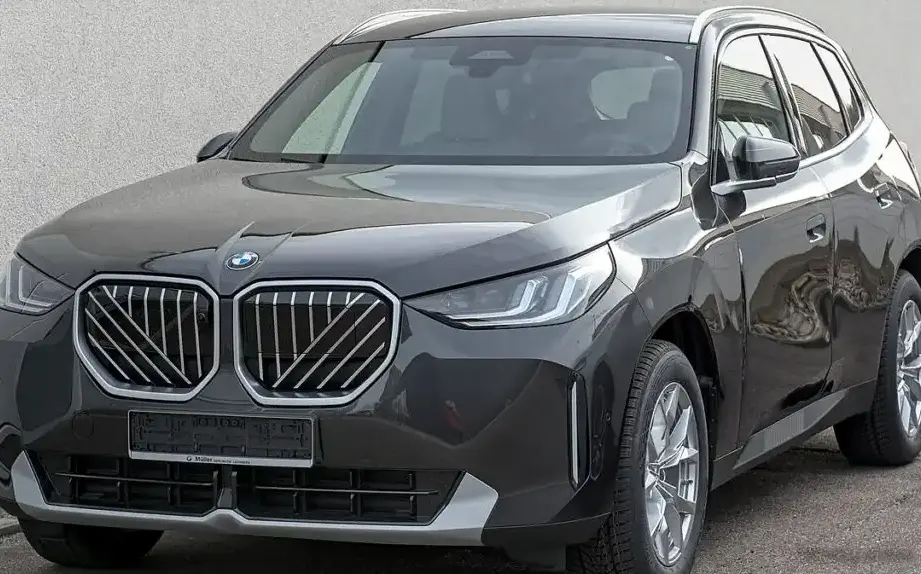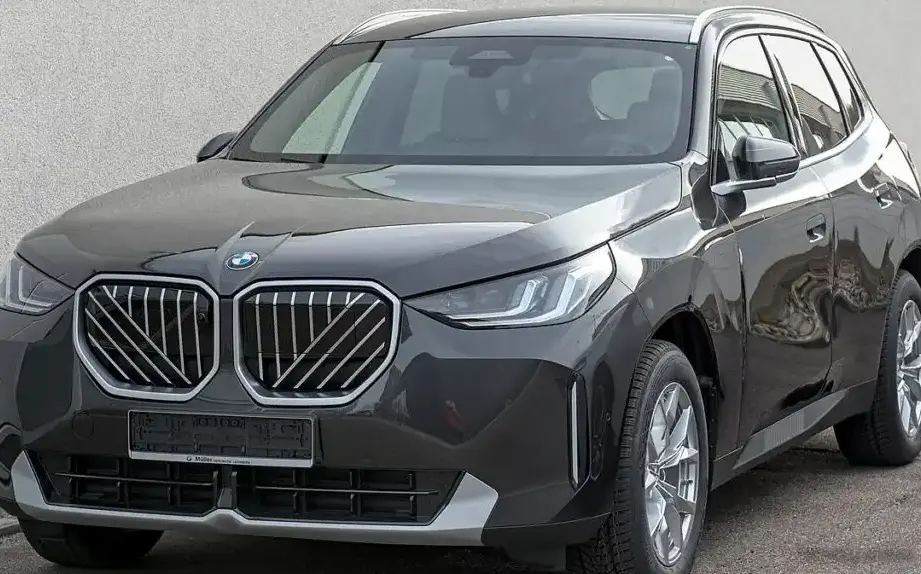
The BMW X3 (E83) 2.0i, produced from 2006 to 2010, represents a key iteration of BMW’s entry into the compact luxury SUV segment. This facelifted version of the E83, introduced in 2006, aimed to refine the original X3’s design and address some early criticisms. The 2.0i variant, powered by the N46B20 engine producing 150 horsepower, served as the base model in many European markets, offering a balance of affordability and BMW’s signature driving experience. In the United States, the X3 was primarily offered with larger engines, making the 2.0i a more common sight in Europe and other international markets. It was positioned as an accessible entry point into the X3 range, appealing to buyers prioritizing fuel efficiency and lower running costs over outright performance.
Technical Specifications
| Brand | BMW |
| Model | X3 |
| Generation | X3 (E83, facelift 2006) |
| Type (Engine) | 2.0i (150 Hp) |
| Start of production | 2006 |
| End of production | 2010 |
| Powertrain Architecture | Internal Combustion engine |
| Body type | SUV |
| Seats | 5 |
| Doors | 5 |
| Fuel consumption (urban) | 13.1 l/100 km (18 US mpg, 21.6 UK mpg, 7.6 km/l) |
| Fuel consumption (extra urban) | 7.1 l/100 km (33.1 US mpg, 39.8 UK mpg, 14.1 km/l) |
| Fuel consumption (combined) | 9.3 l/100 km (25.3 US mpg, 30.4 UK mpg, 10.8 km/l) |
| CO2 emissions | 223 g/km |
| Fuel Type | Petrol (Gasoline) |
| Acceleration 0 – 100 km/h | 11.5 sec |
| Acceleration 0 – 62 mph | 11.5 sec |
| Acceleration 0 – 60 mph | 10.9 sec |
| Maximum speed | 198 km/h (123.03 mph) |
| Emission standard | Euro 4 |
| Weight-to-power ratio | 11 kg/Hp, 90.6 Hp/tonne |
| Weight-to-torque ratio | 8.3 kg/Nm, 120.8 Nm/tonne |
| Power | 150 Hp @ 6200 rpm |
| Power per litre | 75.2 Hp/l |
| Torque | 200 Nm @ 3750 rpm (147.51 lb.-ft. @ 3750 rpm) |
| Engine layout | Front, Longitudinal |
| Engine Model/Code | N46B20B |
| Engine displacement | 1995 cm3 (121.74 cu. in.) |
| Number of cylinders | 4 |
| Engine configuration | Inline |
| Cylinder Bore | 84 mm (3.31 in.) |
| Piston Stroke | 90 mm (3.54 in.) |
| Compression ratio | 10.5:1 |
| Number of valves per cylinder | 4 |
| Fuel injection system | Multi-port manifold injection |
| Engine aspiration | Naturally aspirated engine |
| Engine oil capacity | 4.25 l (4.49 US qt, 3.74 UK qt) |
| Coolant | 8.6 l (9.09 US qt, 7.57 UK qt) |
| Kerb Weight | 1655 kg (3648.65 lbs.) |
| Max. weight | 2200 kg (4850.17 lbs.) |
| Max load | 545 kg (1201.52 lbs.) |
| Trunk (boot) space – minimum | 480 l (16.95 cu. ft.) |
| Trunk (boot) space – maximum | 1560 l (55.09 cu. ft.) |
| Fuel tank capacity | 67 l (17.7 US gal, 14.74 UK gal) |
| Max. roof load | 75 kg (165.35 lbs.) |
| Permitted trailer load with brakes (12%) | 1600 kg (3527.4 lbs.) |
| Permitted trailer load without brakes | 720 kg (1587.33 lbs.) |
| Permitted towbar download | 80 kg (176.37 lbs.) |
| Length | 4569 mm (179.88 in.) |
| Width | 1853 mm (72.95 in.) |
| Width including mirrors | 1987 mm (78.23 in.) |
| Height | 1674 mm (65.91 in.) |
| Wheelbase | 2795 mm (110.04 in.) |
| Front track | 1538 mm (60.55 in.) |
| Rear (Back) track | 1556 mm (61.26 in.) |
| Front overhang | 821 mm (32.32 in.) |
| Rear overhang | 953 mm (37.52 in.) |
| Ride height (ground clearance) | 201 mm (7.91 in.) |
| Drag coefficient (Cd) | 0.35 |
| Minimum turning circle (turning diameter) | 11.7 m (38.39 ft.) |
| Approach angle | 23.9° |
| Departure angle | 21.8° |
| Ramp-over (brakeover) angle | 17.2° |
| Wading depth | 500 mm (19.69 in.) |
| Drive wheel | All wheel drive (4×4) |
| Number of gears and type of gearbox | 6 gears, manual transmission |
| Front brakes | Disc |
| Rear brakes | Disc |
| Assisting systems | ABS (Anti-lock braking system) |
| Steering type | Steering rack and pinion |
| Power steering | Electric Steering |
| Tires size | 215/60 R17 |
| Wheel rims size | 7.0J x 17 |
Powertrain & Engine Architecture
The heart of the X3 2.0i is the N46B20B inline-four cylinder engine. This 1.995-liter engine utilizes a naturally aspirated configuration and features double overhead camshafts (DOHC) with four valves per cylinder. The N46 engine family was known for its relatively smooth operation and decent fuel economy. Fuel delivery is managed by a multi-port fuel injection system, and the engine benefits from BMW’s VANOS variable valve timing system on both the intake and exhaust camshafts, optimizing performance and efficiency across the rev range. The engine produces 150 horsepower at 6200 rpm and 200 Nm (147.51 lb-ft) of torque at 3750 rpm. The engine is longitudinally mounted, a typical BMW layout, and paired with either a six-speed manual or a six-speed automatic transmission. The automatic transmission, a common ZF 6HP19 unit, provides smooth shifts and contributes to the vehicle’s overall refinement.
Driving Characteristics
The X3 2.0i, with its 150 hp and automatic transmission, delivers a comfortable and predictable driving experience. Acceleration from 0-60 mph takes around 10.9 seconds, which is adequate for everyday driving but doesn’t offer particularly sporty performance. The automatic transmission is tuned for fuel efficiency and smooth operation, sometimes at the expense of responsiveness. Compared to the more powerful X3 3.0i or the diesel variants, the 2.0i feels noticeably less energetic, especially when fully loaded or tackling steep inclines. However, the well-tuned suspension and BMW’s characteristic steering feel provide a confident and engaging driving experience. The all-wheel-drive system (xDrive) ensures good traction in various weather conditions.
Equipment & Trim Levels
The X3 2.0i typically came equipped with a respectable level of standard features. These included air conditioning, power windows and locks, a basic audio system, and alloy wheels. Interior upholstery was generally cloth, although leather options were available. Optional extras included a sunroof, upgraded audio systems, navigation, heated seats, and parking sensors. Trim levels varied depending on the market, but generally, the 2.0i represented the entry-level offering, with higher trims (like the 3.0i) adding more luxurious appointments and performance-enhancing features.
Chassis & Braking
The E83 X3 utilizes a MacPherson strut front suspension and a multi-link rear suspension, providing a good balance of ride comfort and handling. The 2.0i variant typically featured smaller brake rotors compared to the higher-performance models. Front brakes were ventilated discs, while rear brakes were solid discs. Anti-lock braking system (ABS) was standard, enhancing safety and control. Stabilizer bars were fitted front and rear to reduce body roll during cornering. The chassis was designed to accommodate the all-wheel-drive system, providing stable and predictable handling characteristics.
Market Reception & Comparison
The X3 2.0i was generally well-received as an accessible entry point into the premium compact SUV segment. Critics praised its comfortable ride, refined interior, and BMW’s signature driving dynamics. However, some reviewers noted that the 150 hp engine felt underpowered, particularly when compared to the more potent engine options. Fuel economy was a strong point, making it an attractive option for buyers prioritizing efficiency. Compared to competitors like the Audi Q5 and Mercedes-Benz GLK (which arrived later), the X3 2.0i offered a more engaging driving experience but potentially lacked some of the luxury features found in its rivals.
Legacy
The N46B20 engine, while generally reliable, is known to be susceptible to certain issues, including oil leaks and VANOS system problems. Regular maintenance, including timely oil changes and VANOS servicing, is crucial for long-term reliability. Today, the X3 2.0i can be found on the used car market at relatively affordable prices. It represents a good value proposition for buyers seeking a well-built, comfortable, and capable compact SUV. Its relatively simple mechanicals and readily available parts make it a relatively easy vehicle to maintain, although finding qualified BMW mechanics is recommended. The X3 2.0i remains a testament to BMW’s early foray into the popular compact SUV segment.