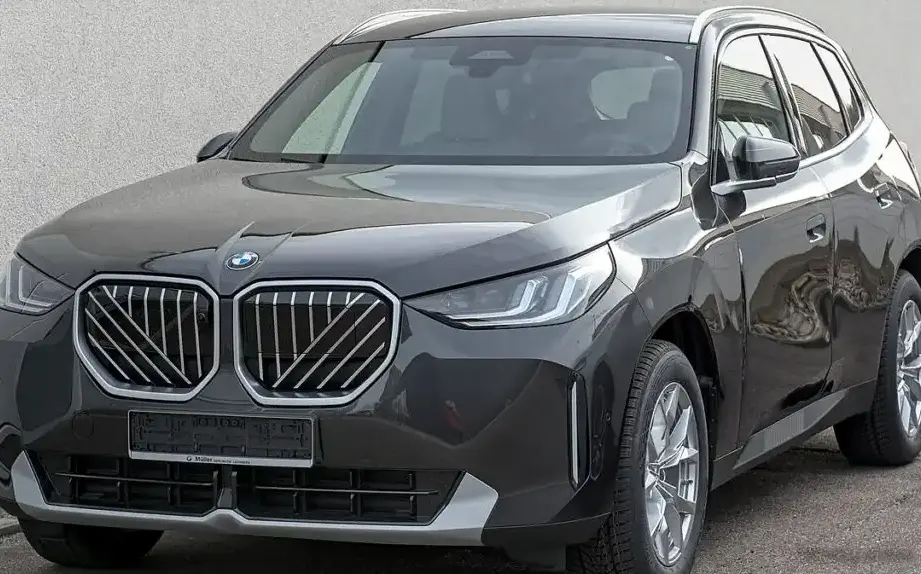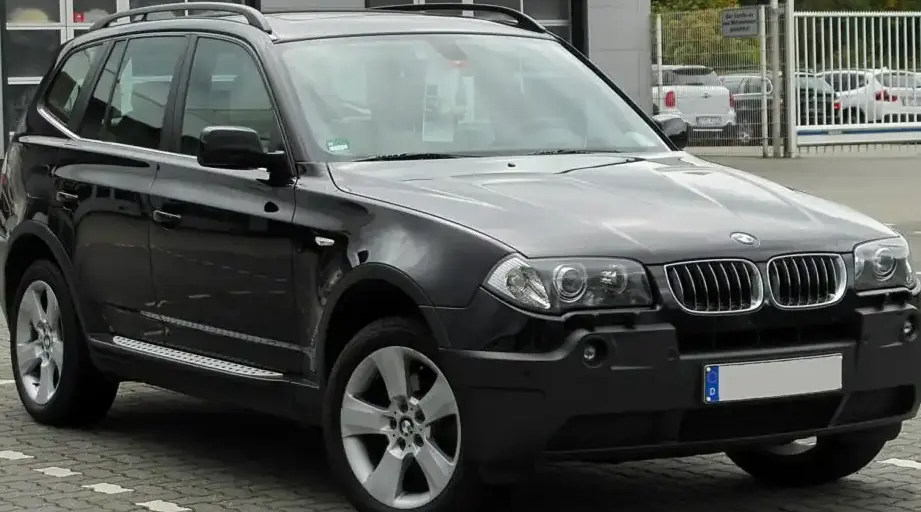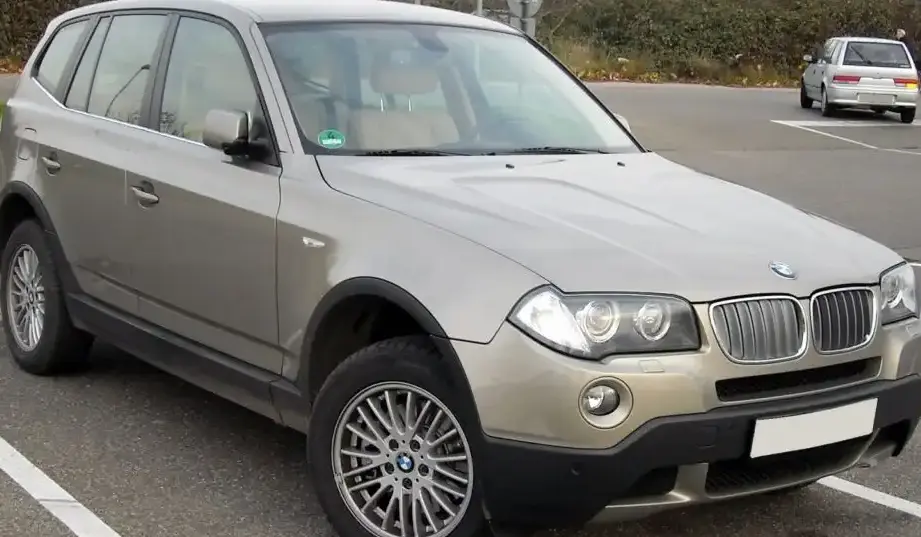
The BMW X3 (E83) facelift 3.0d, produced from 2006 to 2010, represented a significant mid-cycle update to BMW’s compact luxury SUV. Introduced as part of the E83 series, this variant featured a potent 3.0-liter inline-six diesel engine producing 218 horsepower. It occupied a premium position within the X3 lineup, offering a blend of performance, refinement, and fuel efficiency aimed at buyers seeking a more capable and luxurious SUV experience. The facelift brought revised styling, improved interior materials, and updated technology, solidifying the X3’s position in the burgeoning luxury crossover segment.
Technical Specifications
| Brand | BMW |
| Model | X3 |
| Generation | X3 (E83, facelift 2006) |
| Type (Engine) | 3.0d (218 Hp) |
| Start of production | 2006 |
| End of production | 2010 |
| Powertrain Architecture | Internal Combustion engine |
| Body type | SUV |
| Seats | 5 |
| Doors | 5 |
| Fuel consumption (urban) | 10.3 l/100 km (22.8 US mpg, 27.4 UK mpg, 9.7 km/l) |
| Fuel consumption (extra urban) | 6.5 l/100 km (36.2 US mpg, 43.5 UK mpg, 15.4 km/l) |
| Fuel consumption (combined) | 7.9 l/100 km (29.8 US mpg, 35.8 UK mpg, 12.7 km/l) |
| CO2 emissions | 210 g/km |
| Fuel Type | Diesel |
| Acceleration 0 – 100 km/h | 7.4 sec |
| Acceleration 0 – 62 mph | 7.4 sec |
| Acceleration 0 – 60 mph | 7 sec |
| Maximum speed | 210 km/h (130.49 mph) |
| Emission standard | Euro 4 |
| Weight-to-power ratio | 8.3 kg/Hp, 120.8 Hp/tonne |
| Weight-to-torque ratio | 3.6 kg/Nm, 277 Nm/tonne |
| Power | 218 Hp @ 4000 rpm |
| Power per litre | 72.8 Hp/l |
| Torque | 500 Nm @ 1750-2750 rpm (368.78 lb.-ft. @ 1750-2750 rpm) |
| Engine layout | Front, Longitudinal |
| Engine Model/Code | M57D30 |
| Engine displacement | 2993 cm3 (182.64 cu. in.) |
| Number of cylinders | 6 |
| Engine configuration | Inline |
| Cylinder Bore | 84 mm (3.31 in.) |
| Piston Stroke | 90 mm (3.54 in.) |
| Compression ratio | 17:1 |
| Number of valves per cylinder | 4 |
| Fuel injection system | Diesel Commonrail |
| Engine aspiration | Turbocharger, Intercooler |
| Valvetrain | DOHC |
| Engine oil capacity | 7.5 l (7.93 US qt | 6.6 UK qt) |
| Coolant | 10.4 l (10.99 US qt | 9.15 UK qt) |
| Kerb Weight | 1805 kg (3979.34 lbs.) |
| Max. weight | 2350 kg (5180.86 lbs.) |
| Max load | 545 kg (1201.52 lbs.) |
| Trunk (boot) space – minimum | 480 l (16.95 cu. ft.) |
| Trunk (boot) space – maximum | 1560 l (55.09 cu. ft.) |
| Fuel tank capacity | 67 l (17.7 US gal | 14.74 UK gal) |
| Max. roof load | 75 kg (165.35 lbs.) |
| Permitted trailer load with brakes (12%) | 2000 kg (4409.25 lbs.) |
| Permitted trailer load without brakes | 750 kg (1653.47 lbs.) |
| Permitted towbar download | 80 kg (176.37 lbs.) |
| Length | 4569 mm (179.88 in.) |
| Width | 1853 mm (72.95 in.) |
| Width including mirrors | 1987 mm (78.23 in.) |
| Height | 1674 mm (65.91 in.) |
| Wheelbase | 2795 mm (110.04 in.) |
| Front track | 1524 mm (60 in.) |
| Rear (Back) track | 1542 mm (60.71 in.) |
| Front overhang | 821 mm (32.32 in.) |
| Rear overhang | 953 mm (37.52 in.) |
| Ride height (ground clearance) | 201 mm (7.91 in.) |
| Drag coefficient (Cd) | 0.35 |
| Minimum turning circle (turning diameter) | 11.7 m (38.39 ft.) |
| Approach angle | 23.9° |
| Departure angle | 21.8° |
| Ramp-over (brakeover) angle | 17.2° |
| Wading depth | 500 mm (19.69 in.) |
| Drive wheel | All wheel drive (4×4) |
| Number of gears and type of gearbox | 6 gears, manual transmission |
| Front brakes | Disc |
| Rear brakes | Disc |
| Assisting systems | ABS (Anti-lock braking system) |
| Steering type | Steering rack and pinion |
| Power steering | Electric Steering |
| Tires size | 235/55 R17 |
| Wheel rims size | 8.0J x 17 |
INTRODUCTION
The 2006-2010 BMW X3 (E83) 3.0d represents a compelling blend of performance and practicality within the compact luxury SUV segment. Positioned as a premium offering, it catered to buyers who desired the driving dynamics associated with the BMW brand, coupled with the versatility of an SUV. The facelifted model, introduced in 2006, addressed some criticisms of the original E83, improving interior quality and refining the exterior styling. This 3.0d variant, powered by the M57D30 engine, was a popular choice in European markets, offering a strong diesel torque curve and respectable fuel economy. It was a key player in BMW’s strategy to expand its SUV offerings and attract a wider customer base.
Powertrain & Engine Architecture
At the heart of the X3 3.0d lies the M57D30, a 3.0-liter inline-six diesel engine. This engine is renowned for its durability and strong low-end torque. It utilizes a common rail direct injection system, delivering fuel at extremely high pressure for optimized combustion. The M57D30 features a single variable geometry turbocharger (VGT) with an intercooler, enhancing both power and efficiency. The engine employs a double overhead camshaft (DOHC) valvetrain with four valves per cylinder. The 6-speed manual transmission was standard, providing precise gear changes and contributing to the vehicle’s engaging driving experience. The engine’s longitudinal mounting and rear-wheel-drive bias, combined with BMW’s xDrive all-wheel-drive system, provided excellent traction and handling characteristics.
Driving Characteristics
The X3 3.0d offered a noticeably more spirited driving experience compared to lower-powered variants. The 500 Nm (368 lb-ft) of torque, available from 1750-2750 rpm, provided strong acceleration in everyday driving situations and effortless overtaking. While not a sports car, the X3 3.0d felt surprisingly agile for an SUV, thanks to its well-tuned suspension and precise steering. The 6-speed manual transmission allowed drivers to fully exploit the engine’s powerband. Compared to the automatic transmission options available on other X3 models, the manual offered a more direct connection to the engine and improved fuel economy. The xDrive all-wheel-drive system provided confident handling in various weather conditions, enhancing stability and control.
Equipment & Trim Levels
The X3 3.0d typically came well-equipped, reflecting its premium positioning. Standard features included automatic climate control, power windows and locks, a multi-function steering wheel, and a high-quality audio system. Upholstery was typically cloth or leatherette, with full leather options available as an upgrade. Optional extras included a sunroof, navigation system, heated seats, and parking sensors. The facelifted model also benefited from improved interior materials and a more modern dashboard design. Trim levels varied depending on the market, but generally offered increasing levels of luxury and technology.
Chassis & Braking
The X3 E83 utilized a robust chassis with MacPherson strut front suspension and a multi-link rear suspension. This setup provided a good balance between ride comfort and handling precision. The 3.0d variant typically featured larger brakes compared to lower-powered models, ensuring adequate stopping power. Disc brakes were standard on all four wheels, and an anti-lock braking system (ABS) was included as standard equipment. Stabilizer bars were fitted front and rear to reduce body roll during cornering. The suspension was tuned to provide a comfortable ride without sacrificing handling agility.
Market Reception & Comparison
The X3 3.0d was generally well-received by automotive critics. It was praised for its powerful engine, refined driving dynamics, and practical interior. Compared to the 2.0d and 2.5i variants, the 3.0d offered a significant performance upgrade, making it a more appealing option for drivers who prioritized power and torque. However, it came at a higher price point. Fuel economy was considered respectable for a vehicle of its size and performance, although it wasn’t as frugal as the 2.0d. Reliability was generally good, although some owners reported issues with the turbocharger and fuel injectors over the long term.
Legacy
The BMW X3 (E83) 3.0d has established a reputation as a durable and capable SUV. The M57D30 engine is known for its longevity, and well-maintained examples can still provide reliable service today. On the used car market, the 3.0d commands a premium over lower-powered variants, reflecting its superior performance and desirability. While newer generations of the X3 have surpassed it in terms of technology and refinement, the E83 3.0d remains a popular choice for enthusiasts who appreciate its classic BMW driving experience and robust build quality. It represents a pivotal moment in BMW’s expansion into the luxury SUV market, laying the foundation for the successful X3 models that followed.