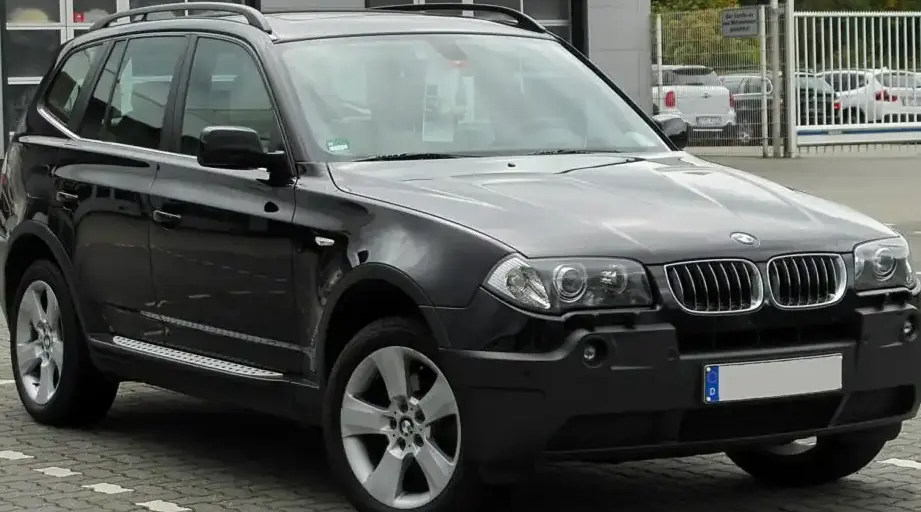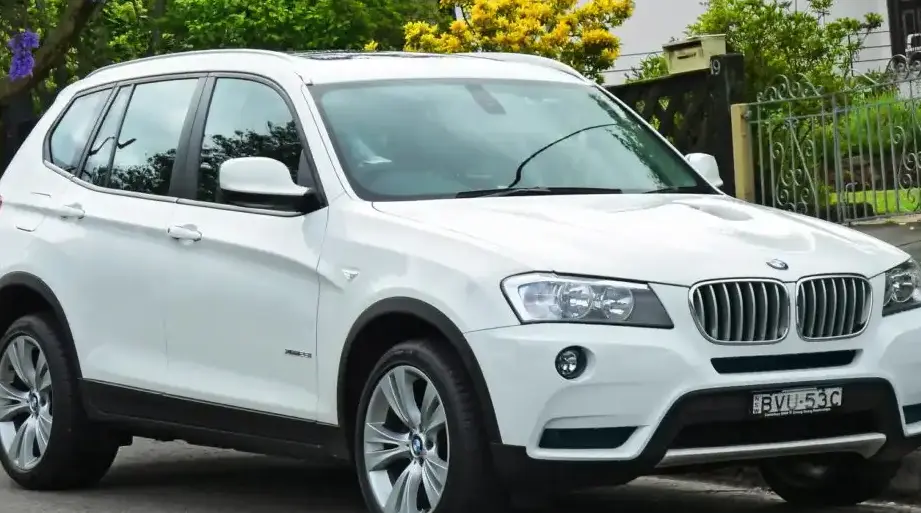
The BMW X3 (F25) 20d xDrive, produced from 2010 to 2014, represented a key offering in BMW’s compact luxury SUV lineup. Powered by a 2.0-liter turbocharged diesel engine producing 184 horsepower, this variant occupied a middle ground within the F25 range, positioned between the base models and the higher-performance gasoline options like the xDrive28i and xDrive35i. The 20d xDrive aimed to balance fuel efficiency with respectable performance, appealing to European buyers seeking a practical and economical premium SUV. It was a significant model for BMW, particularly in Europe, where diesel engines held a substantial market share.
Technical Specifications
| Brand | BMW |
| Model | X3 |
| Generation | X3 (F25) |
| Type (Engine) | 20d (184 Hp) xDrive |
| Start of production | 2010 |
| End of production | 2014 |
| Powertrain Architecture | Internal Combustion engine |
| Body type | SUV |
| Seats | 5 |
| Doors | 5 |
| Fuel consumption (urban) | 6.7 l/100 km (35.1 US mpg, 42.2 UK mpg, 14.9 km/l) |
| Fuel consumption (extra urban) | 5 l/100 km (47 US mpg, 56.5 UK mpg, 20 km/l) |
| Fuel consumption (combined) | 5.6 l/100 km (42 US mpg, 50.4 UK mpg, 17.9 km/l) |
| CO2 emissions | 149 g/km |
| Fuel Type | Diesel |
| Acceleration 0 – 100 km/h | 8.5 sec |
| Acceleration 0 – 62 mph | 8.5 sec |
| Acceleration 0 – 60 mph | 8.1 sec |
| Maximum speed | 210 km/h (130.49 mph) |
| Emission standard | Euro 5 |
| Weight-to-power ratio | 9.3 kg/Hp, 107.3 Hp/tonne |
| Weight-to-torque ratio | 4.5 kg/Nm, 221.6 Nm/tonne |
| Power | 184 Hp @ 4000 rpm |
| Power per litre | 92.2 Hp/l |
| Torque | 380 Nm @ 1750-2750 rpm (280.27 lb.-ft. @ 1750-2750 rpm) |
| Engine layout | Front, Longitudinal |
| Engine Model/Code | N47D20C |
| Engine displacement | 1995 cm3 (121.74 cu. in.) |
| Number of cylinders | 4 |
| Engine configuration | Inline |
| Cylinder Bore | 84 mm (3.31 in.) |
| Piston Stroke | 90 mm (3.54 in.) |
| Compression ratio | 16.5:1 |
| Number of valves per cylinder | 4 |
| Fuel injection system | Diesel Commonrail |
| Engine aspiration | Turbocharger, Intercooler |
| Engine oil capacity | 5.2 l (5.49 US qt | 4.58 UK qt) |
| Coolant | 8 l (8.45 US qt | 7.04 UK qt) |
| Kerb Weight | 1715 kg (3780.93 lbs.) |
| Max. weight | 2290 kg (5048.59 lbs.) |
| Max load | 575 kg (1267.66 lbs.) |
| Trunk (boot) space – minimum | 550 l (19.42 cu. ft.) |
| Trunk (boot) space – maximum | 1600 l (56.5 cu. ft.) |
| Fuel tank capacity | 67 l (17.7 US gal | 14.74 UK gal) |
| Max. roof load | 100 kg (220.46 lbs.) |
| Permitted trailer load with brakes (12%) | 2000 kg (4409.25 lbs.) |
| Permitted trailer load without brakes | 750 kg (1653.47 lbs.) |
| Permitted towbar download | 100 kg (220.46 lbs.) |
| Length | 4648 mm (182.99 in.) |
| Width | 1881 mm (74.06 in.) |
| Width including mirrors | 2098 mm (82.6 in.) |
| Height | 1661 mm (65.39 in.) |
| Wheelbase | 2810 mm (110.63 in.) |
| Front track | 1616 mm (63.62 in.) |
| Rear (Back) track | 1632 mm (64.25 in.) |
| Front overhang | 861 mm (33.9 in.) |
| Rear overhang | 977 mm (38.46 in.) |
| Ride height (ground clearance) | 212 mm (8.35 in.) |
| Drag coefficient (Cd) | 0.33 |
| Minimum turning circle (turning diameter) | 11.9 m (39.04 ft.) |
| Approach angle | 25.7° |
| Departure angle | 22.6° |
| Ramp-over (brakeover) angle | 19.4° |
| Wading depth | 500 mm (19.69 in.) |
| Drive wheel | All wheel drive (4×4) |
| Number of gears and type of gearbox | 6 gears, manual transmission |
| Rear suspension | Independent multi-link suspension |
| Front brakes | Ventilated discs |
| Rear brakes | Ventilated discs |
| Assisting systems | ABS (Anti-lock braking system) |
| Steering type | Steering rack and pinion |
| Power steering | Electric Steering |
| Tires size | 225/60 R17 V |
| Wheel rims size | 7.5J x 17 |
Powertrain & Engine Architecture
The heart of the X3 20d xDrive is the N47D20C engine, a 2.0-liter inline-four cylinder diesel. This engine was a cornerstone of BMW’s EfficientDynamics strategy, focusing on maximizing fuel economy without sacrificing too much performance. The N47 featured second-generation common rail direct injection, operating at pressures up to 1800 bar, for precise fuel delivery and optimized combustion. A single turbocharger with variable geometry turbine (VGT) technology provided boost, contributing to the engine’s 380 Nm (280 lb-ft) of torque available from a low 1750 rpm. The engine also incorporated a diesel particulate filter (DPF) to meet stringent Euro 5 emissions standards. The 6-speed manual transmission was standard, offering smooth shifts and contributing to the vehicle’s overall efficiency. While an 8-speed automatic transmission was available as an option, the manual was common in many European markets.
Driving Characteristics
The X3 20d xDrive, with its 184 hp and 380 Nm of torque, offered a respectable, though not exhilarating, driving experience. Acceleration from 0 to 60 mph took around 8.1 seconds, making it competitive within its class. The engine’s strong low-end torque made it feel responsive in everyday driving situations, providing ample power for overtaking and navigating city traffic. Compared to the more powerful xDrive28i or xDrive35i models, the 20d felt less urgent, but its fuel economy advantage was significant. The manual transmission, while engaging for some drivers, required more effort than the optional automatic, particularly in congested areas. The xDrive all-wheel-drive system provided excellent traction in various weather conditions, enhancing stability and confidence.
Equipment & Trim Levels
The X3 20d xDrive typically came well-equipped, even in base trim. Standard features included automatic climate control, a multi-function steering wheel, power windows and mirrors, and an audio system with auxiliary input. Upholstery was typically cloth, though leather options were available. Higher trim levels added features like a sunroof, navigation system, upgraded audio, and parking sensors. Optional extras included heated seats, automatic headlights, and a tow hitch. The interior design was typical BMW, emphasizing functionality and a driver-focused layout.
Chassis & Braking
The F25 X3 utilized a MacPherson strut front suspension and a multi-link rear suspension, providing a comfortable ride and good handling characteristics. The suspension was tuned to balance comfort and agility, making it suitable for both long highway journeys and winding roads. Braking duties were handled by ventilated disc brakes on all four wheels, providing ample stopping power. Anti-lock braking system (ABS) and electronic stability control (ESC) were standard safety features. The X3 20d xDrive’s weight of around 1715 kg (3781 lbs) was relatively moderate for its class, contributing to its balanced handling.
Market Reception & Comparison
The X3 20d xDrive was generally well-received by automotive critics, who praised its fuel efficiency, comfortable ride, and practical interior. However, some reviewers noted that the engine lacked the refinement and power of its gasoline counterparts. Compared to other diesel-powered SUVs in its segment, such as the Audi Q5 TDI and the Land Rover Freelander 2 TD4, the X3 20d offered a compelling combination of performance, economy, and brand prestige. Its fuel economy figures of around 5.6 l/100 km (42 US mpg) were particularly attractive to European buyers.
Legacy
The N47 engine, while generally reliable, did experience some issues with timing chain wear, particularly in early production models. Regular oil changes and preventative maintenance are crucial for ensuring the longevity of this engine. Today, the F25 X3 20d xDrive represents a relatively affordable entry point into the BMW SUV market. Well-maintained examples can still provide years of reliable service, offering a blend of practicality, efficiency, and the BMW driving experience. The 20d variant remains a popular choice for those seeking a fuel-efficient and capable premium SUV.