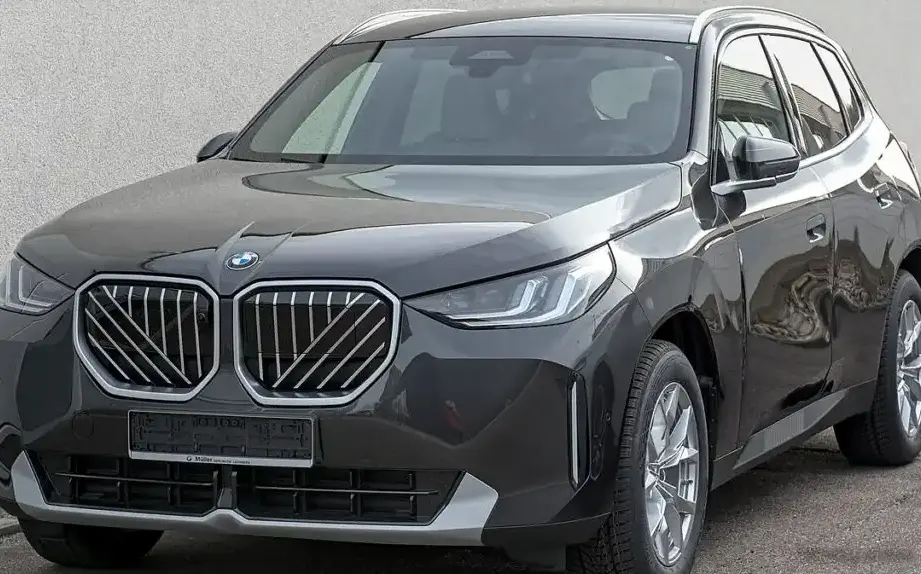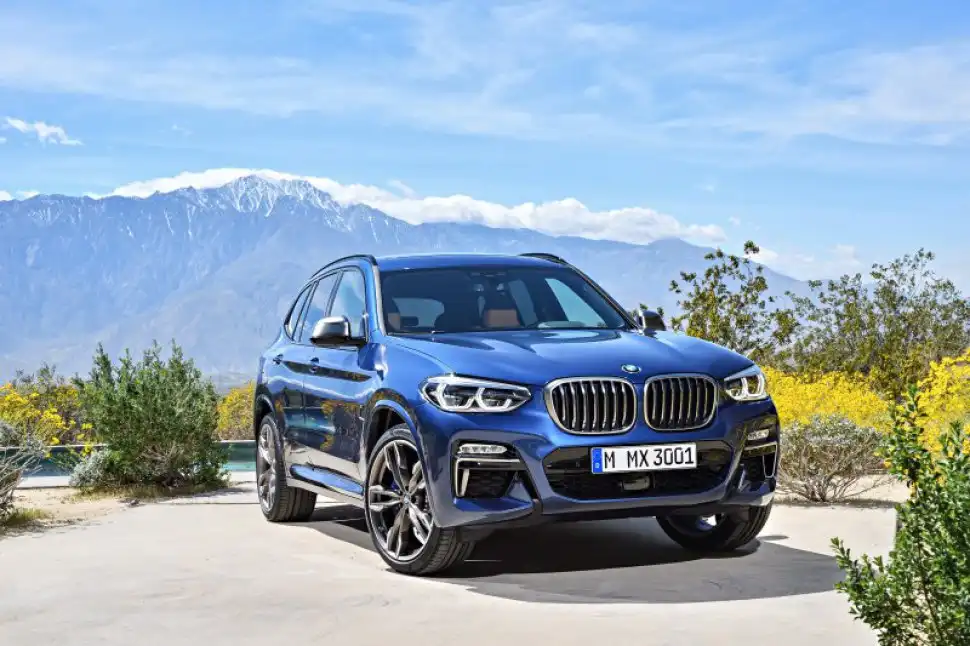
The BMW X3 (G01) 25d xDrive Steptronic, produced from 2018 to 2021, represents a key variant within the second generation of BMW’s popular compact luxury SUV. Positioned as a mid-range offering, the 25d aimed to balance performance and efficiency, appealing to buyers seeking a diesel-powered X3 with all-wheel drive and the convenience of an automatic transmission. It slots between the entry-level 20d and the more powerful 30d models in the G01 lineup, offering a compelling alternative for those prioritizing torque and fuel economy over outright speed.
Technical Specifications
| Brand | BMW |
| Model | X3 |
| Generation | X3 (G01) |
| Type (Engine) | 25d (231 Hp) xDrive Steptronic |
| Start of production | 2018 |
| End of production | 2021 |
| Powertrain Architecture | Internal Combustion engine |
| Body type | SAV (Sports Activity Vehicle) |
| Seats | 5 |
| Doors | 5 |
| Fuel consumption (urban) | 6.2-6.3 l/100 km (37.9 – 37.3 US mpg, 45.6 – 44.8 UK mpg, 16.1 – 15.9 km/l) |
| Fuel consumption (extra urban) | 5.1-5.3 l/100 km (46.1 – 44.4 US mpg, 55.4 – 53.3 UK mpg, 19.6 – 18.9 km/l) |
| Fuel consumption (combined) | 5.5-5.7 l/100 km (42.8 – 41.3 US mpg, 51.4 – 49.6 UK mpg, 18.2 – 17.5 km/l) |
| CO2 emissions | 145-150 g/km |
| Fuel Type | Diesel |
| Acceleration 0 – 100 km/h | 6.8 sec |
| Acceleration 0 – 62 mph | 6.8 sec |
| Acceleration 0 – 60 mph | 6.5 sec |
| Maximum speed | 230 km/h (142.92 mph) |
| Emission standard | Euro 6d – TEMP |
| Weight-to-power ratio | 7.6 kg/Hp, 130.9 Hp/tonne |
| Weight-to-torque ratio | 3.5 kg/Nm, 283.3 Nm/tonne |
| Power | 231 Hp @ 4400 rpm |
| Torque | 500 Nm @ 2000 rpm (368.78 lb.-ft. @ 2000 rpm) |
| Engine layout | Front, Longitudinal |
| Engine Model/Code | B47D20B |
| Engine displacement | 1995 cm3 (121.74 cu. in.) |
| Number of cylinders | 4 |
| Engine configuration | Inline |
| Cylinder Bore | 84 mm (3.31 in.) |
| Piston Stroke | 90 mm (3.54 in.) |
| Compression ratio | 16.5:1 |
| Number of valves per cylinder | 4 |
| Fuel injection system | Diesel Commonrail |
| Engine aspiration | Twin-power turbo, Intercooler |
| Engine oil capacity | 5 l (5.28 US qt | 4.4 UK qt) |
| Coolant capacity | 9.4 l (9.93 US qt | 8.27 UK qt) |
| Kerb Weight | 1765 kg (3891.16 lbs.) |
| Max. weight | 2435 kg (5368.26 lbs.) |
| Max load | 670 kg (1477.1 lbs.) |
| Trunk (boot) space – minimum | 550 l (19.42 cu. ft.) |
| Trunk (boot) space – maximum | 1600 l (56.5 cu. ft.) |
| Fuel tank capacity | 68 l (17.96 US gal | 14.96 UK gal) |
| Max. roof load | 100 kg (220.46 lbs.) |
| Permitted trailer load with brakes (12%) | 2400 kg (5291.09 lbs.) |
| Permitted trailer load without brakes | 750 kg (1653.47 lbs.) |
| Permitted towbar download | 100 kg (220.46 lbs.) |
| Length | 4708 mm (185.35 in.) |
| Width | 1891 mm (74.45 in.) |
| Height | 1676 mm (65.98 in.) |
| Wheelbase | 2864 mm (112.76 in.) |
| Front track | 1620 mm (63.78 in.) |
| Rear track | 1636 mm (64.41 in.) |
| Ride height (ground clearance) | 204 mm (8.03 in.) |
| Drag coefficient (Cd) | 0.29 |
| Minimum turning circle | 12.0 m (39.37 ft.) |
| Approach angle | 25.6° |
| Departure angle | 23.4° |
| Ramp-over angle | 20.0° |
| Wading depth | 500 mm (19.69 in.) |
| Drive wheel | All wheel drive (4×4) |
| Number of gears | 8 |
| Gearbox type | Automatic transmission Steptronic |
| Front suspension | Double wishbone |
| Rear suspension | Independent multi-link suspension |
| Front brakes | Ventilated discs |
| Rear brakes | Ventilated discs |
| Assisting systems | ABS (Anti-lock braking system) |
| Steering type | Steering rack and pinion |
| Power steering | Electric Steering |
| Tires size | 225/60 R18 104W |
| Wheel rims size | 7J x 18 |
INTRODUCTION
The G01 X3, launched in 2017, represented a significant step forward for BMW’s compact SUV, moving to the CLAR platform which allowed for increased rigidity, weight reduction, and improved packaging. The 25d variant, introduced alongside other engine options, quickly became a popular choice in European markets where diesel engines held a strong preference. It offered a balance between the more affordable 20d and the performance-oriented 30d, targeting buyers who valued fuel efficiency and strong low-end torque for everyday driving and occasional long journeys. Production of this specific configuration ran from 2018 to 2021.
Powertrain & Engine Architecture
At the heart of the X3 25d lies the BMW B47D20B, a 2.0-liter inline-four cylinder diesel engine. This engine is a member of BMW’s modular engine family, known for its robust construction and advanced technology. The B47 utilizes a common rail direct injection system operating at extremely high pressures (2,000 bar) for optimized fuel atomization and combustion efficiency. A twin-scroll turbocharger with variable geometry turbine (VGT) technology provides a broad torque curve and minimizes turbo lag. The engine also features an intercooler to further enhance performance. The 8-speed Steptronic automatic transmission, a staple in BMW’s lineup, is paired with the engine. This transmission is known for its smooth shifts and adaptive learning capabilities, optimizing gear selection based on driving style and conditions. The transmission is electronically controlled and offers manual shift modes via steering wheel-mounted paddles or the gear selector.
Driving Characteristics
The X3 25d delivers a characteristically refined driving experience. With 231 horsepower and 369 lb-ft of torque, it provides ample power for confident acceleration and effortless highway cruising. The automatic transmission is well-tuned, offering smooth and responsive gear changes. While not as overtly sporty as the 30d, the 25d offers a more than adequate level of performance for most drivers. The 0-60 mph time of around 6.5 seconds is respectable for a compact SUV. The engine’s strong low-end torque makes it particularly well-suited for overtaking maneuvers and navigating hilly terrain. The xDrive all-wheel-drive system provides excellent traction in all weather conditions, enhancing stability and control. The gear ratios are optimized for both fuel efficiency and responsiveness, with taller gears for relaxed cruising and shorter gears for quicker acceleration.
Equipment & Trim Levels
The X3 25d typically came well-equipped, even in base trim. Standard features included BMW’s iDrive infotainment system with a 6.5-inch display (larger screens were optional), automatic climate control, power-adjustable front seats, and a leather-wrapped steering wheel. Safety features such as automatic emergency braking, lane departure warning, and a rearview camera were also standard. Optional extras included a premium sound system, navigation system, panoramic sunroof, heated seats, and a variety of driver-assistance systems. Interior upholstery options ranged from standard cloth to premium leather. Trim levels varied slightly depending on the market, but generally offered packages that bundled together popular options for convenience and value.
Chassis & Braking
The G01 X3 benefits from a sophisticated chassis design. The front suspension utilizes a double wishbone setup, while the rear features an independent multi-link suspension. This configuration provides a comfortable ride and precise handling. The X3 25d typically came equipped with ventilated disc brakes on all four wheels, providing ample stopping power. Anti-lock braking system (ABS) and electronic stability control (ESC) are standard features, enhancing safety and control. The suspension tuning is geared towards comfort, but still provides a reasonably sporty driving experience. Stabilizer bars are fitted front and rear to minimize body roll during cornering.
Market Reception & Comparison
The X3 25d was generally well-received by automotive critics. It was praised for its fuel efficiency, comfortable ride, and refined driving experience. Compared to the 20d, the 25d offered a noticeable performance boost, while remaining competitive in terms of fuel economy. Compared to the 30d, it provided a more affordable entry point into the X3 range, albeit with slightly less power. Reliability reports suggest that the B47 engine is generally robust, although some owners have reported issues with the diesel particulate filter (DPF) and turbocharger. Fuel economy figures consistently hovered around 40-45 mpg in real-world driving, making it an attractive option for those seeking a fuel-efficient SUV.
Legacy
The BMW X3 25d (G01) remains a popular choice in the used car market. Its combination of practicality, performance, and fuel efficiency continues to appeal to buyers. The B47 engine, while not without its potential issues, is generally considered to be a reliable unit when properly maintained. Regular servicing, including oil changes and DPF regeneration, is crucial for ensuring long-term reliability. The X3 25d represents a well-rounded and capable compact SUV that offers a compelling blend of luxury, performance, and efficiency.