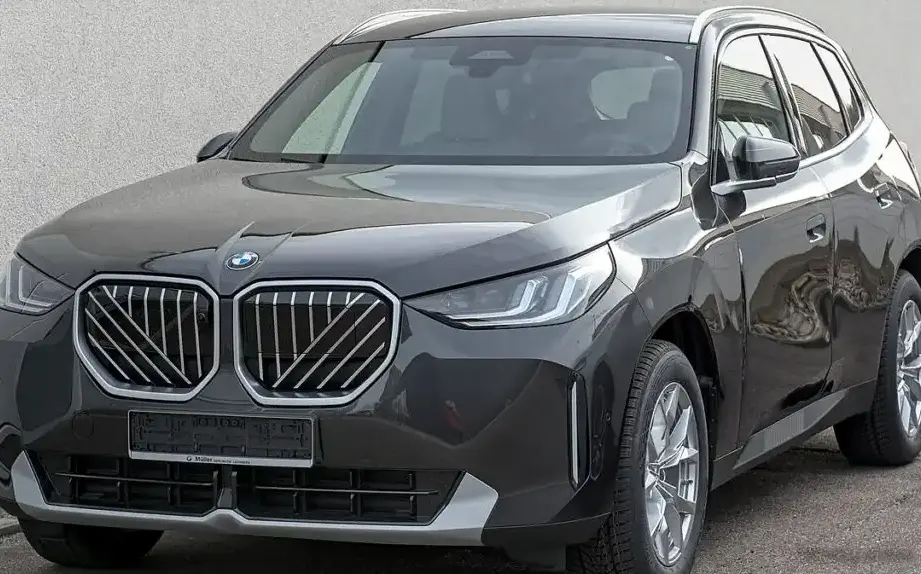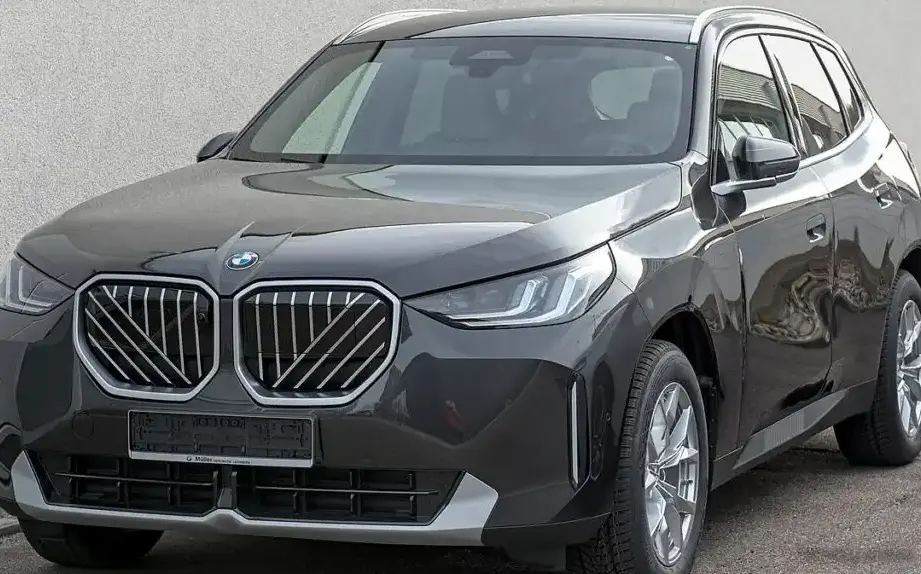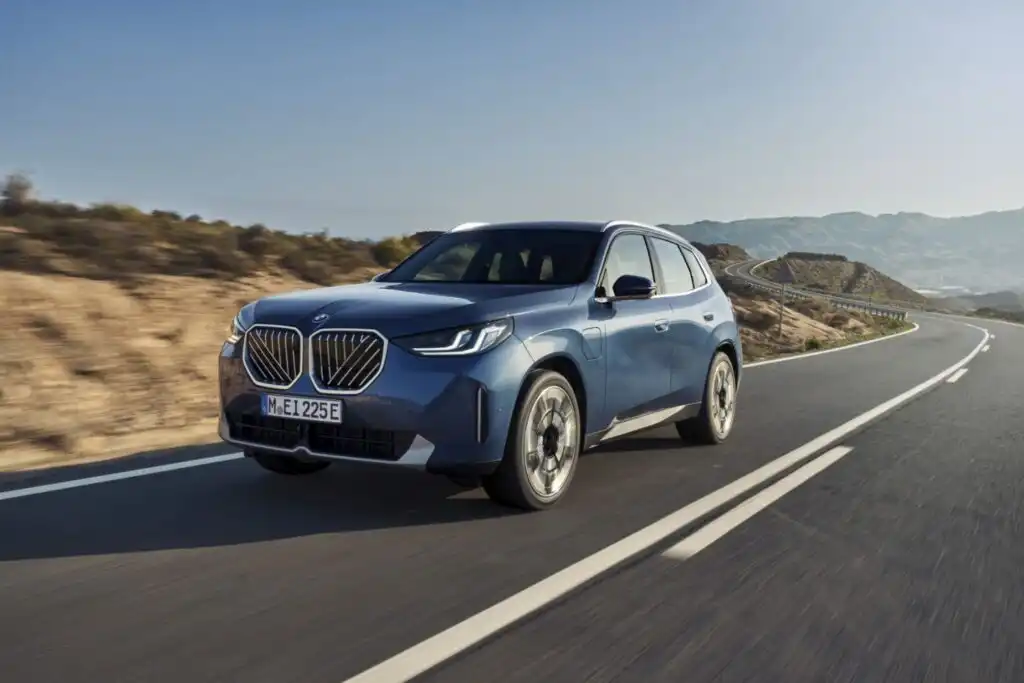
The BMW X3 G45 30e, launched in June 2024, represents BMW’s entry into the plug-in hybrid electric vehicle (PHEV) segment within the popular X3 Sports Activity Vehicle (SAV) lineup. Positioned as a mid-range offering, the 30e combines a 2.0-liter turbocharged four-cylinder gasoline engine with an electric motor, delivering a combined system output of 299 horsepower. This variant is designed to appeal to buyers seeking a balance between performance, efficiency, and the benefits of electric driving, particularly in markets with increasing environmental regulations and incentives for PHEVs. The G45 generation X3, introduced in 2024, builds upon the success of the previous F25 generation, offering updated styling, technology, and powertrain options.
Technical Specifications
| Brand | BMW |
| Model | X3 |
| Generation | X3 (G45) |
| Type | 30e (299 Hp) Plug-in Hybrid xDrive Steptronic |
| Start of production | June, 2024 |
| Powertrain Architecture | PHEV (Plug-in Hybrid Electric Vehicle) |
| Body type | SAV |
| Seats | 5 |
| Doors | 5 |
| Combined fuel consumption (WLTP) | 0.9-1.1 l/100 km (261.3 – 213.8 US mpg, 313.9 – 256.8 UK mpg, 111.1 – 90.9 km/l) |
| CO2 emissions (WLTP) | 21-26 g/km |
| Fuel Type | Petrol / electricity |
| Acceleration 0 – 100 km/h | 6.2 sec |
| Acceleration 0 – 62 mph | 6.2 sec |
| Acceleration 0 – 60 mph | 5.9 sec |
| Maximum speed | 215 km/h (133.59 mph) |
| Emission standard | Euro 6e |
| Weight-to-power ratio | 6.9 kg/Hp, 144.8 Hp/tonne |
| Weight-to-torque ratio | 4.6 kg/Nm, 217.9 Nm/tonne |
| Net (usable) battery capacity | 19.7 kWh |
| Battery voltage | 392 V |
| Battery technology | Lithium-ion (Li-Ion) |
| Battery location | Under the rear seats |
| All-electric range (WLTP) | 81-90 km (50.33 – 55.92 mi) |
| Average Energy consumption (WLTP) | 22.3-24 kWh/100 km (35.89 – 38.62 kWh/100 mi, 94 – 87 MPGe, 4.5 – 4.2 km/kWh, 2.8 – 2.6 mi/kWh) |
| Max speed (electric) | 140 km/h (86.99 mph) |
| Electric motor power | 184 Hp @ 7000 rpm (184.39 lb.-ft. @ 100-5500 rpm) |
| Electric motor Torque | 250 Nm @ 100-5500 rpm |
| Electric motor location | Between the combustion engine and the transmission |
| Electric motor type | Synchronous |
| System power | 299 Hp |
| System torque | 450 Nm (331.9 lb.-ft.) |
| Power | 190 Hp @ 4400-6500 rpm |
| Torque | 310 Nm @ 1500-4000 rpm (228.64 lb.-ft. @ 1500-4000 rpm) |
| Engine layout | Front, Longitudinal |
| Engine Model/Code | B48 |
| Engine displacement | 1998 cm3 (121.93 cu. in.) |
| Number of cylinders | 4 |
| Engine configuration | Inline |
| Cylinder Bore | 82 mm (3.23 in.) |
| Piston Stroke | 94.6 mm (3.72 in.) |
| Compression ratio | 11.6:1 |
| Number of valves per cylinder | 4 |
| Fuel injection system | Direct injection and Multi-port manifold injection |
| Engine aspiration | Twin-power turbo, Intercooler |
| Valvetrain | VALVETRONIC, Double-VANOS |
| Engine oil capacity | 5.25 l (5.55 US qt | 4.62 UK qt) |
| Kerb Weight | 2065 kg (4552.55 lbs.) |
| Max. weight | 2710 kg (5974.53 lbs.) |
| Max load | 645 kg (1421.98 lbs.) |
| Trunk (boot) space – minimum | 460 l (16.24 cu. ft.) |
| Trunk (boot) space – maximum | 1600 l (56.5 cu. ft.) |
| Fuel tank capacity | 50 l (13.21 US gal | 11 UK gal) |
| Max. roof load | 100 kg (220.46 lbs.) |
| Permitted trailer load with brakes (12%) | 2000 kg (4409.25 lbs.) |
| Permitted trailer load without brakes | 750 kg (1653.47 lbs.) |
| Permitted towbar download | 100 kg (220.46 lbs.) |
| Length | 4755 mm (187.2 in.) |
| Width | 1920 mm (75.59 in.) |
| Width including mirrors | 2132 mm (83.94 in.) |
| Height | 1660 mm (65.35 in.) |
| Wheelbase | 2865 mm (112.8 in.) |
| Front track | 1614-1618 mm (63.54 – 63.7 in.) |
| Rear (Back) track | 1623-1659 mm (63.9 – 65.31 in.) |
| Front overhang | 880 mm (34.65 in.) |
| Rear overhang | 1010 mm (39.76 in.) |
| Ride height (ground clearance) | 208 mm (8.19 in.) |
| Drag coefficient (Cd) | 0.27 |
| Minimum turning circle (turning diameter) | 12.2 m (40.03 ft.) |
| Approach angle | 20.8° |
| Departure angle | 21.9° |
| Ramp-over (brakeover) angle | 18.8° |
| Drivetrain Architecture | The Internal combustion engine (ICE) and the electric motor permanently drive the four wheels of the car with the ability to work in full electric or mixed mode. |
| Drive wheel | All wheel drive (4×4) |
| Number of gears and type of gearbox | 8 gears, automatic transmission Steptronic |
| Front suspension | Spring Strut, Transverse stabilizer |
| Rear suspension | Independent multi-link spring suspension with stabilizer |
| Front brakes | Ventilated discs |
| Rear brakes | Ventilated discs |
| Assisting systems | ABS (Anti-lock braking system) |
| Steering type | Steering rack and pinion |
| Power steering | Electric Steering |
| Tires size | 245/50 R19 |
| Wheel rims size | 8.5J x 19 |
Powertrain & Engine Architecture
The BMW X3 30e utilizes BMW’s latest generation plug-in hybrid technology. The core of the powertrain is the B48 2.0-liter inline four-cylinder gasoline engine, featuring direct injection and a twin-scroll turbocharger. This engine produces 190 horsepower and 310 Nm (228.64 lb-ft) of torque. The electric motor, a synchronous unit, is integrated between the engine and the eight-speed Steptronic automatic transmission, contributing an additional 184 horsepower and 250 Nm (184.39 lb-ft) of torque. The combined system output is 299 horsepower and 450 Nm (331.9 lb-ft). The 19.7 kWh lithium-ion battery pack is positioned under the rear seats, minimizing impact on passenger space. The battery supports DC fast charging, allowing for a relatively quick recharge time. The engine employs BMW’s VALVETRONIC variable valve timing and Double-VANOS variable camshaft control for optimized efficiency and performance.
Driving Characteristics
The X3 30e offers a refined driving experience, blending the responsiveness of the gasoline engine with the instant torque of the electric motor. In electric-only mode, the vehicle provides silent and smooth acceleration, suitable for urban commuting. Switching to hybrid mode seamlessly combines the power sources, delivering brisk acceleration – 0 to 60 mph in approximately 5.9 seconds. The eight-speed Steptronic transmission provides smooth and efficient gear changes. Compared to the standard X3 30i (248 hp), the 30e offers similar overall performance but with the added benefit of electric range and reduced emissions. Compared to higher-performance X3 models like the M40i, the 30e prioritizes efficiency over outright speed, offering a more balanced driving experience.
Equipment & Trim Levels
The X3 30e typically comes well-equipped, even in its base trim. Standard features include BMW’s iDrive infotainment system with a large touchscreen display, navigation, Apple CarPlay and Android Auto compatibility, and a suite of advanced driver-assistance systems (ADAS) such as lane departure warning and forward collision mitigation. Interior upholstery is typically premium leatherette or cloth, with options for full leather upgrades. Available options include a panoramic sunroof, premium sound system, and adaptive suspension. Trim levels may vary by market, but generally offer increasing levels of luxury and technology.
Chassis & Braking
The X3 30e utilizes a robust chassis with a spring strut front suspension and an independent multi-link rear suspension, both incorporating stabilizer bars to minimize body roll. Ventilated disc brakes are standard on all four wheels, providing ample stopping power. The vehicle’s xDrive all-wheel-drive system ensures optimal traction in various driving conditions. The added weight of the battery pack is compensated for by the suspension tuning, maintaining a comfortable ride quality and responsive handling.
Market Reception & Comparison
The X3 30e has been generally well-received by automotive critics, praised for its blend of performance, efficiency, and practicality. Its electric range of 81-90 km (50-56 miles) is competitive within its segment, making it suitable for daily commutes without relying solely on gasoline power. Fuel economy figures are significantly improved compared to non-hybrid X3 models. Compared to other PHEV SUVs in its class, such as the Volvo XC60 Recharge and the Mercedes-Benz GLC 300e, the X3 30e offers a compelling combination of driving dynamics and technology.
Legacy
The BMW X3 30e represents a significant step in BMW’s electrification strategy. The B48 engine, coupled with the electric motor and battery technology, is expected to prove reliable, benefiting from BMW’s extensive engineering expertise. As a relatively new model, long-term reliability data is still emerging, but early indications suggest a robust and durable powertrain. On the used car market, the X3 30e is likely to hold its value well, appealing to buyers seeking a fuel-efficient and technologically advanced SUV.