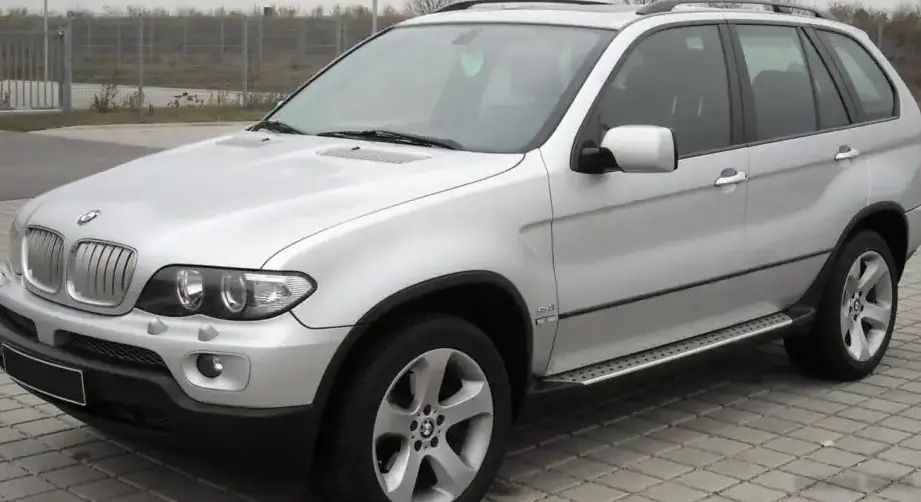
The BMW X5 (E53 LCI), specifically the 3.0i variant with the Steptronic automatic transmission, represents a significant mid-cycle refresh of the first-generation X5. Introduced in 2003 and continuing through 2006, this model aimed to refine the original X5’s design and address some early criticisms while maintaining its position as a luxury sport activity vehicle (SAV). The “LCI” designation (Life Cycle Impulse) denotes a comprehensive facelift, encompassing styling changes, interior upgrades, and mechanical improvements. This 3.0i Steptronic model occupied a middle ground in the X5 lineup, offering a balance between performance and affordability compared to the higher-output 4.4i and the later diesel offerings.
Technical Specifications
| Brand | BMW |
| Model | X5 |
| Generation | X5 (E53 LCI, facelift 2003) |
| Type (Engine) | 3.0i (231 Hp) Steptronic |
| Start of production | 2003 |
| End of production | 2006 |
| Powertrain Architecture | Internal Combustion engine |
| Body type | SUV |
| Seats | 5 |
| Doors | 5 |
| Fuel consumption (economy) – urban | 18.1 l/100 km (13 US mpg, 15.6 UK mpg, 5.5 km/l) |
| Fuel consumption (economy) – extra urban | 9.9 l/100 km (23.8 US mpg, 28.5 UK mpg, 10.1 km/l) |
| Fuel Type | Petrol (Gasoline) |
| Acceleration 0 – 100 km/h | 8.8 sec |
| Acceleration 0 – 62 mph | 8.8 sec |
| Acceleration 0 – 60 mph | 8.4 sec |
| Maximum speed | 210 km/h (130.49 mph) |
| Weight-to-power ratio | 8.7 kg/Hp, 114.4 Hp/tonne |
| Weight-to-torque ratio | 6.7 kg/Nm, 148.5 Nm/tonne |
| Power | 231 Hp @ 5900 rpm |
| Power per litre | 77.5 Hp/l |
| Torque | 300 Nm @ 3500 rpm (221.27 lb.-ft. @ 3500 rpm) |
| Engine layout | Front, Longitudinal |
| Engine Model/Code | M54B30 |
| Engine displacement | 2979 cm3 (181.79 cu. in.) |
| Number of cylinders | 6 |
| Engine configuration | Inline |
| Cylinder Bore | 84 mm (3.31 in.) |
| Piston Stroke | 89.6 mm (3.53 in.) |
| Compression ratio | 10.2:1 |
| Number of valves per cylinder | 4 |
| Fuel injection system | Multi-port manifold injection |
| Engine aspiration | Naturally aspirated engine |
| Engine oil capacity | 6.5 l (6.87 US qt | 5.72 UK qt) |
| Coolant | 10.5 l (11.1 US qt | 9.24 UK qt) |
| Kerb Weight | 2020 kg (4453.34 lbs.) |
| Max. weight | 2620 kg (5776.11 lbs.) |
| Max load | 600 kg (1322.77 lbs.) |
| Trunk (boot) space – minimum | 465 l (16.42 cu. ft.) |
| Trunk (boot) space – maximum | 1550 l (54.74 cu. ft.) |
| Fuel tank capacity | 93 l (24.57 US gal | 20.46 UK gal) |
| Max. roof load | 100 kg (220.46 lbs.) |
| Permitted trailer load with brakes (8%) | 2700 kg (5952.48 lbs.) |
| Permitted trailer load with brakes (12%) | 2300 kg (5070.63 lbs.) |
| Permitted trailer load without brakes | 750 kg (1653.47 lbs.) |
| Permitted towbar download | 120 kg (264.55 lbs.) |
| Length | 4667 mm (183.74 in.) |
| Width | 1872 mm (73.7 in.) |
| Width including mirrors | 2180 mm (85.83 in.) |
| Height | 1715 mm (67.52 in.) |
| Wheelbase | 2820 mm (111.02 in.) |
| Front track | 1576 mm (62.05 in.) |
| Rear (Back) track | 1576 mm (62.05 in.) |
| Ride height (ground clearance) | 203 mm (7.99 in.) |
| Drive wheel | All wheel drive (4×4) |
| Number of gears and type of gearbox | 6 gears, automatic transmission |
| Front suspension | Double wishbone |
| Rear suspension | Independent multi-link suspension |
| Front brakes | Ventilated discs |
| Rear brakes | Disc |
| Assisting systems | ABS (Anti-lock braking system) |
| Steering type | Steering rack and pinion |
| Tires size | 235/65 R17 |
| Wheel rims size | 17 |
INTRODUCTION
The E53 BMW X5, launched in 1999, was BMW’s first foray into the burgeoning SUV market. The 2003 LCI update brought a more refined aesthetic, with revised headlights, taillights, and front/rear bumpers. The 3.0i Steptronic model, powered by the M54B30 engine, was a popular choice for buyers seeking a blend of luxury, capability, and reasonable running costs. It slotted in below the more powerful 4.4i and offered a more accessible entry point into the X5 range than the later, more expensive models. This variant was primarily sold in North America, Europe, and select Asian markets.
Powertrain & Engine Architecture
At the heart of the 3.0i Steptronic lies the M54B30, a 3.0-liter inline-six engine. This engine is a naturally aspirated powerplant known for its smooth operation and relatively simple design. It utilizes a double-VANOS variable valve timing system for both intake and exhaust valves, optimizing performance and efficiency across the rev range. Fuel delivery is managed by a multi-port fuel injection system. The M54 engine is renowned for its durability, but preventative maintenance, particularly regarding cooling system components, is crucial. The “Steptronic” transmission is a 5-speed automatic gearbox, offering both fully automatic operation and a manual shift mode. This transmission was known for its smooth shifts, but some units experienced issues with the torque converter or valve body over time.
Driving Characteristics
The 3.0i Steptronic offered a comfortable and capable driving experience. With 231 horsepower and 221 lb-ft of torque, acceleration from 0-60 mph took around 8.4 seconds, which was respectable for the time. However, it wasn’t a particularly sporty performer compared to the 4.4i. The automatic transmission, while smooth, did detract slightly from the engine’s responsiveness. The gear ratios were tuned for comfort and fuel economy rather than outright performance. In real-world driving, the 3.0i felt adequate for most situations, providing sufficient power for highway cruising and everyday commuting. The all-wheel-drive system provided excellent traction in various weather conditions.
Equipment & Trim Levels
The 3.0i Steptronic came standard with a generous array of features, including leather upholstery, power-adjustable front seats, automatic climate control, a premium sound system, and alloy wheels. Optional extras included a sunroof, navigation system, heated seats, and upgraded interior trim. The LCI update also brought improvements to the interior materials and design, creating a more upscale ambiance. Trim levels were relatively simple, with most options being added individually. The standard interior color schemes included gray, black, and beige leather options.
Chassis & Braking
The X5 E53 featured a robust chassis with a double wishbone front suspension and an independent multi-link rear suspension. This setup provided a comfortable ride while maintaining good handling characteristics. The 3.0i models typically came equipped with ventilated disc brakes at the front and solid disc brakes at the rear. Anti-lock brakes (ABS) were standard. The suspension was tuned for a balance between comfort and control, leaning towards the former. Stabilizer bars were fitted front and rear to reduce body roll during cornering.
Market Reception & Comparison
The X5 3.0i Steptronic was generally well-received by critics. It was praised for its comfortable ride, spacious interior, and refined engine. However, some reviewers noted that the automatic transmission could feel sluggish at times, and the overall driving experience wasn’t as engaging as some of its competitors. Compared to the 4.4i, the 3.0i offered better fuel economy and a lower price point, making it a more practical choice for many buyers. The 3.0i also proved to be more reliable than the later diesel variants, which were prone to certain issues.
Legacy
The BMW X5 E53, including the 3.0i Steptronic, remains a popular choice in the used car market. The M54B30 engine is known for its longevity, but regular maintenance is essential to prevent issues. Common problem areas include the cooling system (water pump and thermostat housing), the VANOS system, and the automatic transmission. Despite these potential issues, the X5 E53 offers a compelling combination of luxury, capability, and affordability, making it a desirable SUV for those seeking a well-rounded vehicle.