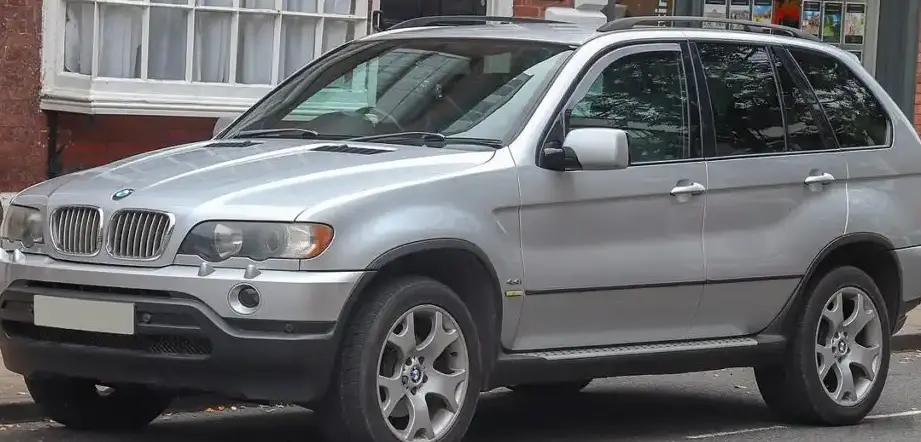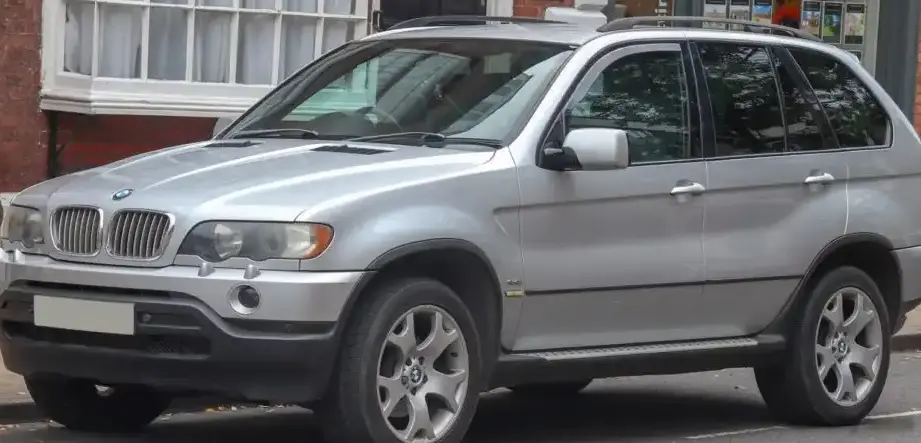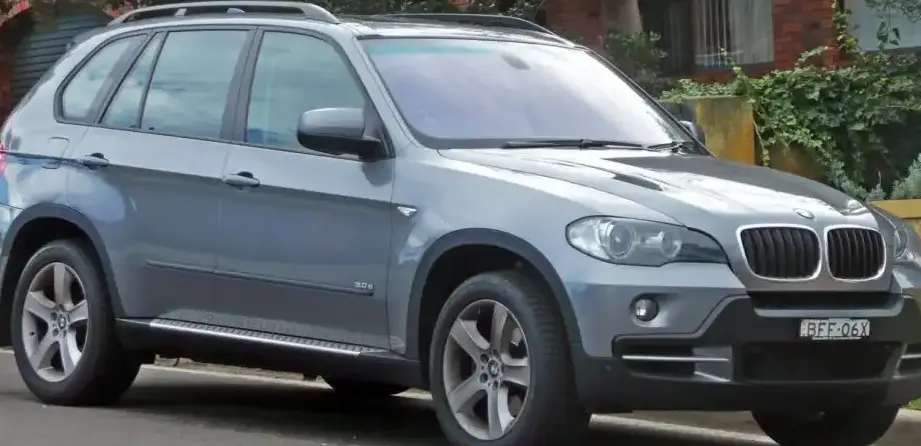
The BMW X5 (E70) 30d xDrive Steptronic, produced from 2009 to 2010, represented a key offering in BMW’s second-generation X5 lineup. Positioned as a diesel-powered, mid-range variant, it aimed to balance fuel efficiency with the X5’s established luxury and all-weather capability. This model utilized BMW’s xDrive all-wheel-drive system and a six-speed automatic transmission, making it a popular choice in European markets where diesel engines were favored. The E70 X5, overall, was BMW’s attempt to create a more road-focused, luxurious SUV compared to its predecessor, and the 30d trim played a significant role in broadening its appeal.
Technical Specifications
| Brand | BMW |
| Model | X5 |
| Generation | X5 (E70) |
| Type (Engine) | 30d (235 Hp) xDrive Steptronic DPF |
| Start of production | 2009 |
| End of production | 2010 |
| Powertrain Architecture | Internal Combustion engine |
| Body type | SUV |
| Seats | 5 |
| Doors | 5 |
| Fuel consumption (economy) – urban | 10.4 l/100 km (22.6 US mpg, 27.2 UK mpg, 9.6 km/l) |
| Fuel consumption (economy) – extra urban | 7 l/100 km (33.6 US mpg, 40.4 UK mpg, 14.3 km/l) |
| Fuel consumption (economy) – combined | 8.2 l/100 km (28.7 US mpg, 34.4 UK mpg, 12.2 km/l) |
| CO2 emissions | 217 g/km |
| Fuel Type | Diesel |
| Acceleration 0 – 100 km/h | 8.1 sec |
| Acceleration 0 – 62 mph | 8.1 sec |
| Acceleration 0 – 60 mph | 7.7 sec |
| Maximum speed | 216 km/h (134.22 mph) |
| Emission standard | Euro 4 |
| Weight-to-power ratio | 8.8 kg/Hp, 113.3 Hp/tonne |
| Weight-to-torque ratio | 4 kg/Nm, 250.6 Nm/tonne |
| Power | 235 Hp @ 4000 rpm |
| Power per litre | 78.5 Hp/l |
| Torque | 520 Nm @ 2000-2750 rpm (383.53 lb.-ft. @ 2000-2750 rpm) |
| Engine layout | Front, Longitudinal |
| Engine Model/Code | M57D30TU2 |
| Engine displacement | 2993 cm3 (182.64 cu. in.) |
| Number of cylinders | 6 |
| Engine configuration | Inline |
| Cylinder Bore | 84 mm (3.31 in.) |
| Piston Stroke | 90 mm (3.54 in.) |
| Compression ratio | 17:1 |
| Number of valves per cylinder | 4 |
| Fuel injection system | Diesel Commonrail |
| Engine aspiration | Turbocharger, Intercooler |
| Engine oil capacity | 7.5 l (7.93 US qt | 6.6 UK qt) |
| Coolant | 10.4 l (10.99 US qt | 9.15 UK qt) |
| Kerb Weight | 2075 kg (4574.59 lbs.) |
| Max. weight | 2755 kg (6073.74 lbs.) |
| Max load | 680 kg (1499.14 lbs.) |
| Trunk (boot) space – minimum | 620 l (21.9 cu. ft.) |
| Trunk (boot) space – maximum | 1750 l (61.8 cu. ft.) |
| Fuel tank capacity | 85 l (22.45 US gal | 18.7 UK gal) |
| Max. roof load | 100 kg (220.46 lbs.) |
| Permitted trailer load with brakes (12%) | 3500 kg (7716.18 lbs.) |
| Permitted trailer load without brakes | 750 kg (1653.47 lbs.) |
| Permitted towbar download | 120 kg (264.55 lbs.) |
| Length | 4854 mm (191.1 in.) |
| Width | 1933 mm (76.1 in.) |
| Height | 1739 mm (68.46 in.) |
| Wheelbase | 2933 mm (115.47 in.) |
| Front track | 1644 mm (64.72 in.) |
| Rear (Back) track | 1650 mm (64.96 in.) |
| Ride height (ground clearance) | 222 mm (8.74 in.) |
| Drag coefficient (Cd) | 0.34 |
| Minimum turning circle (turning diameter) | 12.8 m (41.99 ft.) |
| Approach angle | 25.8° |
| Departure angle | 23.1° |
| Ramp-over (brakeover) angle | 19.8° |
| Wading depth | 500 mm (19.69 in.) |
| Drive wheel | All wheel drive (4×4) |
| Number of gears and type of gearbox | 6 gears, automatic transmission |
| Front suspension | Double wishbone |
| Rear suspension | Independent multi-link suspension |
| Front brakes | Ventilated discs |
| Rear brakes | Ventilated discs |
| Assisting systems | ABS (Anti-lock braking system) |
| Steering type | Steering rack and pinion |
Powertrain & Engine Architecture
The heart of the X5 30d was the M57D30TU2, a 3.0-liter inline-six diesel engine. This engine was a further development of BMW’s well-regarded M57 series, known for its durability and refinement. The ‘TU2’ designation indicates an updated version with improvements to fuel injection and turbocharging. It employed a second-generation common rail direct injection system, delivering fuel at extremely high pressures for optimized combustion. The turbocharger, coupled with an intercooler, boosted power and torque significantly. The engine featured four valves per cylinder and a robust cast iron block. The six-speed automatic transmission, known as the Steptronic, was designed to provide smooth and efficient gear changes. It featured adaptive shift programs that adjusted to the driver’s style and road conditions.
Driving Characteristics
The X5 30d with the automatic transmission offered a comfortable and capable driving experience. While not as overtly sporty as the gasoline-powered X5 variants, it provided ample torque – 520 Nm (383 lb-ft) – from low engine speeds, making it effortless for everyday driving and towing. The automatic transmission, while smooth, wasn’t particularly quick to shift, and some drivers preferred the more engaging experience of the manual gearbox available in other X5 models. Acceleration from 0-60 mph took around 7.7 seconds, respectable for a large SUV. The xDrive all-wheel-drive system provided excellent traction in all weather conditions, enhancing stability and confidence. The gear ratios were tuned for fuel efficiency and relaxed cruising, rather than outright performance.
Equipment & Trim Levels
The X5 30d typically came well-equipped, reflecting BMW’s premium positioning. Standard features included leather upholstery, automatic climate control, a multi-function steering wheel, and a high-fidelity audio system. Optional extras were plentiful, including navigation, heated seats, a panoramic sunroof, and advanced driver-assistance systems like adaptive cruise control and lane departure warning. The interior design was characterized by BMW’s typical focus on ergonomics and build quality. Trim levels varied depending on the market, but generally offered increasing levels of luxury and technology.
Chassis & Braking
The E70 X5 featured a robust chassis with a double wishbone front suspension and an independent multi-link rear suspension. This setup provided a good balance between ride comfort and handling precision. The 30d model typically came with ventilated disc brakes on all four wheels, providing ample stopping power. Anti-lock braking system (ABS) was standard, along with electronic stability control (DSC). The suspension was tuned to prioritize comfort, but still offered a reasonably controlled driving experience. Stabilizer bars were fitted front and rear to reduce body roll during cornering.
Market Reception & Comparison
The X5 30d was generally well-received by automotive critics, particularly in Europe. It was praised for its fuel efficiency, comfortable ride, and spacious interior. However, some reviewers noted that the automatic transmission could feel sluggish at times, and that the diesel engine, while powerful, lacked the refinement of some of its competitors. Compared to the X5 3.0si (gasoline), the 30d offered significantly better fuel economy but less outright performance. Against other diesel SUVs of the time, such as the Porsche Cayenne Diesel, the X5 30d offered a compelling combination of luxury, practicality, and value.
Legacy
The M57D30TU2 engine proved to be remarkably durable, and well-maintained examples of the X5 30d continue to be relatively reliable vehicles today. However, as with any older vehicle, preventative maintenance is crucial. Common issues include wear and tear on the turbocharger, potential problems with the diesel particulate filter (DPF), and occasional issues with the automatic transmission. On the used car market, the X5 30d represents a relatively affordable entry point into BMW’s luxury SUV range. Its fuel efficiency and all-weather capability continue to make it a practical choice for buyers seeking a capable and comfortable vehicle.