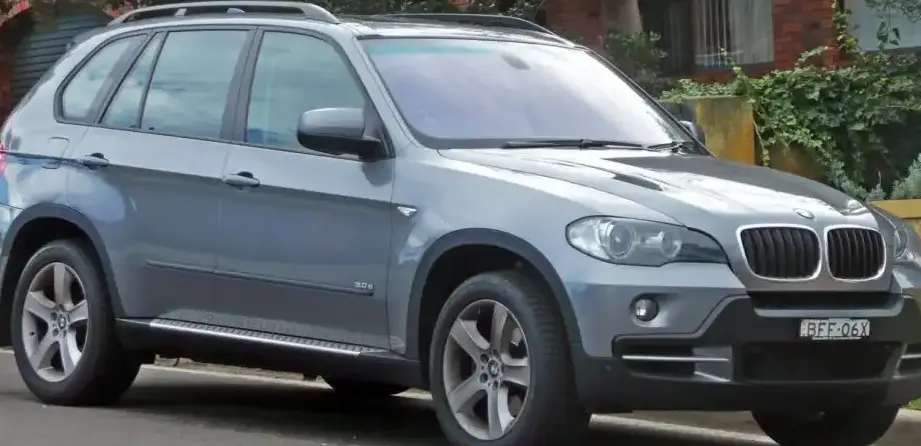
The BMW X5 (E70) 35d xDrive Steptronic, produced from 2009 to 2010, represented a significant offering in the mid-size luxury SUV segment. Positioned as a diesel-powered variant within the second generation E70 X5 lineup, it aimed to balance performance, fuel efficiency, and practicality for European and increasingly, North American buyers. This model utilized BMW’s advanced diesel technology and all-wheel-drive system to deliver a refined driving experience. It sat in the mid-range of the X5 offerings, offering a step up in performance from the xDrive30d while remaining more accessible than the flagship xDrive50i.
Technical Specifications
| Brand | BMW |
| Model | X5 |
| Generation | X5 (E70) |
| Type (Engine) | 35d (286 Hp) xDrive Steptronic DPF |
| Start of production | 2009 |
| End of production | 2010 |
| Powertrain Architecture | Internal Combustion engine |
| Body type | SUV |
| Seats | 5 |
| Doors | 5 |
| Fuel consumption (urban) | 10.5 l/100 km (22.4 US mpg, 26.9 UK mpg, 9.5 km/l) |
| Fuel consumption (extra urban) | 7.1 l/100 km (33.1 US mpg, 39.8 UK mpg, 14.1 km/l) |
| Fuel consumption (combined) | 8.3 l/100 km (28.3 US mpg, 34 UK mpg, 12 km/l) |
| CO2 emissions | 220 g/km |
| Fuel Type | Diesel |
| Acceleration 0 – 100 km/h | 7 sec |
| Acceleration 0 – 62 mph | 7 sec |
| Acceleration 0 – 60 mph | 6.7 sec |
| Maximum speed | 216 km/h (134.22 mph) |
| Emission standard | Euro 4 |
| Weight-to-power ratio | 7.4 kg/Hp, 135.5 Hp/tonne |
| Weight-to-torque ratio | 3.6 kg/Nm, 274.9 Nm/tonne |
| Power | 286 Hp @ 4400 rpm |
| Torque | 580 Nm @ 1750-2250 rpm (427.79 lb.-ft. @ 1750-2250 rpm) |
| Engine layout | Front, Longitudinal |
| Engine Model/Code | M57D30TU2 |
| Engine displacement | 2993 cm3 (182.64 cu. in.) |
| Number of cylinders | 6 |
| Engine configuration | Inline |
| Cylinder Bore | 84 mm (3.31 in.) |
| Piston Stroke | 90 mm (3.54 in.) |
| Compression ratio | 17:1 |
| Number of valves per cylinder | 4 |
| Fuel injection system | Diesel Commonrail |
| Engine aspiration | Twin-power turbo, Intercooler |
| Engine oil capacity | 7.5 l (7.93 US qt | 6.6 UK qt) |
| Coolant | 10.4 l (10.99 US qt | 9.15 UK qt) |
| Kerb Weight | 2110 kg (4651.75 lbs.) |
| Max. weight | 2790 kg (6150.9 lbs.) |
| Max load | 680 kg (1499.14 lbs.) |
| Trunk (boot) space – minimum | 620 l (21.9 cu. ft.) |
| Trunk (boot) space – maximum | 1750 l (61.8 cu. ft.) |
| Fuel tank capacity | 85 l (22.45 US gal | 18.7 UK gal) |
| Max. roof load | 100 kg (220.46 lbs.) |
| Permitted trailer load with brakes (12%) | 3500 kg (7716.18 lbs.) |
| Permitted trailer load without brakes | 750 kg (1653.47 lbs.) |
| Permitted towbar download | 120 kg (264.55 lbs.) |
| Length | 4854 mm (191.1 in.) |
| Width | 1933 mm (76.1 in.) |
| Height | 1739 mm (68.46 in.) |
| Wheelbase | 2933 mm (115.47 in.) |
| Front track | 1558 mm (61.34 in.) |
| Rear (Back) track | 1581 mm (62.24 in.) |
| Ride height (ground clearance) | 222 mm (8.74 in.) |
| Drag coefficient (Cd) | 0.34 |
| Minimum turning circle (turning diameter) | 12.8 m (41.99 ft.) |
| Approach angle | 25.8° |
| Departure angle | 23.1° |
| Ramp-over (brakeover) angle | 19.8° |
| Wading depth | 500 mm (19.69 in.) |
| Drive wheel | All wheel drive (4×4) |
| Number of gears and type of gearbox | 6 gears, automatic transmission |
| Front suspension | Double wishbone |
| Rear suspension | Independent multi-link suspension |
| Front brakes | Ventilated discs |
| Rear brakes | Ventilated discs |
Powertrain & Engine Architecture
The heart of the X5 35d was the M57D30TU2, a 3.0-liter inline-six diesel engine. This engine was a product of BMW’s extensive diesel development program, featuring common-rail direct injection and a variable geometry turbocharger. The ‘TU2’ designation indicated an updated version of the M57 engine family, incorporating improvements to fuel efficiency and emissions. The engine produced 286 horsepower at 4400 rpm and a substantial 427.79 lb-ft of torque between 1750 and 2250 rpm. This torque output was a key characteristic, providing strong acceleration and effortless cruising. The engine also featured an intercooler to further enhance performance. The six-speed Steptronic automatic transmission was specifically tuned to complement the diesel engine’s torque curve, offering smooth shifts and responsive performance. The transmission allowed for manual gear selection, providing drivers with greater control when desired.
Driving Characteristics
The X5 35d xDrive Steptronic offered a compelling blend of performance and efficiency. The high torque output of the diesel engine meant that the vehicle felt strong and responsive in everyday driving situations. Acceleration from 0-60 mph took approximately 6.7 seconds, which was respectable for a vehicle of its size and weight. The automatic transmission contributed to a relaxed driving experience, particularly on long journeys. Compared to the gasoline-powered X5 35i, the 35d offered superior fuel economy and a more relaxed driving experience, albeit with slightly less outright horsepower. The xDrive all-wheel-drive system provided excellent traction in all weather conditions, enhancing stability and control.
Equipment & Trim Levels
The X5 35d typically came well-equipped as standard. Common features included leather upholstery, power-adjustable front seats with memory function, automatic climate control, a premium sound system, and BMW’s iDrive infotainment system. Optional extras included navigation, rear-seat entertainment, panoramic sunroof, and adaptive suspension. The interior design was typical of BMW at the time, emphasizing quality materials and a driver-focused layout. Trim levels were relatively limited, with most customization options available through individual selections rather than distinct packages.
Chassis & Braking
The E70 X5 featured a robust chassis with a double wishbone front suspension and an independent multi-link rear suspension. This setup provided a comfortable ride while maintaining good handling characteristics. The X5 35d was equipped with ventilated disc brakes on all four wheels, providing ample stopping power. Anti-lock braking system (ABS) and stability control were standard features, enhancing safety. The suspension was tuned to balance comfort and handling, offering a composed ride even on uneven surfaces.
Market Reception & Comparison
The X5 35d was generally well-received by automotive critics. It was praised for its fuel efficiency, strong torque output, and comfortable ride. However, some reviewers noted that the diesel engine could be somewhat noisy compared to gasoline engines. Compared to the X5 35i, the 35d offered better fuel economy and a more relaxed driving experience, making it a popular choice for drivers who prioritized efficiency and long-distance comfort. Against competitors like the Porsche Cayenne Diesel and the Mercedes-Benz ML350 CDI, the X5 35d held its own in terms of performance, features, and overall refinement.
Legacy
The M57D30TU2 engine proved to be a reliable and durable powerplant, and well-maintained examples of the X5 35d continue to be sought after in the used car market. While diesel vehicles have faced increased scrutiny in recent years due to emissions concerns, the X5 35d remains a capable and efficient SUV. Common maintenance items include regular oil changes, filter replacements, and occasional attention to the turbocharger and fuel injection system. The Steptronic automatic transmission is generally reliable, but proper fluid changes are essential for long-term durability. Overall, the X5 35d represents a well-engineered and refined SUV that continues to offer a compelling ownership experience.