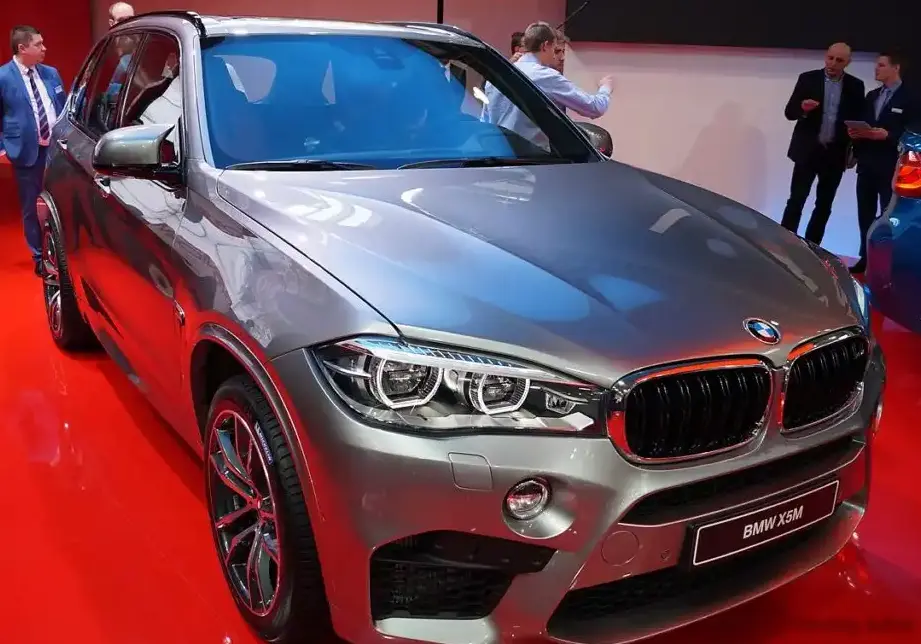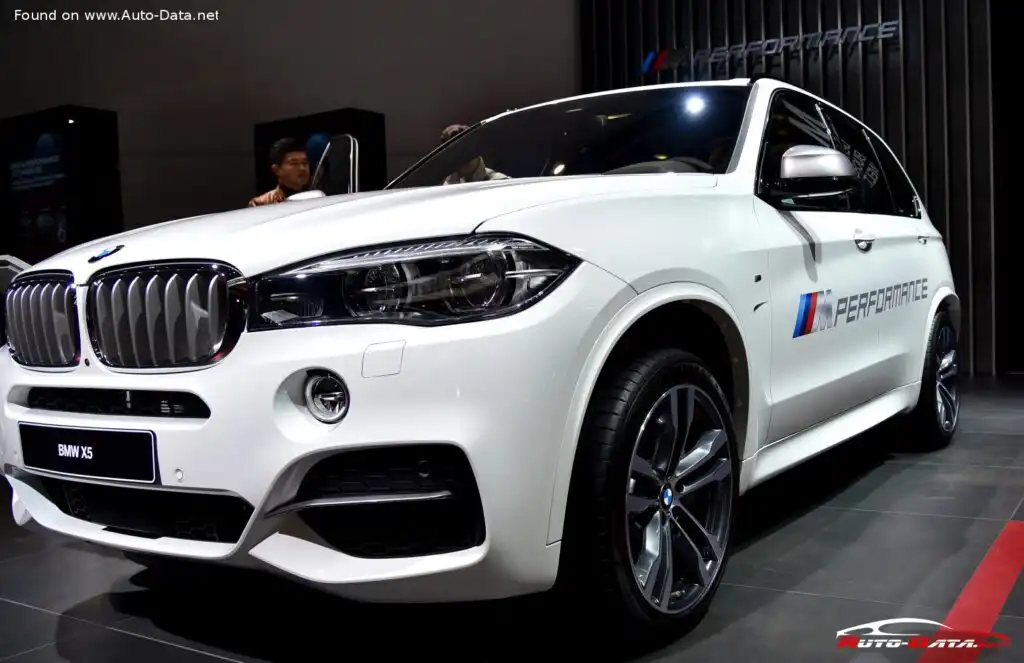
The BMW X5 (F15) 35d xDrive Steptronic, produced from August 2013 to 2018, represents a significant iteration of BMW’s popular Sports Activity Vehicle (SAV). This variant, powered by a 3.0-liter inline-six diesel engine producing 255 horsepower, occupied a crucial mid-range position within the F15 X5 lineup, offering a balance between performance, fuel efficiency, and luxury. It served as a compelling alternative to the higher-performance gasoline models and the more economy-focused four-cylinder diesels, appealing to buyers seeking a refined and capable SUV for both daily driving and long-distance travel. The F15 generation marked a shift towards increased size and weight compared to its predecessor, the E70, and the 35d model was designed to manage this increased mass effectively while delivering a premium driving experience.
Technical Specifications
| Brand | BMW |
| Model | X5 |
| Generation | X5 (F15) |
| Type (Engine) | 35d (255 Hp) xDrive Steptronic |
| Start of production | August, 2013 |
| End of production | 2018 |
| Powertrain Architecture | Internal Combustion engine |
| Body type | SAV |
| Seats | 5 |
| Doors | 5 |
| Fuel consumption (economy) – urban (EPA) | 9.8-10.2 l/100 km (24 – 23.1 US mpg) |
| Fuel consumption (economy) – extra urban (EPA) | 7.6-8.1 l/100 km (30.9 – 29 US mpg) |
| Fuel consumption (economy) – combined (EPA) | 8.7-9.4 l/100 km (27 – 25 US mpg) |
| Fuel Type | Diesel |
| Acceleration 0 – 100 km/h | 6.8 sec |
| Acceleration 0 – 62 mph | 6.8 sec |
| Acceleration 0 – 60 mph | 6.5 sec |
| Maximum speed | 210 km/h (130.49 mph) |
| Emission standard | ULEV II |
| Weight-to-power ratio | 8.7 kg/Hp, 115.3 Hp/tonne |
| Weight-to-torque ratio | 3.9 kg/Nm, 253.3 Nm/tonne |
| Power | 255 Hp @ 4000 rpm |
| Torque | 560 Nm @ 1500-3000 rpm (413.03 lb.-ft. @ 1500-3000 rpm) |
| Engine layout | Front, Longitudinal |
| Engine Model/Code | N57D30O1 |
| Engine displacement | 2993 cm3 (182.64 cu. in.) |
| Number of cylinders | 6 |
| Engine configuration | Inline |
| Cylinder Bore | 84 mm (3.31 in.) |
| Piston Stroke | 90 mm (3.54 in.) |
| Compression ratio | 16.5:1 |
| Number of valves per cylinder | 4 |
| Fuel injection system | Diesel Commonrail |
| Engine aspiration | Twin-power turbo, Intercooler |
| Valvetrain | DOHC |
| Engine oil capacity | 6.5 l (6.87 US qt | 5.72 UK qt) |
| Coolant | 12.6 l (13.31 US qt | 11.09 UK qt) |
| Kerb Weight | 2211-2236 kg (4874.42 – 4929.54 lbs.) |
| Max. weight | 2903 kg (6400.02 lbs.) |
| Max load | 667-692 kg (1470.48 – 1525.6 lbs.) |
| Trunk (boot) space – minimum | 650 l (22.95 cu. ft.) |
| Trunk (boot) space – maximum | 1870 l (66.04 cu. ft.) |
| Fuel tank capacity | 85 l (22.45 US gal | 18.7 UK gal) |
| AdBlue tank | 13.4 l (3.54 US gal | 2.95 UK gal) |
| Max. roof load | 100 kg (220.46 lbs.) |
| Length | 4908 mm (193.23 in.) |
| Width | 1938 mm (76.3 in.) |
| Width including mirrors | 2184 mm (85.98 in.) |
| Height | 1762 mm (69.37 in.) |
| Wheelbase | 2933 mm (115.47 in.) |
| Front track | 1644 mm (64.72 in.) |
| Rear (Back) track | 1650 mm (64.96 in.) |
| Front overhang | 912 mm (35.91 in.) |
| Rear overhang | 1064 mm (41.89 in.) |
| Ride height (ground clearance) | 209 mm (8.23 in.) |
| Drag coefficient (Cd) | 0.33 |
| Minimum turning circle (turning diameter) | 12.7 m (41.67 ft.) |
| Approach angle | 22.2° |
| Departure angle | 20.4° |
| Ramp-over (brakeover) angle | 17.3° |
| Climb angle | 26.6° |
| Wading depth | 500 mm (19.69 in.) |
| Drivetrain Architecture | The Internal combustion engine (ICE) drives permanently the four wheels of the vehicle. |
| Drive wheel | All wheel drive (4×4) |
| Number of gears and type of gearbox | 8 gears, automatic transmission Steptronic |
| Front suspension | Coil spring, Double wishbone, Transverse stabilizer |
| Rear suspension | Independent multi-link spring suspension with stabilizer, Air Suspension – Optional |
| Front brakes | Ventilated discs |
| Rear brakes | Ventilated discs |
Powertrain & Engine Architecture
The heart of the X5 35d is the N57D30O1 engine, a 3.0-liter inline-six diesel. This engine is a product of BMW’s extensive diesel technology development, featuring a common-rail direct injection system operating at extremely high pressures (2,000 bar) for optimized combustion. The N57 engine family is renowned for its robust construction and efficiency. The 35d variant utilizes a twin-turbocharger setup – a small, variable geometry turbocharger for quick response at low engine speeds, and a larger turbocharger for increased power at higher RPMs. This configuration effectively mitigates turbo lag and delivers a broad, usable torque curve. The engine also incorporates an intercooler to further enhance performance by cooling the intake air. The eight-speed Steptronic automatic transmission is a crucial component, offering smooth and efficient gear changes. It’s programmed to prioritize fuel economy while still providing responsive shifts when needed. The transmission features adaptive learning, adjusting shift points based on the driver’s style.
Driving Characteristics
The X5 35d xDrive Steptronic delivers a refined and capable driving experience. The 560 Nm (413 lb-ft) of torque available from 1500-3000 rpm provides strong acceleration and effortless overtaking. While not as overtly sporty as the gasoline-powered X5 variants, the 35d offers ample power for everyday driving and towing. The eight-speed automatic transmission contributes to a relaxed cruising experience, keeping engine speeds low at highway speeds. The xDrive all-wheel-drive system provides excellent traction in all weather conditions, enhancing stability and control. Compared to the six-cylinder gasoline models, the 35d feels less eager to rev but offers superior fuel economy and a more relaxed demeanor. Against the four-cylinder diesel, the 35d provides a noticeable increase in power and refinement.
Equipment & Trim Levels
The X5 35d typically came well-equipped, reflecting BMW’s premium positioning. Standard features included leather upholstery, power-adjustable front seats with memory function, a premium sound system, automatic climate control, and a comprehensive suite of safety features like ABS, stability control, and multiple airbags. Optional extras included features like a panoramic sunroof, upgraded leather options, a head-up display, adaptive cruise control, and a rear-seat entertainment system. Trim levels varied by market, but generally, the 35d could be upgraded with various packages adding cosmetic and technological enhancements.
Chassis & Braking
The F15 X5 utilizes a robust chassis with a double-wishbone front suspension and a multi-link rear suspension. The 35d model typically featured steel coil springs in the rear, although optional air suspension was available, providing adjustable ride height and improved comfort. The braking system consists of ventilated discs on all four wheels, providing ample stopping power. The electronic stability control system integrates with the xDrive all-wheel-drive system to enhance stability and control during braking and cornering.
Market Reception & Comparison
The X5 35d was generally well-received by automotive critics, praised for its blend of performance, fuel efficiency, and luxury. It was often seen as a sweet spot in the X5 lineup, offering a compelling alternative to both the more expensive gasoline models and the less powerful four-cylinder diesels. Fuel economy was a key strength, consistently achieving around 27-25 US mpg in combined driving. Reliability was generally good, although like any complex vehicle, the X5 35d was not immune to potential issues with the diesel particulate filter and turbocharger.
Legacy
The BMW X5 (F15) 35d xDrive Steptronic remains a popular choice in the used car market. The N57 engine is known for its durability, and with proper maintenance, these vehicles can provide many years of reliable service. However, potential buyers should be aware of the potential for diesel particulate filter issues and the cost of maintaining the complex turbocharger system. The F15 X5 35d represents a well-rounded and capable luxury SUV that continues to offer a compelling combination of performance, efficiency, and comfort.