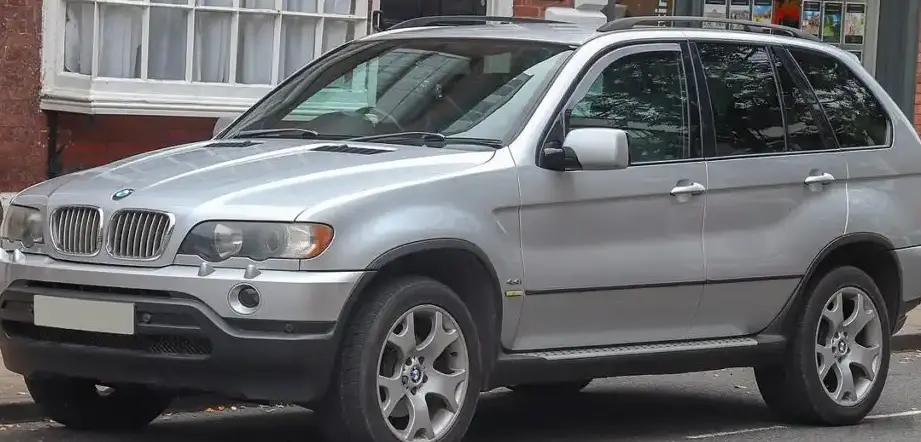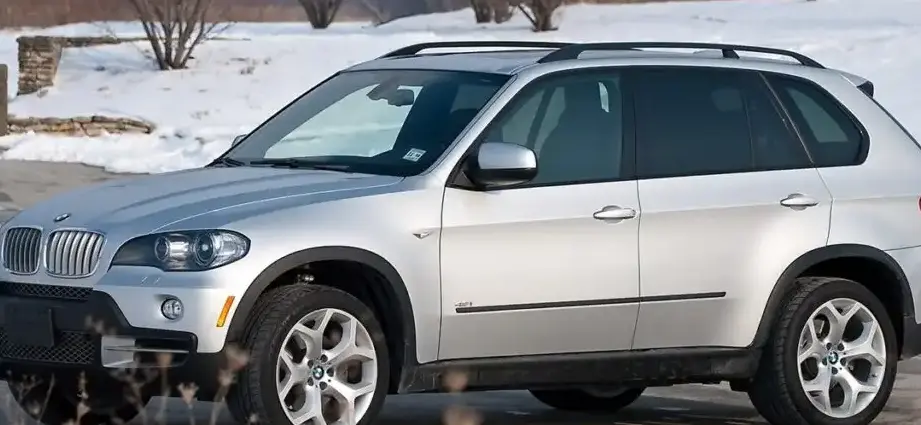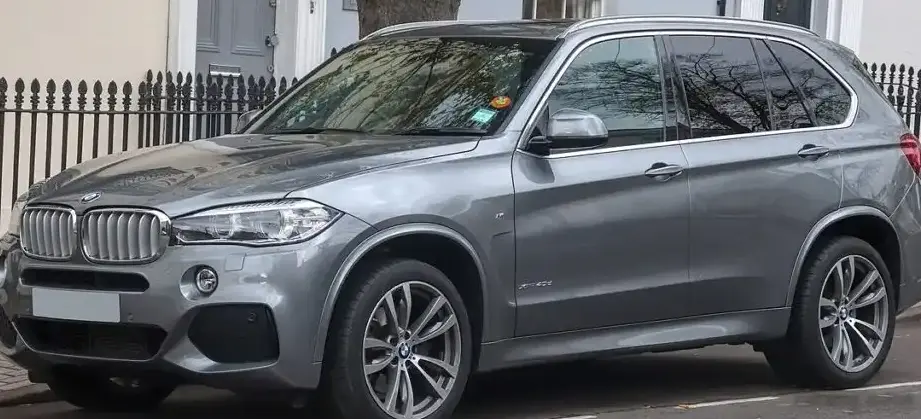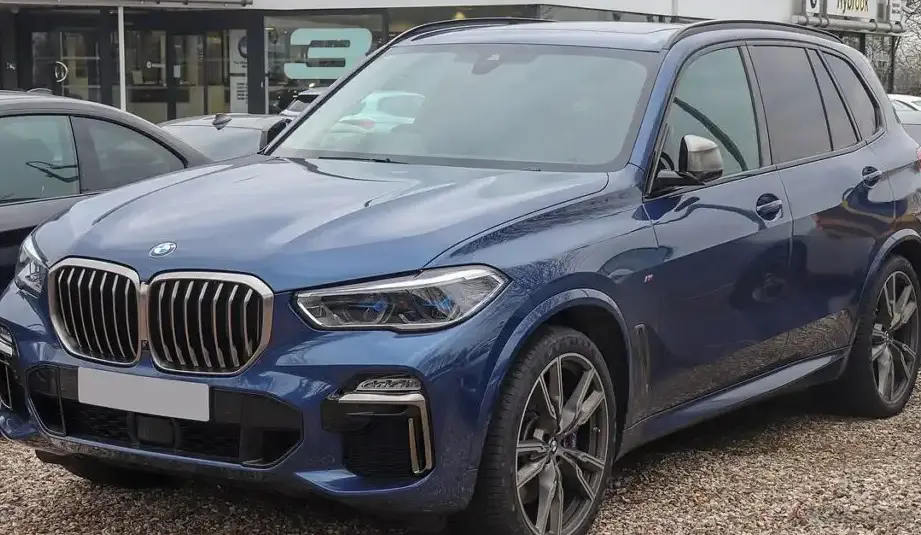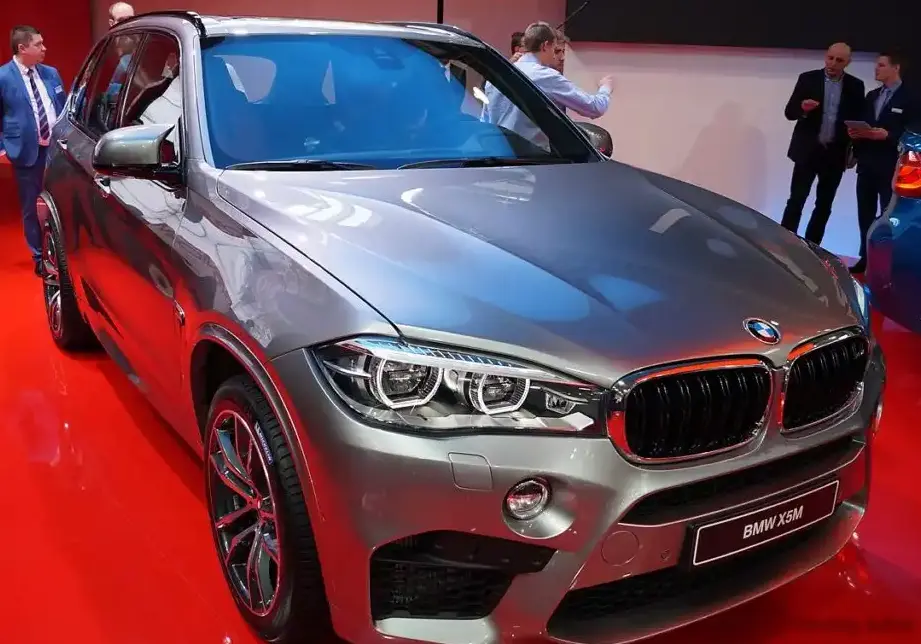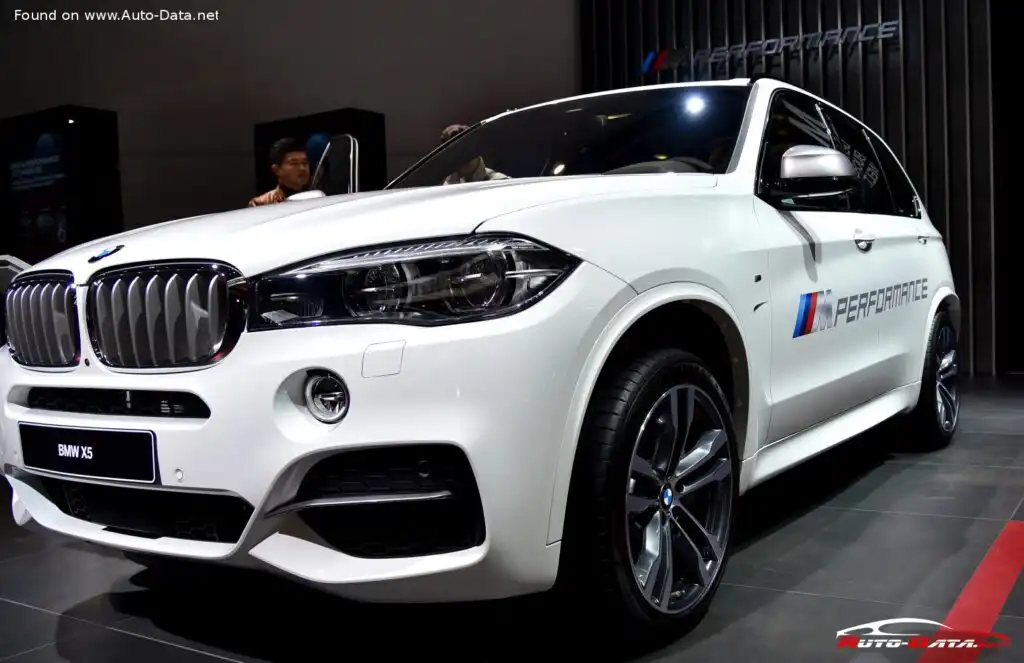
The BMW X5 (F15) 40d xDrive Steptronic, produced from 2013 to 2018, represents a significant iteration of BMW’s popular Sports Activity Vehicle (SAV). Positioned as a mid-range offering within the F15 X5 lineup, it bridged the gap between the entry-level xDrive35i and the high-performance xDrive50i. This variant was primarily aimed at buyers seeking a blend of performance, efficiency, and luxury, offering a compelling alternative to petrol-powered models and serving as a strong competitor in the premium mid-size SUV segment, particularly in European and North American markets. The 40d designation signifies its use of a diesel engine, a popular choice in Europe due to fuel economy and torque characteristics.
Technical Specifications
| Brand | BMW |
| Model | X5 |
| Generation | X5 (F15) |
| Type (Engine) | 40d (313 Hp) xDrive Steptronic |
| Start of production | 2013 |
| End of production | 2018 |
| Powertrain Architecture | Internal Combustion engine |
| Body type | SAV |
| Seats | 5-7 |
| Doors | 5 |
| Fuel consumption (economy) – urban | 7.1-7.2 l/100 km (33.1 – 32.7 US mpg, 39.8 – 39.2 UK mpg, 14.1 – 13.9 km/l) |
| Fuel consumption (economy) – extra urban | 5.8 l/100 km (40.6 US mpg, 48.7 UK mpg, 17.2 km/l) |
| Fuel consumption (economy) – combined | 6.2-6.3 l/100 km (37.9 – 37.3 US mpg, 45.6 – 44.8 UK mpg, 16.1 – 15.9 km/l) |
| CO2 emissions | 164-166 g/km |
| Fuel Type | Diesel |
| Acceleration 0 – 100 km/h | 5.9 sec |
| Acceleration 0 – 62 mph | 5.9 sec |
| Acceleration 0 – 60 mph | 5.6 sec |
| Maximum speed | 236 km/h (146.64 mph) |
| Emission standard | Euro 6 |
| Weight-to-power ratio | 6.7 kg/Hp, 148.3 Hp/tonne |
| Weight-to-torque ratio | 3.3 kg/Nm, 298.6 Nm/tonne |
| Power | 313 Hp @ 4400 rpm |
| Power per litre | 104.6 Hp/l |
| Torque | 630 Nm @ 1500-2500 rpm (464.66 lb.-ft. @ 1500-2500 rpm) |
| Engine layout | Front, Longitudinal |
| Engine Model/Code | N57D30B |
| Engine displacement | 2993 cm3 (182.64 cu. in.) |
| Number of cylinders | 6 |
| Engine configuration | Inline |
| Cylinder Bore | 84 mm (3.31 in.) |
| Piston Stroke | 90 mm (3.54 in.) |
| Compression ratio | 16.5:1 |
| Number of valves per cylinder | 4 |
| Fuel injection system | Diesel Commonrail |
| Engine aspiration | Twin-power turbo, Intercooler |
| Engine oil capacity | 6.5 l (6.87 US qt | 5.72 UK qt) |
| Coolant | 12.6 l (13.31 US qt | 11.09 UK qt) |
| Kerb Weight | 2110 kg (4651.75 lbs.) |
| Max. weight | 2820 kg (6217.04 lbs.) |
| Max load | 710 kg (1565.28 lbs.) |
| Trunk (boot) space – minimum | 650 l (22.95 cu. ft.) |
| Trunk (boot) space – maximum | 1870 l (66.04 cu. ft.) |
| Fuel tank capacity | 85 l (22.45 US gal | 18.7 UK gal) |
| Max. roof load | 100 kg (220.46 lbs.) |
| Permitted trailer load with brakes (12%) | 2700 kg (5952.48 lbs.) |
| Permitted trailer load without brakes | 750 kg (1653.47 lbs.) |
| Permitted towbar download | 140 kg (308.65 lbs.) |
| Length | 4886 mm (192.36 in.) |
| Width | 1938 mm (76.3 in.) |
| Width including mirrors | 2184 mm (85.98 in.) |
| Height | 1762 mm (69.37 in.) |
| Wheelbase | 2933 mm (115.47 in.) |
| Front track | 1644 mm (64.72 in.) |
| Rear (Back) track | 1650 mm (64.96 in.) |
| Front overhang | 890 mm (35.04 in.) |
| Rear overhang | 1063 mm (41.85 in.) |
| Ride height (ground clearance) | 209 mm (8.23 in.) |
| Drag coefficient (Cd) | 0.31 |
| Minimum turning circle (turning diameter) | 12.7 m (41.67 ft.) |
| Approach angle | 25° |
| Departure angle | 20° |
| Ramp-over (brakeover) angle | 20° |
| Wading depth | 500 mm (19.69 in.) |
| Drive wheel | All wheel drive (4×4) |
| Number of gears and type of gearbox | 8 gears, automatic transmission Steptronic |
| Front brakes | Ventilated discs |
| Rear brakes | Ventilated discs |
INTRODUCTION
The F15 BMW X5, launched in 2013, represented the third generation of BMW’s successful SAV. The 40d variant, powered by the N57D30B engine, was a key component of the lineup, particularly in markets where diesel engines were favored. It offered a compelling balance between performance and fuel efficiency, appealing to a broad range of customers. Built on the F15 platform, it shared its underpinnings with other BMW models of the era, including the F30 3 Series and F10 5 Series. The xDrive all-wheel-drive system was standard, enhancing traction and stability in various driving conditions.
Powertrain & Engine Architecture
At the heart of the X5 40d lies the N57D30B, a 3.0-liter inline-six diesel engine. This engine is renowned for its robust construction and sophisticated technology. It features a common-rail direct injection system, delivering fuel at extremely high pressure for optimized combustion. The N57D30B utilizes a variable geometry turbocharger (VGT) and an intercooler to maximize power and torque output. The engine also incorporates BMW’s BlueEfficiency technologies, aimed at reducing emissions and improving fuel economy. Paired with this engine is BMW’s 8-speed Steptronic automatic transmission. This transmission offers smooth and efficient gear changes, contributing to both performance and fuel economy. The Steptronic transmission also features manual shift modes, allowing drivers to take greater control when desired.
Driving Characteristics
The X5 40d delivers a refined and capable driving experience. The 630 Nm (464.66 lb-ft) of torque, available from a low 1500 rpm, provides strong acceleration and effortless overtaking. While not as overtly sporty as the xDrive50i, the 40d offers more than adequate performance for most drivers, achieving 0-60 mph in around 5.6 seconds. The 8-speed automatic transmission contributes to smooth power delivery, and the xDrive all-wheel-drive system provides excellent traction in all weather conditions. Compared to the xDrive35i (powered by a petrol inline-six), the 40d offers significantly more torque and better fuel economy, albeit with a slightly heavier engine. The gear ratios are tuned for a balance of acceleration and cruising efficiency, making it a comfortable long-distance cruiser.
Equipment & Trim Levels
The X5 40d typically came well-equipped as standard. Common features included leather upholstery, power-adjustable front seats with memory function, a premium sound system, automatic climate control, and a navigation system. Optional extras included features like adaptive cruise control, a panoramic sunroof, upgraded leather options, and a rear-seat entertainment system. Trim levels varied by market, but generally offered packages that bundled popular options together. The interior design was typical of BMW at the time, with a driver-focused layout and high-quality materials.
Chassis & Braking
The F15 X5 features a robust chassis with a double-wishbone front suspension and a multi-link rear suspension. This setup provides a comfortable ride while maintaining good handling characteristics. The 40d variant typically came equipped with ventilated disc brakes on all four wheels, providing ample stopping power. Anti-lock braking system (ABS), dynamic stability control (DSC), and traction control were standard safety features. The suspension tuning was generally geared towards comfort, but optional adaptive suspension systems were available, allowing drivers to adjust the ride stiffness.
Market Reception & Comparison
The X5 40d was generally well-received by automotive critics. It was praised for its strong performance, fuel efficiency, and luxurious interior. Compared to its petrol-powered siblings, the 40d offered a more economical option without sacrificing too much performance. It competed directly with other premium mid-size diesel SUVs, such as the Audi Q7 TDI and the Porsche Cayenne Diesel. Reliability was generally good, although some owners reported issues with the diesel particulate filter (DPF) and turbocharger. Fuel economy was a key selling point, with the 40d consistently achieving better MPG figures than the petrol variants.
Legacy
The N57D30B engine has proven to be a durable and reliable powerplant, and the X5 40d remains a popular choice in the used car market. While diesel engines have faced increased scrutiny in recent years, the N57D30B continues to be regarded as one of BMW’s best diesel engines. The F15 X5 40d offers a compelling combination of luxury, performance, and efficiency, making it a desirable option for buyers seeking a premium mid-size SUV. Maintenance costs can be higher than for petrol-powered models due to the complexity of the diesel engine and emissions control systems, but the long-term reliability and fuel economy can offset these costs.