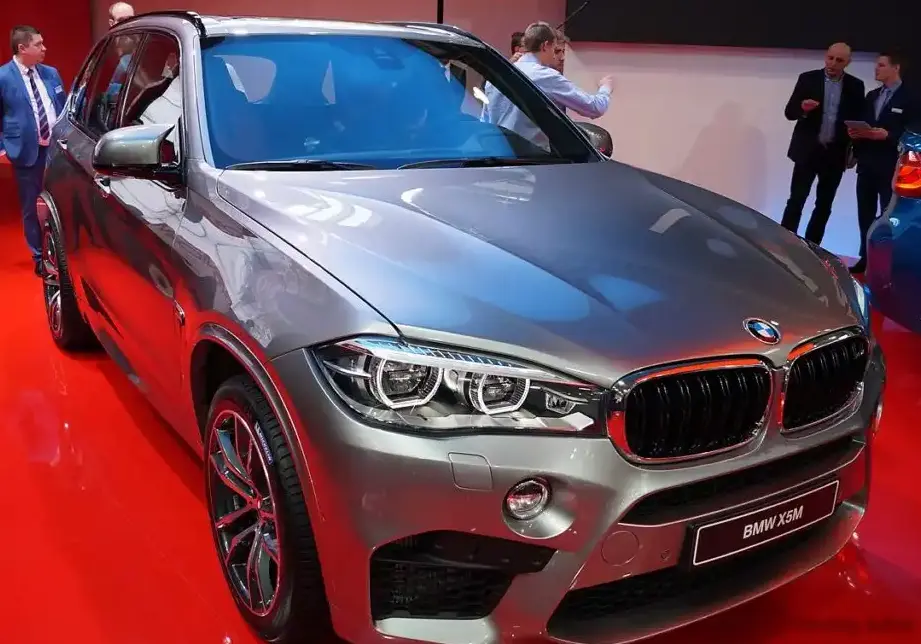
The BMW X5 (G05) M50d, produced from November 2018 to November 2020, represents a performance-oriented variant within the third generation of the X5 Sports Activity Vehicle (SAV). Positioned as a premium offering, the M50d combined a powerful diesel engine with BMW’s xDrive all-wheel-drive system and the Steptronic automatic transmission. It served as a bridge between the more mainstream X5 models and the full-fledged X5 M performance variant, appealing to buyers seeking a blend of luxury, performance, and efficiency. This model was primarily targeted towards the European and international markets, where diesel engines remained popular due to their fuel economy and torque characteristics.
Technical Specifications
| Brand | BMW |
| Model | X5 |
| Generation | X5 (G05) |
| Type (Engine) | M50d (400 Hp) xDrive Steptronic |
| Start of production | November, 2018 |
| End of production | November, 2020 |
| Powertrain Architecture | Internal Combustion engine |
| Body type | SAV |
| Seats | 5 |
| Doors | 5 |
| Combined fuel consumption (WLTP) | 8.3-9.1 l/100 km (28.3 – 25.8 US mpg, 34 – 31 UK mpg, 12 – 11 km/l) |
| CO2 emissions (WLTP) | 216-238 g/km |
| Fuel consumption (economy) – urban (NEDC) | 7.6-8.1 l/100 km (30.9 – 29 US mpg, 37.2 – 34.9 UK mpg, 13.2 – 12.3 km/l) |
| Fuel consumption (economy) – extra urban (NEDC) | 6.3-6.7 l/100 km (37.3 – 35.1 US mpg, 44.8 – 42.2 UK mpg, 15.9 – 14.9 km/l) |
| Fuel consumption (economy) – combined (NEDC) | 6.8-7.2 l/100 km (34.6 – 32.7 US mpg, 41.5 – 39.2 UK mpg, 14.7 – 13.9 km/l) |
| CO2 emissions (NEDC) | 179-190 g/km |
| Fuel Type | Diesel |
| Acceleration 0 – 100 km/h | 5.2 sec |
| Acceleration 0 – 62 mph | 5.2 sec |
| Acceleration 0 – 60 mph | 4.9 sec |
| Maximum speed | 250 km/h (155.34 mph), Electronically limited |
| Emission standard | Euro 6d-TEMP |
| Weight-to-power ratio | 5.7 kg/Hp, 175.8 Hp/tonne |
| Weight-to-torque ratio | 3 kg/Nm, 334.1 Nm/tonne |
| Power | 400 Hp @ 4400 rpm |
| Power per litre | 133.6 Hp/l |
| Torque | 760 Nm @ 2000-3000 rpm (560.55 lb.-ft. @ 2000-3000 rpm) |
| Engine layout | Front, Longitudinal |
| Engine Model/Code | B57D30C |
| Engine displacement | 2993 cm3 (182.64 cu. in.) |
| Number of cylinders | 6 |
| Engine configuration | Inline |
| Cylinder Bore | 84 mm (3.31 in.) |
| Piston Stroke | 90 mm (3.54 in.) |
| Compression ratio | 16:1 |
| Number of valves per cylinder | 4 |
| Fuel injection system | Diesel Commonrail |
| Engine aspiration | Twin-power turbo, Intercooler |
| Valvetrain | DOHC |
| Engine oil capacity | 6.5 l (6.87 US qt | 5.72 UK qt) |
| Coolant | 11.1 l (11.73 US qt | 9.77 UK qt) |
| Kerb Weight | 2275 kg (5015.52 lbs.) |
| Max. weight | 3010 kg (6635.91 lbs.) |
| Max load | 735 kg (1620.4 lbs.) |
| Trunk (boot) space – minimum | 650 l (22.95 cu. ft.) |
| Trunk (boot) space – maximum | 1870 l (66.04 cu. ft.) |
| Fuel tank capacity | 80 l (21.13 US gal | 17.6 UK gal) |
| Max. roof load | 100 kg (220.46 lbs.) |
| Permitted trailer load with brakes (12%) | 2700 kg (5952.48 lbs.) |
| Permitted trailer load without brakes | 750 kg (1653.47 lbs.) |
| Permitted towbar download | 140 kg (308.65 lbs.) |
| Length | 4922 mm (193.78 in.) |
| Width | 2004 mm (78.9 in.) |
| Width including mirrors | 2218 mm (87.32 in.) |
| Height | 1745 mm (68.7 in.) |
| Wheelbase | 2975 mm (117.13 in.) |
| Front track | 1680 mm (66.14 in.) |
| Rear (Back) track | 1687 mm (66.42 in.) |
| Front overhang | 874 mm (34.41 in.) |
| Rear overhang | 1073 mm (42.24 in.) |
| Ride height (ground clearance) | 214 mm (8.43 in.) |
| Drag coefficient (Cd) | 0.32 |
| Minimum turning circle (turning diameter) | 12.6 m (41.34 ft.) |
| Approach angle | 25.2° |
| Departure angle | 22.3° |
| Ramp-over (brakeover) angle | 20.2° |
| Wading depth | 500 mm (19.69 in.) |
| Drivetrain Architecture | The Internal combustion engine (ICE) drives permanently the four wheels of the vehicle. |
| Drive wheel | All wheel drive (4×4) |
| Number of gears and type of gearbox | 8 gears, automatic transmission Steptronic |
| Front suspension | Coil spring, Double wishbone, Transverse stabilizer, Air Suspension – Optional |
| Rear suspension | Independent multi-link spring suspension with stabilizer, Air Suspension – Optional |
| Front brakes | Ventilated discs |
| Rear brakes | Ventilated discs |
| Assisting systems | ABS (Anti-lock braking system) |
| Steering type | Steering rack and pinion |
| Power steering | Electric Steering |
| Tires size | Front wheel tires: 275/40 R21; 275/35 R22 Rear wheel tires: 315/35 R21; 315/30 R22 |
| Wheel rims size | Front wheel rims: 9.5J x 21; 9.5J x 22 Rear wheel rims: 10.5J x 21; 10.5J x 22 |
INTRODUCTION
The BMW X5 M50d (G05) debuted in late 2018 as a high-performance diesel variant of the fourth-generation X5. Built on the Cluster Architecture (CLAR) platform, also known as the G05 platform, it aimed to deliver a compelling combination of luxury, performance, and efficiency. The M50d occupied a niche position within the X5 lineup, offering a significant step up in power and torque compared to the base models, while remaining more accessible and fuel-efficient than the dedicated X5 M performance model. Production continued until November 2020, after which BMW shifted its focus towards gasoline and plug-in hybrid powertrains for the X5 range.
Powertrain & Engine Architecture
At the heart of the X5 M50d lies the B57D30C inline-six cylinder diesel engine, a 3.0-liter (2993 cc) powerplant. This engine is characterized by its sophisticated technology, including a common-rail direct fuel injection system operating at extremely high pressures (2500 bar) for optimized combustion. The engine utilizes a variable geometry turbocharger (VGT) and an additional twin-scroll turbocharger, working in tandem to deliver both strong low-end torque and high-end power. The engine also features a cooled exhaust gas recirculation (EGR) system to reduce NOx emissions and a particulate filter to minimize soot particles. The engine’s valvetrain employs Double Overhead Camshafts (DOHC) and four valves per cylinder. The engine is longitudinally mounted at the front of the vehicle. The engine is paired with BMW’s 8-speed Steptronic automatic transmission, known for its smooth and quick shifts. This transmission features a torque converter and allows for both automatic and manual gear selection via steering wheel-mounted paddles. The transmission is specifically tuned to handle the high torque output of the diesel engine.
Driving Characteristics
The X5 M50d delivers a distinctly different driving experience compared to its gasoline-powered siblings. The substantial 760 Nm (560.55 lb-ft) of torque, available from as low as 2000 rpm, provides effortless acceleration and strong pulling power in any gear. While the 0-60 mph time of around 4.9 seconds is impressive for a large SUV, the M50d’s strength lies in its mid-range acceleration and ability to maintain high speeds with ease. The Steptronic transmission is well-matched to the engine, providing smooth and responsive shifts. Compared to the X5 xDrive40i (gasoline), the M50d offers superior fuel economy and a more relaxed driving experience on long journeys. However, the gasoline engine provides a higher revving character and a more traditional sporty sound. The xDrive all-wheel-drive system ensures excellent traction and stability in all weather conditions, contributing to confident handling.
Equipment & Trim Levels
The M50d trim level came standard with a comprehensive array of luxury and technology features. Standard interior appointments included premium leather upholstery, power-adjustable front seats with memory function, and a panoramic sunroof. The infotainment system featured a 12.3-inch touchscreen display with BMW’s iDrive controller, navigation, and Apple CarPlay compatibility. Standard safety features included automatic emergency braking, lane departure warning, and adaptive cruise control. Optional extras included upgraded leather options, a Bowers & Wilkins sound system, rear-seat entertainment, and various driver-assistance packages. The exterior styling of the M50d was subtly enhanced with M Sport styling cues, including unique front and rear bumpers, side skirts, and exhaust outlets.
Chassis & Braking
The X5 M50d’s chassis is designed to provide a balance of comfort and handling. The suspension system utilizes coil springs and double wishbones at the front, and an independent multi-link setup at the rear. Adaptive air suspension was available as an option, allowing the driver to adjust the ride height and damping characteristics. The braking system consists of ventilated discs on all four wheels, providing ample stopping power. The M50d also features BMW’s Dynamic Stability Control (DSC) system, which helps to maintain stability during cornering and emergency maneuvers. The standard wheel and tire sizes were 21-inch, with 22-inch options available.
Market Reception & Comparison
The X5 M50d was generally well-received by automotive critics, who praised its powerful engine, refined ride, and luxurious interior. It was often positioned as a compelling alternative to gasoline-powered performance SUVs, offering a unique blend of performance and efficiency. Compared to the X5 xDrive40i, the M50d offered significantly more torque and a more relaxed driving experience, but at a higher price point. Against competitors like the Porsche Cayenne Diesel, the X5 M50d offered a similar level of performance and luxury, often at a more competitive price. Fuel economy was a key selling point, with the M50d consistently achieving better fuel consumption figures than its gasoline counterparts.
Legacy
The BMW X5 M50d (G05) represents a significant chapter in the evolution of the X5 model line. While BMW has since moved away from offering diesel engines in the X5 in many markets, the M50d remains a sought-after vehicle in the used car market. The B57 engine is known for its durability and reliability, provided it is properly maintained. The combination of performance, luxury, and efficiency continues to appeal to buyers seeking a capable and refined SUV. However, potential buyers should be aware of the potential maintenance costs associated with the complex diesel engine and emissions control systems.