Technical Specifications
| Brand | BMW |
| Model | X5 M |
| Generation | X5 M (E70) |
| Type (Engine) | 4.4 (555 Hp) xDrive Steptronic |
| Start of production | 2010 |
| End of production | 2013 |
| Powertrain Architecture | Internal Combustion engine |
| Body type | SUV |
| Seats | 5 |
| Doors | 5 |
| Fuel consumption (economy) – urban | 19.3 l/100 km (12.2 US mpg, 14.6 UK mpg, 5.2 km/l) |
| Fuel consumption (economy) – extra urban | 10.8 l/100 km (21.8 US mpg, 26.2 UK mpg, 9.3 km/l) |
| Fuel consumption (economy) – combined | 13.9 l/100 km (16.9 US mpg, 20.3 UK mpg, 7.2 km/l) |
| CO2 emissions | 325 g/km |
| Fuel Type | Petrol (Gasoline) |
| Acceleration 0 – 100 km/h | 4.7 sec |
| Acceleration 0 – 62 mph | 4.7 sec |
| Acceleration 0 – 60 mph | 4.5 sec |
| Acceleration 0 – 200 km/h | 16.9 sec |
| Maximum speed | 250 km/h (155.34 mph) |
| Emission standard | Euro 5 |
| Weight-to-power ratio | 4.2 kg/Hp, 240.8 Hp/tonne |
| Weight-to-torque ratio | 3.4 kg/Nm, 295 Nm/tonne |
| Power | 555 Hp @ 6000 rpm |
| Power per litre | 126.3 Hp/l |
| Torque | 680 Nm @ 1500-5650 rpm (501.54 lb.-ft. @ 1500-5650 rpm) |
| Engine layout | Front, Longitudinal |
| Engine Model/Code | S63B44 |
| Engine displacement | 4395 cm3 (268.2 cu. in.) |
| Number of cylinders | 8 |
| Engine configuration | V-engine |
| Cylinder Bore | 89 mm (3.5 in.) |
| Piston Stroke | 88.3 mm (3.48 in.) |
| Compression ratio | 9.3:1 |
| Number of valves per cylinder | 4 |
| Fuel injection system | Direct injection |
| Engine aspiration | Twin-power turbo, Intercooler |
| Valvetrain | DOHC |
| Engine oil capacity | 8.5 l (8.98 US qt | 7.48 UK qt) |
| Coolant | 17 l (17.96 US qt | 14.96 UK qt) |
| Kerb Weight | 2305 kg (5081.66 lbs.) |
| Max. weight | 2905 kg (6404.43 lbs.) |
| Max load | 600 kg (1322.77 lbs.) |
| Trunk (boot) space – minimum | 620 l (21.9 cu. ft.) |
| Trunk (boot) space – maximum | 1750 l (61.8 cu. ft.) |
| Fuel tank capacity | 85 l (22.45 US gal | 18.7 UK gal) |
| Max. roof load | 100 kg (220.46 lbs.) |
| Permitted trailer load with brakes (12%) | 3000 kg (6613.87 lbs.) |
| Permitted trailer load without brakes | 750 kg (1653.47 lbs.) |
| Permitted towbar download | 120 kg (264.55 lbs.) |
| Length | 4851 mm (190.98 in.) |
| Width | 1994 mm (78.5 in.) |
| Height | 1764 mm (69.45 in.) |
| Wheelbase | 2933 mm (115.47 in.) |
| Front track | 1660 mm (65.35 in.) |
| Rear (Back) track | 1672 mm (65.83 in.) |
| Ride height (ground clearance) | 207 mm (8.15 in.) |
| Drag coefficient (Cd) | 0.38 |
| Minimum turning circle (turning diameter) | 12.8 m (41.99 ft.) |
| Approach angle | 22.0° |
| Departure angle | 21.5° |
| Ramp-over (brakeover) angle | 18.6° |
| Drive wheel | All wheel drive (4×4) |
| Number of gears and type of gearbox | 6 gears, automatic transmission |
| Front suspension | Coil spring |
| Rear suspension | Coil spring |
| Front brakes | Ventilated discs |
| Rear brakes | Ventilated discs |
| Assisting systems | ABS (Anti-lock braking system) |
| Steering type | Steering rack and pinion |
| Tires size | 275/40 R20; 315/35 R20 |
| Wheel rims size | 10J x 20; 11J x 20 |
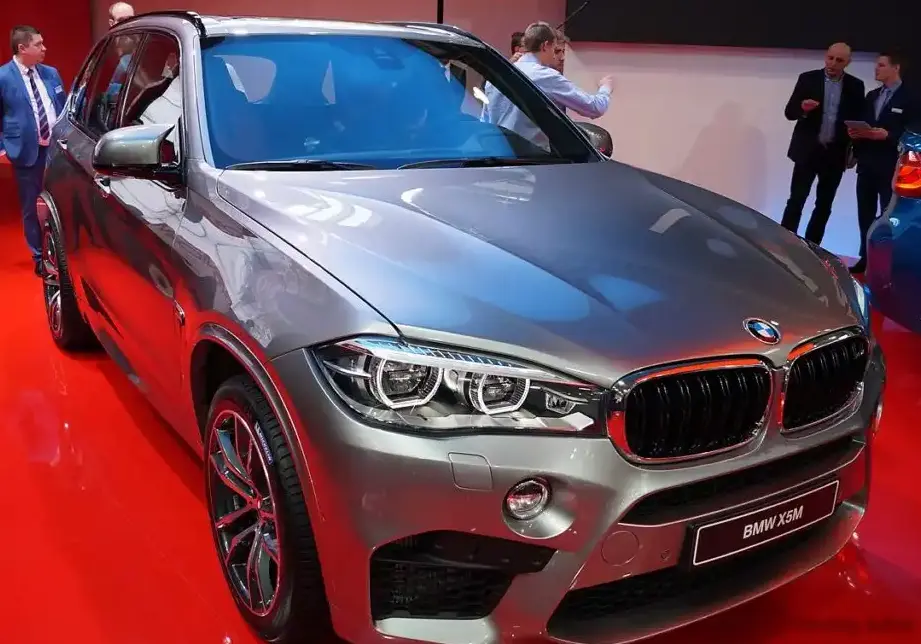
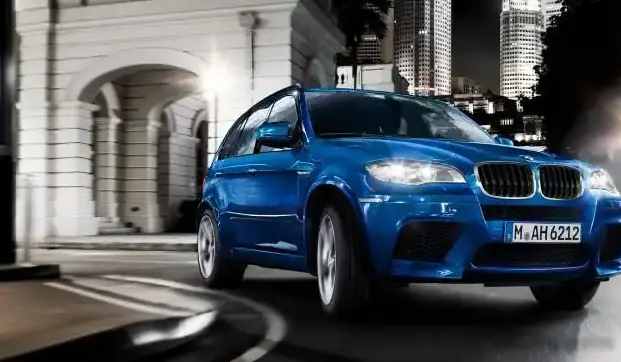
The BMW X5 M (E70), produced from 2010 to 2013, marked a significant step for BMW’s M division, extending its high-performance philosophy to the burgeoning SUV market. Positioned as the flagship of the second-generation X5 lineup, the E70 X5 M aimed to deliver uncompromising performance and a luxurious experience within a practical, family-oriented vehicle. It directly challenged performance SUVs like the Porsche Cayenne Turbo and the Mercedes-Benz ML63 AMG. The sole powertrain option throughout its production run consisted of the 4.4-liter twin-turbocharged V8 engine (S63B44) coupled with a six-speed Steptronic automatic transmission and BMW’s xDrive all-wheel-drive system.
Powertrain & Engine Architecture
The core of the X5 M’s performance is the S63B44 engine, a 4.4-liter twin-turbocharged V8. This engine generates 555 horsepower at 6000 rpm and a substantial 501.54 lb-ft of torque available from 1500 to 5650 rpm. Key features of the S63B44 include direct fuel injection, a 90-degree V-angle, four valves per cylinder, and a double overhead camshaft (DOHC) valvetrain. The twin-turbochargers are strategically positioned within the V-bank, contributing to a more compact engine design and enhancing throttle responsiveness. The six-speed Steptronic automatic transmission was specifically calibrated for the X5 M, offering faster shift times and more aggressive shift patterns compared to the standard X5’s transmission. Paddle shifters were included for manual gear selection, providing drivers with greater control.
Driving Characteristics
The driving experience in the X5 M is dramatically different from that of the standard X5 models. The potent engine and tuned transmission deliver exhilarating acceleration, achieving a 0-60 mph time of approximately 4.5 seconds. The automatic transmission provides smooth operation during normal driving, but quickly adapts to more aggressive settings in Sport mode or when utilizing the paddle shifters. The xDrive all-wheel-drive system ensures excellent traction, particularly in adverse weather conditions, while maintaining a rear-wheel-drive bias for a more engaging driving feel. The suspension is noticeably firmer and more controlled than the standard X5, minimizing body roll and improving handling precision. However, this enhanced performance comes with a slight compromise in ride comfort.
Equipment & Trim Levels
The X5 M came generously equipped, reflecting its status as the top-tier X5 variant. Standard features included leather upholstery, power-adjustable and heated front seats, a premium sound system, a navigation system, and a sunroof. Exterior styling was distinguished by unique M-specific elements, such as aggressive front and rear bumpers, side skirts, and a quad exhaust system. Optional extras included upgraded leather options, a rear-seat entertainment system, and a range of driver-assistance technologies. The interior design emphasized a sporty aesthetic, incorporating aluminum trim and M-specific badging throughout the cabin.
Chassis & Braking
The X5 M’s chassis underwent substantial upgrades compared to the standard X5. The suspension was retuned with stiffer springs, dampers, and stabilizer bars to enhance handling and reduce body roll. The rear suspension incorporated self-leveling air suspension to maintain consistent ride height regardless of load. The braking system was also upgraded with larger, ventilated discs and multi-piston calipers, providing exceptional stopping power. Standard wheels were 20-inch alloy wheels, fitted with high-performance tires designed to maximize grip.
Market Reception & Comparison
Automotive critics generally lauded the X5 M, praising its impressive performance, responsive handling, and luxurious interior. Some reviewers noted the firm ride quality and relatively high fuel consumption as potential drawbacks. Compared to other X5 models, the X5 M offered a significantly more dynamic driving experience, but at a higher price point. The 3.5d and 4.8i models provided better fuel economy and a more comfortable ride, but lacked the X5 M’s outright performance capabilities. The X5 M directly competed with the Porsche Cayenne Turbo and Mercedes-Benz ML63 AMG, offering a comparable level of performance and luxury.
Legacy
The E70 X5 M successfully established BMW’s presence in the high-performance SUV segment and laid the groundwork for future M-badged SUVs. The S63B44 engine proved to be a durable and reliable powerplant, and well-maintained examples of the E70 X5 M remain highly sought after by enthusiasts today. While maintenance costs can be higher than those associated with the standard X5 due to the more complex engine and performance-oriented components, the E70 X5 M continues to be a compelling choice for drivers seeking a high-performance SUV that blends luxury, practicality, and driving enjoyment. The used car market has seen relatively stable values for well-preserved examples, reflecting the vehicle’s enduring appeal and performance credentials.