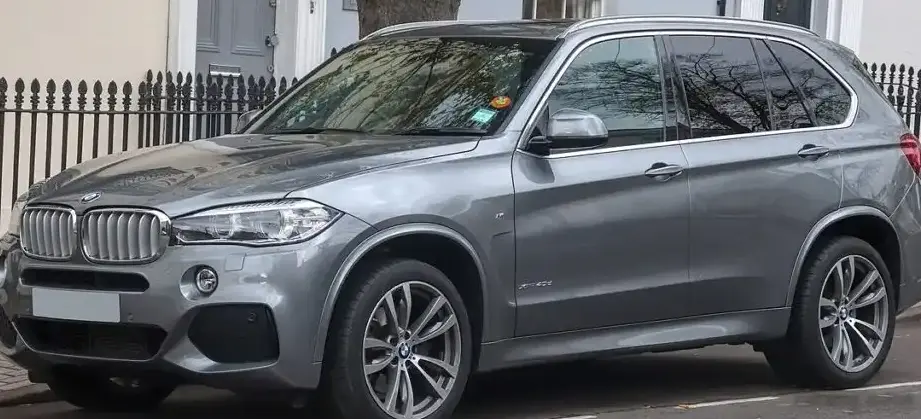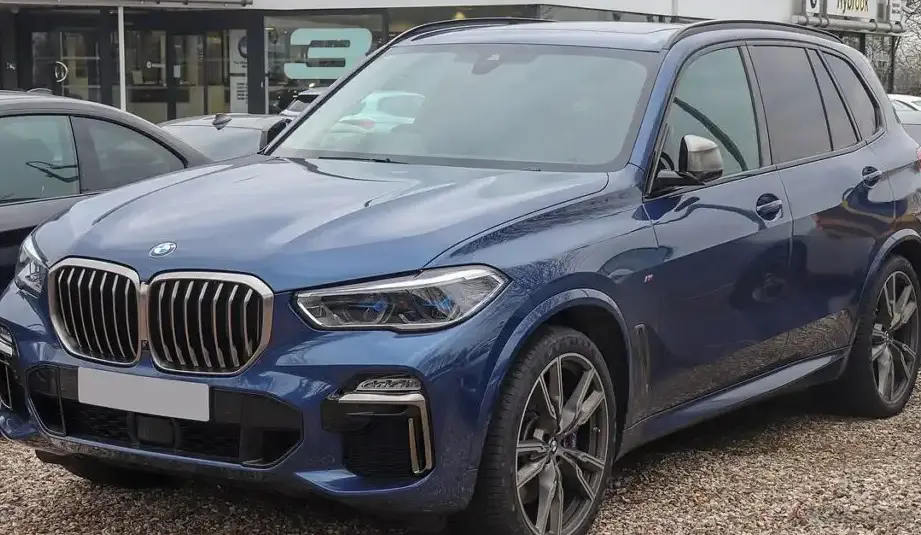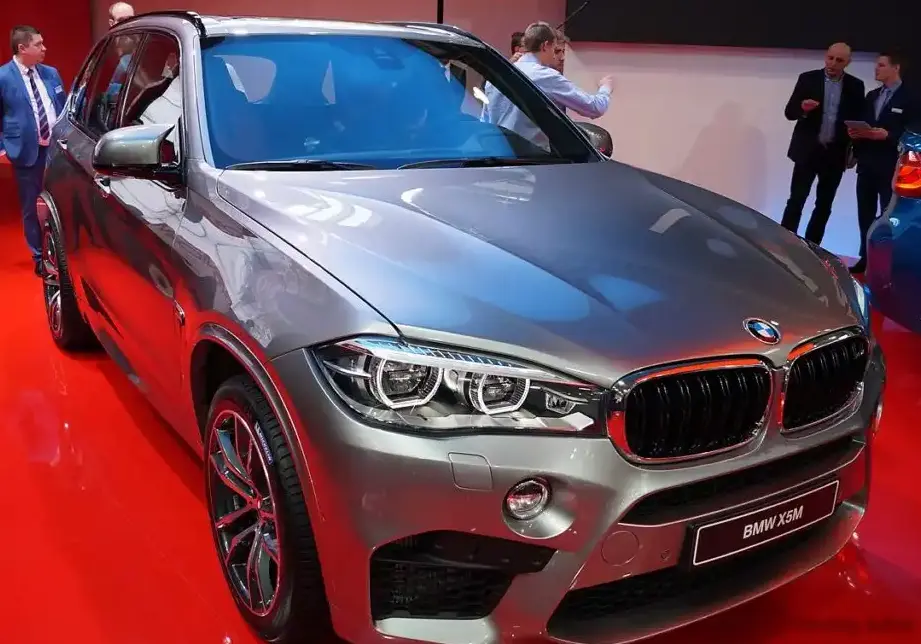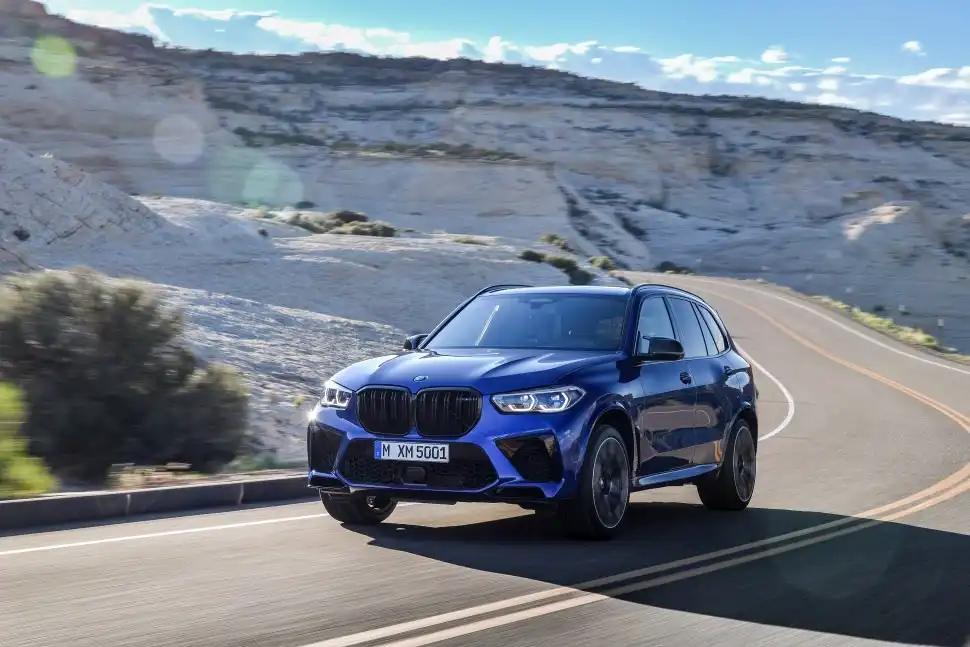
The BMW X5 M (F95), produced from 2019 to 2023, represents the high-performance variant of the third-generation BMW X5 (F95 chassis). Positioned as the flagship SUV within BMW’s M division, the X5 M combines the practicality of a Sport Activity Vehicle (SAV) with the performance characteristics of a dedicated M car. This specific configuration, powered by the 4.4-liter twin-turbocharged V8 engine producing 600 horsepower and paired with the eight-speed Steptronic automatic transmission and xDrive all-wheel-drive system, aimed to deliver uncompromising performance and luxury. It served as the top-tier X5 model, exceeding the capabilities of the X5 xDrive50i and other less powerful trims.
Technical Specifications
| Brand | BMW |
| Model | X5 M |
| Generation | X5 M (F95) |
| Type (Engine) | 4.4 V8 (600 Hp) xDrive Steptronic |
| Start of production | 2019 |
| End of production | 2023 |
| Powertrain Architecture | Internal Combustion engine |
| Body type | SAV |
| Seats | 5 |
| Doors | 5 |
| Fuel consumption (urban) | 16.8-17.5 l/100 km (14 – 13.4 US mpg, 16.8 – 16.1 UK mpg, 6 – 5.7 km/l) |
| Fuel consumption (extra urban) | 9.5-10 l/100 km (24.8 – 23.5 US mpg, 29.7 – 28.2 UK mpg, 10.5 – 10 km/l) |
| Fuel consumption (combined) | 12.5-12.7 l/100 km (18.8 – 18.5 US mpg, 22.6 – 22.2 UK mpg, 8 – 7.9 km/l) |
| CO2 emissions | 284-289 g/km |
| Fuel Type | Petrol (Gasoline) |
| Acceleration 0 – 100 km/h | 3.9 sec |
| Acceleration 0 – 62 mph | 3.9 sec |
| Acceleration 0 – 60 mph | 3.7 sec |
| Acceleration 0 – 200 km/h | 13.5 sec |
| Maximum speed | 250 km/h (155.34 mph) |
| Emission standard | Euro 6d-TEMP |
| Weight-to-power ratio | 3.8 kg/Hp, 261.4 Hp/tonne |
| Weight-to-torque ratio | 3.1 kg/Nm, 326.8 Nm/tonne |
| Power | 600 Hp @ 6000 rpm |
| Power per litre | 136.5 Hp/l |
| Torque | 750 Nm @ 1800-5600 rpm (553.17 lb.-ft. @ 1800-5600 rpm) |
| Engine layout | Front, Longitudinal |
| Engine Model/Code | S63B44B |
| Engine displacement | 4395 cm3 (268.2 cu. in.) |
| Number of cylinders | 8 |
| Engine configuration | V-engine |
| Cylinder Bore | 89 mm (3.5 in.) |
| Piston Stroke | 88.3 mm (3.48 in.) |
| Compression ratio | 10:1 |
| Number of valves per cylinder | 4 |
| Fuel injection system | Direct injection |
| Engine aspiration | Twin-power turbo, Intercooler |
| Valvetrain | VALVETRONIC |
| Engine oil capacity | 10 l (10.57 US qt | 8.8 UK qt) |
| Kerb Weight | 2295 kg (5059.61 lbs.) |
| Max. weight | 3000 kg (6613.87 lbs.) |
| Max load | 705 kg (1554.26 lbs.) |
| Trunk (boot) space – minimum | 580 l (20.48 cu. ft.) |
| Trunk (boot) space – maximum | 1530 l (54.03 cu. ft.) |
| Fuel tank capacity | 83 l (21.93 US gal | 18.26 UK gal) |
| Max. roof load | 100 kg (220.46 lbs.) |
| Permitted trailer load with brakes (12%) | 3000 kg (6613.87 lbs.) |
| Permitted trailer load without brakes | 750 kg (1653.47 lbs.) |
| Permitted towbar download | 140 kg (308.65 lbs.) |
| Length | 4938 mm (194.41 in.) |
| Width | 2015 mm (79.33 in.) |
| Width including mirrors | 2218 mm (87.32 in.) |
| Height | 1747 mm (68.78 in.) |
| Wheelbase | 2972 mm (117.01 in.) |
| Front track | 1699 mm (66.89 in.) |
| Rear (Back) track | 1688 mm (66.46 in.) |
| Front overhang | 880 mm (34.65 in.) |
| Rear overhang | 1086 mm (42.76 in.) |
| Ride height (ground clearance) | 213 mm (8.39 in.) |
| Drag coefficient (Cd) | 0.37 |
| Minimum turning circle (turning diameter) | 12.8 m (41.99 ft.) |
| Drive wheel | All wheel drive (4×4) |
| Number of gears and type of gearbox | 8 gears, automatic transmission Steptronic |
| Front suspension | Double wishbone |
| Rear suspension | Independent multi-link spring suspension with stabilizer |
| Front brakes | Ventilated discs |
| Rear brakes | Ventilated discs |
| Assisting systems | ABS (Anti-lock braking system) |
| Steering type | Steering rack and pinion |
| Power steering | Electric Steering |
| Tires size (Front) | 295/35 ZR21 107Y XL |
| Tires size (Rear) | 315/35 ZR21 111Y XL |
| Wheel rims size (Front) | 10.5J x 21 |
| Wheel rims size (Rear) | 11.5J x 21 |
INTRODUCTION
The F95 X5 M, launched in 2019, marked a significant evolution for BMW’s performance SUV. Built on the Cluster Architecture (CLAR) platform, shared with the standard X5 (G05), the M variant received substantial upgrades to its engine, suspension, brakes, and aerodynamics. The 4.4-liter twin-turbocharged V8, designated the S63B44B, was a key component, delivering a substantial power increase over previous generations. This model year represented the first iteration of the F95, with minor updates occurring throughout its production run until 2023. The X5 M aimed to provide a compelling alternative to high-performance SUVs from Porsche, Mercedes-AMG, and Land Rover.
Powertrain & Engine Architecture
At the heart of the X5 M lies the S63B44B engine, a 4.4-liter twin-turbocharged V8. This engine utilizes direct injection and BMW’s VALVETRONIC variable valve timing system, optimizing both power and efficiency. The twin-scroll turbochargers are positioned within the V of the engine, reducing turbo lag and improving throttle response. The engine produces 600 horsepower at 6000 rpm and 750 Nm (553 lb-ft) of torque between 1800 and 5600 rpm. The engine’s robust construction and advanced cooling systems were designed to withstand the stresses of high-performance driving. Paired with the engine is the M Steptronic eight-speed automatic transmission, featuring quicker shift times and a more aggressive shift program compared to the standard X5’s transmission. This transmission also includes Drivelogic, allowing the driver to select from different shift modes to tailor the driving experience.
Driving Characteristics
The X5 M delivers a remarkably dynamic driving experience for a vehicle of its size and weight. The combination of the powerful V8 engine and the quick-shifting Steptronic transmission results in blistering acceleration – 0 to 60 mph in approximately 3.7 seconds. The xDrive all-wheel-drive system provides excellent traction, particularly in adverse weather conditions. While the automatic transmission is highly capable, it doesn’t offer the same level of driver engagement as a manual gearbox. The suspension is tuned for performance, offering a firm but controlled ride. The steering is precise and well-weighted, providing good feedback to the driver. Compared to the X5 xDrive50i, the M variant offers significantly more power and a more aggressive driving experience. It also differs from the X5 M50i, which uses a detuned version of the S63 engine.
Equipment & Trim Levels
The X5 M came standard with a comprehensive list of features, including Merino leather upholstery, heated and ventilated front seats, a premium sound system, and a large infotainment display with iDrive 7.0. Standard exterior features included M-specific body styling, including aggressive front and rear bumpers, side skirts, and quad exhaust outlets. Optional extras included carbon fiber trim, a head-up display, and various driver-assistance systems. The interior was focused on providing a sporty and luxurious environment, with M-specific badging and accents throughout the cabin.
Chassis & Braking
The X5 M features a reinforced chassis and a specially tuned suspension system to handle the increased power and performance. The front suspension utilizes a double-wishbone design, while the rear suspension employs an independent multi-link setup with a stabilizer bar. Large, ventilated disc brakes are fitted at all four corners, providing ample stopping power. The braking system also includes BMW’s Dynamic Performance Control, which helps to distribute braking force between the rear wheels for improved stability and handling. The standard wheel and tire package consisted of 21-inch alloy wheels with high-performance tires.
Market Reception & Comparison
The F95 X5 M received generally positive reviews from automotive critics. It was praised for its powerful engine, impressive handling, and luxurious interior. However, some critics noted that the ride could be firm and that the fuel economy was relatively poor. Compared to rivals like the Porsche Cayenne Turbo and the Mercedes-AMG GLE 63 S, the X5 M offered a compelling combination of performance, luxury, and practicality. The X5 M’s fuel economy, averaging around 18.8 mpg combined, was typical for a high-performance SUV of its class, but significantly lower than the fuel economy of the base X5 models.
Legacy
The F95 X5 M established itself as a benchmark in the high-performance SUV segment. Its powerful engine, advanced technology, and luxurious interior have made it a desirable vehicle on the used car market. While the powertrain has proven to be generally reliable, preventative maintenance, particularly regarding the cooling system and turbochargers, is crucial. The X5 M continues to be a popular choice for drivers seeking a versatile and high-performing SUV, and its legacy as a capable and refined performance machine remains strong.