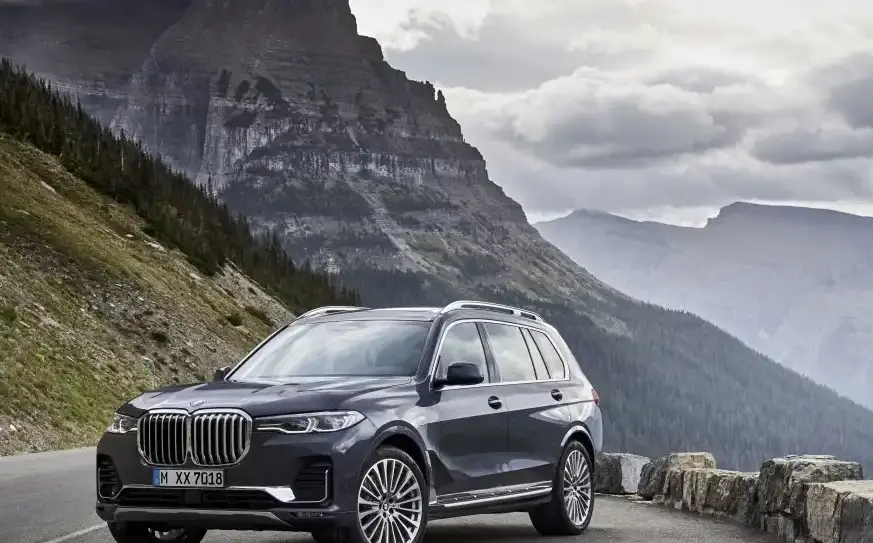
Technical Specifications
| Brand | BMW |
| Model | X7 |
| Generation | X7 (G07) |
| Type (Engine) | 50i (462 Hp) xDrive Steptronic |
| Start of production | 2018 |
| End of production | 2019 |
| Powertrain Architecture | Internal Combustion engine |
| Body type | SUV |
| Seats | 6-7 |
| Doors | 5 |
| Fuel consumption (economy) – combined | 11.4 l/100 km |
| Fuel consumption (economy) – combined | 20.6 US mpg |
| Fuel consumption (economy) – combined | 24.8 UK mpg |
| Fuel consumption (economy) – combined | 8.8 km/l |
| CO2 emissions | 261 g/km |
| Fuel Type | Petrol (Gasoline) |
| Acceleration 0 – 100 km/h | 5.4 sec |
| Acceleration 0 – 62 mph | 5.4 sec |
| Acceleration 0 – 60 mph | 5.1 sec |
| Maximum speed | 250 km/h |
| Maximum speed | 155.34 mph |
| Weight-to-power ratio | 5.3 kg/Hp |
| Weight-to-power ratio | 187.8 Hp/tonne |
| Weight-to-torque ratio | 3.8 kg/Nm |
| Weight-to-torque ratio | 264.2 Nm/tonne |
| Power | 462 Hp @ 5250-6000 rpm |
| Power per litre | 105.1 Hp/l |
| Torque | 650 Nm @ 1500-4750 rpm |
| Torque | 479.42 lb.-ft. @ 1500-4750 rpm |
| Engine layout | Front, Longitudinal |
| Engine Model/Code | N63B44 |
| Engine displacement | 4395 cm3 |
| Engine displacement | 268.2 cu. in. |
| Number of cylinders | 8 |
| Engine configuration | V-engine |
| Cylinder Bore | 89 mm |
| Cylinder Bore | 3.5 in. |
| Piston Stroke | 88.3 mm |
| Piston Stroke | 3.48 in. |
| Compression ratio | 10.5:1 |
| Number of valves per cylinder | 4 |
| Fuel injection system | Direct injection |
| Engine aspiration | Twin-power turbo, Intercooler |
| Engine oil capacity | 10.5 l |
| Engine oil capacity | 11.1 US qt |
| Engine oil capacity | 9.24 UK qt |
| Coolant | 12.6 l |
| Coolant | 13.31 US qt |
| Coolant | 11.09 UK qt |
| Kerb Weight | 2460 kg |
| Kerb Weight | 5423.37 lbs. |
| Max. weight | 3255 kg |
| Max. weight | 7176.05 lbs. |
| Max load | 795 kg |
| Max load | 1752.67 lbs. |
| Trunk (boot) space – minimum | 326 l |
| Trunk (boot) space – minimum | 11.51 cu. ft. |
| Trunk (boot) space – maximum | 2120 l |
| Trunk (boot) space – maximum | 74.87 cu. ft. |
| Fuel tank capacity | 83 l |
| Fuel tank capacity | 21.93 US gal |
| Fuel tank capacity | 18.26 UK gal |
| Max. roof load | 100 kg |
| Max. roof load | 220.46 lbs. |
| Permitted trailer load with brakes (12%) | 2700 kg |
| Permitted trailer load with brakes (12%) | 5952.48 lbs. |
| Permitted trailer load without brakes | 750 kg |
| Permitted trailer load without brakes | 1653.47 lbs. |
| Permitted towbar download | 140 kg |
| Permitted towbar download | 308.65 lbs. |
| Length | 5151 mm |
| Length | 202.8 in. |
| Width | 2000 mm |
| Width | 78.74 in. |
| Width including mirrors | 2218 mm |
| Width including mirrors | 87.32 in. |
| Height | 1805 mm |
| Height | 71.06 in. |
| Wheelbase | 3105 mm |
| Wheelbase | 122.24 in. |
| Front track | 1684 mm |
| Front track | 66.3 in. |
| Rear (Back) track | 1705 mm |
| Rear (Back) track | 67.13 in. |
| Front overhang | 874 mm |
| Front overhang | 34.41 in. |
| Rear overhang | 1172 mm |
| Rear overhang | 46.14 in. |
| Ride height (ground clearance) | 221 mm |
| Ride height (ground clearance) | 8.7 in. |
| Drag coefficient (Cd) | 0.34 |
| Minimum turning circle (turning diameter) | 13.0 m |
| Minimum turning circle (turning diameter) | 42.65 ft. |
| Approach angle | 25° |
| Departure angle | 22.2° |
| Ramp-over (brakeover) angle | 19.8° |
| Wading depth | 500 mm |
| Wading depth | 19.69 in. |
| Drive wheel | All wheel drive (4×4) |
| Number of gears and type of gearbox | 8 gears, automatic transmission Steptronic |
| Front suspension | Double wishbone |
| Rear suspension | Independent multi-link suspension |
| Front brakes | Ventilated discs |
| Rear brakes | Ventilated discs |
| Assisting systems | ABS (Anti-lock braking system) |
| Steering type | Steering rack and pinion |
| Power steering | Electric Steering |
| Tires size | 275/50 R20 113W XL |
| Wheel rims size | 8.5J x 20 |
Introduction
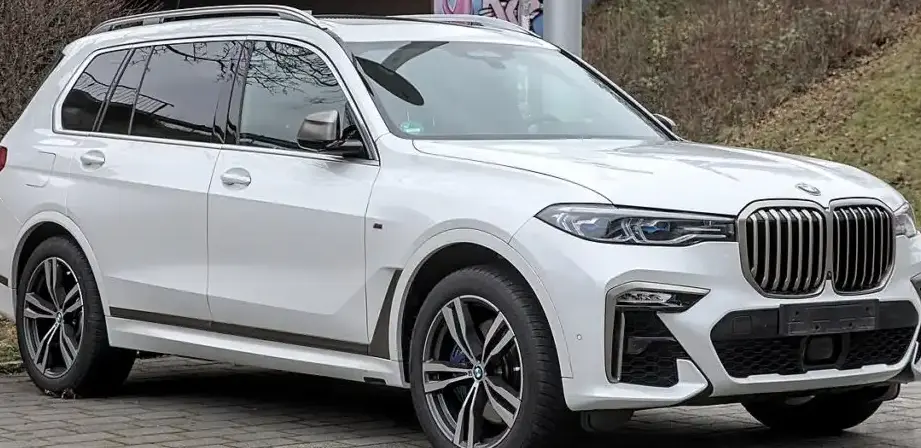
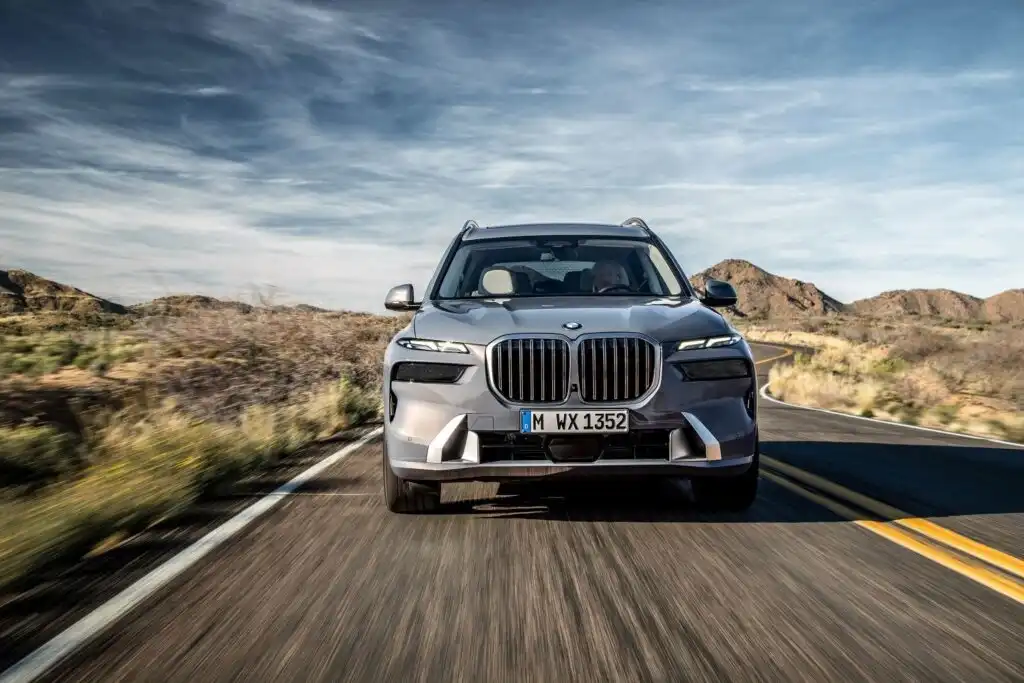
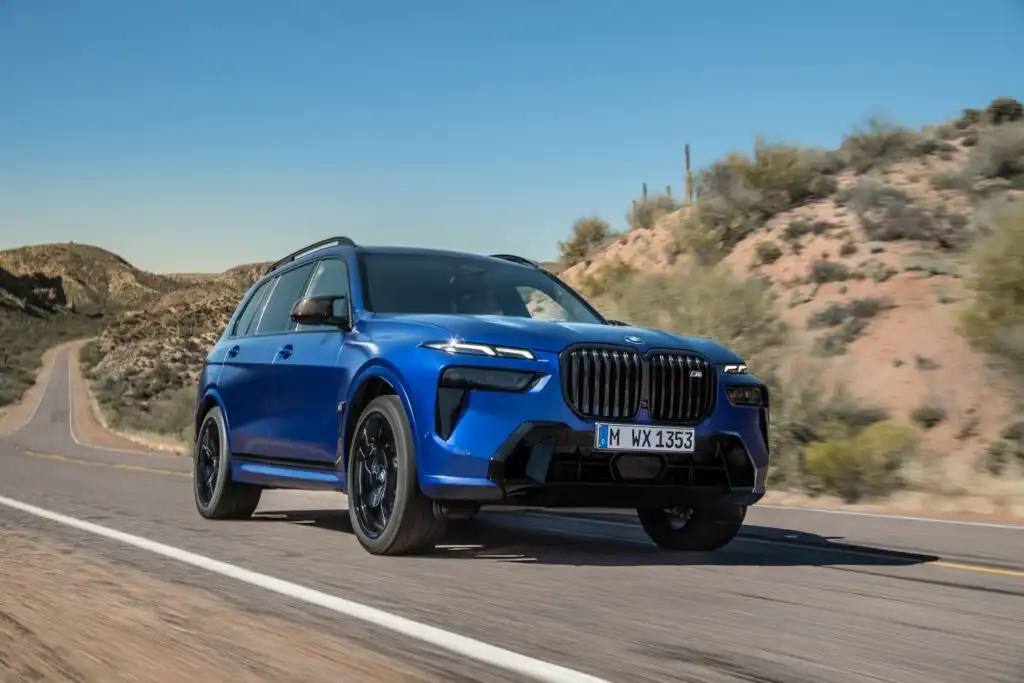
The BMW X7 50i xDrive Steptronic, produced from 2018 to 2019, marked the pinnacle of BMW’s initial foray into the full-size luxury SUV segment. Positioned as the range-topping engine option within the G07 generation, the 50i aimed to deliver a premium experience for buyers prioritizing substantial power and a refined driving character. Built on BMW’s Cluster Architecture (CLAR) platform, the X7 prioritized interior space and comfort alongside its dynamic capabilities, directly competing with established rivals like the Mercedes-Benz GLS-Class and the Range Rover. The X7 50i represented BMW’s attempt to capture a larger share of the growing market for large, luxurious, and capable SUVs, offering a blend of performance and practicality.
Powertrain & Engine Architecture
The X7 50i’s powertrain revolves around BMW’s N63B44 engine, a 4.4-liter twin-turbocharged V8. This engine, part of the N63 family, incorporates direct fuel injection and variable valve timing (Valvetronic) for optimized performance and efficiency. The twin-turbocharger arrangement utilizes two twin-scroll turbochargers, designed to minimize turbo lag and provide a broad, flat torque curve. The engine generates 462 horsepower at 5,250-6,000 rpm and 650 Nm (479 lb-ft) of torque between 1,500 and 4,750 rpm. Power is transmitted through an 8-speed Steptronic automatic transmission, known for its smooth and responsive shifts. BMW’s xDrive all-wheel-drive system intelligently distributes torque between the front and rear axles, enhancing traction and stability in various driving conditions. The engine’s sophisticated design and technology aimed to balance performance with reasonable fuel consumption for a vehicle of its size and capability.
Driving Characteristics
The X7 50i offers a driving experience focused on comfort and effortless power delivery. The 8-speed automatic transmission contributes to a relaxed cruising experience with seamless gear changes. While not designed as a dedicated sports SUV, the V8 engine provides brisk acceleration, achieving 0-60 mph in approximately 5.1 seconds. Compared to the X7 xDrive40i, which utilizes an inline-six engine, the 50i delivers a noticeable performance advantage, offering more substantial power and torque, particularly when the vehicle is fully loaded or towing. The xDrive system provides excellent stability and grip, inspiring confidence in diverse weather conditions. The steering is precise and well-weighted, though it doesn’t offer the same level of tactile feedback found in more performance-oriented BMW models. The overall driving experience is one of refined power and composed handling.
Equipment & Trim Levels
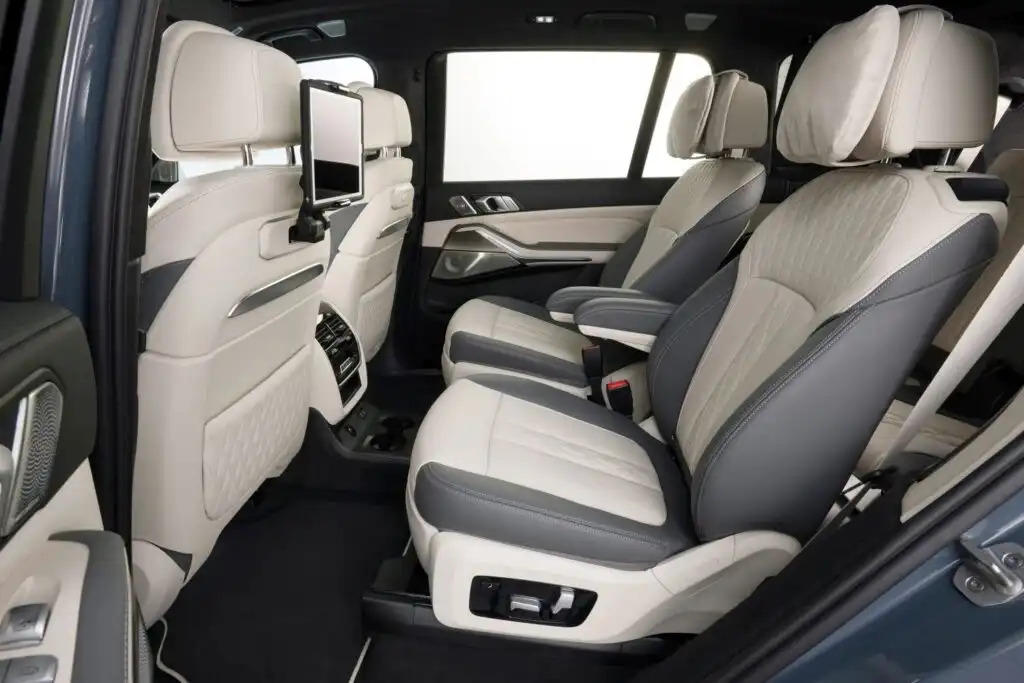
The X7 50i came generously equipped with luxury features as standard. These included leather upholstery, power-adjustable front seats with a massage function, a panoramic sunroof, and a high-end sound system. BMW’s iDrive infotainment system, featuring a 12.3-inch touchscreen display, was also standard, providing navigation, connectivity, and control over vehicle settings. Numerous optional extras were available, such as individual Merino leather upholstery, rear-seat entertainment systems, and advanced driver-assistance features like adaptive cruise control and lane-keeping assist. The 50i trim level distinguished itself with unique exterior styling elements, including specific wheel designs and chrome accents, setting it apart from lower trim levels. These features collectively aimed to create a luxurious and technologically advanced cabin environment.
Chassis & Braking
The X7 50i utilizes a double-wishbone front suspension and an independent multi-link rear suspension, designed to provide a comfortable and controlled ride. Standard air suspension allows for adjustable ride height, enhancing both comfort and off-road capability. The braking system features ventilated discs on all four wheels, delivering ample stopping power. BMW’s Dynamic Stability Control (DSC) system is also incorporated, helping to maintain stability during cornering and emergency braking situations. The chassis and braking components work in concert to provide a secure and confident driving experience, balancing comfort with capable handling.
Market Reception & Comparison
The X7 50i generally received positive reviews from automotive critics, who lauded its luxurious interior, powerful engine, and comfortable ride quality. However, some reviewers pointed out its substantial size and relatively high price point. Compared to the X7 xDrive40i, the 50i offered a significant performance upgrade but came with a considerable cost premium. Fuel economy was also lower in the 50i, reflecting the increased fuel consumption of the V8 engine. When compared to competitors like the Mercedes-Benz GLS 580 and the Range Rover, the X7 50i presented a compelling combination of performance, luxury, and advanced technology, establishing itself as a strong contender in the full-size luxury SUV segment.
Legacy
The N63B44 engine, while offering impressive performance, has been known to require diligent maintenance, particularly concerning the cooling system and turbocharger health. Earlier versions of the N63 engine family experienced some reliability concerns, which BMW addressed through subsequent revisions. The X7 50i, being an early model in the G07 generation, may necessitate more attentive maintenance as it ages. However, with proper care and regular servicing, the N63B44 engine can provide many years of reliable operation. In the used car market, the X7 50i typically commands a higher price than lower-trim models, reflecting its superior performance and luxurious features. It remains a desirable option for buyers seeking a large, powerful, and well-equipped luxury SUV, offering a blend of comfort, capability, and prestige.