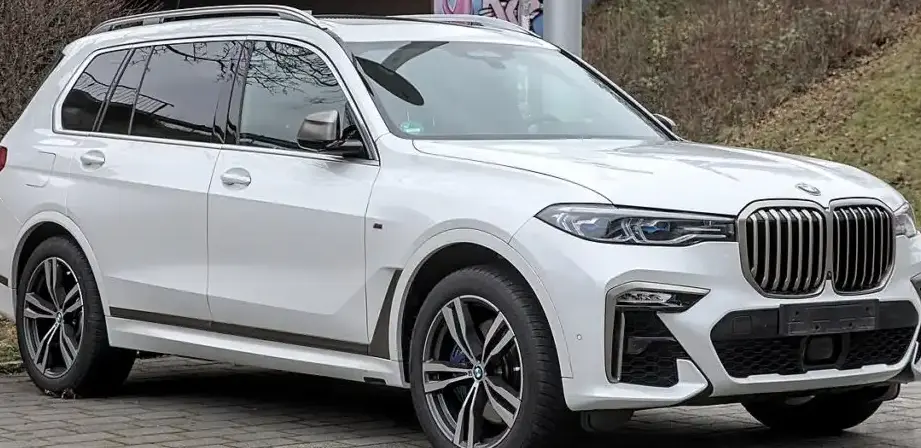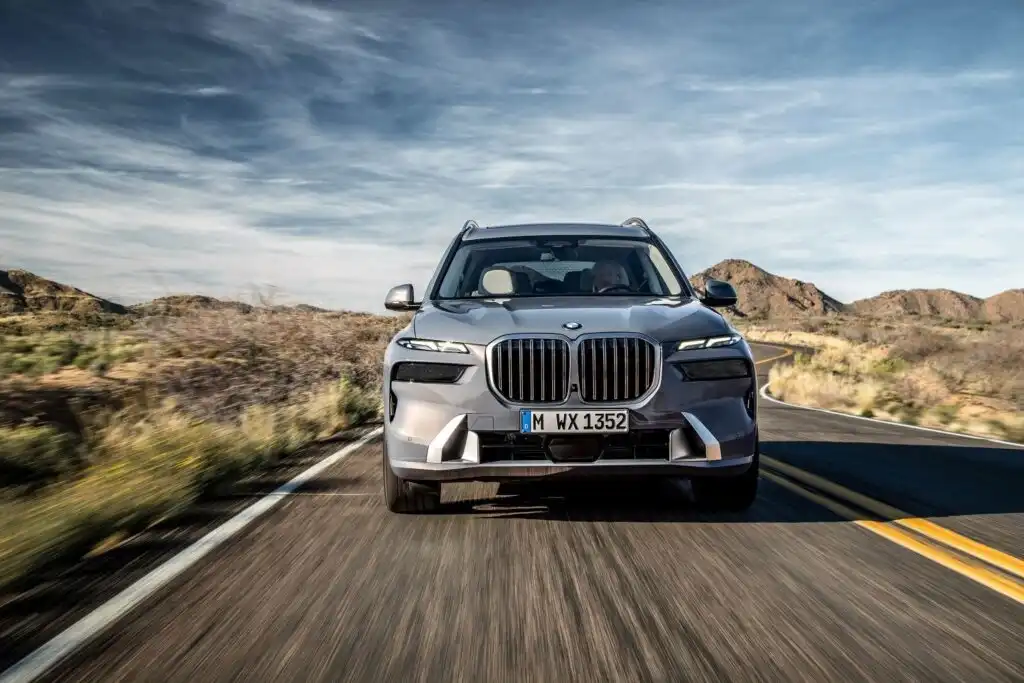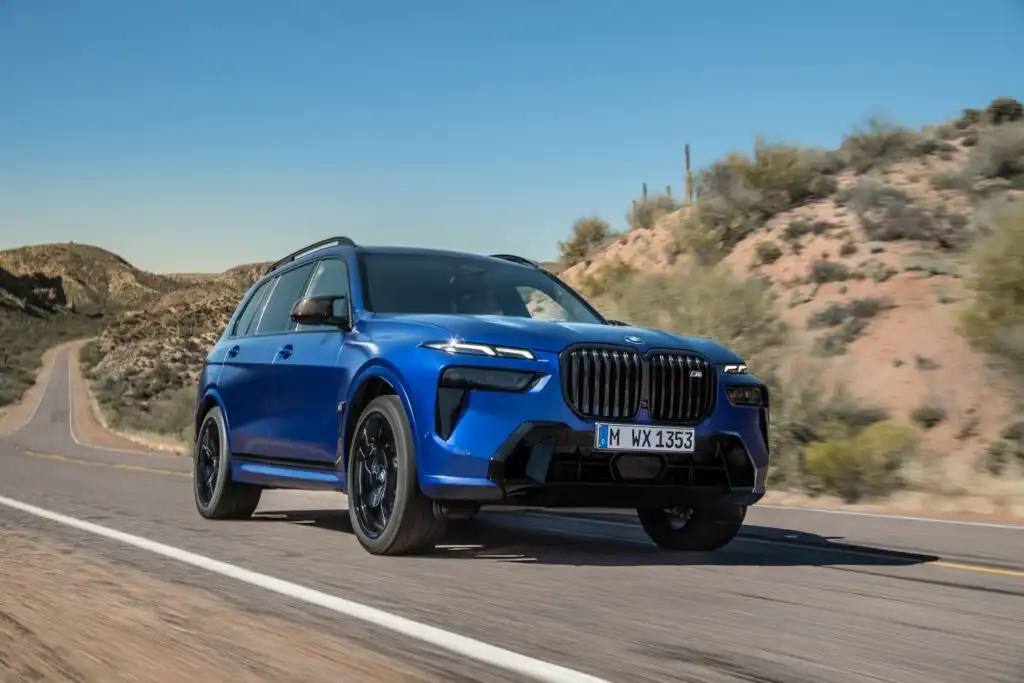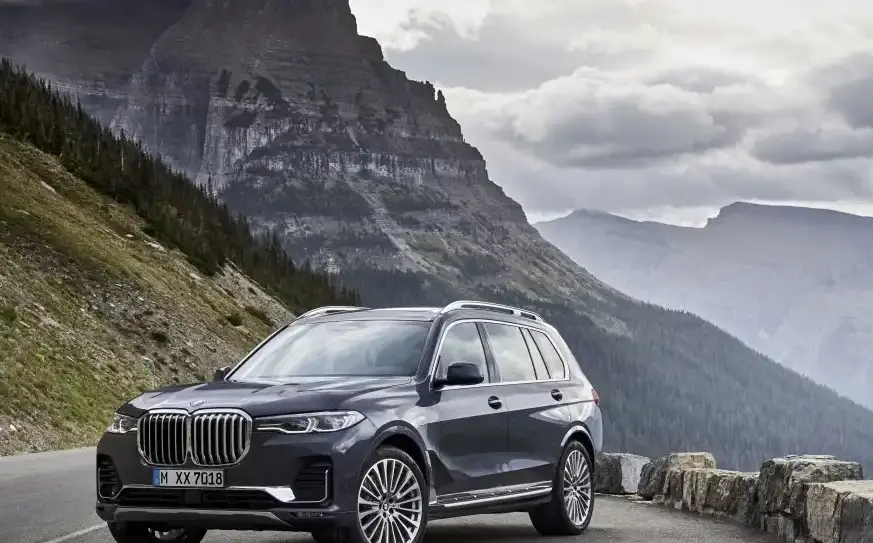
The BMW X7 M50d, produced from 2018 to 2020 as part of the G07 generation, represents the performance-oriented diesel variant of BMW’s flagship full-size luxury SUV. Positioned as a premium offering within the X7 lineup, the M50d aimed to deliver a blend of powerful acceleration, refined comfort, and all-weather capability. It served as a key competitor to other high-end SUVs like the Range Rover and Mercedes-Benz GLS, offering a distinctive BMW driving experience in a larger package. The M50d was discontinued with the introduction of updated X7 models and a shift in BMW’s powertrain strategy.
Technical Specifications
| Brand | BMW |
| Model | X7 |
| Generation | X7 (G07) |
| Type (Engine) | M50d (400 Hp) xDrive Steptronic |
| Start of production | 2018 |
| End of production | 2020 |
| Powertrain Architecture | Internal Combustion engine |
| Body type | SUV |
| Seats | 6-7 |
| Doors | 5 |
| Fuel consumption (combined) | 7.0-7.4 l/100 km (33.6 – 31.8 US mpg, 40.4 – 38.2 UK mpg, 14.3 – 13.5 km/l) |
| CO2 emissions | 185-193 g/km |
| Fuel Type | Diesel |
| Acceleration 0 – 100 km/h | 5.4 sec |
| Acceleration 0 – 62 mph | 5.4 sec |
| Acceleration 0 – 60 mph | 5.1 sec |
| Maximum speed | 250 km/h (155.34 mph) |
| Emission standard | Euro 6d-TEMP |
| Weight-to-power ratio | 6.2 kg/Hp, 162.6 Hp/tonne |
| Weight-to-torque ratio | 3.2 kg/Nm, 308.9 Nm/tonne |
| Power | 400 Hp @ 4400 rpm |
| Power per litre | 133.6 Hp/l |
| Torque | 760 Nm @ 2000-3000 rpm (560.55 lb.-ft. @ 2000-3000 rpm) |
| Engine layout | Front, Longitudinal |
| Engine Model/Code | B57D30C |
| Engine displacement | 2993 cm3 (182.64 cu. in.) |
| Number of cylinders | 6 |
| Engine configuration | Inline |
| Cylinder Bore | 84 mm (3.31 in.) |
| Piston Stroke | 90 mm (3.54 in.) |
| Compression ratio | 16.5:1 |
| Number of valves per cylinder | 4 |
| Fuel injection system | Diesel Commonrail |
| Engine aspiration | Twin-power turbo, Intercooler |
| Engine oil capacity | 6.5 l (6.87 US qt | 5.72 UK qt) |
| Coolant | 11.1 l (11.73 US qt | 9.77 UK qt) |
| Kerb Weight | 2460 kg (5423.37 lbs.) |
| Max. weight | 3290 kg (7253.21 lbs.) |
| Max load | 830 kg (1829.84 lbs.) |
| Trunk (boot) space – minimum | 326 l (11.51 cu. ft.) |
| Trunk (boot) space – maximum | 2120 l (74.87 cu. ft.) |
| Fuel tank capacity | 80 l (21.13 US gal | 17.6 UK gal) |
| Max. roof load | 100 kg (220.46 lbs.) |
| Permitted trailer load with brakes (12%) | 2600 kg (5732.02 lbs.) |
| Permitted trailer load without brakes | 750 kg (1653.47 lbs.) |
| Permitted towbar download | 140 kg (308.65 lbs.) |
| Length | 5151 mm (202.8 in.) |
| Width | 2000 mm (78.74 in.) |
| Width including mirrors | 2218 mm (87.32 in.) |
| Height | 1805 mm (71.06 in.) |
| Wheelbase | 3105 mm (122.24 in.) |
| Front track | 1682 mm (66.22 in.) |
| Rear (Back) track | 1703 mm (67.05 in.) |
| Front overhang | 874 mm (34.41 in.) |
| Rear overhang | 1172 mm (46.14 in.) |
| Ride height (ground clearance) | 221 mm (8.7 in.) |
| Drag coefficient (Cd) | 0.34 |
| Minimum turning circle (turning diameter) | 13.0 m (42.65 ft.) |
| Approach angle | 25° |
| Departure angle | 22.2° |
| Ramp-over (brakeover) angle | 19.8° |
| Wading depth | 500 mm (19.69 in.) |
| Drive wheel | All wheel drive (4×4) |
| Number of gears and type of gearbox | 8 gears, automatic transmission Steptronic |
| Front suspension | Double wishbone |
| Rear suspension | Independent multi-link suspension |
| Front brakes | Ventilated discs |
| Rear brakes | Ventilated discs |
| Assisting systems | ABS (Anti-lock braking system) |
| Steering type | Steering rack and pinion |
| Power steering | Electric Steering |
| Tires size | 285/45 R21 113Y XL |
| Wheel rims size | 9.5J x 21 |
Powertrain & Engine Architecture
The heart of the X7 M50d is BMW’s B57D30C 3.0-liter inline-six diesel engine. This engine is a member of the modular BMW engine family, known for its robust construction and advanced technology. The B57 features a cast iron block, aluminum cylinder head, and four valves per cylinder. Crucially, it employs a sophisticated two-stage turbocharging system – a small turbocharger for immediate response and a larger turbocharger for peak power. This setup, combined with an intercooler, minimizes turbo lag and delivers a broad torque curve. Fuel is delivered via a common rail direct injection system operating at extremely high pressures (2,500 bar) for optimized combustion. The engine produces 400 horsepower at 4,400 rpm and a substantial 760 Nm (560 lb-ft) of torque between 2,000 and 3,000 rpm. The engine is paired with BMW’s 8-speed Steptronic automatic transmission, known for its smooth shifts and quick response. This transmission is programmed for both comfort and performance, adapting to driving style and conditions.
Driving Characteristics
The X7 M50d delivers a markedly different driving experience compared to the gasoline-powered X7 variants. The abundant low-end torque from the diesel engine provides effortless acceleration in everyday driving situations. While not as outright quick as the X7 xDrive50i, the M50d’s 5.4-second 0-60 mph time is still impressive for a vehicle of its size and weight. The 8-speed automatic transmission is well-matched to the engine, providing smooth and timely gear changes. The transmission’s programming prioritizes fuel efficiency at lower speeds and more aggressive shifts when accelerating. The xDrive all-wheel-drive system provides excellent traction in all weather conditions, enhancing stability and control. However, the M50d’s weight (over 5,400 lbs) is noticeable in spirited driving, and the steering, while precise, lacks the ultimate feedback of some competitors.
Equipment & Trim Levels
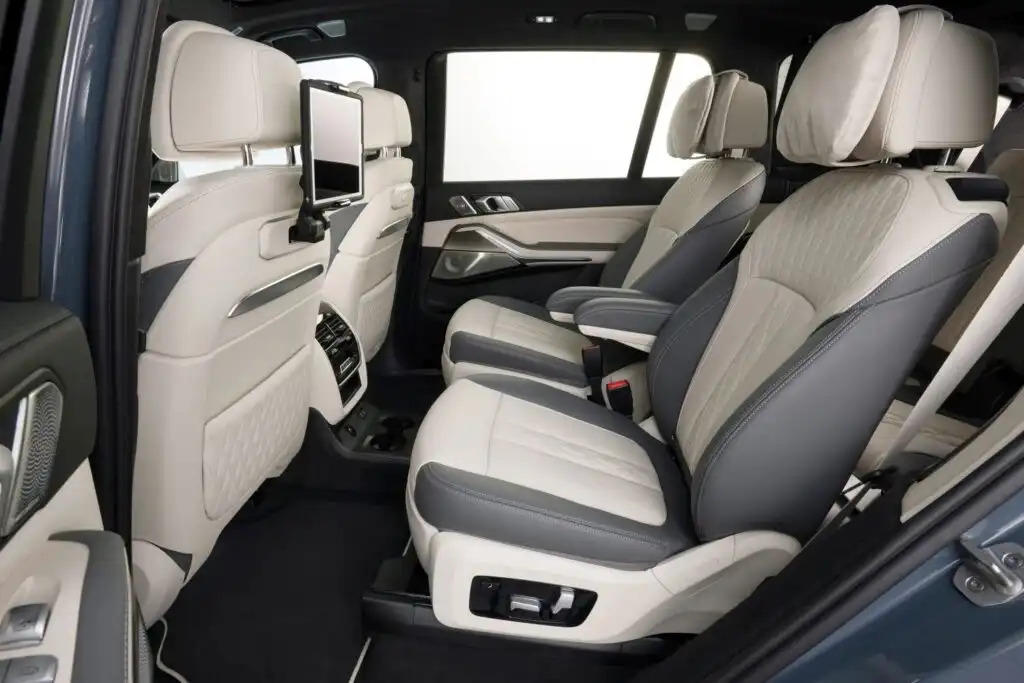
The M50d trim was positioned as the near-top-of-the-line X7, offering a comprehensive suite of standard features. Standard equipment included leather upholstery, power-adjustable front seats with memory function, a panoramic sunroof, a premium sound system, and a comprehensive suite of driver-assistance systems (including adaptive cruise control, lane departure warning, and automatic emergency braking). Optional extras included individual Merino leather upholstery, rear-seat entertainment systems, massaging front seats, and a variety of cosmetic enhancements. The interior design was luxurious and modern, with high-quality materials and a focus on comfort and technology.
Chassis & Braking
The X7 M50d utilizes a double-wishbone front suspension and an independent multi-link rear suspension, tuned for a balance of comfort and handling. Air suspension was standard, allowing for adjustable ride height and further enhancing ride quality. The braking system consists of ventilated discs at all four corners, providing ample stopping power. The X7 M50d’s large size and weight necessitate a robust braking system to ensure confident deceleration. Electronic stability control and traction control systems are standard, working in conjunction with the xDrive all-wheel-drive system to maintain stability and control in challenging conditions.
Market Reception & Comparison
The X7 M50d was generally well-received by automotive critics, who praised its powerful engine, luxurious interior, and comfortable ride. However, some reviewers noted the vehicle’s size and weight, and the diesel engine’s inherent noise and vibration compared to gasoline alternatives. Compared to the X7 xDrive50i, the M50d offered superior fuel economy and a more relaxed driving experience, but lacked the gasoline engine’s outright performance. Against competitors like the Range Rover and Mercedes-Benz GLS, the X7 M50d offered a compelling combination of performance, luxury, and technology, often at a slightly more competitive price point.
Legacy
The BMW X7 M50d represents a significant offering in the luxury SUV segment, showcasing BMW’s expertise in diesel engine technology. While the M50d has been discontinued, its powertrain remains relatively reliable, with proper maintenance. On the used car market, the X7 M50d offers a compelling value proposition for buyers seeking a spacious, luxurious, and capable SUV with strong performance and good fuel economy. However, potential buyers should be aware of the higher maintenance costs associated with diesel engines and the potential for emissions-related issues as the vehicle ages.