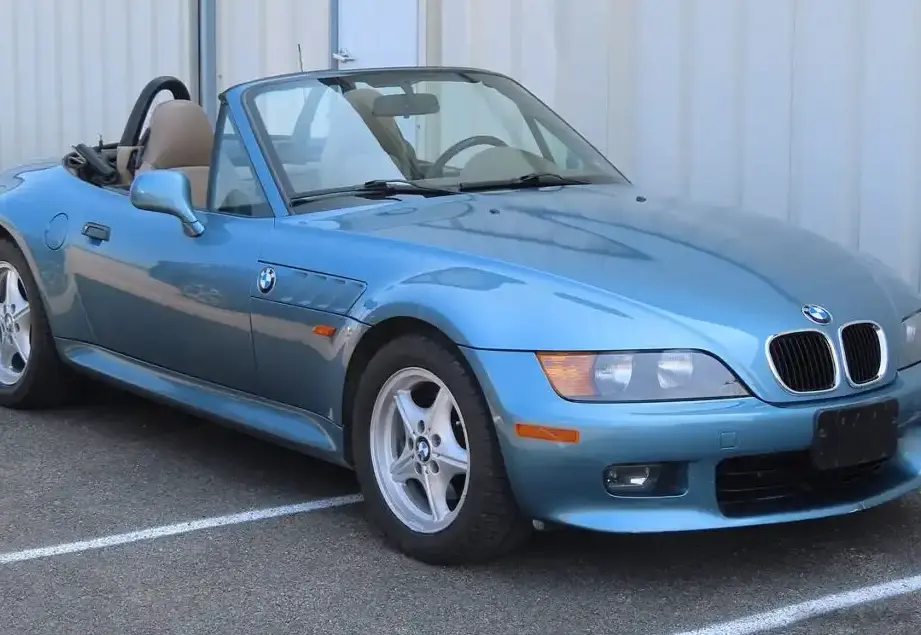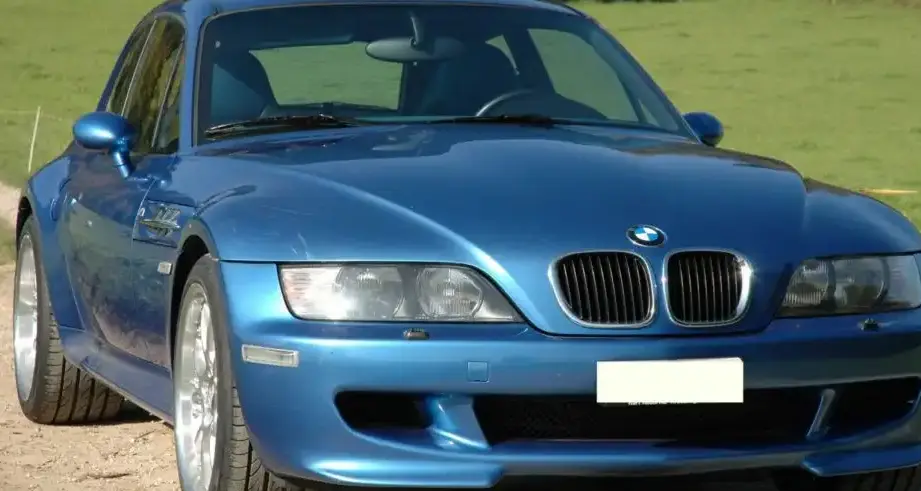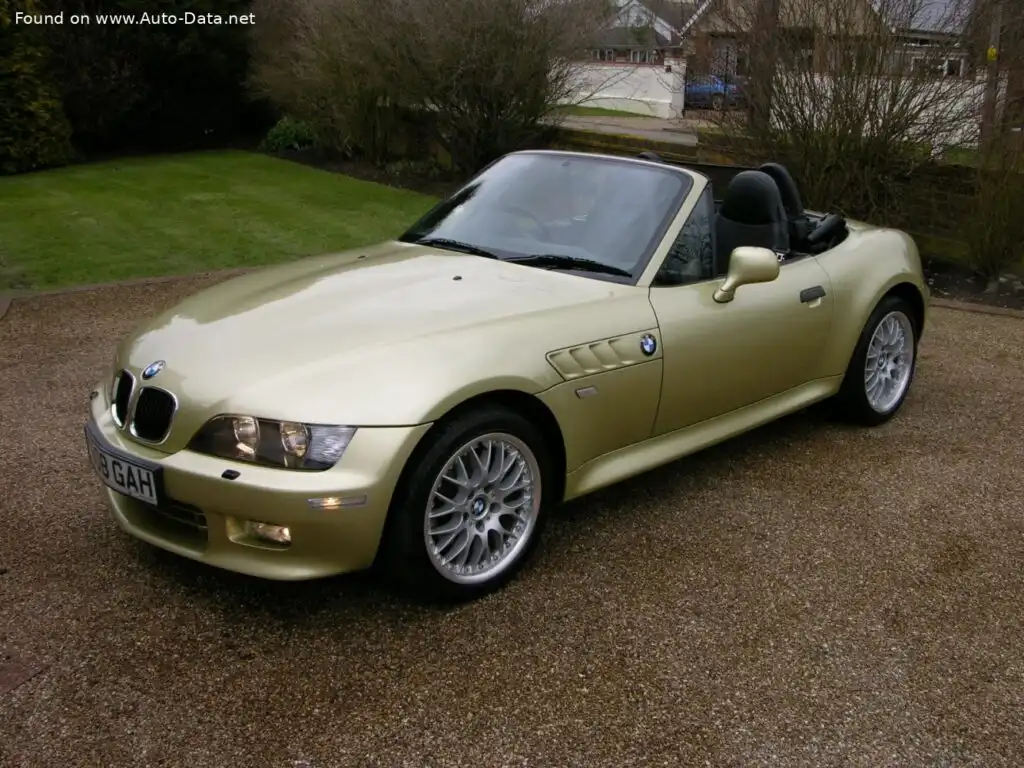
The BMW Z3 (E36/7) 1.9, produced from 1998 to 2003, represented the entry point into BMW’s popular two-seat roadster lineup. Positioned below the more powerful 2.5 and 3.0 liter variants, the 1.9 model aimed to broaden the Z3’s appeal by offering a more affordable and fuel-efficient option. It was built on the E36 platform, shared with the 3 Series, but with significant modifications to create a dedicated roadster experience. This variant played a crucial role in establishing the Z3 as a desirable and accessible sports car in the North American and European markets.
Technical Specifications
| Brand | BMW |
| Model | Z3 |
| Generation | Z3 (E36/7) |
| Type (Engine) | 1.9 (118 Hp) |
| Start of production | 1998 |
| End of production | 2003 |
| Powertrain Architecture | Internal Combustion engine |
| Body type | Roadster |
| Seats | 2 |
| Doors | 2 |
| Fuel consumption (urban) | 11 l/100 km (21.4 US mpg) |
| Fuel consumption (extra urban) | 6 l/100 km (39.2 US mpg) |
| Fuel Type | Petrol (Gasoline) |
| Acceleration 0 – 100 km/h | 10.4 sec |
| Acceleration 0 – 62 mph | 10.4 sec |
| Acceleration 0 – 60 mph | 9.9 sec |
| Maximum speed | 196 km/h (121.79 mph) |
| Weight-to-power ratio | 10.3 kg/Hp |
| Weight-to-torque ratio | 6.4 kg/Nm |
| Power | 118 Hp @ 5500 rpm |
| Power per litre | 62.3 Hp/l |
| Torque | 190 Nm @ 3500 rpm (140.14 lb.-ft. @ 3500 rpm) |
| Engine layout | Front, Longitudinal |
| Engine Model/Code | M43TUB19 |
| Engine displacement | 1895 cm3 (115.64 cu. in.) |
| Number of cylinders | 4 |
| Engine configuration | Inline |
| Cylinder Bore | 85 mm (3.35 in.) |
| Piston Stroke | 83.5 mm (3.29 in.) |
| Compression ratio | 9.7:1 |
| Number of valves per cylinder | 2 |
| Fuel injection system | Multi-port manifold injection |
| Engine aspiration | Naturally aspirated engine |
| Valvetrain | OHC |
| Engine oil capacity | 4 l (4.23 US qt | 3.52 UK qt) |
| Coolant capacity | 6.6 l (6.97 US qt | 5.81 UK qt) |
| Kerb Weight | 1220 kg (2689.64 lbs.) |
| Max. weight | 1490 kg (3284.89 lbs.) |
| Max load | 270 kg (595.25 lbs.) |
| Trunk (boot) space – minimum | 165 l (5.83 cu. ft.) |
| Fuel tank capacity | 51 l (13.47 US gal | 11.22 UK gal) |
| Length | 4050 mm (159.45 in.) |
| Width | 1740 mm (68.5 in.) |
| Height | 1288 mm (50.71 in.) |
| Wheelbase | 2446 mm (96.3 in.) |
| Front track | 1411 mm (55.55 in.) |
| Rear (Back) track | 1492 mm (58.74 in.) |
| Drivetrain Architecture | Rear wheel drive |
| Number of gears | 5 gears, manual transmission |
| Front suspension | Spring Strut |
| Rear suspension | Coil spring |
| Front brakes | Ventilated discs |
| Rear brakes | Disc |
| Assisting systems | ABS (Anti-lock braking system) |
| Steering type | Steering rack and pinion |
| Power steering | Hydraulic Steering |
| Tires size | 225/50 R16 |
| Wheel rims size | 16 |
INTRODUCTION
The BMW Z3 1.9, launched in 1998 as part of the E36 generation’s mid-cycle refresh, offered a more accessible entry point into the BMW roadster experience. While the initial Z3 models (1.8 and 1.9) were available from 1996, the 1998 update brought improvements to the engine and interior. This variant was primarily targeted at buyers seeking a stylish, fun-to-drive sports car without the higher price tag of the larger-engined models. It was a popular choice in Europe and North America, where the Z3 successfully captured a segment of the market looking for a compact, rear-wheel-drive roadster.
Powertrain & Engine Architecture
The heart of the Z3 1.9 is the M43TUB19 engine, a 1.9-liter inline-four cylinder powerplant. This engine is a naturally aspirated unit featuring multi-port fuel injection and a single overhead camshaft (OHC) valvetrain. The ‘TUB’ designation signifies a technological update to the M43 series, including improvements to the engine management system and reduced emissions. The engine produces 118 horsepower at 5500 rpm and 190 Nm (140 lb-ft) of torque at 3500 rpm. The engine’s relatively low compression ratio of 9.7:1 contributes to its ability to run on regular unleaded gasoline. The Z3 1.9 was exclusively offered with a 5-speed manual transmission, providing a direct connection between the engine and the rear wheels. This transmission featured relatively short gear ratios, designed to maximize acceleration and driving enjoyment.
Driving Characteristics
The Z3 1.9, while not a performance powerhouse, offered a surprisingly engaging driving experience. The 5-speed manual transmission allowed drivers to fully exploit the engine’s powerband. Acceleration from 0-60 mph took around 9.9 seconds, and the car could reach a top speed of 121.79 mph. The relatively light weight of the Z3 (approximately 2690 lbs) helped to offset the engine’s modest output. Handling was typically BMW – precise and predictable, with well-weighted steering. Compared to the 2.5 and 3.0 liter Z3 models, the 1.9 felt less urgent in its acceleration, but it offered a more balanced and forgiving driving experience, making it a good choice for everyday use. The shorter gearing of the manual transmission meant the engine was often operating in its sweet spot, providing responsive acceleration in most driving situations.
Equipment & Trim Levels
The Z3 1.9 typically came with a fairly basic level of equipment, reflecting its position as the entry-level model. Standard features included power windows, central locking, and an AM/FM radio. Interior upholstery was typically cloth, although leather was available as an option. Dashboard trim was generally simple and functional. Optional extras included air conditioning, a premium sound system, alloy wheels, and a sport suspension package. The Z3 1.9 was often seen as a blank canvas for customization, with many owners adding aftermarket accessories to personalize their cars.
Chassis & Braking
The Z3’s chassis was a modified version of the E36 3 Series platform, featuring a reinforced structure to improve rigidity. The front suspension utilized MacPherson struts, while the rear suspension employed a semi-trailing arm design. Brakes were ventilated discs at the front and solid discs at the rear. Anti-lock braking system (ABS) was standard. The Z3 1.9’s suspension was tuned for a balance between comfort and handling, providing a reasonably compliant ride without sacrificing too much agility. The relatively light weight of the 1.9 model meant that the braking system was generally adequate for its performance level.
Market Reception & Comparison
The Z3 1.9 was generally well-received by automotive critics as an affordable and enjoyable roadster. It was praised for its handling, steering feel, and overall driving experience. However, some critics noted that the engine lacked the punch of the larger-engined models. Compared to the Z3 2.5, the 1.9 offered significantly better fuel economy, but at the cost of performance. The 1.9 also proved to be more reliable than some of the earlier Z3 models, thanks to the improvements made with the M43TUB19 engine. It was a popular alternative to other small roadsters of the time, such as the Mazda MX-5 Miata.
Legacy
The BMW Z3 1.9 has become a popular choice among enthusiasts and collectors. The M43TUB19 engine is known for its reliability and relatively low maintenance costs. While not as sought-after as the higher-performance Z3 variants, the 1.9 offers a compelling combination of affordability, style, and driving enjoyment. Well-maintained examples are becoming increasingly rare, and prices have been steadily rising in recent years. The Z3 1.9 remains a testament to BMW’s commitment to building engaging and rewarding sports cars.