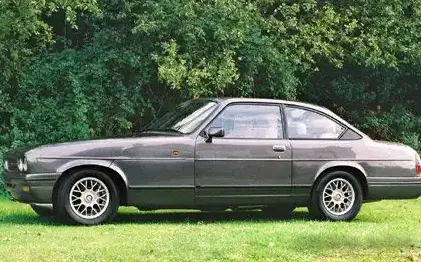
The Bristol Blenheim III 5.9i V8, produced between 2000 and 2002, represents a continuation of the Blenheim lineage, a grand touring coupe built by the independent British manufacturer, Bristol Cars. This iteration, the III, was the final evolution of the Blenheim model, known for its hand-built construction, luxurious appointments, and powerful American-sourced V8 engine. It occupied the top-tier position within the Blenheim range, offering the highest performance and most refined experience of the model. The Blenheim, and particularly the III, catered to a niche market of discerning buyers seeking a uniquely British alternative to mainstream luxury coupes.
Technical Specifications
| Brand | Bristol |
| Model | Blenheim |
| Generation | Blenheim III |
| Type (Engine) | 5.9 i V8 (354 Hp) |
| Start of production | 2000 year |
| End of production | 2002 year |
| Powertrain Architecture | Internal Combustion engine |
| Body type | Coupe |
| Seats | 4 |
| Doors | 2 |
| Fuel consumption (economy) – urban | 18 l/100 km (13.1 US mpg, 15.7 UK mpg, 5.6 km/l) |
| Fuel consumption (economy) – extra urban | 10 l/100 km (23.5 US mpg, 28.2 UK mpg, 10 km/l) |
| Fuel Type | Petrol (Gasoline) |
| Acceleration 0 – 100 km/h | 5.4 sec |
| Acceleration 0 – 62 mph | 5.4 sec |
| Acceleration 0 – 60 mph | 5.1 sec |
| Maximum speed | 250 km/h (155.34 mph) |
| Weight-to-power ratio | 4.9 kg/Hp, 203.4 Hp/tonne |
| Weight-to-torque ratio | 3.5 kg/Nm, 287.4 Nm/tonne |
| Power | 354 Hp @ 5500 rpm |
| Power per litre | 60 Hp/l |
| Torque | 500 Nm @ 4000 rpm (368.78 lb.-ft. @ 4000 rpm) |
| Engine Model/Code | Magnum |
| Engine displacement | 5898 cm3 (359.92 cu. in.) |
| Number of cylinders | 8 |
| Engine configuration | V-engine |
| Cylinder Bore | 101.6 mm (4 in.) |
| Piston Stroke | 90.93 mm (3.58 in.) |
| Compression ratio | 9.8:1 |
| Fuel injection system | Multi-port manifold injection |
| Engine aspiration | Naturally aspirated engine |
| Kerb Weight | 1740 kg (3836.04 lbs.) |
| Trunk (boot) space – minimum | 540 l (19.07 cu. ft.) |
| Fuel tank capacity | 82 l (21.66 US gal | 18.04 UK gal) |
| Length | 4825 mm (189.96 in.) |
| Width | 1765 mm (69.49 in.) |
| Height | 1440 mm (56.69 in.) |
| Wheelbase | 2900 mm (114.17 in.) |
| Front track | 1450 mm (57.09 in.) |
| Rear (Back) track | 1460 mm (57.48 in.) |
| Drivetrain Architecture | The Internal combustion engine (ICE) drives the rear wheels of the vehicle. |
| Drive wheel | Rear wheel drive |
| Number of gears and type of gearbox | 4 gears, automatic transmission |
| Front suspension | Coil spring |
| Rear suspension | Torsion |
| Front brakes | Disc |
| Rear brakes | Disc |
| Assisting systems | ABS (Anti-lock braking system) |
| Power steering | Hydraulic Steering |
| Tires size | 215/70 R15 |
| Wheel rims size | 15 |
Powertrain & Engine Architecture
The heart of the Blenheim III 5.9i V8 is its 5.9-liter (359.92 cubic inch) Magnum V8 engine, sourced from Chrysler. This engine, a staple of Bristol’s models for many years, is a naturally aspirated, pushrod V8 known for its robust construction and substantial torque output. The engine utilizes a multi-port fuel injection system, delivering fuel directly into the intake ports for improved combustion efficiency. The engine produces 354 horsepower at 5500 rpm and 500 Nm (368.78 lb-ft) of torque at 4000 rpm. The engine’s 9.8:1 compression ratio contributes to its strong low-end and mid-range power delivery. Paired with the engine is a four-speed automatic transmission, providing smooth and relatively quick shifts. While not as technologically advanced as some contemporary transmissions, it was chosen for its reliability and suitability for the grand touring nature of the Blenheim.
Driving Characteristics
The Blenheim III 5.9i V8 delivers a classic grand touring experience. The combination of the powerful V8 and the four-speed automatic transmission results in brisk acceleration – 0 to 60 mph in approximately 5.1 seconds and a top speed of 155 mph. The automatic transmission, while not offering manual control, provides smooth gear changes, making for comfortable cruising. The torque-rich engine means strong acceleration is available across a wide rev range. However, the car’s substantial weight (1740 kg / 3836 lbs) is noticeable, particularly in cornering. The rear-wheel-drive configuration provides a traditional driving feel, but requires respect and careful throttle control, especially in adverse conditions. Compared to a hypothetical manual transmission version, the automatic sacrifices some driver engagement but gains in ease of use, aligning with the Blenheim’s focus on comfortable, effortless performance.
Equipment & Trim Levels
The Blenheim III was exceptionally well-equipped, reflecting its premium price point. Standard features included Connolly leather upholstery, burled walnut veneer trim, electric windows, central locking, and an upgraded audio system. Air conditioning was also standard. Bristol offered a high degree of customization, allowing buyers to specify bespoke interior colors, wood finishes, and other personalized touches. Optional extras included a sunroof, upgraded audio systems, and various comfort and convenience features. The interior layout was traditional and luxurious, prioritizing comfort and craftsmanship over cutting-edge technology. The Blenheim III aimed for a classic, understated elegance rather than a flashy, modern aesthetic.
Chassis & Braking
The Blenheim III utilizes a traditional body-on-frame construction, providing a robust and rigid chassis. Front suspension consists of coil springs, while the rear employs a torsion bar setup. This configuration provides a comfortable ride, although it doesn’t offer the same level of handling precision as more modern independent suspension systems. Braking is provided by disc brakes on all four wheels, assisted by an anti-lock braking system (ABS). The braking system is adequate for the car’s performance, but lacks the sophistication of more contemporary systems. The car rides on 215/70 R15 tires, mounted on 15-inch wheels.
Market Reception & Comparison
The Bristol Blenheim III was never a high-volume seller, appealing to a very specific clientele. Critics praised its luxurious interior, powerful engine, and unique British character. However, the car’s high price, traditional construction, and relatively unsophisticated technology were also points of criticism. Compared to other grand touring coupes of the era, such as the BMW 6 Series or the Mercedes-Benz CL, the Blenheim offered a more individualistic and handcrafted experience. Fuel economy was predictably poor, reflecting the large displacement V8 engine – around 18 l/100 km (13.1 US mpg) in urban driving and 10 l/100 km (23.5 US mpg) on the highway. Reliability was generally good, owing to the robust nature of the Chrysler V8, but maintenance costs could be high due to the car’s specialized components and limited production run.
Legacy
The Bristol Blenheim III represents the culmination of the Blenheim model line and a final expression of Bristol’s traditional approach to automotive engineering. While the company has faced financial challenges and changes in ownership since the Blenheim’s production ended, the car remains a sought-after classic among enthusiasts. The Magnum V8 engine is known for its durability, and well-maintained examples of the Blenheim III continue to provide years of reliable service. In the used car market, the Blenheim III commands a premium price, reflecting its rarity, exclusivity, and unique character. It stands as a testament to a bygone era of British automotive craftsmanship and a reminder of a time when cars were built with a focus on quality, luxury, and individual expression.