
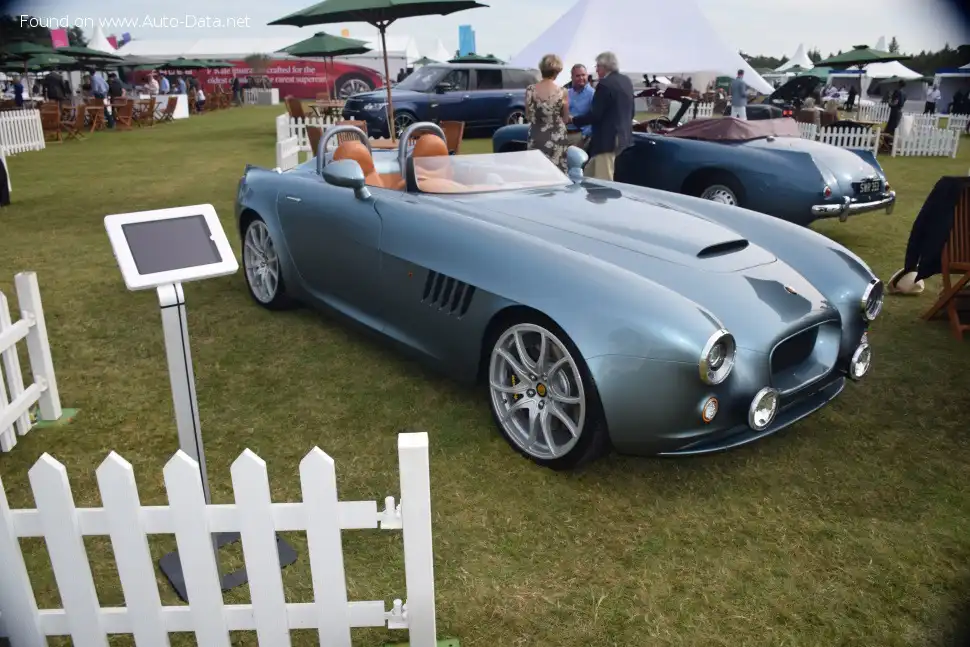
The Bristol Bullet 4.8 V8, launched in 2017, represents a modern interpretation of the classic British sports car. It marked a significant moment for Bristol, emerging after a period of financial restructuring and representing the company’s return to production. The Bullet is a hand-built, rear-wheel-drive roadster designed to offer a blend of performance, luxury, and exclusivity. It’s built on a bespoke platform, eschewing the shared component strategy common among many modern manufacturers. Production was limited, further enhancing its appeal to collectors and enthusiasts. The 4.8 V8 variant, producing 374 horsepower, was the sole engine option offered at launch.
Technical Specifications
| Brand | Bristol |
| Model | Bullet |
| Generation | Bullet |
| Type (Engine) | 4.8 V8 (374 Hp) |
| Start of production | 2017 |
| Powertrain Architecture | Internal Combustion engine |
| Body type | Roadster |
| Seats | 2 |
| Doors | 2 |
| Fuel Type | Petrol (Gasoline) |
| Acceleration 0 – 100 km/h | 3.8 sec |
| Acceleration 0 – 62 mph | 3.8 sec |
| Acceleration 0 – 60 mph | 3.6 sec |
| Maximum speed | 249 km/h (154.72 mph) |
| Weight-to-power ratio | 2.9 kg/Hp, 340 Hp/tonne |
| Weight-to-torque ratio | 2.2 kg/Nm, 456.4 Nm/tonne |
| Power | 374 Hp @ 6300 rpm |
| Power per litre | 77.9 Hp/l |
| Torque | 502 Nm @ 3400 rpm (370.26 lb.-ft. @ 3400 rpm) |
| Engine layout | Front, Longitudinal |
| Engine displacement | 4799 cm3 (292.85 cu. in.) |
| Number of cylinders | 8 |
| Engine configuration | V-engine |
| Cylinder Bore | 93 mm (3.66 in.) |
| Piston Stroke | 88.3 mm (3.48 in.) |
| Compression ratio | 10.5:1 |
| Number of valves per cylinder | 4 |
| Fuel injection system | Multi-port manifold injection |
| Engine aspiration | Naturally aspirated engine |
| Valvetrain | DOHC |
| Engine oil capacity | 8 l (8.45 US qt | 7.04 UK qt) |
| Kerb Weight | 1100 kg (2425.08 lbs.) |
| Max. weight | 1250 kg (2755.78 lbs.) |
| Max load | 150 kg (330.69 lbs.) |
| Fuel tank capacity | 55 l (14.53 US gal | 12.1 UK gal) |
| Length | 4200 mm (165.35 in.) |
| Width | 1860 mm (73.23 in.) |
| Height | 1200 mm (47.24 in.) |
| Wheelbase | 2553 mm (100.51 in.) |
| Drivetrain Architecture | Rear wheel drive |
| Drive wheel | Rear wheel drive |
| Number of gears and type of gearbox | 6 gears, manual transmission |
| Front brakes | Ventilated discs |
| Rear brakes | Ventilated discs |
| Assisting systems | ABS (Anti-lock braking system) |
| Steering type | Steering rack and pinion |
| Power steering | Electric Steering |
| Tires size | 225/35 R19; 245/35 R19 |
| Wheel rims size | 8.5J x 19 |
Powertrain & Engine Architecture
The heart of the Bristol Bullet 4.8 V8 is a naturally aspirated 4.8-liter V8 engine. While the engine’s origins are often linked to Chrysler’s LA series V8, Bristol extensively modified and re-engineered the unit over decades of use in their vehicles. The 4.8-liter version, specifically for the Bullet, benefits from updated fuel injection and engine management systems. It utilizes a multi-port fuel injection system, delivering fuel directly into the intake ports. The engine features a double overhead camshaft (DOHC) valvetrain, optimizing airflow for improved performance. The engine produces 374 horsepower at 6300 rpm and 502 Nm (370.26 lb-ft) of torque at 3400 rpm. The engine is mounted longitudinally in the front of the car, driving the rear wheels. The sole transmission option at launch was a six-speed manual gearbox, chosen to provide a more engaging driving experience, aligning with Bristol’s traditional focus on driver involvement.
Driving Characteristics
The Bristol Bullet 4.8 V8 delivers a classic sports car driving experience. The naturally aspirated V8 provides a linear power delivery, building smoothly towards its peak output. The six-speed manual transmission allows for precise control over the engine’s power. Acceleration is brisk, with 0-60 mph achieved in approximately 3.6 seconds. The rear-wheel-drive configuration contributes to a balanced chassis, offering good handling characteristics. Compared to a hypothetical turbocharged engine, the V8 lacks the immediate low-end torque, but provides a more rewarding experience at higher engine speeds. The gear ratios are well-matched to the engine’s powerband, allowing for strong acceleration in each gear. The car feels relatively lightweight and agile, making it enjoyable to drive on winding roads.
Equipment & Trim Levels
The Bristol Bullet 4.8 V8 was offered with a high level of standard equipment, reflecting its luxury positioning. The interior features hand-stitched leather upholstery, a bespoke dashboard design, and a focus on craftsmanship. Standard features included air conditioning, power windows, and a premium audio system. Bristol offered a significant degree of customization, allowing customers to personalize the interior with different leather colors, wood veneers, and trim materials. Optional extras included upgraded audio systems, navigation, and bespoke luggage sets. The emphasis was on creating a unique and personalized vehicle for each customer.
Chassis & Braking
The Bristol Bullet utilizes a bespoke chassis constructed from a combination of steel and carbon fiber, designed to provide a balance of rigidity and lightweight construction. The suspension system features independent double wishbones at all four corners, offering precise handling and a comfortable ride. Ventilated disc brakes are fitted to all four wheels, providing ample stopping power. An anti-lock braking system (ABS) is standard. The car’s relatively low weight (1100 kg / 2425 lbs) contributes to its agile handling. The steering is a rack and pinion system with electric power assistance, providing precise and responsive steering feel.
Market Reception & Comparison
The Bristol Bullet 4.8 V8 received generally positive reviews from automotive critics. Praise was directed towards its classic sports car character, its beautifully crafted interior, and its engaging driving experience. Some critics noted the relatively high price tag and the lack of modern technology compared to some competitors. Compared to other sports cars in its price range, such as the Porsche 911, the Bullet offered a more unique and exclusive experience, but lacked the widespread brand recognition and dealer network. Fuel economy was not a primary focus, with the V8 engine consuming fuel at a rate typical for a high-performance naturally aspirated engine. Reliability was expected to be good, given Bristol’s reputation for building durable vehicles, but the limited production run meant that long-term reliability data was scarce.
Legacy
The Bristol Bullet 4.8 V8 represents a significant chapter in Bristol’s history, marking its return to production after a period of uncertainty. The car’s limited production run and unique character have made it a desirable collectible. The powertrain, while based on a long-standing design, was thoroughly updated and proven to be reliable. On the used car market, the Bullet commands a premium price, reflecting its exclusivity and craftsmanship. The car serves as a testament to Bristol’s commitment to building hand-built, driver-focused sports cars. The Bullet’s legacy is one of understated elegance, performance, and a dedication to traditional automotive values.
