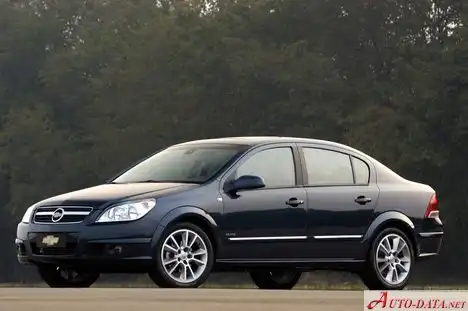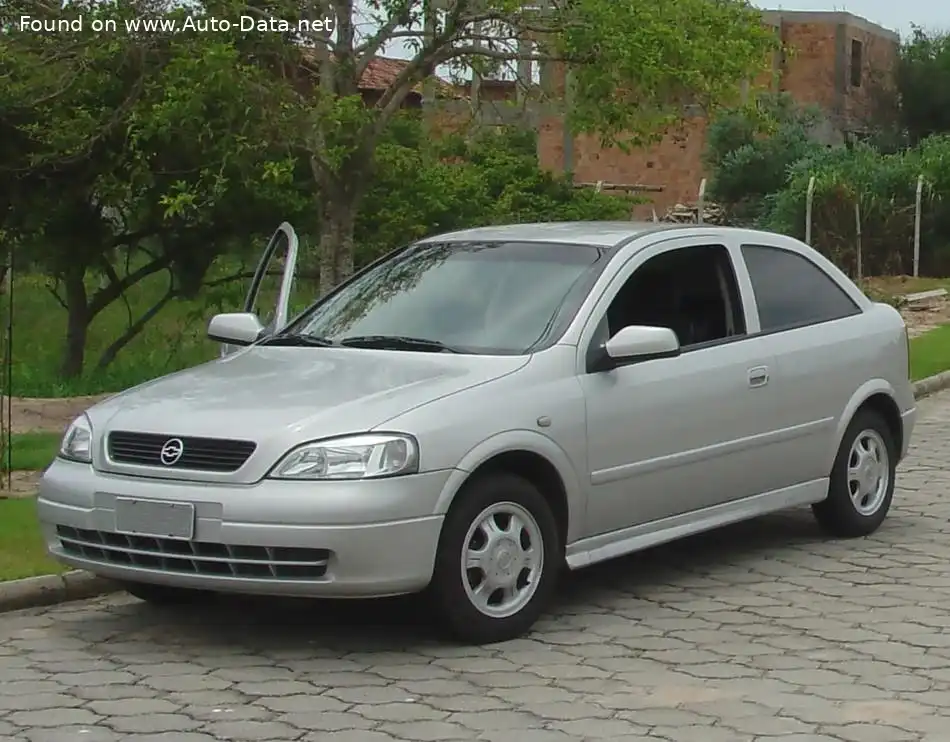
The Chevrolet Astra 2.0 i 16V Sport with 136 horsepower is a compact hatchback that enjoyed a notable production run, primarily in the South American market, from 1999 to 2011. Based directly on the German-engineered Opel Astra G, this model was adapted and marketed under the Chevrolet brand, becoming a popular choice for consumers seeking a blend of European driving dynamics, robust performance, and everyday practicality. As a variant of the widely successful Astra line, the Chevrolet Astra 2.0 distinguished itself with a responsive naturally aspirated engine and a sporty three-door configuration, positioning it as an accessible performance hatchback in its segment. Its long lifespan is a testament to its successful design, reliable powertrain, and enduring appeal in a competitive automotive landscape.
History and South American Production
Opel Origins
The story of this particular Chevrolet Astra begins in Europe with the launch of the Opel Astra G in 1998. Designed as a successor to the Astra F, the second-generation Astra was a significant step forward for Opel, featuring a fully galvanized body to combat rust, improved build quality, and more sophisticated driving dynamics. It was developed on General Motors’ T-platform and was offered in a wide range of body styles, including 3- and 5-door hatchbacks, a sedan, a wagon (Caravan), and two specialty models—a coupé and a convertible designed by the Italian coachbuilder Bertone.
The Astra G was a commercial success in Europe, praised for its well-rounded character. The platform’s engineering excellence provided a solid foundation for its international counterparts. General Motors, leveraging its global platform-sharing strategy, adapted the Astra G for various markets under different brand names, including Vauxhall in the United Kingdom, Holden in Australia, and, most relevantly, Chevrolet in Latin America.
A Long-Lived Chevrolet
In 1998, Chevrolet of Brazil began importing the Astra G from Belgium before commencing local production in São José dos Campos in 1999. The Chevrolet Astra was introduced to replace the aging Chevrolet Kadett and quickly found favor with the public. The 2.0-liter 16-valve engine was one of the premier power units offered, providing a significant performance advantage over the smaller 1.8-liter and 2.0-liter 8-valve engines also available in the lineup.
The model designated as the 2.0 i 16V Sport was specifically aimed at the enthusiast driver. Offered exclusively in the sportier three-door hatchback body style, it combined the most powerful naturally aspirated engine in the range with features that enhanced its athletic appeal. While its European counterpart saw a successor in the Astra H in 2004, the Chevrolet Astra continued to be produced in Brazil with remarkable longevity, remaining on the market until 2011. During its 12-year production run, the vehicle received several cosmetic updates to keep its appearance fresh. A notable facelift occurred around 2003, which introduced revised front and rear bumpers, new headlights and taillights, and updated interior trims. This ability to adapt and remain relevant was a key factor in its sustained popularity.
Exterior and Interior Design
Exterior Styling
The Chevrolet Astra 2.0 i 16V Sport’s design was penned by Opel’s team in Germany and is a hallmark of late 1990s automotive styling. It featured clean lines, soft curves, and a purposeful stance. The three-door hatchback variant, in particular, boasted a dynamic profile with a steeply raked C-pillar and a compact, athletic rear end. The Sport designation often included specific trim details such as body-colored bumpers and mirrors, a subtle roof spoiler, fog lights, and distinct alloy wheels, which set it apart from lower-trim models. Its overall dimensions—4110 mm in length and 1710 mm in width—placed it firmly in the compact C-segment class, making it an ideal vehicle for navigating urban environments while retaining a stable presence on the highway.
Interior and Ergonomics
Inside, the Astra’s cabin reflected its German origins with a focus on functionality and solid construction. The dashboard layout was logical and driver-focused, with clear instrumentation and controls that were easy to reach and operate. While the materials were predominantly durable plastics, the fit and finish were generally considered of high quality for its class and era. The Sport model often featured more supportive front seats with enhanced bolstering to hold occupants securely during spirited driving, along with unique upholstery patterns or materials. Despite its three-door configuration, the cabin was reasonably spacious for front passengers. Rear seating was more constrained, as is typical for this body style, but remained usable for short trips or for children. The hatchback design provided excellent practicality, with a generous trunk capacity that could be significantly expanded by folding the rear seats.
Powertrain and Performance of the Chevrolet Astra 2.0
The X20XEV Engine
The heart of this Astra is its engine, the Opel-developed X20XEV. This 2.0-liter (1998 cc) inline-four-cylinder powerplant is a member of GM’s Family II engine line, known for its reliability and robust performance. It features a dual overhead camshaft (DOHC) valvetrain with 16 valves (four per cylinder), which allows for efficient breathing and higher power output compared to its 8-valve SOHC counterpart.
With a square architecture (bore and stroke are both 86 mm), the engine is well-balanced for both torque and high-rpm power. It produces a healthy 136 horsepower (100 kW) at 5600 rpm and 188 Nm (138.66 lb-ft) of torque at 4000 rpm. The use of a multi-port fuel injection system ensures precise fuel delivery, contributing to its responsive throttle and smooth power delivery across the rev range. This naturally aspirated engine was praised for its linear power curve and engaging character, making the Chevrolet Astra 2.0 feel lively and eager. The power-per-liter figure of 68.1 Hp/l was respectable for a non-turbocharged engine of its time.
Transmission and Drivetrain
Power from the X20XEV engine is channeled to the front wheels through a standard five-speed manual transmission. This gearbox was well-matched to the engine’s characteristics, with gear ratios that allowed for brisk acceleration in lower gears while providing a comfortable and relatively economical cruising experience in fifth gear. The drivetrain architecture is a conventional transverse-engine, front-wheel-drive layout, which is standard for the compact class due to its efficiency in packaging and manufacturing. This setup contributes to predictable handling and good traction in most driving conditions.
Performance Metrics
The combination of the 136 Hp engine and a relatively low curb weight of 1170 kg gives the Chevrolet Astra 2.0 i 16V Sport spirited performance. Its weight-to-power ratio of 8.6 kg/Hp is a key factor in its acceleration. The car can sprint from 0 to 100 km/h (62 mph) in approximately 9.1 seconds, a competitive figure for a warm hatch of its era. Its maximum speed is rated at 203 km/h (126 mph), making it a capable performer on the motorway. These figures ensured the Astra could hold its own against rivals like the Volkswagen Golf and Ford Focus.
Chassis, Handling, and Brakes
Suspension Setup
The Astra’s chassis provides a competent balance between ride comfort and handling agility. The front suspension utilizes a MacPherson strut system with coil springs, a common and effective design that offers a good compromise between control and cost. At the rear, the car employs a semi-independent torsion beam axle, also with coil springs. This setup is known for its durability and space-saving characteristics, which helps to maximize rear passenger and cargo room. For the Sport model, the suspension was often tuned to be slightly firmer than standard models, reducing body roll during cornering and providing a more connected feel to the road without being overly harsh for daily driving.
Steering and Braking Systems
The vehicle is equipped with a rack-and-pinion steering system assisted by hydraulic power steering. This system provides good feedback to the driver and a natural, progressive feel, which was a highlight of many European-designed cars from this period. The braking system is robust, featuring ventilated discs at the front for superior heat dissipation during heavy use and solid discs at the rear, a significant upgrade over the drum brakes found on base models. The inclusion of an Anti-lock Braking System (ABS) as a standard or optional feature greatly enhanced safety by preventing wheel lock-up during emergency braking maneuvers.
Dimensions and Practicality
Despite its sporty intentions, the Chevrolet Astra 2.0 remained a highly practical vehicle. Its compact exterior dimensions made it easy to park and maneuver in city traffic. The 2615 mm wheelbase provided a stable ride on the highway and contributed to a respectable amount of interior space. The car’s primary practical advantage was its hatchback body style. The trunk offered a minimum of 370 liters of cargo space, which was ample for daily needs like grocery shopping. For larger items, the rear seats could be folded down to expand the cargo area to a cavernous 1180 liters. The 52-liter fuel tank, paired with its reasonable fuel economy, gave the Astra a decent touring range.
Market Legacy
The Chevrolet Astra 2.0 i 16V Sport carved out a significant niche for itself in the South American market. Its combination of a proven, powerful engine, European driving dynamics, and a sporty yet practical hatchback body was a winning formula. It became an aspirational vehicle for many young buyers and driving enthusiasts who wanted more performance than a standard commuter car without sacrificing utility. Its remarkable 12-year production run is a powerful indicator of its success and the strong connection it forged with customers. Today, it is remembered as a reliable, fun-to-drive, and important model in Chevrolet’s history in the region, representing one of the last truly European-flavored Chevrolets before the brand’s lineup shifted towards global models developed in other regions.
Technical Specifications
| Category | Specification |
| ————————— | ————————————————————————– |
| General Information | |
| Brand | Chevrolet |
| Model | Astra |
| Generation | Astra (G) |
| Type | 2.0 i 16V Sport |
| Production Years | 1999 – 2011 |
| Body Type | 3-Door Hatchback |
| Seats | 5 |
| Performance | |
| Maximum Speed | 203 km/h (126 mph) |
| Acceleration (0-100 km/h) | 9.1 seconds |
| Fuel Consumption (Urban) | 10.5 L/100 km (22.4 US mpg / 26.9 UK mpg) |
| Fuel Consumption (Extra-Urban) | 6.7 L/100 km (35.1 US mpg / 42.2 UK mpg) |
| Fuel Type | Petrol (Gasoline) |
| Engine | |
| Power | 136 Hp @ 5600 rpm |
| Torque | 188 Nm @ 4000 rpm |
| Engine Model/Code | X20XEV |
| Engine Layout | Front, Transverse |
| Displacement | 1998 cm³ (2.0 L) |
| Number of Cylinders | 4 |
| Engine Configuration | Inline |
| Cylinder Bore | 86 mm |
| Piston Stroke | 86 mm |
| Compression Ratio | 9.6:1 |
| Valvetrain | DOHC, 4 valves per cylinder (16 total) |
| Aspiration | Naturally Aspirated |
| Fuel System | Multi-port Manifold Injection |
| Engine Oil Capacity | 4.25 L |
| Coolant Capacity | 6.7 L |
| Drivetrain & Chassis | |
| Drivetrain Architecture | Front-Wheel Drive |
| Gearbox | 5-speed Manual Transmission |
| Front Suspension | Coil Spring (MacPherson Strut) |
| Rear Suspension | Coil Spring (Torsion Beam) |
| Front Brakes | Ventilated Discs |
| Rear Brakes | Discs |
| Assisting Systems | ABS (Anti-lock Braking System) |
| Steering Type | Rack and Pinion |
| Power Steering | Hydraulic Steering |
| Tires Size | 185/65 R14 (May vary with trim level) |
| Dimensions & Weights | |
| Length | 4110 mm |
| Width | 1710 mm |
| Height | 1430 mm |
| Wheelbase | 2615 mm |
| Front Track | 1485 mm |
| Rear Track | 1460 mm |
| Kerb Weight | 1170 kg |
| Max. Permissible Weight | 1670 kg |
| Max. Load Capacity | 500 kg |
| Trunk Space (Minimum) | 370 L |
| Trunk Space (Maximum) | 1180 L |
| Fuel Tank Capacity | 52 L |