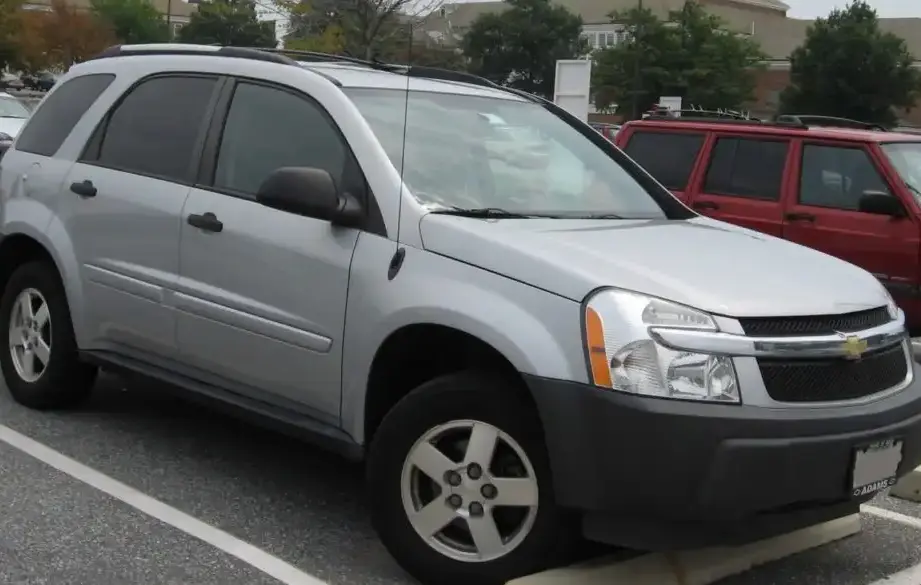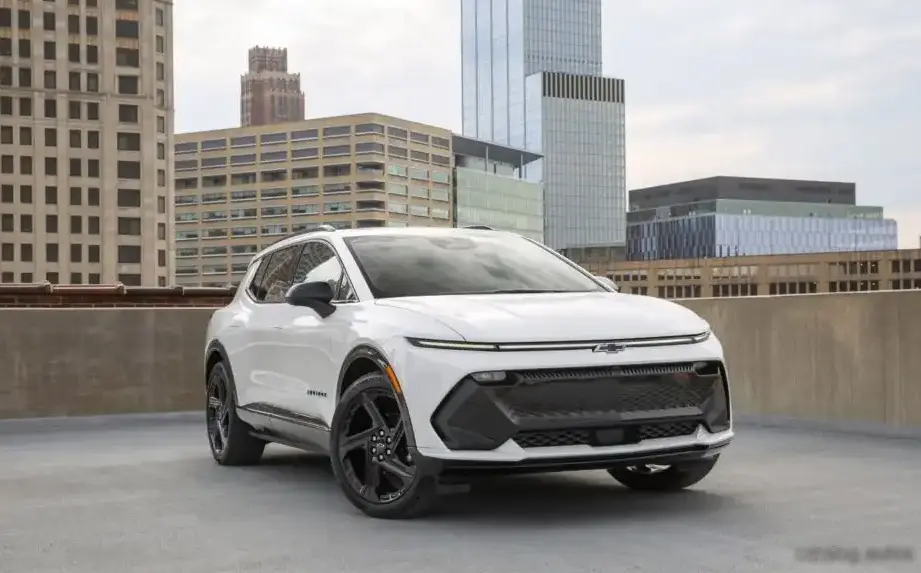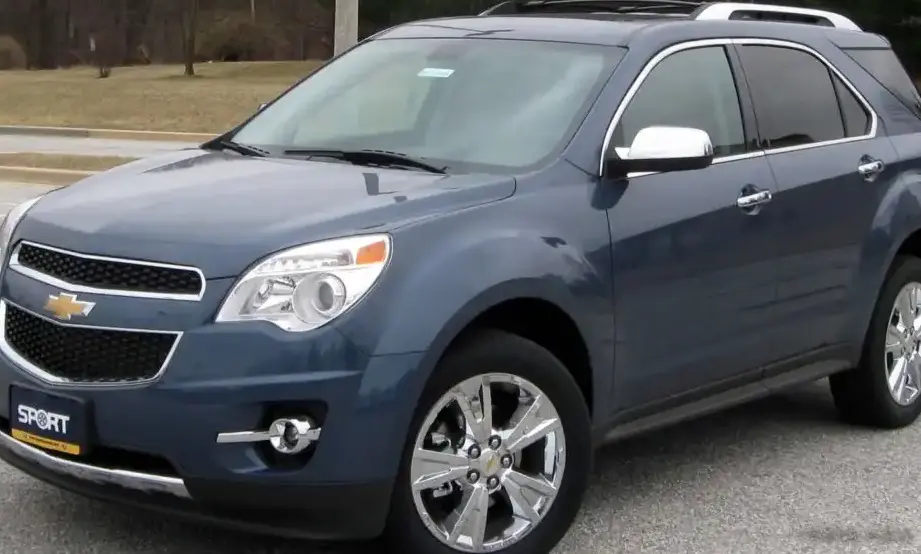
The Chevrolet Equinox II, specifically the 2.4 Ecotec variant with the six-speed automatic transmission, was a key model in Chevrolet’s lineup from its introduction in June 2009 until its discontinuation in February 2015. Representing the second generation of the Equinox, this version aimed to provide a balance of fuel efficiency, practicality, and modern features within the compact crossover SUV segment. It served as a mainstream offering, positioned between the base 2.0L model and the more powerful 3.6L V6, targeting families and individuals seeking a versatile and comfortable vehicle. This configuration was particularly popular in the North American market, where the Equinox competed with vehicles like the Honda CR-V and Toyota RAV4.
Technical Specifications
| Brand | Chevrolet |
| Model | Equinox |
| Generation | Equinox II |
| Type (Engine) | 2.4 Ecotec (182 Hp) Automatic |
| Start of production | June, 2009 |
| End of production | February, 2015 |
| Powertrain Architecture | Internal Combustion engine |
| Body type | SUV |
| Seats | 5 |
| Doors | 5 |
| Fuel consumption (urban) | 10.7 l/100 km (22 US mpg) |
| Fuel consumption (extra urban) | 7.4 l/100 km (31.8 US mpg) |
| Fuel Type | Petrol (Gasoline) |
| Power | 182 Hp |
| Torque | 233 Nm (171.85 lb.-ft.) |
| Engine layout | Front, Transverse |
| Engine Model/Code | LAF |
| Engine displacement | 2384 cm3 (145.48 cu. in.) |
| Number of cylinders | 4 |
| Engine configuration | Inline |
| Number of valves per cylinder | 4 |
| Fuel injection system | Direct injection |
| Valvetrain | DOHC |
| Engine oil capacity | 4.7 l (4.97 US qt | 4.14 UK qt) |
| Coolant capacity | 7.8 l (8.24 US qt | 6.86 UK qt) |
| Trunk (boot) space (minimum) | 1804 l (63.71 cu. ft.) |
| Fuel tank capacity | 71 l (18.76 US gal | 15.62 UK gal) |
| Length | 4770 mm (187.8 in.) |
| Width | 1842 mm (72.52 in.) |
| Height | 1760 mm (69.29 in.) |
| Wheelbase | 2858 mm (112.52 in.) |
| Front track | 1598 mm (62.91 in.) |
| Rear track | 1577 mm (62.09 in.) |
| Drivetrain | Front wheel drive |
| Number of gears | 6 |
| Gearbox type | Automatic transmission |
| Front suspension | Independent coil spring |
| Rear suspension | Independent multi-link spring suspension with stabilizer |
| Front brakes | Disc |
| Rear brakes | Disc |
| Assisting systems | ABS (Anti-lock braking system) |
| Steering type | Steering rack and pinion |
| Power steering | Electric Steering |
| Tires size | 225/65 R17 100T; 235/55 R18 99T; 235/55 R19 101H |
| Wheel rims size | 7J x 17 ET43; 7J x 18 ET46; 7J x 19 ET46 |
Powertrain & Engine Architecture
The heart of this Equinox variant is the 2.4-liter LAF inline-four cylinder engine. This engine belongs to Chevrolet’s Ecotec family, known for its focus on efficiency and refinement. The LAF engine features direct fuel injection, a double overhead camshaft (DOHC) valvetrain with four valves per cylinder, and variable valve timing (VVT) to optimize performance and fuel economy across the engine’s operating range. The direct injection system delivers fuel directly into the combustion chamber, improving combustion efficiency and reducing emissions. The six-speed automatic transmission, a Hydra-Matic 6T40, was specifically chosen for its smooth shifting and responsiveness. This transmission features adaptive learning, adjusting shift points based on driving style and conditions.
Driving Characteristics
The 182 horsepower and 171.85 lb.-ft. of torque produced by the 2.4L Ecotec engine, coupled with the six-speed automatic, provided adequate performance for everyday driving. Acceleration was respectable, though not particularly sporty. The automatic transmission was tuned for comfort and fuel efficiency, resulting in relatively smooth gear changes. Compared to the available 3.6L V6, the 2.4L offered less outright power, but it provided better fuel economy. The gear ratios were optimized for cruising, making it a comfortable highway vehicle. Drivers seeking more spirited performance often opted for the V6 or the manual transmission available on the base 2.0L model.
Equipment & Trim Levels
The 2.4L Ecotec Automatic Equinox typically came standard with features such as air conditioning, power windows and locks, a tilt and telescoping steering wheel, and a basic audio system. Higher trim levels, like the LT and LTZ, added features such as leather upholstery, heated front seats, a premium audio system, a rearview camera, and a power liftgate. Optional extras included a navigation system, a sunroof, and remote start. Interior upholstery was typically cloth on the base models, with leather available on higher trims. The dashboard layout was functional and straightforward, prioritizing ease of use.
Chassis & Braking
The Equinox II utilized a unibody construction for improved rigidity and crash safety. The front suspension consisted of independent coil springs, while the rear suspension employed an independent multi-link setup with a stabilizer bar. This suspension configuration aimed to provide a comfortable ride while maintaining reasonable handling characteristics. Braking duties were handled by disc brakes on all four wheels, equipped with an Anti-lock Braking System (ABS) for enhanced safety. The steering system was a rack-and-pinion setup with electric power steering, offering a light and responsive feel.
Market Reception & Comparison
The Chevrolet Equinox II 2.4L Automatic was generally well-received by automotive critics. It was praised for its comfortable ride, spacious interior, and competitive fuel economy. However, some reviewers noted that the engine could feel underpowered when fully loaded or when climbing hills. Compared to the 3.6L V6, the 2.4L offered significantly better fuel economy, achieving around 22 mpg in the city and 32 mpg on the highway. Reliability was generally good, with few major issues reported. The 2.4L engine proved to be durable and relatively maintenance-free.
Legacy
The Chevrolet Equinox II 2.4L Automatic remains a popular choice in the used car market due to its affordability, practicality, and relatively good reliability. The 2.4L Ecotec engine has proven to be a durable powertrain, capable of exceeding 150,000 miles with proper maintenance. While not the most exciting vehicle to drive, it provides a comfortable and reliable transportation option for families and individuals. Its blend of fuel efficiency and interior space continues to appeal to buyers seeking a versatile and value-oriented crossover SUV. Common maintenance items include regular oil changes, timing chain inspection (though generally robust), and occasional sensor replacements.