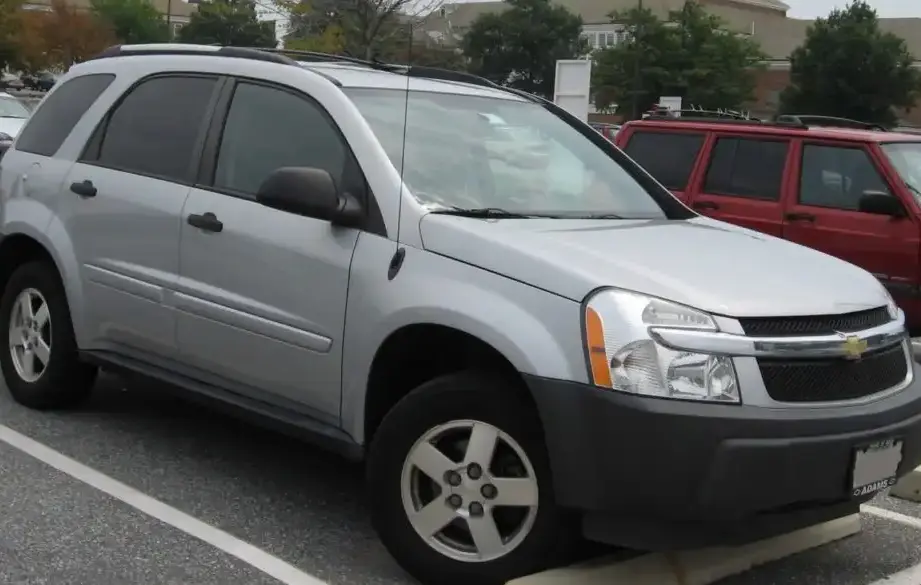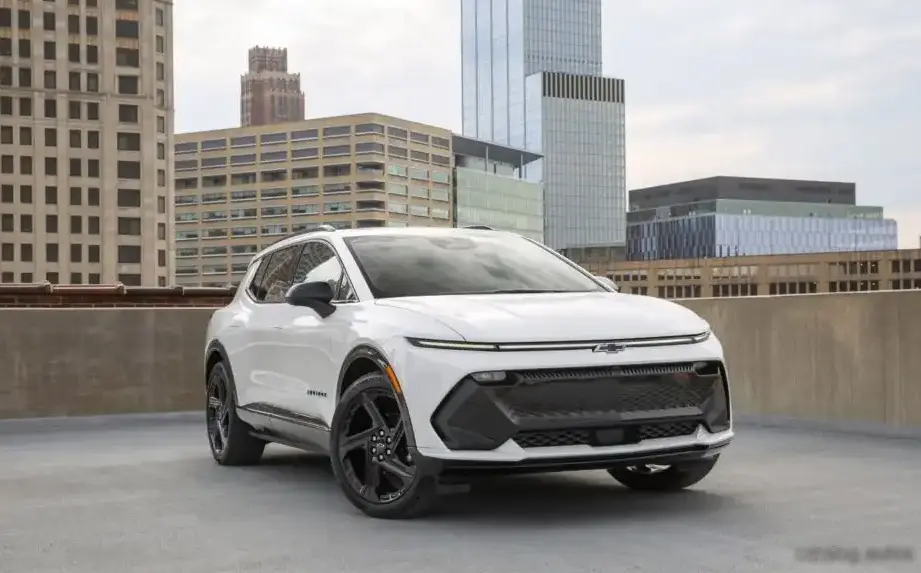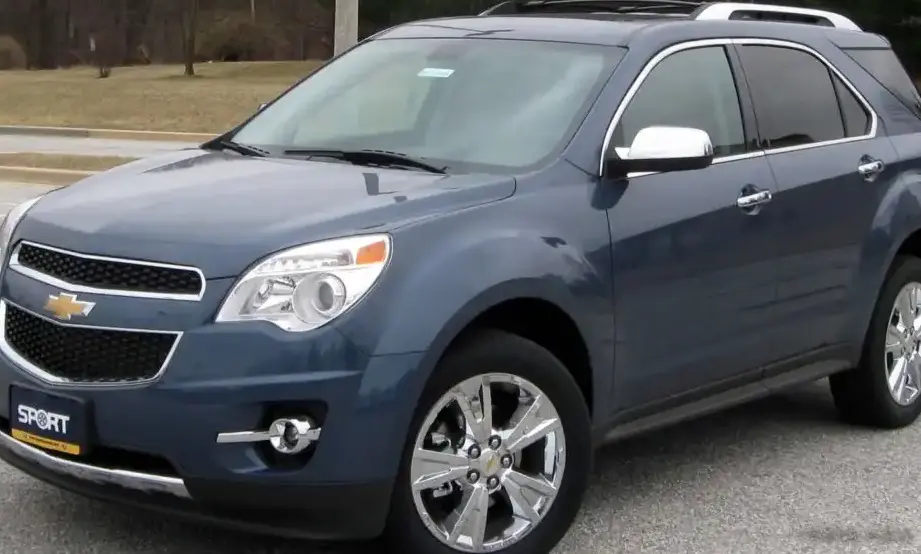
The Chevrolet Equinox II 3.0 V6 Automatic, produced from 2009 to 2012, represented a significant step up in performance and refinement for Chevrolet’s popular crossover SUV. Positioned as the premium engine option within the second-generation Equinox (2009-2017) lineup, it catered to buyers seeking more power and a smoother driving experience than the standard 2.4-liter four-cylinder engine. This variant occupied the top tier of the Equinox range, offering a compelling alternative to competitors like the Honda CR-V and Toyota RAV4. It was built on the GM Theta platform, shared with other GM vehicles of the era, and aimed to provide a comfortable and capable family vehicle.
Technical Specifications
| Brand | Chevrolet |
| Model | Equinox |
| Generation | Equinox II |
| Type (Engine) | 3.0 V6 (264 Hp) Automatic |
| Start of production | June, 2009 |
| End of production | 2012 |
| Powertrain Architecture | Internal Combustion engine |
| Body type | SUV |
| Seats | 5 |
| Doors | 5 |
| Fuel consumption (urban) | 13.8 l/100 km (17 US mpg, 20.5 UK mpg) |
| Fuel consumption (extra urban) | 9.8 l/100 km (24 US mpg, 28.8 UK mpg) |
| Fuel Type | Petrol (Gasoline) |
| Power | 264 Hp |
| Power per litre | 88.2 Hp/l |
| Torque | 301 Nm (222.01 lb.-ft.) |
| Engine layout | Front, Transverse |
| Engine Model/Code | LF1 |
| Engine displacement | 2994 cm3 (182.71 cu. in.) |
| Number of cylinders | 6 |
| Engine configuration | V-engine |
| Number of valves per cylinder | 4 |
| Fuel injection system | Direct injection |
| Valvetrain | DOHC |
| Engine oil capacity | 5.7 l (6.02 US qt | 5.02 UK qt) |
| Coolant | 10.2 l (10.78 US qt | 8.97 UK qt) |
| Trunk (boot) space (minimum) | 1804 l (63.71 cu. ft.) |
| Fuel tank capacity | 79 l (20.87 US gal | 17.38 UK gal) |
| Length | 4770 mm (187.8 in.) |
| Width | 1842 mm (72.52 in.) |
| Height | 1760 mm (69.29 in.) |
| Wheelbase | 2858 mm (112.52 in.) |
| Front track | 1598 mm (62.91 in.) |
| Rear track | 1577 mm (62.09 in.) |
| Drivetrain Architecture | Front wheel drive |
| Number of gears | 6 |
| Gearbox type | Automatic transmission |
| Front suspension | Independent coil spring |
| Rear suspension | Independent multi-link spring suspension with stabilizer |
| Front brakes | Disc |
| Rear brakes | Disc |
| Assisting systems | ABS (Anti-lock braking system) |
| Steering type | Steering rack and pinion |
| Power steering | Electric Steering |
| Tires size | 225/65 R17 100T; 235/55 R18 99T; 235/55 R19 101H |
| Wheel rims size | 7J x 17 ET43; 7J x 18 ET46; 7J x 19 ET46 |
Powertrain & Engine Architecture
The heart of the Equinox II 3.0 V6 was the LF1 engine, a 2.994-liter (182.7 cu in) naturally aspirated V6. This engine featured a 60-degree V-angle and utilized direct fuel injection, a technology that improved fuel efficiency and power output compared to traditional port fuel injection systems. The DOHC (Dual Overhead Camshaft) valvetrain, with four valves per cylinder, further enhanced breathing and performance. The LF1 engine produced 264 horsepower and 301 Nm (222 lb-ft) of torque. The engine was transversely mounted in the front of the vehicle. Paired with the LF1 engine was a six-speed automatic transmission, providing smooth and responsive shifts. This transmission was tuned for comfort and efficiency, prioritizing a relaxed driving experience over aggressive performance.
Driving Characteristics
The 3.0 V6 Automatic Equinox offered a noticeable improvement in acceleration and overall responsiveness compared to the base 2.4-liter model. While not a sports SUV, it provided ample power for merging onto highways, overtaking, and tackling moderate inclines. The six-speed automatic transmission contributed to a comfortable driving experience, with well-spaced gear ratios. The transmission’s programming favored smooth shifts and fuel economy, rather than aggressive downshifts. Compared to a manual transmission equipped Equinox (which wasn’t offered with the V6), the automatic provided convenience but sacrificed some driver engagement. The V6’s power delivery was linear and predictable, making it easy to modulate the throttle and maintain control in various driving conditions.
Equipment & Trim Levels
The 3.0 V6 Automatic was typically offered in the higher trim levels of the Equinox II, such as the LT and LTZ. Standard features included air conditioning, power windows and locks, a CD/MP3 player, and cruise control. Higher trims added features like leather upholstery, heated front seats, a power-adjustable driver’s seat, a sunroof, and a premium sound system. Optional extras included a navigation system, rear-seat entertainment system, and a trailering package. Interior materials were generally of good quality for the segment, with a focus on durability and comfort. The dashboard layout was straightforward and user-friendly, with logically placed controls.
Chassis & Braking
The Equinox II featured an independent coil spring suspension in the front and an independent multi-link suspension with a stabilizer bar in the rear. This suspension setup provided a comfortable ride quality, absorbing bumps and irregularities in the road surface effectively. The stabilizer bar helped to reduce body roll during cornering. All four wheels were equipped with disc brakes, providing adequate stopping power for the vehicle’s weight and performance. An Anti-lock Braking System (ABS) was standard, enhancing safety and control during emergency braking situations. Steering was rack-and-pinion with electric power assist, offering a light and responsive feel.
Market Reception & Comparison
The Chevrolet Equinox II 3.0 V6 Automatic was generally well-received by automotive critics. Reviewers praised its smooth and powerful engine, comfortable ride, and spacious interior. However, some criticized its fuel economy, which was lower than that of the four-cylinder model and some competitors. Compared to the 2.4-liter Equinox, the V6 offered a significant performance boost but came at the cost of increased fuel consumption. The V6 also commanded a higher price tag. Against competitors like the Honda CR-V and Toyota RAV4, the Equinox V6 offered a competitive level of performance and features, but its fuel economy was often slightly lower.
Legacy
The LF1 3.0 V6 engine proved to be a relatively reliable powertrain, with few widespread issues reported. However, like many GM engines of this era, it was susceptible to timing chain wear over high mileage. Regular oil changes and maintenance were crucial for ensuring long-term reliability. On the used car market, the Equinox II 3.0 V6 Automatic remains a popular choice for buyers seeking a comfortable and capable SUV with a bit more power. Its relatively affordable price and proven reliability make it a compelling option in the used vehicle segment. While not a standout performer, it represents a solid and dependable choice for families and individuals alike.