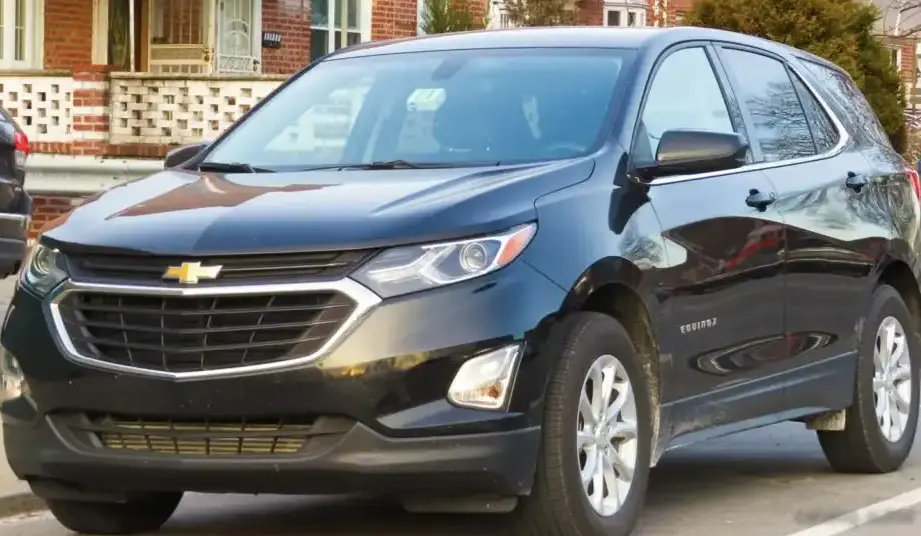
The Chevrolet Equinox III 1.6d (139 hp) AWD Automatic represents a significant offering in the compact SUV segment, produced from 2017 to 2021. Positioned as a mid-range option within the Equinox III lineup, this variant aimed to balance fuel efficiency with all-weather capability, appealing to buyers seeking a practical and comfortable crossover. It was primarily marketed in North America, where the demand for compact SUVs with all-wheel drive was steadily increasing. This generation Equinox, built on the GM Delta platform, represented a shift towards a more refined and fuel-conscious design compared to its predecessors.
Technical Specifications
| Brand | Chevrolet |
| Model | Equinox |
| Generation | Equinox III |
| Type (Engine) | 1.6d (139 Hp) AWD Automatic |
| Start of production | 2017 |
| End of production | 2021 |
| Powertrain Architecture | Internal Combustion engine |
| Body type | SUV |
| Seats | 5 |
| Doors | 5 |
| Fuel consumption (urban) | 7.6 l/100 km (30.9 US mpg) |
| Fuel consumption (extra urban) | 6.4 l/100 km (36.8 US mpg) |
| Fuel Type | Diesel |
| Weight-to-power ratio | 12.1 kg/Hp |
| Weight-to-torque ratio | 5.2 kg/Nm |
| Power | 139 Hp @ 3750 rpm |
| Power per litre | 87 Hp/l |
| Torque | 325 Nm @ 2000 rpm (239.71 lb.-ft. @ 2000 rpm) |
| Engine layout | Front, Longitudinal |
| Engine Model/Code | LH7 |
| Engine displacement | 1598 cm3 (97.52 cu. in.) |
| Number of cylinders | 4 |
| Engine configuration | Inline |
| Cylinder Bore | 79.7 mm (3.14 in.) |
| Piston Stroke | 80.1 mm (3.15 in.) |
| Compression ratio | 16:1 |
| Number of valves per cylinder | 4 |
| Fuel injection system | Diesel Commonrail |
| Engine aspiration | Turbocharger, Intercooler |
| Valvetrain | DOHC |
| Engine oil capacity | 5 l (5.28 US qt | 4.4 UK qt) |
| Coolant | 7.5 l (7.93 US qt | 6.6 UK qt) |
| Kerb Weight | 1675 kg (3692.74 lbs.) |
| Trunk (boot) space – minimum | 847 l (29.91 cu. ft.) |
| Trunk (boot) space – maximum | 1798 l (63.5 cu. ft.) |
| Fuel tank capacity | 59 l (15.59 US gal | 12.98 UK gal) |
| Length | 4651 mm (183.11 in.) |
| Width | 1844 mm (72.6 in.) |
| Height | 1661 mm (65.39 in.) |
| Wheelbase | 2725 mm (107.28 in.) |
| Front track | 1580 mm (62.2 in.) |
| Rear (Back) track | 1580 mm (62.2 in.) |
| Minimum turning circle | 11.4 m (37.4 ft.) |
| Drive wheel | All wheel drive (4×4) |
| Number of gears | 6 |
| Gearbox type | automatic transmission Hydra-Matic |
| Front suspension | Independent, type McPherson with coil spring and anti-roll bar |
| Rear suspension | Independent multi-link suspension |
| Front brakes | Ventilated discs |
| Rear brakes | Disc |
| Assisting systems | ABS (Anti-lock braking system) |
| Steering type | Steering rack and pinion |
| Power steering | Electric Steering |
| Tires size | 225/65 R17 |
| Wheel rims size | 17 |
Powertrain & Engine Architecture
The heart of the Equinox III 1.6d AWD is the GM-developed LH7 1.6-liter turbocharged diesel engine. This inline-four cylinder engine utilizes a common-rail direct fuel injection system, delivering fuel at extremely high pressure for optimized combustion. The engine features a single turbocharger with an intercooler to increase air density and boost power output. The double overhead camshaft (DOHC) valvetrain, with four valves per cylinder, contributes to efficient cylinder filling and exhaust scavenging. Paired with this engine is a six-speed Hydra-Matic automatic transmission, chosen for its smooth operation and efficiency. This transmission is designed to handle the engine’s torque output and provide adequate acceleration. The longitudinal engine placement was a key design element, facilitating the implementation of the all-wheel-drive system.
Driving Characteristics
The 139 hp and 325 Nm (239.71 lb-ft) of torque provided by the 1.6d engine delivered adequate, though not exhilarating, performance. Acceleration from 0 to 60 mph was typically in the 9-10 second range. The automatic transmission, while smooth, was tuned for fuel economy rather than aggressive shifting. Compared to the available 2.0-liter turbocharged gasoline engine, the 1.6d offered less outright power but significantly better fuel economy. The all-wheel-drive system provided enhanced traction in inclement weather, making it a practical choice for regions experiencing snow or rain. The gear ratios were optimized for highway cruising, providing a comfortable driving experience at higher speeds. However, passing maneuvers required careful planning due to the engine’s limited power reserve.
Equipment & Trim Levels
The 1.6d AWD Automatic trim typically included standard features such as air conditioning, a touchscreen infotainment system with Apple CarPlay and Android Auto compatibility, a rearview camera, and keyless entry. Higher trim levels, such as the LT and Premier, added features like leather upholstery, heated front seats, a power liftgate, and advanced safety technologies like blind-spot monitoring and rear cross-traffic alert. Optional extras included a panoramic sunroof, a Bose premium audio system, and navigation. Interior upholstery was generally cloth on the base trims, upgrading to leather on higher-spec models. The dashboard layout was functional and user-friendly, with a focus on ease of use.
Chassis & Braking
The Equinox III utilized an independent suspension system on both the front and rear axles. The front suspension employed a McPherson strut design with coil springs and an anti-roll bar, while the rear featured a multi-link setup. This configuration provided a comfortable ride quality and decent handling characteristics. Braking duties were handled by ventilated discs on the front wheels and solid discs on the rear. The anti-lock braking system (ABS) was standard, enhancing safety during emergency braking situations. The chassis was designed to provide a balance between ride comfort and handling stability, catering to the needs of a broad range of drivers.
Market Reception & Comparison
The Chevrolet Equinox III 1.6d AWD Automatic received mixed reviews. Critics praised its fuel efficiency and comfortable ride, but some found the engine to be underpowered, particularly when fully loaded or tackling steep inclines. Compared to competitors like the Honda CR-V and Toyota RAV4, the Equinox offered a more affordable price point but lacked the same level of refinement and performance. The 1.6d diesel engine offered better fuel economy than the gasoline options, but it also came with a higher initial cost and potentially higher maintenance expenses due to the complexities of diesel technology. Reliability reports were generally positive, with few major issues reported with the powertrain.
Legacy
The Chevrolet Equinox III 1.6d AWD Automatic has established itself as a reasonably reliable and practical used car option. The 1.6-liter diesel engine, while not known for its blistering performance, has proven to be durable with proper maintenance. The availability of all-wheel drive makes it a desirable choice in regions with harsh winters. As with any diesel engine, regular oil changes and fuel filter replacements are crucial for long-term reliability. Today, these Equinox models represent a value-oriented choice for buyers seeking a compact SUV with all-weather capability and decent fuel economy.