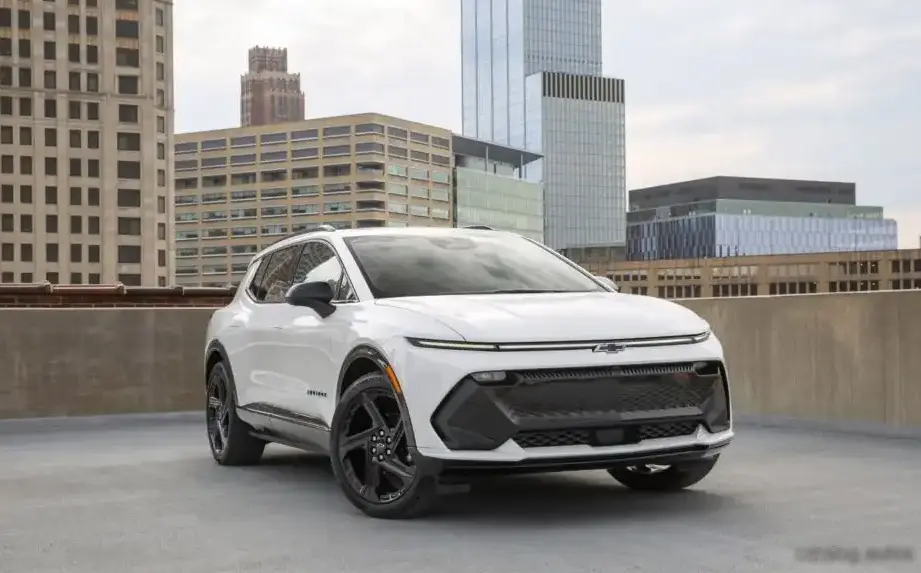
The Chevrolet Equinox III, produced from 2017 to 2021, represented a significant step forward for Chevrolet’s popular compact SUV. Among the various configurations offered, the 2.0i (256 Hp) AWD Automatic variant occupied a premium position in the lineup, offering a blend of performance, technology, and all-weather capability. This model year marked the beginning of the third generation (often referred to internally as the Equinox III) and was built on the GM Theta platform, shared with other vehicles like the GMC Terrain and Buick Envision. The 2.0i AWD Automatic was positioned as a top-tier trim, appealing to buyers seeking a more engaging driving experience and enhanced traction compared to the base 1.5L engine option.
Technical Specifications
| Brand | Chevrolet |
| Model | Equinox |
| Generation | Equinox III |
| Type (Engine) | 2.0i (256 Hp) AWD Automatic |
| Start of production | 2017 year |
| End of production | 2021 year |
| Powertrain Architecture | Internal Combustion engine |
| Body type | SUV |
| Seats | 5 |
| Doors | 5 |
| Fuel consumption (economy) – urban | 10.7 l/100 km (22 US mpg, 26.4 UK mpg, 9.3 km/l) |
| Fuel consumption (economy) – extra urban | 8.4 l/100 km (28 US mpg, 33.6 UK mpg, 11.9 km/l) |
| Fuel Type | Petrol (Gasoline) |
| Weight-to-power ratio | 6.6 kg/Hp, 152.4 Hp/tonne |
| Weight-to-torque ratio | 4.8 kg/Nm, 210.1 Nm/tonne |
| Power | 256 Hp @ 5500 rpm |
| Power per litre | 128.1 Hp/l |
| Torque | 353 Nm @ 2500-4500 rpm (260.36 lb.-ft. @ 2500-4500 rpm) |
| Engine layout | Front, Longitudinal |
| Engine Model/Code | LTG |
| Engine displacement | 1998 cm3 (121.93 cu. in.) |
| Number of cylinders | 4 |
| Engine configuration | Inline |
| Cylinder Bore | 86 mm (3.39 in.) |
| Piston Stroke | 86 mm (3.39 in.) |
| Compression ratio | 9.5:1 |
| Number of valves per cylinder | 4 |
| Fuel injection system | Direct injection |
| Engine aspiration | Turbocharger, Intercooler |
| Valvetrain | DOHC-CVVT |
| Engine oil capacity | 5.7 l (6.02 US qt | 5.02 UK qt) |
| Coolant | 7.8 l (8.24 US qt | 6.86 UK qt) |
| Kerb Weight | 1680 kg (3703.77 lbs.) |
| Trunk (boot) space – minimum | 847 l (29.91 cu. ft.) |
| Trunk (boot) space – maximum | 1798 l (63.5 cu. ft.) |
| Fuel tank capacity | 59 l (15.59 US gal | 12.98 UK gal) |
| Permitted trailer load with brakes (12%) | 1588 kg (3500.94 lbs.) |
| Length | 4651 mm (183.11 in.) |
| Width | 1844 mm (72.6 in.) |
| Height | 1661 mm (65.39 in.) |
| Wheelbase | 2725 mm (107.28 in.) |
| Front track | 1580 mm (62.2 in.) |
| Rear (Back) track | 1580 mm (62.2 in.) |
| Drive wheel | All wheel drive (4×4) |
| Number of gears and type of gearbox | 9 gears, automatic transmission Hydra-Matic |
| Front suspension | Independent, type McPherson with coil spring and anti-roll bar |
| Rear suspension | Independent multi-link suspension |
| Front brakes | Ventilated discs |
| Rear brakes | Disc |
| Assisting systems | ABS (Anti-lock braking system) |
| Steering type | Steering rack and pinion |
| Power steering | Electric Steering |
| Tires size | 225/60 R18 |
| Wheel rims size | 18 |
Powertrain & Engine Architecture
The heart of the Equinox III 2.0i AWD Automatic is the LTG 1.998-liter turbocharged inline-four cylinder engine. This engine is a member of GM’s Small Engine Family (SEF), known for its efficiency and responsiveness. The LTG utilizes direct injection, a technology that precisely meters fuel directly into the combustion chamber, improving fuel economy and reducing emissions. The engine also features a twin-scroll turbocharger, which minimizes turbo lag and provides a broader torque curve. Variable valve timing (CVVT) on both the intake and exhaust valves further optimizes engine performance across the rev range. The engine is paired with a sophisticated nine-speed Hydra-Matic automatic transmission. This transmission offers a wide range of gear ratios, contributing to both fuel efficiency and smooth acceleration. The all-wheel-drive system is an automatic on-demand system, seamlessly engaging the rear wheels when traction is needed.
Driving Characteristics
The 256 horsepower and 353 lb-ft of torque delivered by the 2.0L turbo engine provide a noticeable performance upgrade over the base 1.5L engine. Acceleration is brisk, and the nine-speed transmission generally shifts smoothly and intelligently. While not a sports SUV, the 2.0i AWD offers ample power for highway merging and passing maneuvers. The all-wheel-drive system provides enhanced stability and traction in inclement weather conditions. Compared to manual transmission equipped versions (which were not widely available in the US market for this engine), the automatic transmission prioritizes convenience and ease of use, though it may slightly diminish overall fuel economy and driver engagement. The gear ratios are tuned for a balance between acceleration and fuel efficiency, with taller gears for highway cruising.
Equipment & Trim Levels
The 2.0i AWD Automatic trim typically included a generous array of standard features. These often included leather upholstery, heated front seats, a power-adjustable driver’s seat, a touchscreen infotainment system with Apple CarPlay and Android Auto compatibility, a rearview camera, and a suite of advanced safety features such as blind-spot monitoring and rear cross-traffic alert. Optional extras could include a panoramic sunroof, a Bose premium audio system, adaptive cruise control, and a navigation system. Interior materials were generally of good quality for the segment, with a focus on comfort and practicality. Dashboard configurations were relatively straightforward and user-friendly.
Chassis & Braking
The Equinox III utilizes an independent suspension system at all four corners. The front suspension employs a McPherson strut design with coil springs and an anti-roll bar, while the rear features a multi-link setup. This suspension configuration provides a comfortable ride quality while maintaining reasonable handling characteristics. The 2.0i AWD models typically featured larger brakes than the base models, with ventilated discs at the front and solid discs at the rear. Anti-lock brakes (ABS) were standard, along with electronic stability control and traction control systems. Steering is provided by an electric power steering system, offering a light and responsive feel.
Market Reception & Comparison
The Chevrolet Equinox III 2.0i AWD Automatic was generally well-received by automotive critics. Reviewers praised its spacious interior, comfortable ride, and strong engine performance. However, some noted that the infotainment system could be slow to respond at times. Compared to competitors like the Honda CR-V and Toyota RAV4, the Equinox offered a more powerful engine option, but its fuel economy was generally slightly lower. The Equinox also offered a more competitive price point than some of its rivals. Reliability reports have been mixed, with some owners reporting issues with the automatic transmission and turbocharger.
Legacy
The Chevrolet Equinox III 2.0i AWD Automatic remains a popular choice in the used car market. The LTG engine, while not without its potential issues, is generally considered to be a robust and capable powerplant. Regular maintenance, including oil changes and timely replacement of wear items, is crucial for ensuring long-term reliability. The availability of parts and service is generally good, given the Equinox’s widespread popularity. The 2.0i AWD Automatic variant continues to appeal to buyers seeking a well-equipped and capable compact SUV with a bit more performance than the base models offer.