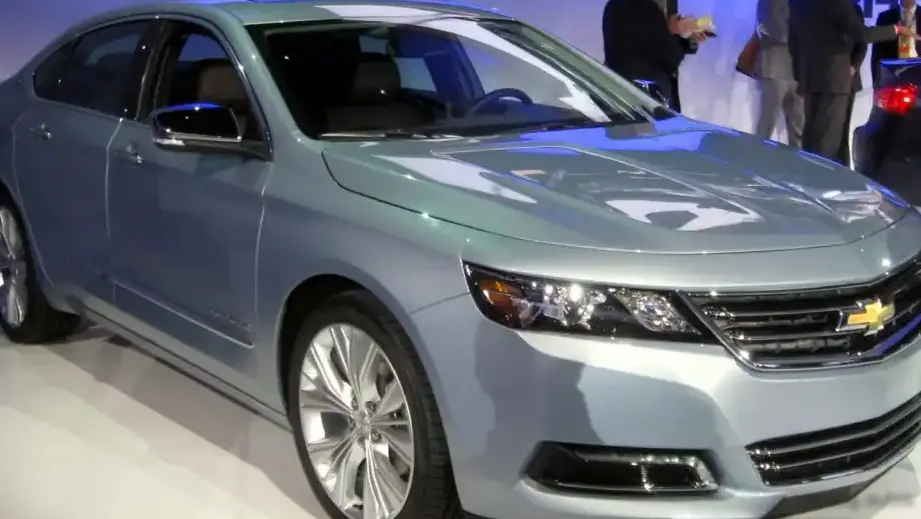
The Chevrolet Impala X 2.5 Ecotec, produced from 2013 to 2016, represented a significant iteration of Chevrolet’s full-size sedan. Positioned as a mainstream offering within the tenth generation Impala (2014-2020), this variant utilized a 2.5-liter four-cylinder engine paired with a six-speed automatic transmission. It aimed to provide a balance of fuel efficiency and adequate performance for everyday driving, appealing to a broader customer base than the available V6 options. The Impala X, in general, was Chevrolet’s attempt to recapture market share in a segment increasingly dominated by foreign competitors, offering a more modern and refined experience than previous Impala generations.
Technical Specifications
| Brand | Chevrolet |
| Model | Impala |
| Generation | Impala X |
| Type (Engine) | 2.5 Ecotec (196 Hp) Automatic |
| Start of production | 2013 |
| End of production | 2016 |
| Powertrain Architecture | Internal Combustion engine |
| Body type | Sedan |
| Seats | 5 |
| Doors | 4 |
| Fuel consumption (urban) | 11.2 l/100 km (21 US mpg) |
| Fuel consumption (extra urban) | 7.5 l/100 km (31.4 US mpg) |
| Fuel Type | Petrol (Gasoline) |
| Weight-to-power ratio | 8.5 kg/Hp |
| Weight-to-torque ratio | 6.6 kg/Nm |
| Power | 196 Hp @ 6300 rpm |
| Power per litre | 79.7 Hp/l |
| Torque | 253 Nm @ 4400 rpm (186.6 lb.-ft. @ 4400 rpm) |
| Engine layout | Front, Transverse |
| Engine Model/Code | LKW |
| Engine displacement | 2458 cm3 (150 cu. in.) |
| Number of cylinders | 4 |
| Engine configuration | Inline |
| Cylinder Bore | 88 mm (3.46 in.) |
| Piston Stroke | 101 mm (3.98 in.) |
| Compression ratio | 11.25:1 |
| Number of valves per cylinder | 4 |
| Fuel injection system | Direct injection |
| Engine aspiration | Naturally aspirated engine |
| Valvetrain | DOHC |
| Engine oil capacity | 4.7 l (4.97 US qt | 4.14 UK qt) |
| Coolant | 7.4 l (7.82 US qt | 6.51 UK qt) |
| Kerb Weight | 1669 kg (3679.52 lbs.) |
| Trunk (boot) space – minimum | 532 l (18.79 cu. ft.) |
| Fuel tank capacity | 70 l (18.49 US gal | 15.4 UK gal) |
| Permitted trailer load with brakes (12%) | 454 kg (1000.9 lbs.) |
| Length | 5113 mm (201.3 in.) |
| Width | 1854 mm (72.99 in.) |
| Height | 1496 mm (58.9 in.) |
| Wheelbase | 2837 mm (111.69 in.) |
| Front track | 1580 mm (62.2 in.) |
| Rear (Back) track | 1576 mm (62.05 in.) |
| Minimum turning circle (turning diameter) | 11.75 m (38.55 ft.) |
| Drivetrain Architecture | Front wheel drive |
| Number of gears and type of gearbox | 6 gears, automatic transmission |
| Front suspension | Independent, type McPherson with coil spring and anti-roll bar |
| Rear suspension | Independent multi-link spring suspension with stabilizer |
| Front brakes | Ventilated discs |
| Rear brakes | Disc |
| Assisting systems | ABS (Anti-lock braking system) |
| Steering type | Steering rack and pinion |
| Power steering | Electric Steering |
| Tires size | 235/50 R18; 245/45 R19; 245/40 R20 |
| Wheel rims size | 18; 19; 20 |
Introduction
The Chevrolet Impala X 2.5 Ecotec, launched in 2013, was a key component of the tenth-generation Impala’s revitalization effort. Built on the GM Epsilon II platform, also underpinning models like the Buick Regal and Opel Insignia, the Impala aimed to offer a more sophisticated driving experience and improved interior quality compared to its predecessors. The 2.5-liter Ecotec engine and six-speed automatic transmission combination was positioned as the entry-level powertrain, offering a balance between affordability and acceptable performance. It served as the foundation for the Impala lineup, with the 3.6-liter V6 models catering to buyers seeking more power.
Powertrain & Engine Architecture
The heart of the Impala X 2.5 Ecotec is the LKW engine, a 2.5-liter inline-four cylinder powerplant. This engine utilizes direct fuel injection, a technology that improves fuel efficiency and power output by injecting fuel directly into the combustion chamber. The engine also features a double overhead camshaft (DOHC) valvetrain with four valves per cylinder, optimizing airflow for enhanced performance. The six-speed automatic transmission, a common GM unit, was chosen for its smooth shifting and efficiency. While not a performance-oriented transmission, it was well-suited to the engine’s torque characteristics. The transmission’s gear ratios were tuned for fuel economy, with a relatively tall final drive. The engine’s relatively modest output meant that the transmission didn’t need to be overly robust, contributing to its reliability.
Driving Characteristics
The 196-horsepower and 186 lb-ft of torque delivered by the 2.5-liter Ecotec engine provided adequate, but not exhilarating, performance. Acceleration from 0 to 60 mph typically took around 8.5-9.5 seconds. The automatic transmission generally shifted smoothly, but could sometimes feel hesitant during quick acceleration maneuvers. Compared to the V6-equipped Impalas, the 2.5-liter model felt noticeably slower, particularly when fully loaded or climbing hills. However, the engine was generally refined and quiet during normal driving conditions. The gear ratios were optimized for highway cruising, providing a comfortable and relatively fuel-efficient experience. The front-wheel-drive configuration offered predictable handling, but lacked the dynamic capabilities of rear-wheel-drive or all-wheel-drive vehicles.
Equipment & Trim Levels
The Impala X 2.5 Ecotec typically came standard with a respectable array of features. These included air conditioning, power windows and locks, a basic audio system with USB connectivity, and cloth upholstery. Higher trim levels, such as the LT and Premier, added features like leather upholstery, a more advanced infotainment system with a touchscreen display, heated front seats, and a premium sound system. Optional extras available for the 2.5 Ecotec included a sunroof, navigation system, and various driver-assistance technologies like blind-spot monitoring and rear cross-traffic alert. The interior design was generally modern and well-appointed, although the materials used in the base model were not as luxurious as those found in higher-end trims.
Chassis & Braking
The Impala X 2.5 Ecotec utilized an independent suspension system at all four corners. The front suspension employed a McPherson strut design with coil springs and an anti-roll bar, while the rear suspension featured a multi-link setup with a stabilizer bar. This suspension configuration provided a comfortable ride quality, absorbing bumps and imperfections in the road effectively. Braking duties were handled by ventilated discs at the front and solid discs at the rear. The braking system was equipped with ABS (Anti-lock Braking System) to enhance safety and control during emergency stops. The steering system was a rack-and-pinion setup with electric power steering, providing light and responsive steering feel.
Market Reception & Comparison
Critics generally viewed the Impala X 2.5 Ecotec as a competent and practical sedan, but not a standout performer. The engine was praised for its fuel efficiency, achieving around 21 mpg in the city and 31 mpg on the highway. However, its lack of power was a common criticism, particularly when compared to the V6 models. The automatic transmission received mixed reviews, with some testers finding it smooth and responsive, while others noted occasional hesitation. Compared to competitors like the Toyota Camry and Honda Accord, the Impala offered a more spacious interior and a more distinctive design, but lacked the same level of refinement and reliability. The 2.5L engine offered a lower price point, making it attractive to budget-conscious buyers.
Legacy
The 2.5-liter Ecotec engine and six-speed automatic transmission combination proved to be relatively reliable in the Impala X. While not without its minor issues, such as occasional oil leaks and sensor failures, the powertrain generally held up well over time. In the used car market, the Impala X 2.5 Ecotec represents a good value proposition for buyers seeking a spacious and comfortable full-size sedan at an affordable price. Its fuel efficiency and relatively low maintenance costs make it an attractive option for daily commuting and family transportation. However, potential buyers should be aware of the engine’s limited power and the potential for minor mechanical issues as the vehicle ages.