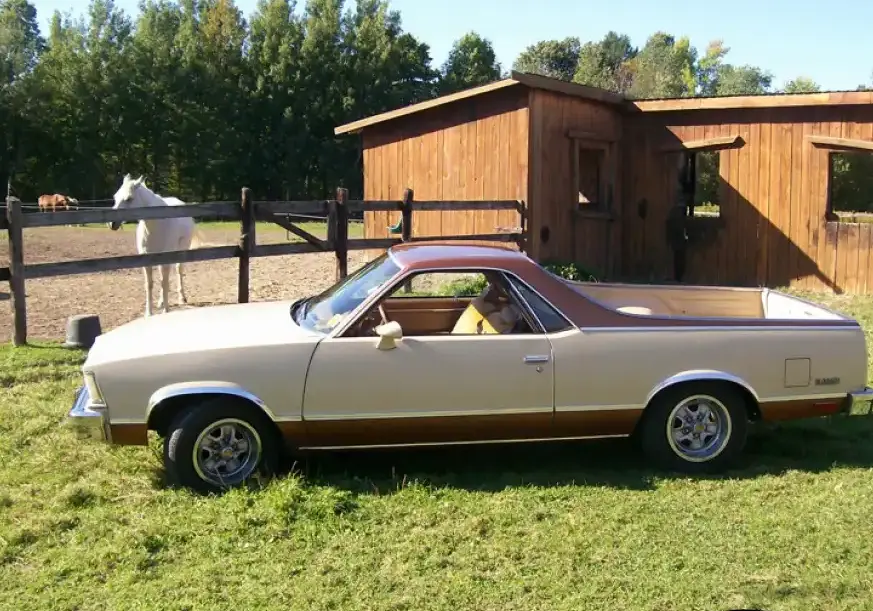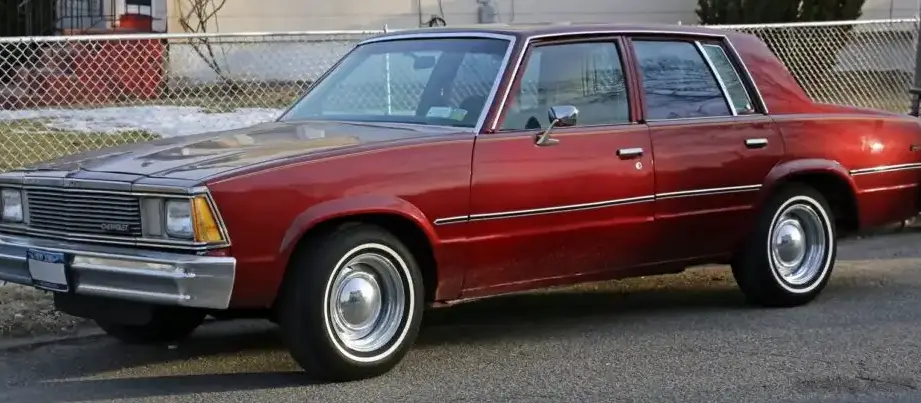
The Chevrolet Malibu IV Sedan, produced for the 1978 and 1979 model years, represented a significant downsizing for Chevrolet’s mid-size offering. Following the trend of the late 1970s towards more fuel-efficient vehicles, the fourth-generation Malibu moved to a smaller platform, a departure from the larger, more traditionally-styled Malibus of the past. The 3.8L V6 with a catalytic converter and automatic transmission was a key variant within the lineup, positioned as a comfortable, if not particularly sporty, option for family buyers. It was built on the A-body platform, shared with other GM vehicles like the Oldsmobile Cutlass and Pontiac Grand Prix.
Technical Specifications
| Brand | Chevrolet |
| Model | Malibu |
| Generation | Malibu IV Sedan |
| Type (Engine) | 3.8 V6 (115 Hp) CAT Automatic |
| Start of production | 1978 |
| End of production | 1979 |
| Powertrain Architecture | Internal Combustion engine |
| Body type | Sedan |
| Seats | 6 |
| Doors | 4 |
| Fuel Type | Petrol (Gasoline) |
| Weight-to-power ratio | 12.3 kg/Hp, 81.4 Hp/tonne |
| Weight-to-torque ratio | 5.5 kg/Nm, 182.7 Nm/tonne |
| Power | 115 Hp @ 3800 rpm |
| Power per litre | 30.3 Hp/l |
| Torque | 258 Nm @ 2000 rpm, 190.29 lb.-ft. @ 2000 rpm |
| Engine layout | Front, Longitudinal |
| Engine displacement | 3791 cm3, 231.34 cu. in. |
| Number of cylinders | 6 |
| Engine configuration | V-engine |
| Cylinder Bore | 96.5 mm, 3.8 in. |
| Piston Stroke | 86.4 mm, 3.4 in. |
| Compression ratio | 8:1 |
| Number of valves per cylinder | 2 |
| Fuel injection system | Carburettor |
| Engine aspiration | Naturally aspirated engine |
| Valvetrain | OHV |
| Engine oil capacity | 4 l, 4.23 US qt | 3.52 UK qt |
| Kerb Weight | 1412 kg, 3112.93 lbs |
| Trunk (boot) space – maximum | 470 l, 16.6 cu. ft |
| Fuel tank capacity | 68 l, 17.96 US gal | 14.96 UK gal |
| Length | 4895 mm, 192.72 in |
| Width | 1816 mm, 71.5 in |
| Height | 1354 mm, 53.31 in |
| Wheelbase | 2745 mm, 108.07 in |
| Front track | 1486 mm, 58.5 in |
| Rear (Back) track | 1467 mm, 57.76 in |
| Front overhang | 915 mm, 36.02 in |
| Rear overhang | 1235 mm, 48.62 in |
| Ride height (ground clearance) | 137 mm, 5.39 in |
| Drag coefficient (Cd) | 0.45 |
| Minimum turning circle (turning diameter) | 12.2 m, 40.03 ft |
| Approach angle | 20° |
| Departure angle | 15° |
| Ramp-over (brakeover) angle | 14° |
| Drivetrain Architecture | The Internal combustion engine (ICE) drives the rear wheels of the vehicle. |
| Drive wheel | Rear wheel drive |
| Number of gears and type of gearbox | 3 gears, automatic transmission |
| Front suspension | Independent, type McPherson with coil spring and anti-roll bar |
| Rear suspension | dependent spring suspension, Transverse stabilizer, Trailing arm |
| Front brakes | Ventilated discs |
| Rear brakes | Drum |
| Steering type | Steering rack and pinion |
| Tires size | 185/75 R14 |
| Wheel rims size | 6.0J x 14 |
Powertrain & Engine Architecture
The heart of this Malibu variant was the 3.8-liter (231 cubic inch) Chevrolet V6 engine. This engine, internally designated as the 3800, was a staple of GM’s lineup for many years. The 1978-79 version featured a two-barrel carburetor, overhead valve (OHV) valvetrain, and a relatively low 8:1 compression ratio, necessitated by the use of leaded gasoline and the introduction of catalytic converters to meet increasingly stringent emissions standards. The catalytic converter, denoted by the “CAT” in the model name, was a crucial component in reducing harmful exhaust emissions. The engine produced 115 horsepower at 3800 rpm and 190 lb-ft of torque at 2000 rpm. The automatic transmission was a three-speed TH350 unit, known for its durability and relatively smooth operation. The engine was mounted longitudinally in the front of the vehicle, driving the rear wheels.
Driving Characteristics
The 3.8L V6 automatic Malibu offered a comfortable, but not particularly exhilarating, driving experience. The automatic transmission, while smooth, did detract from overall acceleration compared to the available manual transmission options. The 3-speed automatic’s gear ratios were optimized for cruising and fuel economy rather than outright performance. Acceleration from a standstill was adequate, but passing maneuvers required careful planning. The rear-wheel-drive configuration provided a balanced feel, but the suspension, while comfortable, wasn’t designed for aggressive cornering. Compared to the more powerful V8 options available in other GM A-body cars, the 3.8L Malibu was noticeably slower, but it offered a significant improvement in fuel economy.
Equipment & Trim Levels
The 3.8L automatic Malibu typically came standard with features considered essential for the time, including cloth upholstery, a basic AM radio, and manual windows and locks. Air conditioning was a popular option. The interior was generally functional and durable, though not luxurious. Higher trim levels offered upgrades such as upgraded cloth or vinyl upholstery, a more comprehensive sound system, and power windows and locks. The Malibu’s interior design was fairly conservative, reflecting the overall focus on practicality and affordability.
Chassis & Braking
The Malibu IV Sedan utilized a body-on-frame construction, typical for American cars of the era. The front suspension was independent, employing McPherson struts with coil springs and an anti-roll bar. The rear suspension was a more traditional solid axle setup with coil springs and a transverse stabilizer bar. Braking duties were handled by ventilated discs at the front and drum brakes at the rear. Steering was via a rack-and-pinion system. The suspension was tuned for a comfortable ride, prioritizing smoothness over sporty handling. The 185/75 R14 tires provided adequate grip for everyday driving conditions.
Market Reception & Comparison
The 3.8L automatic Malibu was generally well-received as a practical and affordable family sedan. Critics noted its comfortable ride and improved fuel economy compared to larger, V8-powered cars. However, it was often criticized for its lack of performance and somewhat bland styling. Compared to the six-cylinder manual transmission versions, the automatic suffered a noticeable performance penalty. Against competitors like the Ford Fairmont and Dodge Dart, the Malibu offered a similar level of comfort and features at a competitive price point. Fuel economy was respectable for the time, but not class-leading.
Legacy
The 1978-79 Chevrolet Malibu IV Sedan, particularly the 3.8L V6 automatic variant, represents a transitional period in American automotive history. It marked a shift towards smaller, more fuel-efficient vehicles in response to changing consumer preferences and government regulations. While not a particularly memorable or collectible car, the 3.8L V6 proved to be a durable and reliable powertrain. Today, these Malibus are relatively rare and often found in well-preserved condition, appealing to collectors interested in 1970s American automotive history. The 3800 V6 engine itself went on to become a long-lived and highly regarded powerplant in various GM vehicles for decades to come, cementing its place in automotive lore.