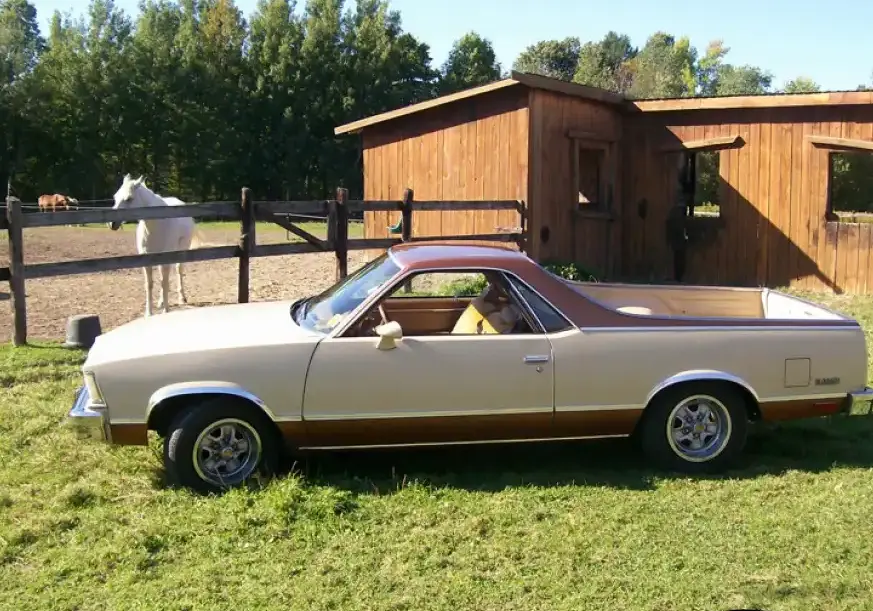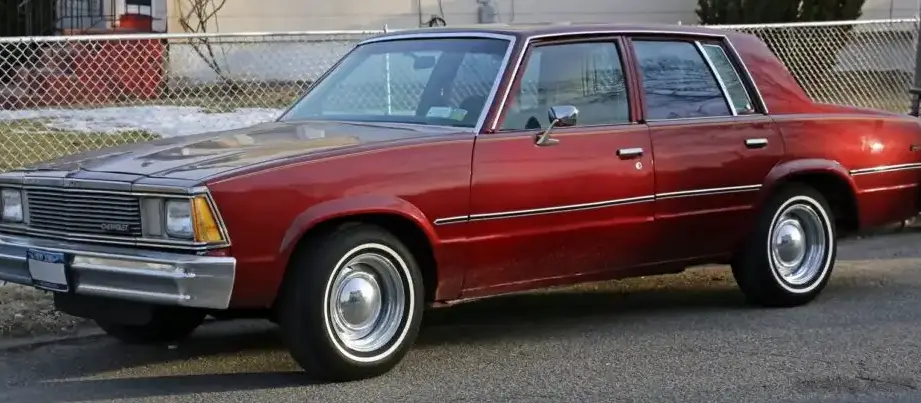
The Chevrolet Malibu IV Sedan, produced for the 1979 and 1980 model years, represented a downsized iteration of Chevrolet’s popular mid-size offering. Positioned as a more fuel-efficient alternative to the larger, traditional American sedans, the Malibu IV was built on the A-body platform, shared with other GM vehicles like the Oldsmobile Cutlass and Pontiac Grand Prix. Within the Malibu IV lineup, the 4.4 V8 (120 hp) with a three-speed automatic transmission represented a relatively base-level configuration, aimed at buyers prioritizing comfortable cruising over outright performance. This variant was offered during a period of significant change in the automotive industry, driven by tightening emissions regulations and the oil crises of the 1970s.
Technical Specifications
| Brand | Chevrolet |
| Model | Malibu |
| Generation | Malibu IV Sedan |
| Type (Engine) | 4.4 V8 (120 Hp) CAT Automatic |
| Start of production | 1979 |
| End of production | 1980 |
| Powertrain Architecture | Internal Combustion engine |
| Body type | Sedan |
| Seats | 6 |
| Doors | 4 |
| Fuel Type | Petrol (Gasoline) |
| Weight-to-power ratio | 12.2 kg/Hp, 82.2 Hp/tonne |
| Weight-to-torque ratio | 5 kg/Nm, 199.5 Nm/tonne |
| Power | 120 Hp @ 3600 rpm |
| Power per litre | 27.3 Hp/l |
| Torque | 291 Nm @ 2000 rpm, 214.63 lb.-ft. @ 2000 rpm |
| Engine layout | Front, Longitudinal |
| Engine displacement | 4389 cm3, 267.83 cu. in. |
| Number of cylinders | 8 |
| Engine configuration | V-engine |
| Cylinder Bore | 88.9 mm, 3.5 in. |
| Piston Stroke | 88.4 mm, 3.48 in. |
| Compression ratio | 8.3:1 |
| Number of valves per cylinder | 2 |
| Fuel injection system | Carburettor |
| Engine aspiration | Naturally aspirated engine |
| Valvetrain | OHV |
| Engine oil capacity | 4 l, 4.23 US qt | 3.52 UK qt |
| Kerb Weight | 1459 kg, 3216.54 lbs |
| Trunk (boot) space – maximum | 470 l, 16.6 cu. ft |
| Fuel tank capacity | 68 l, 17.96 US gal | 14.96 UK gal |
| Length | 4895 mm, 192.72 in |
| Width | 1816 mm, 71.5 in |
| Height | 1354 mm, 53.31 in |
| Wheelbase | 2745 mm, 108.07 in |
| Front track | 1486 mm, 58.5 in |
| Rear (Back) track | 1467 mm, 57.76 in |
| Front overhang | 915 mm, 36.02 in |
| Rear overhang | 1235 mm, 48.62 in |
| Ride height (ground clearance) | 137 mm, 5.39 in |
| Minimum turning circle (turning diameter) | 12.2 m, 40.03 ft |
| Approach angle | 23° |
| Departure angle | 16° |
| Ramp-over (brakeover) angle | 14° |
| Drivetrain Architecture | The Internal combustion engine (ICE) drives the rear wheels of the vehicle. |
| Drive wheel | Rear wheel drive |
| Number of gears and type of gearbox | 3 gears, automatic transmission |
| Front suspension | Independent, type McPherson with coil spring and anti-roll bar |
| Rear suspension | dependent spring suspension, Transverse stabilizer, Trailing arm |
| Front brakes | Ventilated discs |
| Rear brakes | Drum |
| Steering type | Steering rack and pinion |
| Tires size | 185/75 R14 |
| Wheel rims size | 6.0J x 14 |
Powertrain & Engine Architecture
The heart of this Malibu variant was the 4.4-liter (268 cubic inch) Chevrolet small-block V8 engine. While bearing the family resemblance to the more potent versions found in other GM vehicles, this particular iteration was equipped with a two-barrel carburetor and a relatively low 8.3:1 compression ratio, primarily to meet increasingly stringent emissions standards. The engine utilized a traditional overhead valve (OHV) valvetrain with two valves per cylinder. The “CAT” designation in the model name indicates the presence of a catalytic converter, a crucial component in reducing harmful exhaust emissions. The three-speed automatic transmission, a TH350 unit, was a common choice for this class of vehicle, offering smooth, if not particularly sporty, shifts. The transmission was geared for comfortable highway cruising, prioritizing fuel economy over rapid acceleration.
Driving Characteristics
The 120 horsepower and 214 lb-ft of torque delivered by this combination resulted in adequate, but not exhilarating, performance. Acceleration from 0 to 60 mph was estimated to be around 11-12 seconds. The automatic transmission’s gear ratios were optimized for relaxed driving, with a focus on smooth transitions rather than aggressive downshifts. Compared to the available manual transmission or the larger V8 options, this 4.4L automatic Malibu felt noticeably less responsive. However, it provided a comfortable and predictable driving experience, well-suited for everyday commuting and long-distance travel. The rear-wheel-drive layout offered balanced handling, but the relatively soft suspension tuning prioritized ride comfort over sporty cornering.
Equipment & Trim Levels
The 1.8L Automatic Malibu typically came standard with features considered essential for the time, including cloth upholstery, a basic AM radio, and manual windows and locks. Air conditioning was a popular option, as was power steering. The interior design was functional and straightforward, reflecting the car’s focus on practicality. Higher trim levels offered upgrades such as upgraded interior materials, additional chrome trim, and more advanced audio systems. However, the base 4.4L automatic model was generally equipped with the minimum necessary features to provide a comfortable and reliable transportation experience.
Chassis & Braking
The Malibu IV utilized a body-on-frame construction, a common practice for American sedans of the era. The front suspension featured independent McPherson struts with coil springs and an anti-roll bar, while the rear suspension employed a traditional leaf spring setup with a transverse stabilizer. Braking duties were handled by ventilated discs at the front and drum brakes at the rear. The braking system was adequate for normal driving conditions, but lacked the stopping power of more modern systems. Steering was accomplished via a rack-and-pinion system, providing reasonably precise control.
Market Reception & Comparison
The 1979-1980 Chevrolet Malibu IV with the 4.4L V8 and automatic transmission was viewed as a sensible and practical choice for buyers seeking a comfortable and reliable mid-size sedan. Critics generally praised its improved fuel economy compared to larger, older models, but noted its lack of performance compared to other V8-powered options. Compared to the six-cylinder Malibu variants, the V8 offered more power, but at the cost of slightly reduced fuel efficiency. The automatic transmission was favored by many buyers for its ease of use, but some preferred the greater control offered by the manual transmission.
Legacy
The 4.4L V8 engine, while not known for its longevity or high performance, proved to be reasonably reliable when properly maintained. The automatic transmission was also generally durable. Today, the 1979-1980 Malibu IV with this powertrain configuration is considered a classic American car, appealing to collectors and enthusiasts seeking a nostalgic driving experience. Parts availability is generally good, thanks to the widespread use of Chevrolet small-block V8 engines in other GM vehicles. However, finding well-preserved examples can be challenging, as many were subjected to years of hard use. The Malibu IV represents a transitional period in automotive history, bridging the gap between the large, gas-guzzling sedans of the 1970s and the more fuel-efficient and technologically advanced cars of the 1980s.