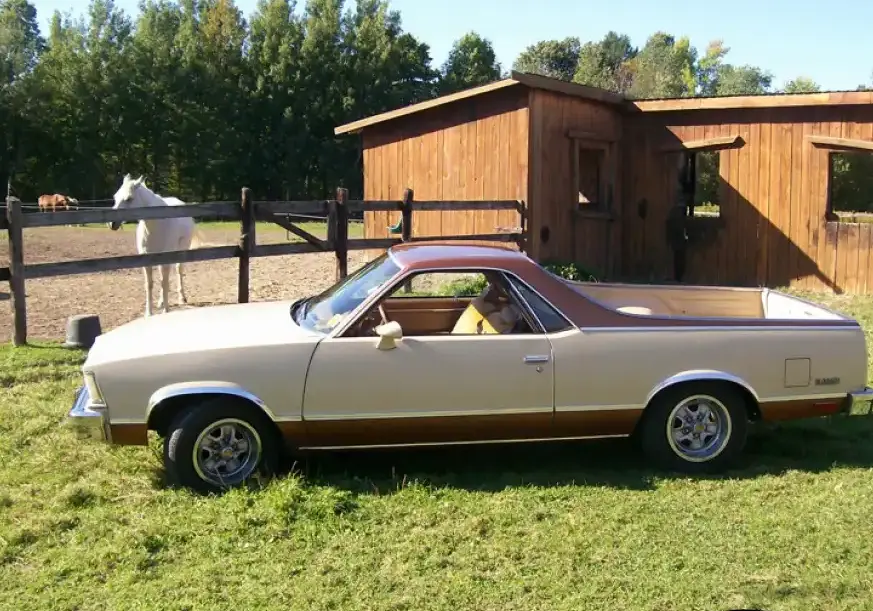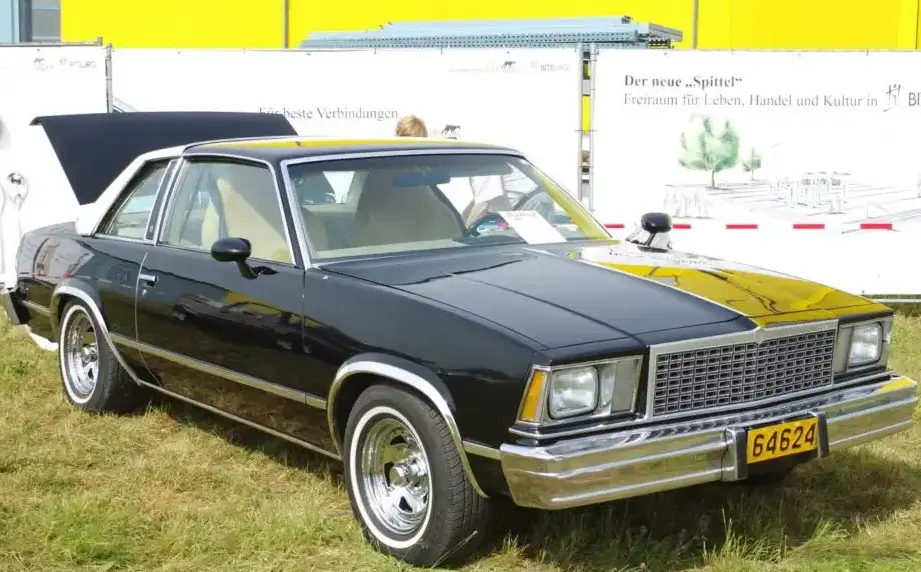
The Chevrolet Malibu IV Sport Coupe, produced for the 1979 and 1980 model years, represented a downsized offering from Chevrolet in the burgeoning personal luxury coupe segment. Positioned as a more sporty alternative to the larger, more traditionally styled Malibu sedans and wagons, the Sport Coupe aimed to attract buyers seeking a stylish and relatively fuel-efficient vehicle. This particular variant, equipped with the 3.8-liter V6 engine producing 115 horsepower, occupied a mid-range position within the Sport Coupe lineup, offering a balance between performance and affordability. It was a transitional model, bridging the gap between the gas-guzzling muscle car era and the increasing demand for more economical vehicles following the energy crises of the 1970s.
Technical Specifications
| Brand | Chevrolet |
| Model | Malibu |
| Generation | Malibu IV Sport Coupe |
| Type (Engine) | 3.8 V6 (115 Hp) |
| Start of production | 1979 |
| End of production | 1980 |
| Powertrain Architecture | Internal Combustion engine |
| Body type | Coupe |
| Seats | 6 |
| Doors | 2 |
| Fuel Type | Petrol (Gasoline) |
| Weight-to-power ratio | 12.2 kg/Hp, 82.1 Hp/tonne |
| Weight-to-torque ratio | 5.9 kg/Nm, 169.3 Nm/tonne |
| Power | 115 Hp @ 4000 rpm |
| Power per litre | 30.7 Hp/l |
| Torque | 237 Nm @ 2000 rpm, 174.8 lb.-ft. @ 2000 rpm |
| Engine layout | Front, Longitudinal |
| Engine displacement | 3752 cm3, 228.96 cu. in. |
| Number of cylinders | 6 |
| Engine configuration | V-engine |
| Cylinder Bore | 95 mm, 3.74 in. |
| Piston Stroke | 88.4 mm, 3.48 in. |
| Compression ratio | 8.6:1 |
| Number of valves per cylinder | 2 |
| Fuel injection system | Carburettor |
| Engine aspiration | Naturally aspirated engine |
| Valvetrain | OHV |
| Kerb Weight | 1400 kg, 3086.47 lbs |
| Trunk (boot) space – maximum | 470 l, 16.6 cu. ft |
| Fuel tank capacity | 68 l, 17.96 US gal | 14.96 UK gal |
| Length | 4895 mm, 192.72 in |
| Width | 1816 mm, 71.5 in |
| Height | 1354 mm, 53.31 in |
| Wheelbase | 2745 mm, 108.07 in |
| Front track | 1486 mm, 58.5 in |
| Rear (Back) track | 1467 mm, 57.76 in |
| Front overhang | 915 mm, 36.02 in |
| Rear overhang | 1235 mm, 48.62 in |
| Ride height (ground clearance) | 136 mm, 5.35 in |
| Minimum turning circle (turning diameter) | 12.2 m, 40.03 ft |
| Approach angle | 23° |
| Departure angle | 16° |
| Ramp-over (brakeover) angle | 14° |
| Drivetrain Architecture | The Internal combustion engine (ICE) drives the rear wheels of the vehicle. |
| Drive wheel | Rear wheel drive |
| Number of gears and type of gearbox | 3 gears, manual transmission |
| Front suspension | Independent, type McPherson with coil spring and anti-roll bar |
| Rear suspension | dependent spring suspension, Transverse stabilizer, Trailing arm |
| Front brakes | Ventilated discs |
| Rear brakes | Drum |
| Steering type | Steering rack and pinion |
| Tires size | 185/75 R14 |
| Wheel rims size | 6.0J x 14 |
Powertrain & Engine Architecture
The heart of this Malibu Sport Coupe is Chevrolet’s 3.8-liter (229 cubic inch) V6 engine. Designated with various codes depending on specific calibration, this engine was a mainstay of Chevrolet’s mid-size offerings. The 115 horsepower output was achieved through a two-barrel carburetor fuel system, a relatively simple setup for the time. The engine utilized an overhead valve (OHV) valvetrain, with two valves per cylinder. The engine’s longitudinal front-mount configuration, coupled with rear-wheel drive, was a traditional layout for American cars of this era. The three-speed manual transmission was the standard offering for this trim, providing a direct connection between the engine and the rear wheels. While an automatic transmission was available as an option, the manual gearbox offered a more engaging driving experience and slightly improved fuel economy.
Driving Characteristics
The 115 hp 3.8L V6, paired with the three-speed manual transmission, provided adequate, but not exhilarating, performance. Acceleration was respectable for the time, but the car wasn’t designed for outright speed. The engine delivered its peak power at 4000 rpm, requiring drivers to shift to maintain momentum. The three-speed gearbox offered relatively wide gear ratios, prioritizing fuel economy over rapid acceleration. Compared to the available V8 engines in other Malibu trims, this V6 offered a smoother, quieter ride and better fuel efficiency, but at the expense of raw power. The rear-wheel-drive configuration provided a balanced feel, although the suspension, while adequate, wasn’t particularly sophisticated.
Equipment & Trim Levels
The Malibu Sport Coupe 3.8 V6 typically came standard with features like cloth upholstery, a basic AM radio, and a vinyl-wrapped steering wheel. The interior was functional and straightforward, reflecting the car’s focus on affordability. Optional extras included air conditioning, a more powerful stereo system, upgraded interior trim, and power steering. The Sport Coupe trim generally featured a more aggressive exterior styling package than the standard Malibu, with a distinctive grille, unique wheel covers, and often, a contrasting color roof.
Chassis & Braking
The Malibu Sport Coupe utilized a body-on-frame construction, a common practice for American cars of the late 1970s. The front suspension was an independent McPherson strut design, providing a reasonable level of ride comfort. The rear suspension employed a traditional leaf spring setup with a transverse stabilizer bar, which helped to reduce body roll. Braking duties were handled by ventilated discs at the front and drum brakes at the rear. The braking system was adequate for normal driving conditions, but lacked the stopping power of more modern systems. The 185/75 R14 tires provided a reasonable balance between ride comfort and handling.
Market Reception & Comparison
The Malibu Sport Coupe, and specifically the 3.8L V6 variant, was generally well-received by critics as a competent and stylish offering in its price range. It was praised for its comfortable ride, relatively fuel-efficient engine, and attractive styling. However, some reviewers noted that the engine lacked the power of its V8 counterparts and that the interior was somewhat basic. Compared to other coupes on the market, such as the Ford Mustang and Dodge Challenger, the Malibu Sport Coupe offered a more refined and comfortable driving experience, but lacked the same level of performance and sporting character. Fuel economy was a key selling point, particularly in the wake of the oil crises.
Legacy
The Chevrolet Malibu IV Sport Coupe 3.8 V6, while not a particularly rare or collectible vehicle today, represents an important chapter in Chevrolet’s history. It exemplifies the transition from the muscle car era to the more fuel-conscious designs of the 1980s. The 3.8-liter V6 engine proved to be a durable and reliable powerplant, and many examples are still on the road today. In the used car market, these Malibus are often sought after by enthusiasts looking for a classic American coupe that is relatively affordable to maintain and restore. The simplicity of the engine and the availability of parts make it a relatively easy car to work on for DIY mechanics. While not a high-performance machine, the Malibu Sport Coupe 3.8 V6 offers a nostalgic glimpse into a bygone era of American automotive design.