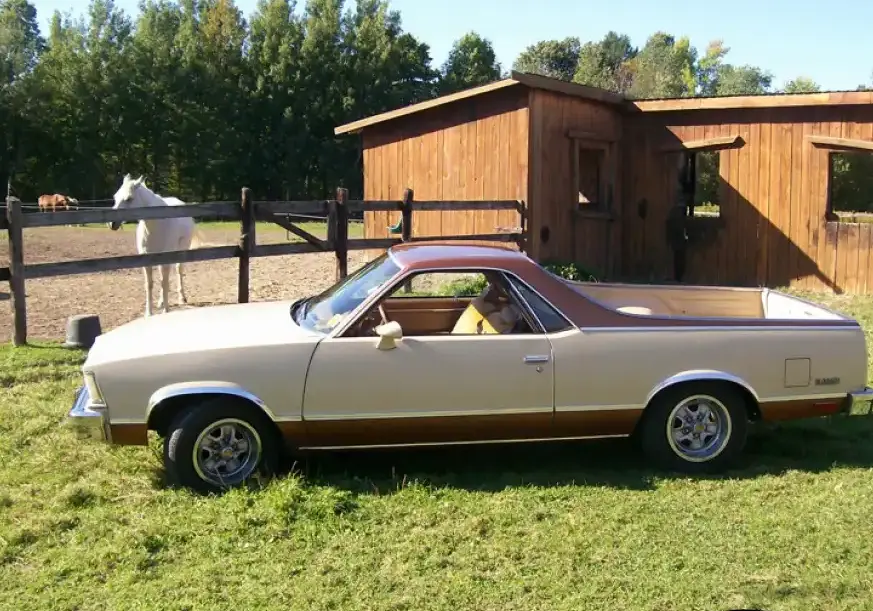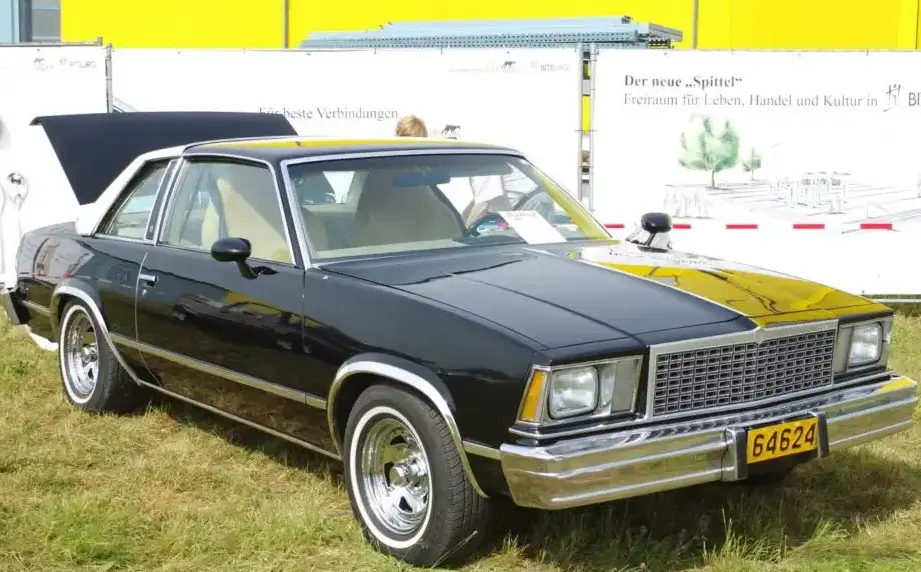
The Chevrolet Malibu IV Sport Coupe, produced for the 1978 and 1979 model years, represented a downsized iteration of Chevrolet’s popular mid-size offering. Positioned as a sporty variant within the fourth-generation Malibu lineup (1978-1983), the 5.0 V8 with a three-speed automatic transmission offered a blend of performance and comfort, albeit with compromises in fuel economy typical of the era. This configuration aimed to appeal to buyers seeking a more engaging driving experience than the base six-cylinder models, while still providing the convenience of an automatic gearbox. It sat in the middle of the performance spectrum, below the more potent versions of the 305 V8, but above the economy-focused inline-six options.
Technical Specifications
| Brand | Chevrolet |
| Model | Malibu |
| Generation | Malibu IV Sport Coupe |
| Type (Engine) | 5.0 V8 (160 Hp) CAT Automatic |
| Start of production | 1978 |
| End of production | 1979 |
| Powertrain Architecture | Internal Combustion engine |
| Body type | Coupe |
| Seats | 6 |
| Doors | 2 |
| Fuel Type | Petrol (Gasoline) |
| Weight-to-power ratio | 9.2 kg/Hp, 108.4 Hp/tonne |
| Weight-to-torque ratio | 4.6 kg/Nm, 216.1 Nm/tonne |
| Power | 160 Hp @ 4000 rpm |
| Power per litre | 32 Hp/l |
| Torque | 319 Nm @ 2400 rpm, 235.28 lb.-ft. @ 2400 rpm |
| Engine layout | Front, Longitudinal |
| Engine displacement | 5001 cm3, 305.18 cu. in. |
| Number of cylinders | 8 |
| Engine configuration | V-engine |
| Cylinder Bore | 94.89 mm, 3.74 in. |
| Piston Stroke | 88.4 mm, 3.48 in. |
| Compression ratio | 8.4:1 |
| Number of valves per cylinder | 2 |
| Fuel injection system | Carburettor |
| Engine aspiration | Naturally aspirated engine |
| Valvetrain | OHV |
| Engine oil capacity | 4.2 l, 4.44 US qt | 3.7 UK qt |
| Kerb Weight | 1476 kg, 3254.02 lbs |
| Trunk (boot) space – maximum | 470 l, 16.6 cu. ft |
| Fuel tank capacity | 68 l, 17.96 US gal | 14.96 UK gal |
| Length | 4895 mm, 192.72 in |
| Width | 1816 mm, 71.5 in |
| Height | 1354 mm, 53.31 in |
| Wheelbase | 2745 mm, 108.07 in |
| Front track | 1486 mm, 58.5 in |
| Rear (Back) track | 1467 mm, 57.76 in |
| Front overhang | 915 mm, 36.02 in |
| Rear overhang | 1235 mm, 48.62 in |
| Ride height (ground clearance) | 137 mm, 5.39 in |
| Drag coefficient (Cd) | 0.45 |
| Minimum turning circle (turning diameter) | 12.2 m, 40.03 ft |
| Approach angle | 20° |
| Departure angle | 15° |
| Ramp-over (brakeover) angle | 14° |
| Drive wheel | Rear wheel drive |
| Number of gears and type of gearbox | 3 gears, automatic transmission |
| Front suspension | Independent, type McPherson with coil spring and anti-roll bar |
| Rear suspension | dependent spring suspension, Transverse stabilizer, Trailing arm |
| Front brakes | Ventilated discs |
| Rear brakes | Drum |
| Steering type | Steering rack and pinion |
| Tires size | 185/75 R14 |
| Wheel rims size | 6.0J x 14 |
Powertrain & Engine Architecture
The heart of this Malibu variant was Chevrolet’s 305 cubic inch (5.0-liter) small-block V8 engine. This engine, designated with emissions control systems (CAT), produced 160 horsepower at 4000 rpm and 235 lb-ft of torque at 2400 rpm. It utilized a two-barrel carburetor for fuel delivery, a relatively simple system for the time, and an overhead valve (OHV) valvetrain. The engine was longitudinally mounted in the front of the vehicle, driving the rear wheels. The three-speed automatic transmission, a TH350 likely, was chosen for its smoothness and ease of use, catering to a broader audience than the available manual transmissions. While not a high-performance setup, the 305 V8 provided adequate power for comfortable cruising and occasional spirited driving.
Driving Characteristics
The 160 hp V8 and three-speed automatic combination resulted in a driving experience focused on relaxed cruising rather than outright acceleration. The automatic transmission’s gear ratios were geared towards fuel efficiency and smooth shifts, rather than aggressive downshifts for performance. Compared to the manual transmission versions of the same engine, or the higher-output V8s available in other Malibu trims, this setup felt noticeably less responsive. However, the torque output at lower RPMs provided sufficient power for everyday driving situations. The rear-wheel-drive configuration offered a balanced feel, but the relatively soft suspension tuning prioritized ride comfort over sharp handling.
Equipment & Trim Levels
The Sport Coupe trim generally included features like color-keyed carpeting, a sport steering wheel, and upgraded interior trim compared to the base Malibu models. Standard features for the 1978-1979 Malibu included a full-length vinyl bench seat, cloth upholstery, and basic instrumentation. Optional extras included air conditioning, power steering, power brakes, a stereo system, and upgraded wheel covers. The Sport Coupe package often added a more aggressive exterior appearance with unique badging and potentially a rear spoiler, though these were often optional add-ons.
Chassis & Braking
The Malibu IV Sport Coupe utilized a body-on-frame construction, common for American cars of the era. The front suspension was an independent McPherson strut design with coil springs and an anti-roll bar, while the rear suspension employed a traditional leaf spring setup with a transverse stabilizer. Braking duties were handled by ventilated discs at the front and drum brakes at the rear. The braking system, while adequate for the vehicle’s weight and performance, lacked the stopping power of more modern systems. Steering was accomplished via a rack-and-pinion system, providing reasonable steering feel.
Market Reception & Comparison
The 1978-1979 Chevrolet Malibu IV Sport Coupe with the 5.0 V8 and automatic transmission was viewed as a competent, if unremarkable, offering in the crowded mid-size market. Critics generally praised the Malibu’s comfortable ride and spacious interior, but noted its lack of sporty handling and relatively poor fuel economy. Compared to the six-cylinder Malibu models, the V8 offered a significant performance boost, but at the cost of increased fuel consumption. Against competitors like the Ford Fairmont and Dodge Dart, the Malibu offered a similar blend of features and performance, with Chevrolet’s reputation for reliability being a key selling point.
Legacy
The 305 V8 engine proved to be remarkably durable and reliable, and many examples are still on the road today. The automatic transmission, when properly maintained, also demonstrated good longevity. However, age and neglect have taken their toll on many examples, and finding a well-preserved Malibu IV Sport Coupe with the 5.0 V8 can be challenging. In the used car market, these cars are often sought after by enthusiasts looking for a classic American coupe with a relatively simple and easily maintained powertrain. While not a collector’s item in the same vein as some muscle cars, the Malibu IV Sport Coupe represents a significant chapter in Chevrolet’s history and offers a nostalgic driving experience.