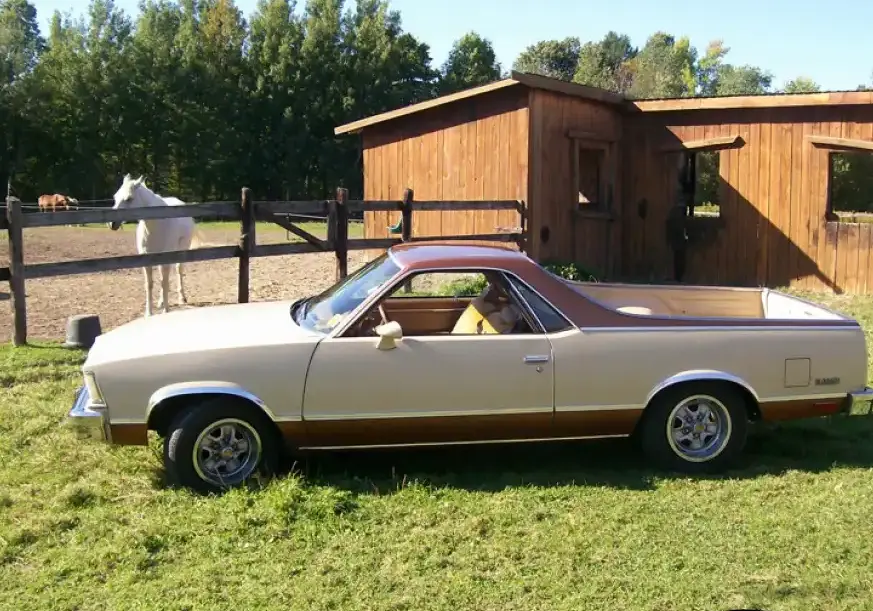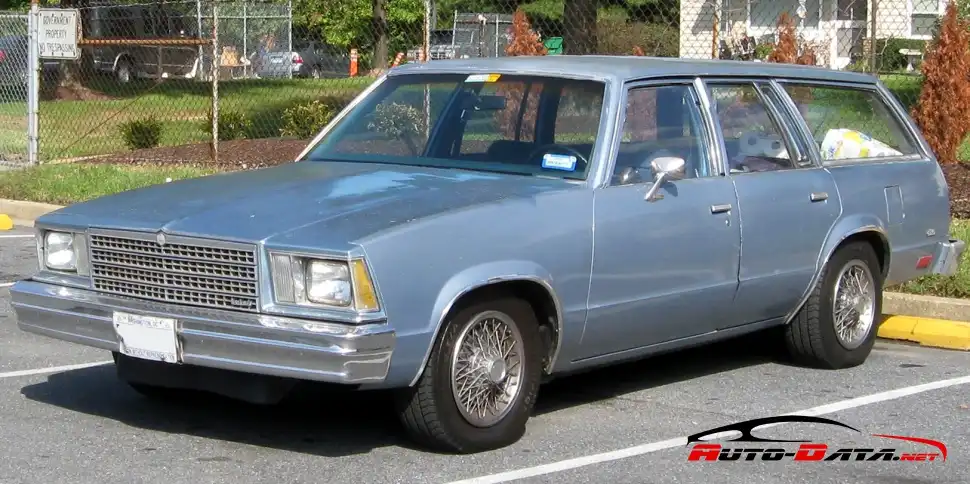
The Chevrolet Malibu IV Station Wagon, produced for a limited run between 1978 and 1979, represented Chevrolet’s entry into the increasingly popular station wagon market. Offered as a practical alternative to the sedan, the Malibu wagon aimed to provide families with ample space and versatility. This particular variant, equipped with a 5.0-liter V8 engine producing 160 horsepower, was positioned as a mid-range offering within the Malibu lineup, appealing to buyers who desired a balance of performance and fuel economy. It was built on the rear-wheel drive A-body platform, a mainstay of General Motors’ intermediate offerings for many years.
Technical Specifications
| Brand | Chevrolet |
| Model | Malibu |
| Generation | Malibu IV Station Wagon |
| Type (Engine) | 5.0 V8 (160 Hp) CAT |
| Start of production | 1978 |
| End of production | 1979 |
| Powertrain Architecture | Internal Combustion engine |
| Body type | Station wagon (estate) |
| Seats | 6 |
| Doors | 5 |
| Fuel Type | Petrol (Gasoline) |
| Weight-to-power ratio | 9.6 kg/Hp, 104.1 Hp/tonne |
| Weight-to-torque ratio | 4.8 kg/Nm, 207.5 Nm/tonne |
| Power | 160 Hp @ 4000 rpm |
| Power per litre | 32 Hp/l |
| Torque | 319 Nm @ 2400 rpm, 235.28 lb.-ft. @ 2400 rpm |
| Engine layout | Front, Longitudinal |
| Engine displacement | 5001 cm3, 305.18 cu. in. |
| Number of cylinders | 8 |
| Engine configuration | V-engine |
| Cylinder Bore | 94.89 mm, 3.74 in. |
| Piston Stroke | 88.39 mm, 3.48 in. |
| Compression ratio | 8.4:1 |
| Number of valves per cylinder | 2 |
| Fuel injection system | Carburettor |
| Engine aspiration | Naturally aspirated engine |
| Valvetrain | OHV |
| Engine oil capacity | 4 l, 4.23 US qt | 3.52 UK qt |
| Kerb Weight | 1537 kg, 3388.5 lbs |
| Trunk (boot) space – minimum | 1133 l, 40.01 cu. ft |
| Trunk (boot) space – maximum | 2050 l, 72.4 cu. ft |
| Fuel tank capacity | 69 l, 18.23 US gal | 15.18 UK gal |
| Length | 4911 mm, 193.35 in |
| Width | 1816 mm, 71.5 in |
| Height | 1384 mm, 54.49 in |
| Wheelbase | 2745 mm, 108.07 in |
| Front track | 1486 mm, 58.5 in |
| Rear (Back) track | 1467 mm, 57.76 in |
| Front overhang | 915 mm, 36.02 in |
| Rear overhang | 1251 mm, 49.25 in |
| Ride height (ground clearance) | 145 mm, 5.71 in |
| Minimum turning circle (turning diameter) | 13.0 m, 42.65 ft |
| Approach angle | 20° |
| Departure angle | 15° |
| Ramp-over (brakeover) angle | 14° |
| Drivetrain Architecture | The Internal combustion engine (ICE) drives the rear wheels of the vehicle. |
| Drive wheel | Rear wheel drive |
| Number of gears and type of gearbox | 4 gears, manual transmission |
| Front suspension | Independent, type McPherson with coil spring and anti-roll bar |
| Rear suspension | dependent spring suspension, Transverse stabilizer, Trailing arm |
| Front brakes | Ventilated discs |
| Rear brakes | Drum |
| Steering type | Steering rack and pinion |
| Tires size | 195/75 R14 |
| Wheel rims size | 6.0J x 14 |
Powertrain & Engine Architecture
The heart of this Malibu wagon was Chevrolet’s 305 cubic inch (5.0-liter) small-block V8 engine. Designated with the engine code likely falling within the Q or K series depending on specific emissions controls, this engine was a staple of GM vehicles throughout the 1970s and 80s. It featured a cast iron block and cylinder heads, with a two-barrel carburetor managing fuel delivery. The overhead valve (OHV) configuration, while traditional, proved reliable and relatively easy to maintain. The catalytic converter, indicated by the “CAT” designation, was a crucial component in meeting increasingly stringent emissions standards. The engine produced 160 horsepower at 4,000 rpm and 235 lb-ft of torque at 2,400 rpm. This power was transmitted to the rear wheels through a four-speed manual transmission, offering drivers a degree of control over gear selection. While a Turbo-Hydramatic automatic transmission was available, the manual was a more affordable option and favored by those seeking a more engaging driving experience.
Driving Characteristics
The 160 hp V8, coupled with the four-speed manual transmission, provided adequate, though not exhilarating, performance. Acceleration was respectable for the era, but the Malibu wagon’s weight (approximately 3,388 lbs) limited its outright speed. The manual transmission allowed drivers to keep the engine in its optimal power band, making highway cruising and passing maneuvers manageable. Compared to the larger 350 cubic inch V8 offered in some Malibu trims, this 305 offered a noticeable reduction in power, but also improved fuel economy. The rear-wheel drive layout provided a balanced feel, although the suspension, while adequate, wasn’t particularly sporty. The wagon’s suspension was tuned for comfort, prioritizing a smooth ride over sharp handling.
Equipment & Trim Levels
The 1978-1979 Malibu IV Station Wagon with the 5.0 V8 and manual transmission typically came standard with features considered essential for the time. These included cloth upholstery, a basic AM radio, and manual windows and locks. Power steering and power brakes were often included, but air conditioning was frequently an optional extra. Interior trim was generally functional and durable, with a focus on practicality rather than luxury. Buyers could opt for upgrades such as a more advanced stereo system, cruise control, and upgraded interior fabrics. The wagon’s spacious interior and large cargo area were its primary selling points, making it a popular choice for families.
Chassis & Braking
The Malibu wagon utilized a traditional body-on-frame construction, providing a robust and durable chassis. The front suspension featured independent McPherson struts with coil springs and an anti-roll bar, while the rear suspension employed a solid axle with leaf springs and a transverse stabilizer. This setup provided a comfortable ride, but wasn’t known for its precise handling. Braking duties were handled by ventilated discs at the front and drum brakes at the rear. While adequate for normal driving conditions, the braking system lacked the stopping power of more modern systems. The 195/75 R14 tires provided a reasonable balance of grip and ride comfort.
Market Reception & Comparison
The 1978-1979 Chevrolet Malibu IV Station Wagon with the 5.0 V8 and manual transmission was generally well-received by consumers seeking a practical and affordable family vehicle. Critics praised its spacious interior and comfortable ride, but noted its lack of sporty handling and relatively modest performance. Compared to other station wagons of the era, such as the Ford Country Squire and the Plymouth Fury wagon, the Malibu offered a competitive combination of features and price. The 305 V8 provided a good balance of power and fuel economy, making it a popular choice for those who didn’t require the extra power of the larger 350 V8. However, the automatic transmission variants were significantly more popular, offering greater convenience for everyday driving.
Legacy
The Chevrolet Malibu IV Station Wagon, particularly the 5.0 V8 manual transmission variant, has become a collectible vehicle among enthusiasts of classic American cars. The 305 small-block V8 is known for its durability and relative ease of maintenance, making it a popular choice for restoration projects. While not as highly sought after as some of the more powerful Malibu trims, the 5.0 V8 wagon offers a unique combination of practicality, affordability, and classic American styling. Today, well-maintained examples command a reasonable price in the used car market, appealing to those seeking a nostalgic and reliable vehicle.