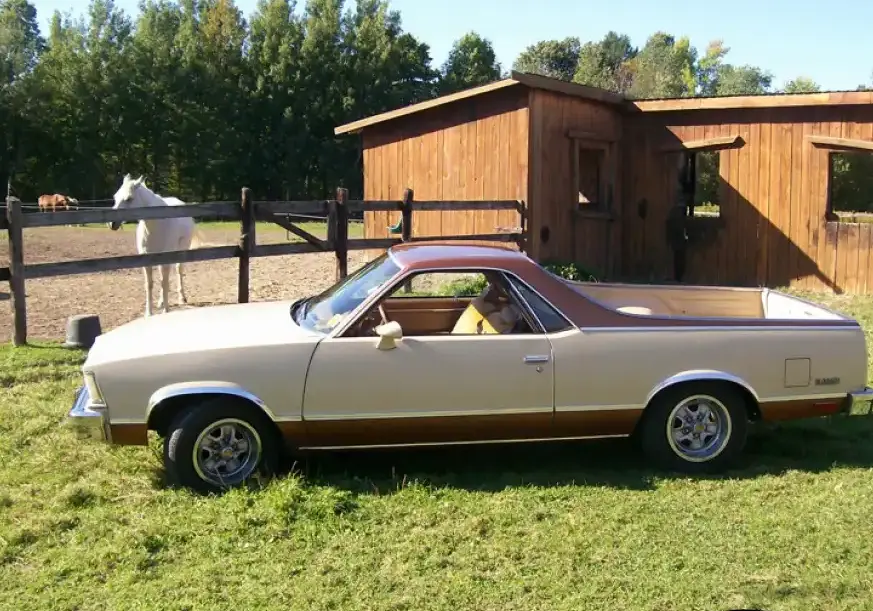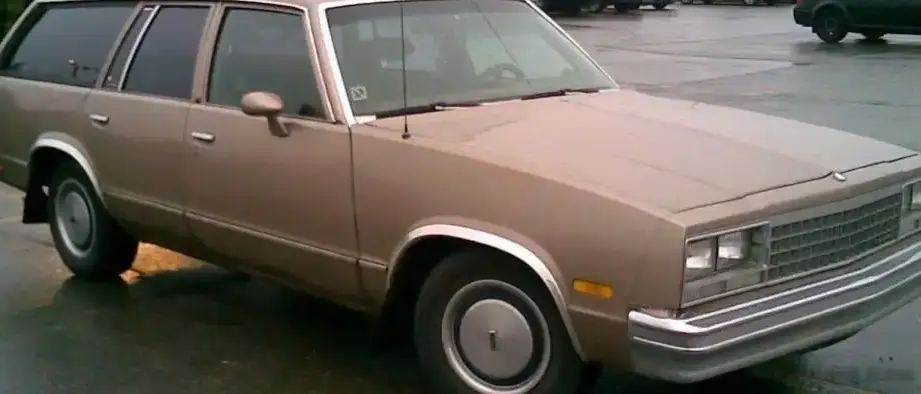
The Chevrolet Malibu IV Wagon, specifically the facelifted version produced from 1981 to 1983, represented a unique offering in the American station wagon market. This variant featured a 5.7-liter diesel V8 engine producing 105 horsepower, paired with a three-speed automatic transmission. Positioned as a more fuel-efficient alternative to gasoline-powered wagons, it catered to buyers seeking practicality and space without the high running costs associated with larger displacement petrol engines. The 1981-1983 facelift brought minor cosmetic updates to the fourth-generation Malibu, which was based on the A-body platform shared with other GM vehicles like the Oldsmobile Cutlass and Pontiac Grand Prix.
Technical Specifications
| Brand | Chevrolet |
| Model | Malibu |
| Generation | Malibu IV Wagon (facelift 1981) |
| Type (Engine) | 5.7 d V8 (105 Hp) Automatic |
| Start of production | 1981 |
| End of production | 1983 |
| Powertrain Architecture | Internal Combustion engine |
| Body type | Station wagon (estate) |
| Seats | 6 |
| Doors | 5 |
| Fuel Type | Diesel |
| Weight-to-power ratio | 15.9 kg/Hp, 62.9 Hp/tonne |
| Weight-to-torque ratio | 6.2 kg/Nm, 162.3 Nm/tonne |
| Power | 105 Hp @ 3200 rpm |
| Power per litre | 18.3 Hp/l |
| Torque | 271 Nm @ 1600 rpm (199.88 lb.-ft. @ 1600 rpm) |
| Engine layout | Front, Longitudinal |
| Engine Model/Code | LF9 |
| Engine displacement | 5735 cm3 (349.97 cu. in.) |
| Number of cylinders | 8 |
| Engine configuration | V-engine |
| Cylinder Bore | 103.05 mm (4.06 in.) |
| Piston Stroke | 85.98 mm (3.39 in.) |
| Compression ratio | 22.5:1 |
| Number of valves per cylinder | 2 |
| Fuel injection system | Precombustion chamber injection |
| Engine aspiration | Naturally aspirated engine |
| Valvetrain | OHV |
| Engine oil capacity | 6.6 l (6.97 US qt | 5.81 UK qt) |
| Coolant | 16.5 l (17.44 US qt | 14.52 UK qt) |
| Kerb Weight | 1670 kg (3681.72 lbs) |
| Trunk (boot) space – minimum | 1131 l (39.94 cu. ft.) |
| Trunk (boot) space – maximum | 2050 l (72.4 cu. ft.) |
| Fuel tank capacity | 69 l (18.23 US gal | 15.18 UK gal) |
| Length | 4911 mm (193.35 in.) |
| Width | 1826 mm (71.89 in.) |
| Height | 1418 mm (55.83 in.) |
| Wheelbase | 2745 mm (108.07 in.) |
| Front track | 1486 mm (58.5 in.) |
| Rear (Back) track | 1467 mm (57.76 in.) |
| Front overhang | 915 mm (36.02 in.) |
| Rear overhang | 1251 mm (49.25 in.) |
| Ride height (ground clearance) | 158 mm (6.22 in.) |
| Minimum turning circle (turning diameter) | 13 m (42.65 ft.) |
| Approach angle | 23.5° |
| Departure angle | 16.7° |
| Ramp-over (brakeover) angle | 15.6° |
| Drivetrain Architecture | The Internal combustion engine (ICE) drives the rear wheels of the vehicle. |
| Drive wheel | Rear wheel drive |
| Number of gears and type of gearbox | 3 gears, automatic transmission |
| Front suspension | Independent, type McPherson with coil spring and anti-roll bar |
| Rear suspension | dependent spring suspension, Transverse stabilizer, Trailing arm |
| Front brakes | Ventilated discs |
| Rear brakes | Drum |
| Steering type | Steering rack and pinion |
| Tires size | 195/75 R14 |
| Wheel rims size | 6.0J x 14 |
Powertrain & Engine Architecture
The heart of this Malibu variant was the 5.7-liter (349.97 cubic inches) LF9 diesel V8 engine. This engine utilized precombustion chamber injection, a system common in older diesel designs, where fuel is injected into a small pre-chamber connected to the main combustion chamber. This aids in better fuel mixing and combustion, particularly at lower temperatures. The engine featured a two-valve per cylinder OHV (Overhead Valve) valvetrain. The three-speed automatic transmission, a GM-built unit (likely the TH350), was chosen for its durability and relative simplicity. While not known for its performance, it provided smooth, if somewhat slow, gear changes. The engine’s longitudinal front-engine layout was typical for rear-wheel-drive American cars of the era.
Driving Characteristics
The 105-horsepower diesel V8, coupled with the automatic transmission, resulted in a driving experience focused on fuel economy and relaxed cruising rather than spirited acceleration. The 271 Nm (199.88 lb-ft) of torque, available at a relatively low 1600 rpm, provided adequate pulling power for everyday driving and towing, but the engine felt strained at higher speeds. The automatic transmission’s gear ratios were optimized for fuel efficiency, meaning the engine often operated at lower RPMs. Compared to gasoline-powered Malibu variants, particularly those with the V6 engines, this diesel automatic combination was significantly slower. Manual transmission versions, when available with the diesel, offered slightly improved responsiveness due to the elimination of transmission losses.
Equipment & Trim Levels
The 5.7 diesel automatic Malibu Wagon typically came with a fairly basic level of equipment. Standard features generally included cloth upholstery, a basic AM/FM radio, and manual windows and locks. Air conditioning was often an optional extra, as were power windows and upgraded sound systems. Interior trim was generally functional and durable, reflecting the car’s intended role as a practical family vehicle. The dashboard layout was typical of early 1980s GM vehicles, with a straightforward instrument cluster and simple controls.
Chassis & Braking
The Malibu Wagon featured an independent McPherson strut front suspension with coil springs and an anti-roll bar, providing a reasonably comfortable ride. The rear suspension utilized a dependent spring suspension with trailing arms and a transverse stabilizer. Braking was accomplished via ventilated discs at the front and drum brakes at the rear. The braking system was adequate for the vehicle’s weight and performance, but lacked the stopping power of more modern systems. Steering was via a rack and pinion system, offering reasonable precision.
Market Reception & Comparison
The diesel-powered Malibu Wagon received mixed reviews. While praised for its fuel economy – a significant advantage during the energy crises of the late 1970s and early 1980s – it was often criticized for its lack of power and sluggish performance. Compared to gasoline-powered Malibu variants, the diesel automatic was considerably slower. However, it offered a lower total cost of ownership due to the diesel engine’s inherent fuel efficiency. Reliability was generally good, but the diesel engine required more diligent maintenance, including regular oil changes and fuel filter replacements, to prevent issues.
Legacy
The Chevrolet Malibu IV Wagon with the 5.7-liter diesel V8 and automatic transmission represents a unique chapter in American automotive history. While not a performance icon, it offered a practical and fuel-efficient alternative to gasoline-powered wagons during a period of rising fuel prices. Today, these wagons are relatively rare, and well-maintained examples are sought after by collectors and enthusiasts interested in preserving a piece of automotive history. The LF9 diesel engine, while not known for its longevity, can provide years of reliable service with proper maintenance. The combination of a wagon body style, diesel power, and an automatic transmission makes this particular Malibu variant a distinctive and increasingly collectible vehicle.