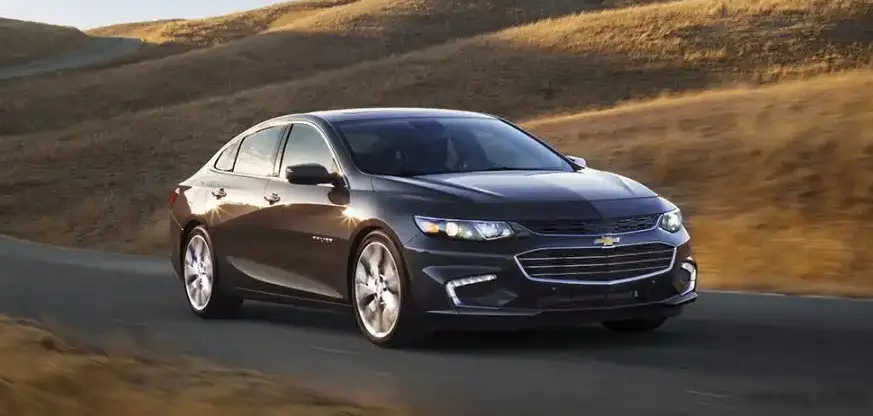
The Chevrolet Malibu IX 1.8 (182 Hp) Hybrid Automatic, produced from 2016 to 2018, represented Chevrolet’s entry into the increasingly competitive mid-size hybrid sedan market in North America. Positioned as a technologically advanced and fuel-efficient option within the ninth generation Malibu (introduced as the Malibu IX), this variant aimed to appeal to buyers seeking a balance between practicality, comfort, and reduced environmental impact. It was built on the GM Epsilon II platform, shared with other global GM vehicles. The Malibu IX sought to modernize the Malibu’s image and compete more effectively with established hybrid models like the Toyota Camry Hybrid and Ford Fusion Hybrid.
Technical Specifications
| Brand | Chevrolet |
| Model | Malibu |
| Generation | Malibu IX |
| Type (Engine) | 1.8 (182 Hp) Hybrid Automatic |
| Start of production | 2016 |
| End of production | 2018 |
| Powertrain Architecture | FHEV (Full Hybrid Electric Vehicle) |
| Body type | Sedan |
| Seats | 5 |
| Doors | 4 |
| Fuel consumption (urban) | 4.9 l/100 km (48 US mpg) |
| Fuel consumption (extra urban) | 5.2 l/100 km (45.2 US mpg) |
| Fuel Type | Petrol (Gasoline) |
| Weight-to-power ratio | 8.4 kg/Hp |
| Weight-to-torque ratio | 4.1 kg/Nm |
| Electric motor power (1) | 103 Hp |
| Electric motor power (2) | 75 Hp |
| System power | 182 Hp |
| System torque | 375 Nm @ 4750 rpm (276.59 lb.-ft. @ 4750 rpm) |
| Engine power | 122 Hp @ 5000 rpm |
| Engine torque | 175 Nm @ 4750 rpm (129.07 lb.-ft. @ 4750 rpm) |
| Engine layout | Front, Transverse |
| Engine Model/Code | LKN |
| Engine displacement | 1800 cm3 (109.84 cu. in.) |
| Number of cylinders | 4 |
| Engine configuration | Inline |
| Cylinder Bore | 80.5 mm (3.17 in.) |
| Piston Stroke | 88.2 mm (3.47 in.) |
| Compression ratio | 11.5:1 |
| Number of valves per cylinder | 4 |
| Fuel injection system | Direct injection |
| Valvetrain | DOHC, VVT-Di |
| Engine oil capacity | 5 l (5.28 US qt | 4.4 UK qt) |
| Coolant capacity | 6.8 l (7.19 US qt | 5.98 UK qt) |
| Kerb Weight | 1526 kg (3364.25 lbs.) |
| Trunk (boot) space (minimum) | 328 l (11.58 cu. ft.) |
| Length | 4923 mm (193.82 in.) |
| Width | 1854 mm (72.99 in.) |
| Height | 1463 mm (57.6 in.) |
| Wheelbase | 2830 mm (111.42 in.) |
| Front track | 1590 mm (62.6 in.) |
| Rear track | 1588 mm (62.52 in.) |
| Minimum turning circle | 11.5 m (37.73 ft.) |
| Drive wheel | Front wheel drive |
| Number of gears and type of gearbox | 1 gears, automatic transmission Direct drive |
| Front suspension | Independent, type McPherson with coil spring and anti-roll bar |
| Rear suspension | Independent multi-link suspension |
| Front brakes | Ventilated discs |
| Rear brakes | Disc |
| Assisting systems | ABS (Anti-lock braking system) |
| Steering type | Steering rack and pinion |
| Power steering | Electric Steering |
| Tires size | 225/55 R17 |
| Wheel rims size | 8.0J x 17 |
Powertrain & Engine Architecture
The Malibu IX 1.8 Hybrid employed a sophisticated full hybrid electric vehicle (FHEV) powertrain. The core of the system was a 1.8-liter inline-four cylinder gasoline engine, designated the LKN code. This engine featured direct fuel injection and a Double Overhead Camshaft (DOHC) valvetrain with Variable Valve Timing (VVT-Di) to optimize efficiency and power delivery. The engine produced 122 horsepower at 5000 rpm and 129.07 lb-ft of torque at 4750 rpm. However, the total system output was significantly higher, reaching 182 horsepower and 276.59 lb-ft of torque, thanks to the integration of two electric motors. One electric motor produced 103 hp, while the second contributed 75 hp. The electric motors were integrated into the transmission, allowing for electric-only driving at lower speeds and assisting the gasoline engine during acceleration. The powertrain utilized a continuously variable transmission (CVT) to provide smooth and efficient power delivery. The hybrid system was capable of regenerative braking, capturing energy during deceleration to recharge the high-voltage battery pack.
Driving Characteristics
The 1.8L Hybrid Automatic Malibu offered a noticeably different driving experience compared to its conventionally powered siblings. The electric motors provided instant torque, resulting in brisk acceleration from a standstill. While not a performance-oriented vehicle, the combined output of the engine and motors offered adequate power for everyday driving situations. The CVT, while efficient, could sometimes feel less responsive than a traditional automatic transmission, exhibiting a “rubber band” effect during hard acceleration. The hybrid system prioritized fuel economy, and the vehicle seamlessly transitioned between electric, gasoline, and combined power modes. In electric-only mode, the Malibu could travel short distances at lower speeds, contributing to reduced emissions and fuel consumption. Compared to the 2.0L Turbo Malibu, the hybrid offered less overall power but significantly better fuel economy. The handling was comfortable and predictable, geared towards providing a smooth and refined ride rather than sporty dynamics.
Equipment & Trim Levels
The Malibu IX 1.8 Hybrid Automatic typically came standard with a respectable array of features. Interior appointments included cloth upholstery, though leather options were available. Standard equipment generally included Chevrolet’s MyLink infotainment system with a 7-inch touchscreen display, Apple CarPlay and Android Auto compatibility, a rearview camera, and keyless entry. Higher trim levels, such as the Premier, added features like leather seats, heated front seats, a larger touchscreen display, a premium audio system, and advanced safety features like lane departure warning and automatic emergency braking. Optional extras included a sunroof, navigation system, and various driver-assistance packages.
Chassis & Braking
The Malibu IX featured a front-wheel-drive layout with an independent McPherson strut suspension in the front and an independent multi-link suspension in the rear. This suspension setup provided a comfortable ride and decent handling characteristics. The vehicle was equipped with ventilated disc brakes in the front and solid disc brakes in the rear. Anti-lock Braking System (ABS) was standard. The steering was electric power-assisted, providing light and precise steering feel. The chassis was designed to balance ride comfort with handling stability, prioritizing a smooth and quiet driving experience.
Market Reception & Comparison
The Chevrolet Malibu IX 1.8 Hybrid Automatic was generally well-received by automotive critics, who praised its fuel efficiency and comfortable ride. However, some reviewers noted that the CVT transmission could feel less engaging than traditional automatics. Compared to the non-hybrid Malibu models, the hybrid offered significantly better fuel economy – achieving around 48 mpg in the city and 45 mpg on the highway. The hybrid also commanded a higher price tag than its gasoline-only counterparts. In comparison to competitors like the Toyota Camry Hybrid and Ford Fusion Hybrid, the Malibu Hybrid offered a competitive level of fuel economy and features, but often lagged slightly in terms of overall refinement and brand reputation.
Legacy
The Malibu IX 1.8 Hybrid Automatic represented Chevrolet’s commitment to offering fuel-efficient alternatives in the mid-size sedan segment. While not a groundbreaking vehicle, it provided a viable option for buyers seeking a practical and economical hybrid. The LKN engine and hybrid powertrain proved to be relatively reliable, with few widespread issues reported. On the used car market, these models continue to offer good value for those seeking a fuel-efficient and well-equipped sedan. The Malibu Hybrid helped pave the way for Chevrolet’s continued development of hybrid and electric vehicle technology, contributing to the brand’s broader electrification strategy.