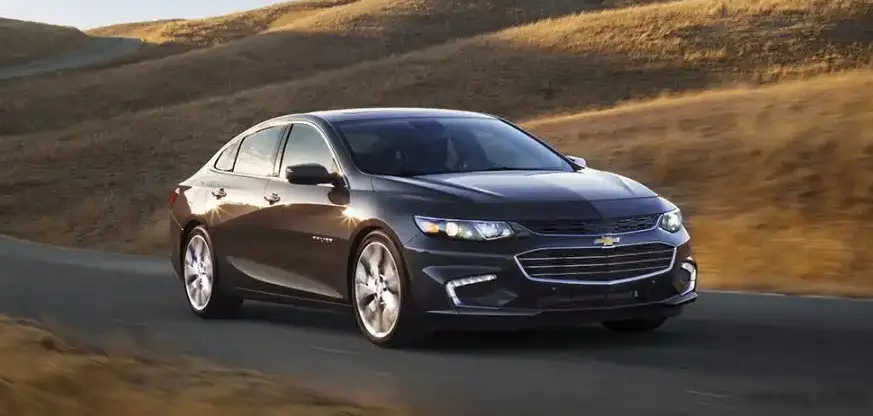
The Chevrolet Malibu IX 2.0 Turbo, produced from 2016 to 2018, represented a significant step forward for the Malibu nameplate. Part of the eighth generation (introduced as a 2016 model), the Malibu IX aimed to compete more effectively in the mid-size sedan segment, offering a blend of style, technology, and performance. The 2.0 Turbo variant, equipped with a 250 horsepower engine and a nine-speed automatic transmission, positioned itself as the premium offering within the Malibu IX lineup, appealing to buyers seeking a more engaging driving experience than the base 1.5L engine provided. This model was primarily targeted at the North American market, where mid-size sedans remain a popular choice.
Technical Specifications
| Brand | Chevrolet |
| Model | Malibu |
| Generation | Malibu IX |
| Type (Engine) | 2.0 Turbo (250 Hp) Automatic |
| Start of production | 2016 |
| End of production | 2018 |
| Powertrain Architecture | Internal Combustion engine |
| Body type | Sedan |
| Seats | 5 |
| Doors | 4 |
| Fuel consumption (urban) | 10.7 l/100 km (22 US mpg) |
| Fuel consumption (extra urban) | 7.4 l/100 km (31.8 US mpg) |
| Fuel Type | Petrol (Gasoline) |
| Weight-to-power ratio | 5.7 kg/Hp |
| Weight-to-torque ratio | 4 kg/Nm |
| Power | 250 Hp @ 5300 rpm |
| Power per litre | 125.1 Hp/l |
| Torque | 353 Nm @ 2000-5000 rpm (260.36 lb.-ft. @ 2000-5000 rpm) |
| Engine layout | Front, Transverse |
| Engine Model/Code | LTG |
| Engine displacement | 1998 cm3 (121.93 cu. in.) |
| Number of cylinders | 4 |
| Engine configuration | Inline |
| Cylinder Bore | 86 mm (3.39 in.) |
| Piston Stroke | 86 mm (3.39 in.) |
| Compression ratio | 9.5:1 |
| Number of valves per cylinder | 4 |
| Fuel injection system | Direct injection |
| Engine aspiration | Turbocharger, Intercooler |
| Valvetrain | DOHC, VVT-Di |
| Engine oil capacity | 4.7 l (4.97 US qt | 4.14 UK qt) |
| Coolant | 6.8 l (7.19 US qt | 5.98 UK qt) |
| Kerb Weight | 1429 kg (3150.41 lbs.) |
| Trunk (boot) space – minimum | 447 l (15.79 cu. ft.) |
| Fuel tank capacity | 60 l (15.85 US gal | 13.2 UK gal) |
| Length | 4923 mm (193.82 in.) |
| Width | 1854 mm (72.99 in.) |
| Height | 1463 mm (57.6 in.) |
| Wheelbase | 2830 mm (111.42 in.) |
| Front track | 1590 mm (62.6 in.) |
| Rear (Back) track | 1588 mm (62.52 in.) |
| Minimum turning circle | 11.5 m (37.73 ft.) |
| Drivetrain Architecture | Front wheel drive |
| Drive wheel | Front wheel drive |
| Number of gears and type of gearbox | 9 gears, automatic transmission Hydra-Matic |
| Front suspension | Independent, type McPherson with coil spring and anti-roll bar |
| Rear suspension | Independent multi-link suspension |
| Front brakes | Ventilated discs |
| Rear brakes | Disc |
| Assisting systems | ABS (Anti-lock braking system) |
| Steering type | Steering rack and pinion |
| Power steering | Electric Steering |
| Tires size | 205/60 R16; 225/55 R17; 245/45 R18; 245/40 R19 |
| Wheel rims size | 7.5J x 16; 8.0J x 17; 8.0J x 18; 8.0J x 19 |
Powertrain & Engine Architecture
The heart of the Malibu IX 2.0 Turbo is the LTG engine, a 1.998-liter turbocharged inline-four cylinder. This engine utilizes direct injection, a technology that improves fuel efficiency and power output by injecting fuel directly into the combustion chamber. The LTG also features a dual overhead camshaft (DOHC) valvetrain with variable valve timing (VVT-Di) on both intake and exhaust valves, optimizing engine performance across a wider RPM range. The turbocharger, coupled with an intercooler, provides a significant boost in power and torque. The engine is paired with a GM Hydra-Matic 9-speed automatic transmission. This transmission was designed to improve fuel economy and provide smoother shifts compared to traditional six-speed automatics. The transmission’s wide gear ratio spread allows the engine to operate in its optimal power band more frequently.
Driving Characteristics
The 250 horsepower and 353 Nm (260 lb-ft) of torque delivered by the 2.0 Turbo engine provided a noticeable performance upgrade over the base 1.5L Malibu. Acceleration was brisk, and the engine felt responsive in most driving situations. The nine-speed automatic transmission generally shifted smoothly, although some drivers reported occasional hesitation at lower speeds. The transmission’s programming prioritized fuel efficiency, which sometimes resulted in less aggressive downshifts during quick acceleration. Compared to a manual transmission, the automatic offered convenience but sacrificed some driver engagement. The 2.0 Turbo offered a more refined and enjoyable driving experience than the base engine, making it suitable for both daily commuting and longer highway journeys.
Equipment & Trim Levels
The 2.0 Turbo trim typically included features such as leather upholstery, heated front seats, a premium audio system, and a larger touchscreen infotainment system. Standard safety features included automatic emergency braking, lane departure warning, and blind-spot monitoring. Optional extras included a sunroof, navigation system, and adaptive cruise control. The interior design was modern and well-appointed, with a focus on comfort and convenience. The higher trim levels often featured unique exterior styling cues, such as chrome accents and larger alloy wheels.
Chassis & Braking
The Malibu IX utilized an independent suspension system at all four corners. The front suspension employed a McPherson strut design with coil springs and an anti-roll bar, while the rear suspension featured a multi-link setup. This suspension configuration provided a comfortable ride quality while maintaining reasonable handling characteristics. The 2.0 Turbo models were equipped with ventilated front disc brakes and solid rear disc brakes, providing adequate stopping power for the vehicle’s weight and performance. The electric power steering system offered light and precise steering feel.
Market Reception & Comparison
The Malibu IX 2.0 Turbo received generally positive reviews from automotive critics. It was praised for its stylish design, comfortable interior, and strong performance. However, some critics noted that the infotainment system could be slow to respond at times. Compared to competitors such as the Honda Accord and Toyota Camry, the Malibu IX offered a more distinctive design and a more engaging driving experience, but it lagged behind in terms of overall refinement and reliability. Fuel economy was competitive, averaging around 25 mpg in combined driving. The 2.0 Turbo variant was positioned as a direct competitor to the higher-trim levels of the Accord and Camry.
Legacy
The LTG engine proved to be a relatively reliable powertrain, although some owners have reported issues with the turbocharger and fuel injectors. The nine-speed automatic transmission also experienced some reported issues, including rough shifting and occasional failures. Despite these potential issues, the Malibu IX 2.0 Turbo remains a popular choice in the used car market, offering a good balance of performance, features, and value. Its modern styling and comfortable interior continue to appeal to buyers seeking a mid-size sedan with a bit more personality than the mainstream options.