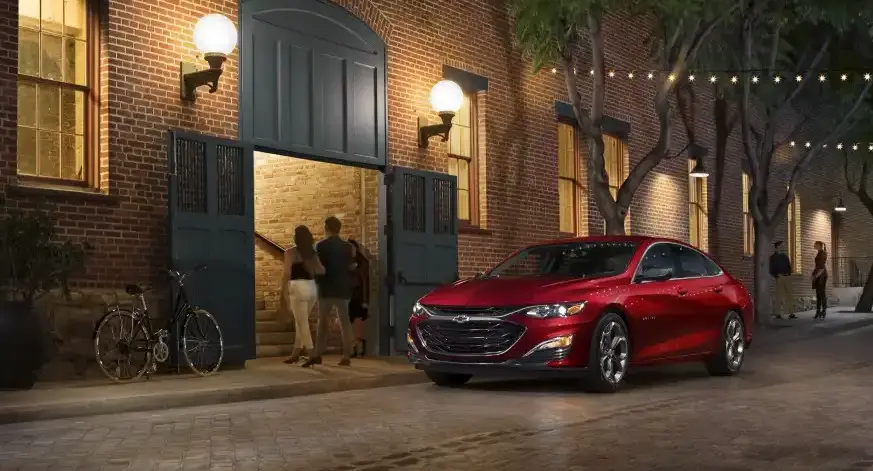
The Chevrolet Malibu IX, specifically the 1.8-liter (185 hp) Hybrid variant introduced with the 2019 facelift, represented a significant step in Chevrolet’s efforts to offer a more fuel-efficient mid-size sedan to the American market. Positioned as a mid-range offering within the Malibu IX lineup, it bridged the gap between the base 1.5L turbocharged engine and the more powerful 2.0L turbo. Production of this variant ran from 2019 through 2023, coinciding with the later years of the eighth-generation Malibu (introduced in 2016). The Malibu, historically a mainstay of the American automotive landscape, aimed to compete with established rivals like the Toyota Camry and Honda Accord, with the hybrid model specifically targeting buyers prioritizing fuel economy and a smoother driving experience.
Technical Specifications
| Brand | Chevrolet |
| Model | Malibu |
| Generation | Malibu IX (facelift 2019) |
| Type (Engine) | 1.8 (185 Hp) Hybrid |
| Start of production | 2019 |
| Powertrain Architecture | FHEV (Full Hybrid Electric Vehicle) |
| Body type | Sedan |
| Seats | 5 |
| Doors | 4 |
| Fuel consumption (urban) | 4.8 l/100 km (49 US mpg) |
| Fuel consumption (extra urban) | 5.4 l/100 km (43.6 US mpg) |
| Fuel Type | Petrol (Gasoline) |
| Weight-to-power ratio | 8.2 kg/Hp |
| Weight-to-torque ratio | 4.1 kg/Nm |
| Electric motor power (1) | 103 Hp |
| Electric motor power (2) | 75 Hp |
| System power | 185 Hp |
| System torque | 375 Nm (276.59 lb.-ft.) |
| Engine Power | 124 Hp @ 5000 rpm |
| Engine Torque | 175 Nm @ 4750 rpm (129.07 lb.-ft. @ 4750 rpm) |
| Engine displacement | 1796 cm3 (109.6 cu. in.) |
| Number of cylinders | 4 |
| Engine configuration | Inline |
| Cylinder Bore | 80.5 mm (3.17 in.) |
| Piston Stroke | 88.2 mm (3.47 in.) |
| Compression ratio | 11.5:1 |
| Number of valves per cylinder | 4 |
| Fuel injection system | Direct injection |
| Valvetrain | DOHC, VVT |
| Kerb Weight | 1526 kg (3364.25 lbs.) |
| Trunk (boot) space (minimum) | 328 l (11.58 cu. ft.) |
| Fuel tank capacity | 49 l (12.94 US gal | 10.78 UK gal) |
| Length | 4923 mm (193.82 in.) |
| Width | 1854 mm (72.99 in.) |
| Height | 1463 mm (57.6 in.) |
| Wheelbase | 2830 mm (111.42 in.) |
| Front track | 1590 mm (62.6 in.) |
| Rear track | 1588 mm (62.52 in.) |
| Minimum turning circle | 11.5 m (37.73 ft.) |
| Drive wheel | Front wheel drive |
| Number of gears & gearbox type | 1 gear, automatic transmission |
| Front suspension | Independent, McPherson with coil spring and anti-roll bar |
| Rear suspension | Independent multi-link spring suspension with stabilizer |
| Front brakes | Ventilated discs |
| Rear brakes | Disc |
| Assisting systems | ABS (Anti-lock braking system) |
| Steering type | Steering rack and pinion |
| Power steering | Electric |
| Tires size | 225/55 R17 |
| Wheel rims size | 8J x 17 |
Powertrain & Engine Architecture
The 2019 Malibu Hybrid utilizes a sophisticated Full Hybrid Electric Vehicle (FHEV) powertrain. At its core is a 1.8-liter inline-four cylinder gasoline engine (code LU8) producing 124 horsepower at 5000 rpm and 175 Nm (129 lb-ft) of torque at 4750 rpm. This engine employs direct fuel injection and a Double Overhead Camshaft (DOHC) valvetrain with Variable Valve Timing (VVT) to optimize efficiency and power delivery. Crucially, this engine isn’t designed to operate independently for extended periods; it primarily functions in conjunction with the electric motor(s). The hybrid system incorporates two electric motors – one 103 hp unit and a smaller 75 hp unit – integrated with a continuously variable transmission (CVT). The combined system output is 185 horsepower and 375 Nm (276.59 lb-ft) of torque. The electric motors draw power from a lithium-ion battery pack, allowing for electric-only driving at lower speeds and assisting the gasoline engine during acceleration. The CVT, while sometimes criticized for its driving feel, is essential for maximizing fuel efficiency in a hybrid application.
Driving Characteristics
The 1.8L Hybrid Malibu offers a noticeably different driving experience compared to its gasoline-only counterparts. The electric motor assistance provides instant torque, resulting in brisk acceleration from a standstill. While not a performance-oriented vehicle, the combined 185 hp is adequate for everyday driving and highway merging. The CVT, while smooth, can sometimes feel disconnected, exhibiting the characteristic “rubber band” effect common to these transmissions. However, this is mitigated by the electric motor’s responsiveness. Compared to the 1.5L turbo, the hybrid feels more refined and quieter, especially in electric-only mode. Against the 2.0L turbo, it sacrifices outright power for significantly improved fuel economy. The steering is light and precise, typical of modern Chevrolet sedans, and the suspension provides a comfortable ride, absorbing most road imperfections effectively.
Equipment & Trim Levels
The 1.8L Hybrid was typically offered in LS and LT trim levels. The LS trim included standard features such as Chevrolet’s Infotainment 3 system with a 7-inch touchscreen, Apple CarPlay and Android Auto compatibility, a rearview camera, and keyless entry. The LT trim added features like an 8-inch touchscreen, upgraded cloth upholstery, heated front seats, and a power-adjustable driver’s seat. Optional extras available on both trims included a sunroof, navigation system, and a premium Bose audio system. Safety features such as automatic emergency braking and lane keep assist were standard across the lineup.
Chassis & Braking
The Malibu IX utilizes a front-wheel-drive platform with an independent McPherson strut suspension in the front and an independent multi-link suspension in the rear. This setup provides a good balance between ride comfort and handling. The hybrid variant, due to the added weight of the battery pack, features slightly stiffer spring rates compared to the standard Malibu to maintain handling composure. Braking duties are handled by ventilated discs in the front and solid discs in the rear. Anti-lock Braking System (ABS) is standard. The steering system employs an electric power steering (EPS) system, providing light and responsive steering feel.
Market Reception & Comparison
The 2019 Malibu Hybrid was generally well-received by automotive critics, who praised its fuel efficiency and comfortable ride. Fuel economy figures of 49 mpg city and 43.6 mpg highway were competitive within the mid-size sedan segment. However, some reviewers noted the CVT’s occasionally unrefined feel and the lack of a truly sporty driving experience. Compared to the 1.5L turbo, the hybrid offered superior fuel economy but a slightly higher price point. Against the 2.0L turbo, it traded performance for efficiency. Reliability reports have been generally positive, with few major issues reported with the hybrid powertrain.
Legacy
The Chevrolet Malibu Hybrid, and specifically the 1.8L variant, represents a key step in Chevrolet’s electrification strategy. While not a groundbreaking vehicle, it provided a practical and fuel-efficient option for consumers seeking a mid-size sedan. On the used car market, these models hold their value reasonably well, particularly those with lower mileage and well-maintained service records. The hybrid powertrain has proven to be relatively reliable, and the availability of replacement parts is good. As fuel prices continue to fluctuate, the Malibu Hybrid remains an attractive option for budget-conscious buyers seeking a comfortable and efficient daily driver.