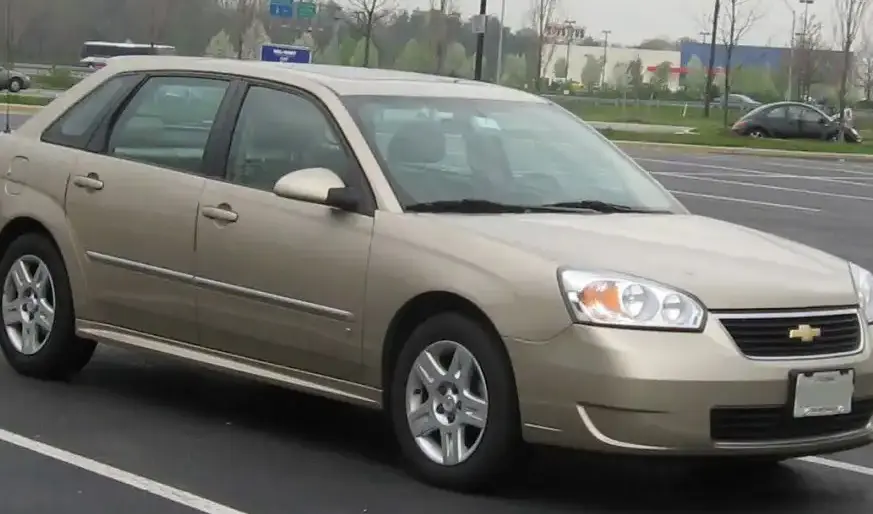
The Chevrolet Malibu Maxx SS, specifically the 3.9i V6 variant produced from 2006 to 2007, represented a unique offering in the mid-size segment. Positioned as the performance-oriented trim of the Malibu Maxx (a hatchback version of the sixth-generation Malibu), it aimed to provide a sportier alternative to traditional sedans. This facelifted model, built on the GM Epsilon platform, was primarily marketed in North America, offering a blend of practicality and V6 power. The SS trim distinguished itself with a more powerful engine, unique styling cues, and a focus on driving engagement, though it utilized a four-speed automatic transmission as its sole gearbox option.
Technical Specifications
| Brand | Chevrolet |
| Model | Malibu |
| Generation | Malibu Maxx (facelift 2006) |
| Type | SS 3.9i V6 12V (240 Hp) Automatic |
| Start of production | 2006 |
| End of production | 2007 |
| Powertrain Architecture | Internal Combustion engine |
| Body type | Hatchback |
| Seats | 5 |
| Doors | 5 |
| Fuel consumption (urban) | 13 l/100 km (18.1 US mpg) |
| Fuel consumption (extra urban) | 9 l/100 km (26.1 US mpg) |
| Fuel Type | Petrol (Gasoline) |
| Weight-to-power ratio | 6.8 kg/Hp |
| Weight-to-torque ratio | 5.1 kg/Nm |
| Power | 240 Hp @ 5800 rpm |
| Torque | 325 Nm @ 2800 rpm (239.71 lb.-ft. @ 2800 rpm) |
| Maximum engine speed | 6400 rpm |
| Engine layout | Front, Transverse |
| Engine Model/Code | LZ9 |
| Engine displacement | 3880 cm3 (236.77 cu. in.) |
| Number of cylinders | 6 |
| Engine configuration | V-engine |
| Cylinder Bore | 99 mm (3.9 in.) |
| Piston Stroke | 84 mm (3.31 in.) |
| Compression ratio | 9.8:1 |
| Number of valves per cylinder | 2 |
| Fuel injection system | Multi-port manifold injection |
| Engine aspiration | Naturally aspirated engine |
| Valvetrain | OHV, CVVT |
| Engine oil capacity | 4.7 l (4.97 US qt | 4.14 UK qt) |
| Coolant capacity | 9.4 l (9.93 US qt | 8.27 UK qt) |
| Kerb Weight | 1642 kg (3619.99 lbs.) |
| Trunk (boot) space – minimum | 646 l (22.81 cu. ft.) |
| Trunk (boot) space – maximum | 1161 l (41 cu. ft.) |
| Fuel tank capacity | 61 l (16.11 US gal | 13.42 UK gal) |
| Length | 4770 mm (187.8 in.) |
| Width | 1773 mm (69.8 in.) |
| Height | 1476 mm (58.11 in.) |
| Wheelbase | 2852 mm (112.28 in.) |
| Front track | 1524 mm (60 in.) |
| Rear track | 1529 mm (60.2 in.) |
| Ride height (ground clearance) | 154 mm (6.06 in.) |
| Minimum turning circle | 11.4 m (37.4 ft.) |
| Drivetrain Architecture | Front wheel drive |
| Number of gears and type of gearbox | 4 gears, automatic transmission Hydra-Matic |
| Front suspension | Independent, McPherson with coil spring and anti-roll bar |
| Rear suspension | Independent multi-link suspension |
| Front brakes | Ventilated discs |
| Rear brakes | Disc |
| Assisting systems | ABS (Anti-lock braking system) |
| Steering type | Steering rack and pinion |
| Power steering | Electric Steering |
| Tires size | 225/50 R18 |
| Wheel rims size | 18 |
Powertrain & Engine Architecture
The heart of the Malibu Maxx SS was the 3.9-liter (3880 cc) LZ9 V6 engine. This engine, a member of GM’s 3800 Series II V6 family, featured a 90-degree V-configuration, overhead valve (OHV) valvetrain, and a 9.8:1 compression ratio. It utilized multi-port fuel injection to deliver fuel to the cylinders. The LZ9 engine was known for its relatively smooth operation and decent power output for its displacement. The engine’s 240 horsepower and 239.71 lb-ft of torque were respectable for the time, but not class-leading. The sole transmission option was a four-speed Hydra-Matic automatic, which, while reliable, was beginning to show its age compared to newer transmissions with more gears. This transmission was geared towards comfortable cruising rather than aggressive acceleration.
Driving Characteristics
The combination of the 3.9L V6 and the four-speed automatic resulted in a driving experience that prioritized smooth, relaxed acceleration over outright performance. While the engine provided adequate power for merging and passing on the highway, it didn’t offer the same responsiveness as some of its competitors with more modern transmissions or higher-output engines. The automatic transmission’s gear ratios were spaced to favor fuel economy and comfort, meaning that the engine often felt slightly strained during hard acceleration. Compared to a hypothetical manual transmission version, the automatic would have resulted in a noticeable decrease in both acceleration and fuel efficiency. The Maxx’s hatchback body style did contribute to a slightly more nimble feel compared to the standard Malibu sedan.
Equipment & Trim Levels
The Malibu Maxx SS came reasonably well-equipped, reflecting its position as the top-tier trim level. Standard features typically included air conditioning, power windows and locks, a CD player with an auxiliary input, and cruise control. The SS trim also featured unique exterior styling elements, such as a sportier front fascia, body-colored side moldings, and alloy wheels. Interior appointments included cloth upholstery, though leather was often available as an option. Optional extras could include a sunroof, upgraded audio system, and remote keyless entry.
Chassis & Braking
The Malibu Maxx SS utilized an independent suspension setup, with McPherson struts at the front and a multi-link suspension at the rear. This configuration provided a comfortable ride quality, though it wasn’t particularly sporty. The SS trim featured slightly stiffer suspension tuning compared to lower trims, aimed at improving handling. Braking duties were handled by ventilated discs at the front and solid discs at the rear. Anti-lock brakes (ABS) were standard. The braking system was adequate for everyday driving, but lacked the stopping power of some competitors with larger brakes.
Market Reception & Comparison
The Malibu Maxx SS received mixed reviews from automotive critics. While the V6 engine was praised for its smoothness and adequate power, the four-speed automatic transmission was often criticized for being outdated and lacking responsiveness. Compared to other mid-size cars with V6 engines, such as the Honda Accord and Toyota Camry, the Malibu Maxx SS offered a more affordable price point but lacked the same level of refinement and performance. Fuel economy was average for the class, with the EPA estimating around 18 mpg city and 26 mpg highway. Reliability was generally considered good, though some owners reported issues with the automatic transmission over the long term.
Legacy
The Chevrolet Malibu Maxx SS, while not a groundbreaking vehicle, holds a niche position in the history of the Malibu. It represented an attempt by Chevrolet to offer a more engaging and sporty version of its popular mid-size car. The LZ9 V6 engine proved to be a relatively durable and reliable powerplant, and many examples are still on the road today. In the used car market, the Malibu Maxx SS is often sought after by enthusiasts looking for an affordable and practical V6-powered hatchback. However, potential buyers should be aware of the potential for transmission issues and the relatively low fuel economy compared to more modern vehicles.