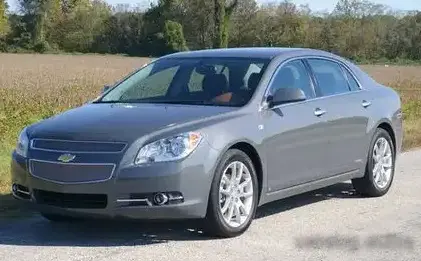
The Chevrolet Malibu VII 2.4i Hybrid, produced for the 2008 and 2009 model years, represented Chevrolet’s initial foray into mainstream hybrid technology within the mid-size sedan segment. Positioned as a fuel-efficient alternative within the seventh generation Malibu (2008-2012) lineup, it offered a blend of gasoline engine power and electric motor assistance. This variant aimed to appeal to buyers seeking improved gas mileage without sacrificing the practicality and space of a traditional sedan. It was sold exclusively in the North American market, as part of Chevrolet’s strategy to offer more fuel-conscious options amidst rising gasoline prices.
Technical Specifications
| Brand | Chevrolet |
| Model | Malibu |
| Generation | Malibu VII |
| Type (Engine) | 2.4i (164 Hp) Hybrid |
| Start of production | 2008 |
| End of production | 2009 |
| Powertrain Architecture | MHEV (Mild Hybrid Electric Vehicle) |
| Body type | Sedan |
| Seats | 5 |
| Doors | 4 |
| Fuel consumption (urban) | 9 l/100 km (26.1 US mpg) |
| Fuel consumption (extra urban) | 6.9 l/100 km (34.1 US mpg) |
| Fuel consumption (combined) | 8.1 l/100 km (29 US mpg) |
| Fuel Type | Petrol (Gasoline) |
| Weight-to-power ratio | 9.8 kg/Hp |
| Weight-to-torque ratio | 7.4 kg/Nm |
| System power | 164 Hp |
| Engine Power | 164 Hp @ 6000 rpm |
| Power per litre | 68.8 Hp/l |
| Torque | 216 Nm @ 5000 rpm (159.31 lb.-ft. @ 5000 rpm) |
| Engine layout | Front, Transverse |
| Engine Model/Code | LAT |
| Engine displacement | 2384 cm3 (145.48 cu. in.) |
| Number of cylinders | 4 |
| Engine configuration | Inline |
| Cylinder Bore | 88 mm (3.46 in.) |
| Piston Stroke | 98 mm (3.86 in.) |
| Compression ratio | 10.6:1 |
| Number of valves per cylinder | 4 |
| Fuel injection system | Multi-port manifold injection |
| Valvetrain | DOHC |
| Engine oil capacity | 4.7 l (4.97 US qt | 4.14 UK qt) |
| Coolant capacity | 7.7 l (8.14 US qt | 6.78 UK qt) |
| Kerb Weight | 1604 kg (3536.21 lbs.) |
| Max. weight | 2140 kg (4717.89 lbs.) |
| Max load | 536 kg (1181.68 lbs.) |
| Trunk (boot) space – maximum | 377 l (13.31 cu. ft.) |
| Fuel tank capacity | 61 l (16.11 US gal | 13.42 UK gal) |
| Length | 4872 mm (191.81 in.) |
| Width | 1785 mm (70.28 in.) |
| Height | 1451 mm (57.13 in.) |
| Wheelbase | 2852 mm (112.28 in.) |
| Front track | 1514 mm (59.61 in.) |
| Rear track | 1524 mm (60 in.) |
| Minimum turning circle | 12.3 m (40.35 ft.) |
| Drive wheel | Front wheel drive |
| Number of gears | 4 |
| Gearbox type | Automatic transmission |
| Front brakes | Ventilated discs |
| Rear brakes | Disc |
| Assisting systems | ABS (Anti-lock braking system) |
| Steering type | Steering rack and pinion |
| Power steering | Electric |
| Tires size | 215/60 R16 |
| Wheel rims size | 16 |
Powertrain & Engine Architecture
The Malibu Hybrid VII utilized a 2.4-liter inline-four cylinder gasoline engine, designated the LAT engine code. This engine featured multi-port fuel injection and a double overhead camshaft (DOHC) valvetrain. The engine produced 164 horsepower at 6000 rpm and 159.31 lb-ft of torque at 5000 rpm. The “hybrid” aspect came from a 48-volt mild hybrid system. This system included a Motor Generator Unit (MGU) that provided start/stop functionality, regenerative braking, and a small amount of electric assist during acceleration. The MGU wasn’t powerful enough to propel the vehicle on electric power alone. The four-speed automatic transmission was specifically calibrated to work with the hybrid system, optimizing for fuel efficiency. The transmission’s gear ratios were geared towards maximizing fuel economy rather than outright performance.
Driving Characteristics
The 2.4i Hybrid offered a noticeably smoother and quieter driving experience compared to the standard 2.4-liter Malibu. The electric motor assist provided a subtle boost during initial acceleration, helping to reduce engine strain. However, the four-speed automatic transmission, while adequate, wasn’t as responsive or refined as the six-speed automatics found in some competitors. The mild hybrid system didn’t deliver the dramatic fuel economy gains of a full hybrid, but it did provide a measurable improvement, particularly in city driving. Compared to the more powerful 2.4L non-hybrid versions, the hybrid felt slightly less energetic, especially when accelerating at highway speeds or climbing hills. The focus was clearly on efficiency, not sporty performance.
Equipment & Trim Levels
The Malibu Hybrid VII was generally offered with a fairly well-equipped standard feature set. This typically included air conditioning, power windows and locks, a CD player with auxiliary input, and keyless entry. Interior upholstery was usually cloth, with optional leather available. Higher trim levels added features like a sunroof, upgraded audio system, and alloy wheels. The hybrid model didn’t have a unique trim level; it was offered within the existing Malibu trim structure (LS, LT, LTZ), with the hybrid powertrain being an option on certain trims.
Chassis & Braking
The Malibu VII utilized a front-wheel-drive layout with independent front suspension and a multi-link rear suspension. The hybrid model shared the same suspension components as the standard Malibu, but the suspension tuning was slightly adjusted to account for the added weight of the hybrid system components. Braking duties were handled by ventilated front discs and solid rear discs, equipped with an Anti-lock Braking System (ABS). The steering was rack-and-pinion with electric power assist.
Market Reception & Comparison
The Malibu Hybrid VII received mixed reviews. Critics praised its improved fuel economy and smooth ride, but some found the performance underwhelming and the four-speed automatic transmission dated. Compared to other mid-size sedans of the time, such as the Toyota Camry Hybrid and Honda Accord Hybrid, the Malibu Hybrid offered a more affordable entry point into the hybrid market, but it lacked the refinement and fuel efficiency of its Japanese competitors. Fuel economy was rated at 29 mpg combined, which was a modest improvement over the non-hybrid Malibu.
Legacy
The Chevrolet Malibu VII 2.4i Hybrid, while not a groundbreaking vehicle, represented an important step for Chevrolet in embracing hybrid technology. The mild hybrid system proved to be relatively reliable, with few widespread issues reported. Today, these vehicles are relatively affordable on the used car market. While the fuel economy benefits aren’t as significant as more modern hybrids, the Malibu Hybrid VII remains a practical and reasonably efficient option for budget-conscious buyers. The powertrain, while not known for exceptional longevity, generally holds up well with regular maintenance. Its significance lies in paving the way for Chevrolet’s more advanced hybrid and electric vehicle offerings in subsequent years.