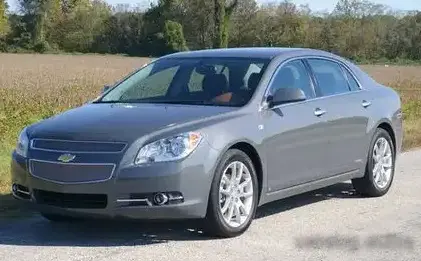
The Chevrolet Malibu VII, produced from 2008 to 2012, represented a significant step forward for Chevrolet’s mid-size sedan. This generation, built on the GM Epsilon II platform, aimed to offer a more refined and competitive vehicle in a segment dominated by the Toyota Camry and Honda Accord. Among the various engine and transmission options available, the 3.6i V6 24V (252 Hp) paired with an automatic transmission occupied a position as the premium offering, balancing performance with everyday usability. It was positioned above the base 2.4L four-cylinder models and offered a more powerful alternative to the fuel-efficient but less potent options.
Technical Specifications
| Brand | Chevrolet |
| Model | Malibu |
| Generation | Malibu VII |
| Type (Engine) | 3.6i V6 24V (252 Hp) Automatic |
| Start of production | 2008 |
| End of production | 2012 |
| Powertrain Architecture | Internal Combustion engine |
| Body type | Sedan |
| Seats | 5 |
| Doors | 4 |
| Fuel consumption (urban) | 13.8 l/100 km (17 US mpg, 20.5 UK mpg) |
| Fuel consumption (extra urban) | 9 l/100 km (26.1 US mpg, 31.4 UK mpg) |
| Fuel Type | Petrol (Gasoline) |
| Weight-to-power ratio | 6.6 kg/Hp, 152.3 Hp/tonne |
| Weight-to-torque ratio | 4.9 kg/Nm, 205.4 Nm/tonne |
| Power | 252 Hp @ 6300 rpm |
| Power per litre | 70.7 Hp/l |
| Torque | 340 Nm @ 3200 rpm (250.77 lb.-ft. @ 3200 rpm) |
| Maximum engine speed | 6900 rpm |
| Engine layout | Front, Transverse |
| Engine Model/Code | LY7 |
| Engine displacement | 3564 cm3 (217.49 cu. in.) |
| Number of cylinders | 6 |
| Engine configuration | V-engine |
| Cylinder Bore | 94 mm (3.7 in.) |
| Piston Stroke | 85.6 mm (3.37 in.) |
| Compression ratio | 10.2:1 |
| Number of valves per cylinder | 4 |
| Fuel injection system | Multi-port manifold injection |
| Engine aspiration | Naturally aspirated engine |
| Valvetrain | DOHC, VVT |
| Engine oil capacity | 5.2 l (5.49 US qt | 4.58 UK qt) |
| Coolant | 9.4 l (9.93 US qt | 8.27 UK qt) |
| Kerb Weight | 1655 kg (3648.65 lbs.) |
| Trunk (boot) space – maximum | 427 l (15.08 cu. ft.) |
| Fuel tank capacity | 62 l (16.38 US gal | 13.64 UK gal) |
| Length | 4872 mm (191.81 in.) |
| Width | 1785 mm (70.28 in.) |
| Height | 1451 mm (57.13 in.) |
| Wheelbase | 2852 mm (112.28 in.) |
| Front track | 1514 mm (59.61 in.) |
| Rear (Back) track | 1524 mm (60 in.) |
| Minimum turning circle | 12.3 m (40.35 ft.) |
| Drivetrain Architecture | Front wheel drive |
| Number of gears | 6 |
| Gearbox type | Automatic transmission |
| Front suspension | Independent, McPherson with coil spring and anti-roll bar |
| Rear suspension | Independent multi-link suspension |
| Front brakes | Ventilated discs |
| Rear brakes | Disc |
| Assisting systems | ABS (Anti-lock braking system) |
| Steering type | Steering rack and pinion |
| Power steering | Electric |
| Tires size | 225/50 R17; 225/50 R18 |
| Wheel rims size | 17; 18 |
Powertrain & Engine Architecture
The heart of this Malibu variant was the 3.6-liter LY7 V6 engine. This engine, part of GM’s High Feature V6 family, was a 60-degree V-engine featuring a cast aluminum block and cylinder heads. It utilized multi-port fuel injection and a double overhead camshaft (DOHC) valvetrain with variable valve timing (VVT) on both intake and exhaust camshafts. This VVT system allowed for optimized engine performance and efficiency across a wider range of engine speeds. The LY7 produced 252 horsepower at 6300 rpm and 250.77 lb-ft of torque at 3200 rpm. The engine was transversely mounted in the front of the vehicle, driving the front wheels. The automatic transmission was a six-speed unit, offering smooth shifts and contributing to the overall refined driving experience.
Driving Characteristics
The 3.6L V6 automatic Malibu offered a noticeable performance upgrade over the base four-cylinder models. Acceleration was brisk, and the engine provided ample power for highway merging and passing maneuvers. While not a sports sedan, the V6 delivered a confident and responsive driving experience. The six-speed automatic transmission was well-tuned, providing smooth and timely shifts. Compared to the manual transmission options available on other Malibu trims, the automatic prioritized comfort and ease of use over outright performance. The gear ratios were optimized for everyday driving, providing good low-end torque for city driving and sufficient power for highway cruising.
Equipment & Trim Levels
The 3.6L V6 Malibu typically came equipped with a higher level of standard features than the lower trims. These often included features like alloy wheels (typically 17 or 18-inch), upgraded interior upholstery (cloth or leatherette), a premium sound system, and power-adjustable front seats. Optional extras could include a sunroof, navigation system, remote start, and a rear-seat entertainment system. The interior design was generally considered modern and comfortable for its time, with a focus on ergonomics and usability.
Chassis & Braking
The Malibu VII featured an independent suspension system at all four wheels. The front suspension utilized a McPherson strut design with coil springs and an anti-roll bar, while the rear suspension employed a multi-link setup. This suspension configuration provided a comfortable ride quality while maintaining reasonable handling characteristics. Braking duties were handled by ventilated discs at the front and solid discs at the rear. The vehicle was equipped with an anti-lock braking system (ABS) as standard, enhancing safety and control during emergency braking situations. Steering was rack-and-pinion with electric power assist, providing a responsive and precise steering feel.
Market Reception & Comparison
Critics generally praised the Malibu VII 3.6L V6 for its refined engine, comfortable ride, and spacious interior. However, some reviewers noted that the styling was somewhat conservative compared to its competitors. Fuel economy was a common point of discussion, with the V6 engine consuming more fuel than the four-cylinder options. Compared to the 2.4L four-cylinder models, the V6 offered a significant performance boost but at the cost of increased fuel consumption. The V6 also commanded a higher price point, making it a more premium offering within the Malibu lineup. Against competitors like the Toyota Camry and Honda Accord, the Malibu VII V6 offered a competitive package with a strong engine and a comfortable interior.
Legacy
The Chevrolet Malibu VII 3.6L V6 Automatic has proven to be a relatively reliable powertrain combination. The LY7 V6 engine is known for its durability and longevity, with many examples exceeding 150,000 miles with proper maintenance. Common maintenance items include regular oil changes, coolant flushes, and spark plug replacements. The six-speed automatic transmission is also generally considered reliable, although some owners have reported issues with solenoid failures. In the used car market today, these Malibus represent a good value for buyers seeking a comfortable and well-equipped mid-size sedan with a powerful V6 engine. While not a collector’s item, the Malibu VII 3.6L V6 remains a popular choice for those looking for a dependable and affordable used car.