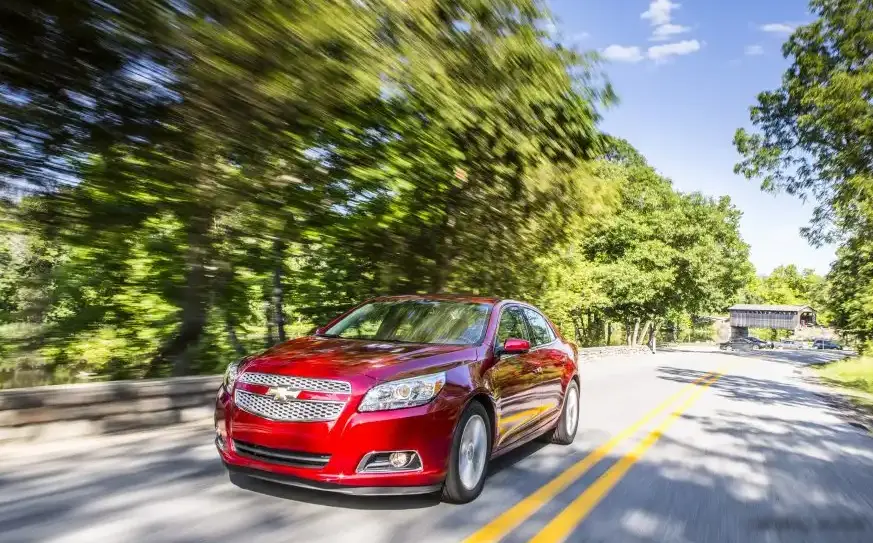
The Chevrolet Malibu VIII 2.4 (200 Hp) Eco Hybrid Automatic, produced from 2012 to 2014, represented Chevrolet’s entry into the increasingly competitive mid-size sedan segment with a focus on fuel efficiency. Positioned as a technologically advanced offering within the eighth generation Malibu (2012-2016), this variant combined a 2.4-liter four-cylinder gasoline engine with an electric motor, forming a full hybrid electric vehicle (FHEV) system. It aimed to appeal to buyers seeking a balance between performance and economy, offering a more sophisticated alternative to traditional gasoline-only models. The Malibu VIII, built on the GM Epsilon II platform, was designed to recapture market share in a segment dominated by the Toyota Camry and Honda Accord.
Technical Specifications
| Brand | Chevrolet |
| Model | Malibu |
| Generation | Malibu VIII |
| Type (Engine) | 2.4 (200 Hp) Eco Hybrid Automatic |
| Start of production | 2012 |
| End of production | 2014 |
| Powertrain Architecture | FHEV (Full Hybrid Electric Vehicle) |
| Body type | Sedan |
| Seats | 5 |
| Doors | 4 |
| Fuel consumption (urban) | 9.4 l/100 km (25 US mpg) |
| Fuel consumption (extra urban) | 6.4 l/100 km (36.8 US mpg) |
| Fuel consumption (combined) | 8.1 l/100 km (29 US mpg) |
| Fuel Type | Petrol (Gasoline) |
| Weight-to-power ratio | 8.1 kg/Hp |
| Weight-to-torque ratio | 5.8 kg/Nm |
| Gross battery capacity | 0.5 kWh |
| Electric motor power | 15 Hp @ 1000-2200 rpm |
| Electric motor Torque | 150 Nm @ 1000 rpm (110.63 lb.-ft. @ 1000 rpm) |
| System power | 200 Hp @ 6700 rpm |
| System torque | 280 Nm @ 3500 rpm (206.52 lb.-ft. @ 3500 rpm) |
| Power | 182 Hp |
| Torque | 233 Nm (171.85 lb.-ft.) |
| Maximum engine speed | 7000 rpm |
| Engine layout | Front, Transverse |
| Engine Model/Code | LUK |
| Engine displacement | 2384 cm3 (145.48 cu. in.) |
| Number of cylinders | 4 |
| Engine configuration | Inline |
| Cylinder Bore | 88 mm (3.46 in.) |
| Piston Stroke | 98 mm (3.86 in.) |
| Compression ratio | 11.2:1 |
| Number of valves per cylinder | 4 |
| Fuel injection system | Direct injection |
| Valvetrain | DOHC, CVVT |
| Engine oil capacity | 4.7 l (4.97 US qt | 4.14 UK qt) |
| Coolant capacity | 7.1 l (7.5 US qt | 6.25 UK qt) |
| Kerb Weight | 1628 kg (3589.13 lbs.) |
| Trunk (boot) space (minimum) | 374 l (13.21 cu. ft.) |
| Fuel tank capacity | 60 l (15.85 US gal | 13.2 UK gal) |
| Length | 4865 mm (191.54 in.) |
| Width | 1854 mm (72.99 in.) |
| Height | 1462 mm (57.56 in.) |
| Wheelbase | 2738 mm (107.8 in.) |
| Front track | 1579 mm (62.17 in.) |
| Rear track | 1575 mm (62.01 in.) |
| Drag coefficient (Cd) | 0.30 |
| Minimum turning circle | 11.4 m (37.4 ft.) |
| Drive wheel | Front wheel drive |
| Number of gears | 6 |
| Gearbox type | Automatic transmission |
| Front suspension | Independent type McPherson |
| Rear suspension | Independent multi-link suspension |
| Front brakes | Ventilated discs |
| Rear brakes | Disc |
| Assisting systems | ABS (Anti-lock braking system) |
| Steering type | Steering rack and pinion |
| Tires size | 225/55 R17 |
| Wheel rims size | 8.0J x 17 |
Powertrain & Engine Architecture
The heart of the Malibu Hybrid was the LUK engine, a 2.4-liter inline-four cylinder gasoline engine. This engine featured direct fuel injection and a double overhead camshaft (DOHC) valvetrain with variable valve timing (CVVT) on both intake and exhaust valves. These technologies were employed to optimize combustion efficiency and power delivery. The engine produced 182 horsepower and 171.85 lb-ft of torque. Supplementing the gasoline engine was a 15-horsepower electric motor, capable of generating 110.63 lb-ft of torque. The electric motor drew power from a 0.5 kWh battery pack. The combined system output was rated at 200 horsepower and 206.52 lb-ft of torque. The powertrain utilized a six-speed automatic transmission, specifically tuned to work seamlessly with the hybrid system. The transmission’s programming prioritized fuel economy, often favoring higher gears at lower speeds.
Driving Characteristics
The 200-horsepower output of the Malibu Hybrid, coupled with the six-speed automatic, provided adequate, though not particularly sporty, performance. Acceleration from 0 to 60 mph was estimated around 8.5 seconds. The electric motor provided instant torque at low speeds, contributing to a responsive feel during initial acceleration. However, the automatic transmission sometimes felt hesitant during quick overtaking maneuvers, requiring a downshift to access the engine’s full power. Compared to the 2.5-liter non-hybrid Malibu, the Hybrid offered similar overall power but with a different power delivery profile, emphasizing low-end torque. The hybrid system’s regenerative braking also provided a unique driving feel, with noticeable deceleration when lifting off the throttle.
Equipment & Trim Levels
The Malibu Hybrid was generally well-equipped, often including features such as keyless entry, a touchscreen infotainment system, Bluetooth connectivity, and a rearview camera. Standard interior features included cloth upholstery and a leather-wrapped steering wheel. Higher trim levels offered upgrades like leather seats, a premium sound system, and a power sunroof. Optional extras included navigation, remote start, and advanced safety features like lane departure warning and forward collision alert. The Hybrid trim was typically positioned as a mid-range offering, bridging the gap between the base model and the more luxurious trims.
Chassis & Braking
The Malibu VIII utilized an independent McPherson strut suspension in the front and an independent multi-link suspension in the rear. This setup aimed to provide a comfortable ride while maintaining reasonable handling characteristics. The front brakes were ventilated discs, while the rear brakes were solid discs. Anti-lock braking system (ABS) was standard. The suspension tuning was geared towards comfort rather than sporty handling, prioritizing a smooth ride over sharp cornering. The car’s curb weight of 3589.13 lbs contributed to a slightly less agile feel compared to lighter competitors.
Market Reception & Comparison
The Malibu Hybrid received mixed reviews from automotive critics. While praised for its fuel economy (estimated at 29 mpg combined), some reviewers found the performance to be underwhelming. Compared to the standard 2.5-liter Malibu, the Hybrid offered a noticeable improvement in fuel efficiency but at a slightly higher purchase price. The Toyota Camry Hybrid and Ford Fusion Hybrid were often cited as stronger competitors, offering more refined hybrid systems and a more engaging driving experience. Reliability reports were generally positive, with few major issues reported with the hybrid powertrain.
Legacy
The Chevrolet Malibu VIII 2.4 Eco Hybrid Automatic represented an important step for Chevrolet in the hybrid vehicle market. While not a runaway success, it demonstrated the brand’s commitment to fuel efficiency and advanced technology. The powertrain proved to be relatively reliable, and used examples continue to offer a compelling value proposition for buyers seeking a fuel-efficient mid-size sedan. The lessons learned from the Malibu Hybrid informed Chevrolet’s subsequent hybrid and electric vehicle development, paving the way for future models like the Volt and Bolt.