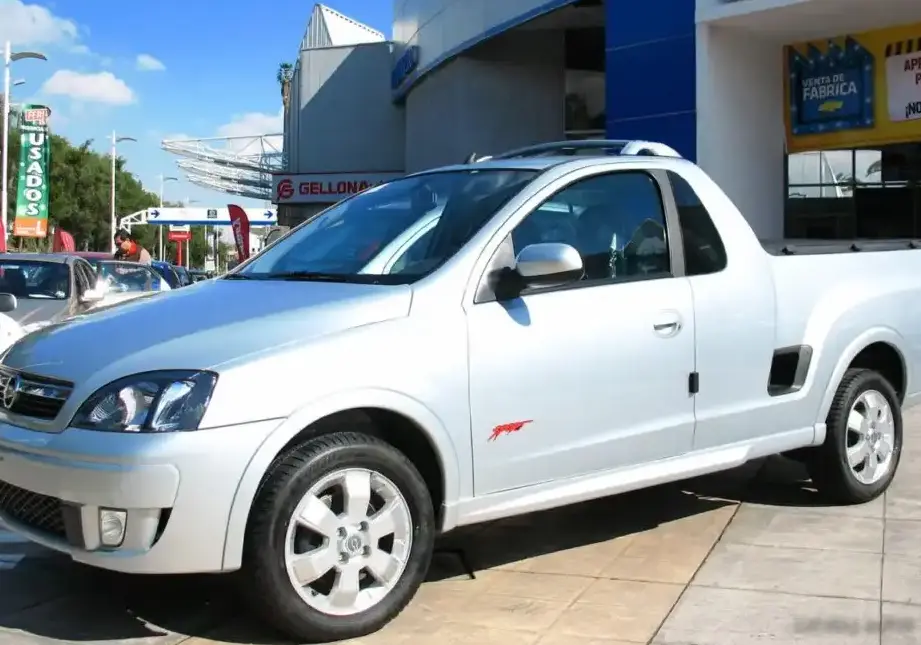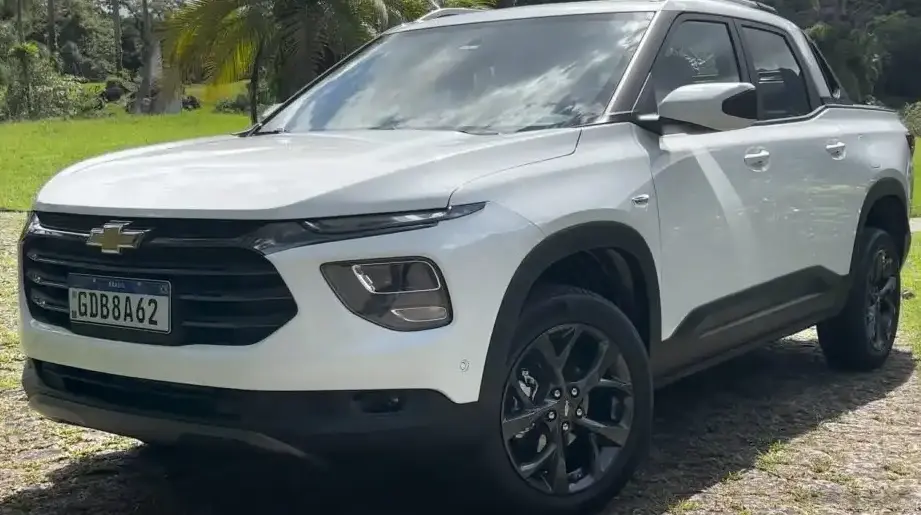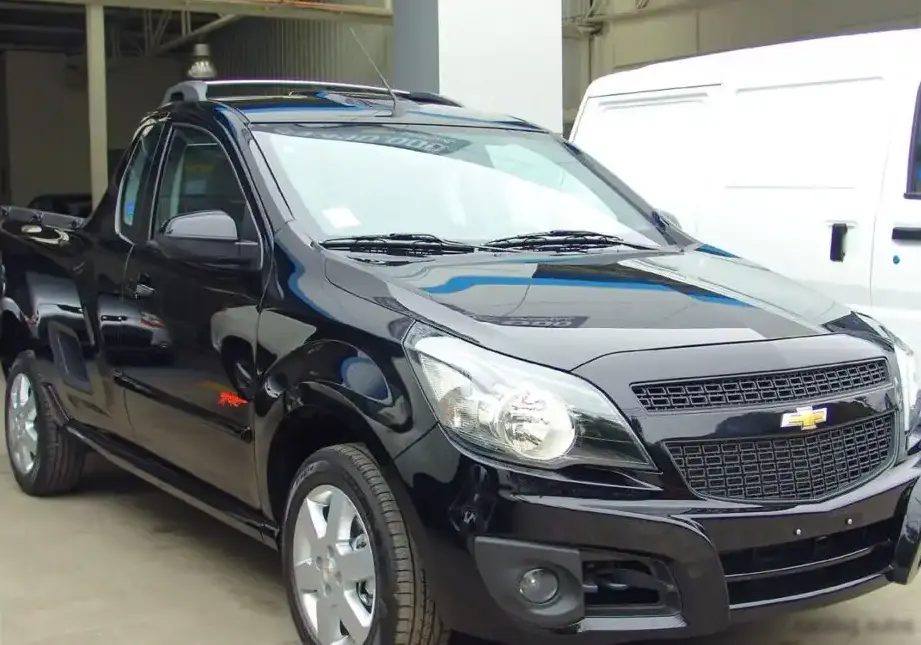
The Chevrolet Montana II 1.8 (105 hp) was a compact pickup truck produced by Chevrolet from 2011 to 2021, primarily for the South American market. Positioned as an entry-level offering within the Montana II range, it provided a more affordable and fuel-efficient alternative to the higher-powered versions. The Montana II itself was a second-generation iteration of the Montana, built on a unibody chassis and designed to blend the practicality of a pickup with the comfort of a passenger car. This variant, with its 1.8-liter engine and five-speed manual transmission, aimed to appeal to buyers seeking a versatile vehicle for both work and personal use.
Technical Specifications
| Brand | Chevrolet |
| Model | Montana |
| Generation | Montana II |
| Type (Engine) | 1.8 (105 Hp) |
| Start of production | 2011 |
| End of production | 2021 |
| Powertrain Architecture | Internal Combustion engine |
| Body type | Pick-up |
| Seats | 2 |
| Doors | 2 |
| Fuel Type | Petrol (Gasoline) |
| Weight-to-power ratio | 10.6 kg/Hp, 94.2 Hp/tonne |
| Weight-to-torque ratio | 6.9 kg/Nm, 144.4 Nm/tonne |
| Power | 105 Hp @ 5400 rpm |
| Power per litre | 58.5 Hp/l |
| Torque | 161 Nm @ 3000 rpm (118.75 lb.-ft. @ 3000 rpm) |
| Maximum engine speed | 6300 rpm |
| Engine layout | Front, Transverse |
| Engine displacement | 1796 cm3 (109.6 cu. in.) |
| Number of cylinders | 4 |
| Engine configuration | Inline |
| Cylinder Bore | 80.5 mm (3.17 in.) |
| Piston Stroke | 88.2 mm (3.47 in.) |
| Compression ratio | 10.5:1 |
| Fuel injection system | Multi-port manifold injection |
| Engine aspiration | Naturally aspirated engine |
| Engine oil capacity | 3.25 l (3.43 US qt | 2.86 UK qt) |
| Coolant | 5.5 l (5.81 US qt | 4.84 UK qt) |
| Kerb Weight | 1115-1152 kg (2458.15 – 2539.73 lbs.) |
| Max. weight | 1857 kg (4093.98 lbs.) |
| Max load | 705-742 kg (1554.26 – 1635.83 lbs.) |
| Fuel tank capacity | 56 l (14.79 US gal | 12.32 UK gal) |
| Length | 4514 mm (177.72 in.) |
| Width | 1700 mm (66.93 in.) |
| Width including mirrors | 1918 mm (75.51 in.) |
| Height | 1578-1630 mm (62.13 – 64.17 in.) |
| Wheelbase | 2669 mm (105.08 in.) |
| Front track | 1429 mm (56.26 in.) |
| Rear (Back) track | 1439 mm (56.65 in.) |
| Front overhang | 844 mm (33.23 in.) |
| Rear overhang | 1001 mm (39.41 in.) |
| Ride height (ground clearance) | 138-150 mm (5.43 – 5.91 in.) |
| Minimum turning circle (turning diameter) | 11.3 m (37.07 ft.) |
| Drivetrain Architecture | The Internal combustion engine (ICE) drives the front wheels of the vehicle. |
| Drive wheel | Front wheel drive |
| Number of gears and type of gearbox | 5 gears, manual transmission |
| Front suspension | Independent, type McPherson with coil spring and anti-roll bar |
| Rear suspension | Torsion |
| Front brakes | Disc |
| Rear brakes | Drum |
| Assisting systems | ABS (Anti-lock braking system) |
| Steering type | Steering rack and pinion |
| Tires size | 175/70 R14; 185/65 R15; 195/55 R16 |
| Wheel rims size | 5.5J x 14; 6J x 15; 6J x 16 |
Powertrain & Engine Architecture
The Chevrolet Montana II 1.8 utilized a 1.8-liter inline-four cylinder engine, internally designated as the X18XE. This engine was a common powerplant in various Chevrolet and Opel/Vauxhall models in South America and Europe. It featured a multi-port fuel injection system, providing a balance between fuel efficiency and performance. The engine’s valvetrain consisted of two overhead camshafts (DOHC) operating four valves per cylinder, contributing to improved breathing and power output. The five-speed manual transmission was the standard offering for this variant, providing a direct connection between the engine and the front wheels. The transmission’s gear ratios were tuned for everyday drivability, prioritizing fuel economy and smooth acceleration rather than outright performance.
Driving Characteristics
The 105 hp output of the 1.8-liter engine, coupled with the five-speed manual transmission, resulted in a driving experience geared towards practicality and efficiency. Acceleration was adequate for city driving and highway merging, but it wasn’t particularly brisk. The engine delivered its peak torque at 3000 rpm, providing a usable powerband for everyday driving situations. Compared to the more powerful engine options available in the Montana II lineup, this variant offered a more relaxed and fuel-conscious driving experience. The manual transmission allowed for greater driver control, but the gear ratios were spaced to favor fuel economy over sporty performance. The unibody construction and relatively lightweight nature of the Montana II contributed to decent handling characteristics, although it wasn’t designed for aggressive cornering.
Equipment & Trim Levels
The 1.8-liter Montana II typically served as the base trim level. Standard equipment generally included power steering, air conditioning, and a basic audio system. Interior upholstery was typically cloth, and the dashboard featured a functional, if somewhat spartan, design. Optional extras included power windows, power door locks, and an upgraded audio system. Higher trim levels, equipped with more powerful engines, offered additional features such as alloy wheels, fog lights, and more premium interior appointments. The focus of the 1.8L trim was affordability and essential features, making it an attractive option for budget-conscious buyers.
Chassis & Braking
The Chevrolet Montana II utilized a McPherson strut front suspension with a coil spring and anti-roll bar, providing a comfortable ride and reasonable handling. The rear suspension employed a torsion beam setup, which was a cost-effective solution for a compact pickup truck. The braking system consisted of disc brakes on the front wheels and drum brakes on the rear wheels. Anti-lock Braking System (ABS) was standard, enhancing safety by preventing wheel lockup during hard braking. The suspension and braking systems were tuned to provide a balance between ride comfort, handling stability, and affordability, appropriate for the vehicle’s intended use as a light-duty pickup.
Market Reception & Comparison
The Chevrolet Montana II 1.8 (105 hp) was generally well-received in its target market as a practical and affordable pickup truck. Critics praised its fuel efficiency and versatility, but noted that its performance was modest compared to higher-powered versions. Compared to the more expensive Montana II variants with larger engines, the 1.8-liter model offered a significant cost savings, making it an attractive option for buyers who didn’t require maximum power or towing capacity. Its fuel economy was a key selling point, particularly in regions where gasoline prices were high. Reliability was generally considered good, with the 1.8-liter engine proving to be a durable and dependable powerplant.
Legacy
The Chevrolet Montana II 1.8 (105 hp) remains a common sight on the roads of South America. The 1.8L engine, in general, has a reputation for being relatively reliable and easy to maintain. In the used car market, this variant represents a good value proposition for buyers seeking an affordable and practical pickup truck. While it may not offer the performance or features of more expensive models, its simplicity, fuel efficiency, and durability make it a popular choice for those who need a versatile vehicle for everyday tasks. Parts availability remains good, and the relatively straightforward mechanical design makes it accessible to independent mechanics.