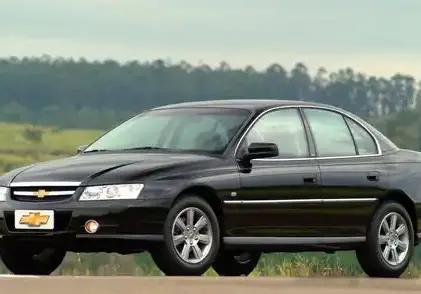
The Chevrolet Omega Suprema 3.0i, produced between 1992 and 1998, represented the top-of-the-line variant of the Omega line, Chevrolet’s flagship in the Brazilian market. Positioned as a spacious and comfortable family vehicle, the Suprema distinguished itself with its station wagon (estate) body style and a more powerful engine option compared to the standard Omega sedan. It was a key model for Chevrolet in South America, offering a blend of American engineering with adaptations for local conditions and preferences. The Omega, and specifically the Suprema, filled a niche for buyers seeking a domestically produced alternative to imported European station wagons.
Technical Specifications
| Brand | Chevrolet |
| Model | Omega |
| Generation | Omega Suprema |
| Type (Engine) | 3.0 i (165 Hp) |
| Start of production | 1992 |
| End of production | 1998 |
| Powertrain Architecture | Internal Combustion engine |
| Body type | Station wagon (estate) |
| Seats | 5 |
| Doors | 5 |
| Fuel consumption (combined) | 11 l/100 km (21.4 US mpg, 25.7 UK mpg, 9.1 km/l) |
| Fuel Type | Petrol (Gasoline) |
| Acceleration 0 – 100 km/h | 10 sec |
| Acceleration 0 – 62 mph | 10 sec |
| Acceleration 0 – 60 mph | 9.5 sec |
| Maximum speed | 210 km/h (130.49 mph) |
| Weight-to-power ratio | 9.1 kg/Hp, 110.2 Hp/tonne |
| Weight-to-torque ratio | 6.5 kg/Nm, 153.6 Nm/tonne |
| Power | 165 Hp @ 5800 rpm |
| Power per litre | 55.6 Hp/l |
| Torque | 230 Nm @ 4200 rpm (169.64 lb.-ft. @ 4200 rpm) |
| Engine layout | Front, Longitudinal |
| Engine displacement | 2969 cm3 (181.18 cu. in.) |
| Number of cylinders | 6 |
| Engine configuration | Inline |
| Cylinder Bore | 95 mm (3.74 in.) |
| Piston Stroke | 69.8 mm (2.75 in.) |
| Compression ratio | 9.2:1 |
| Number of valves per cylinder | 2 |
| Fuel injection system | Multi-port manifold injection |
| Engine aspiration | Naturally aspirated engine |
| Kerb Weight | 1497 kg (3300.32 lbs.) |
| Max. weight | 2110 kg (4651.75 lbs.) |
| Max load | 613 kg (1351.43 lbs.) |
| Trunk (boot) space – minimum | 540 l (19.07 cu. ft.) |
| Trunk (boot) space – maximum | 1850 l (65.33 cu. ft.) |
| Fuel tank capacity | 70 l (18.49 US gal | 15.4 UK gal) |
| Length | 4768 mm (187.72 in.) |
| Width | 1760 mm (69.29 in.) |
| Height | 1454 mm (57.24 in.) |
| Wheelbase | 2730 mm (107.48 in.) |
| Front track | 1462 mm (57.56 in.) |
| Rear (Back) track | 1476 mm (58.11 in.) |
| Drivetrain Architecture | The Internal combustion engine (ICE) drives the rear wheels of the vehicle. |
| Drive wheel | Rear wheel drive |
| Number of gears and type of gearbox | 5 gears, manual transmission |
| Front suspension | Coil spring |
| Rear suspension | Coil spring |
| Front brakes | Ventilated discs |
| Rear brakes | Disc |
| Assisting systems | ABS (Anti-lock braking system) |
| Steering type | Steering rack and pinion |
| Power steering | Hydraulic Steering |
| Tires size | 195/65 R15 V |
Powertrain & Engine Architecture
The heart of the Omega Suprema 3.0i was the Chevrolet 2969 cc inline-six cylinder engine. This engine, internally designated with various codes depending on the year of manufacture, was a robust and relatively simple design. It featured a cast iron block and aluminum cylinder head, employing a single overhead camshaft (SOHC) design with two valves per cylinder. Fuel delivery was managed by a multi-port fuel injection system, providing a balance between performance and fuel efficiency. The 9.2:1 compression ratio contributed to the engine’s respectable 165 horsepower at 5800 rpm and 230 Nm (169.64 lb-ft) of torque at 4200 rpm. The engine’s longitudinal front-engine, rear-wheel-drive layout was a carryover from General Motors’ global platforms, offering a more traditional driving experience compared to front-wheel-drive competitors.
Driving Characteristics
The 3.0i engine, coupled with the five-speed manual transmission, provided the Omega Suprema with adequate performance for its size and intended purpose. Acceleration to 60 mph was achieved in approximately 9.5 seconds, and it could reach a top speed of around 130 mph. While not a sports car, the Omega Suprema offered a comfortable and confident driving experience, particularly on the open road. The rear-wheel-drive configuration provided balanced handling, although it lacked the agility of more modern, front-wheel-drive designs. The five-speed manual transmission allowed drivers to effectively utilize the engine’s torque band, providing good responsiveness in most driving situations. Compared to the four-cylinder Omega models, the 3.0i offered a significant performance upgrade, making it a more suitable choice for drivers who frequently carried passengers or cargo.
Equipment & Trim Levels
The Omega Suprema 3.0i was generally well-equipped for its time and market. Standard features typically included power windows, power locks, air conditioning, and a basic audio system. Higher trim levels offered options such as leather upholstery, a sunroof, and upgraded audio systems. The interior design was functional and spacious, with a focus on comfort and practicality. The station wagon body style provided ample cargo space, making it ideal for families and those who needed to transport large items. The dashboard layout was straightforward and easy to use, with clearly labeled controls.
Chassis & Braking
The Omega Suprema utilized a traditional body-on-frame construction, providing a robust and durable chassis. The suspension system consisted of coil springs all around, with a focus on ride comfort. The front suspension featured independent coil springs, while the rear suspension employed a solid axle with coil springs. Braking duties were handled by ventilated discs at the front and solid discs at the rear. An anti-lock braking system (ABS) was standard, enhancing safety and control during emergency braking situations. The steering system was a rack-and-pinion setup with hydraulic power assistance, providing precise and responsive steering feel.
Market Reception & Comparison
The Chevrolet Omega Suprema 3.0i was generally well-received in the Brazilian market. Critics praised its spacious interior, comfortable ride, and powerful engine. However, some noted its relatively high price compared to other vehicles in its class. Compared to the smaller-engined Omega models, the 3.0i offered a significant performance advantage, but it also came with a higher fuel consumption. Against imported European station wagons, the Omega Suprema offered a more affordable alternative, albeit with a slightly less refined driving experience. Its fuel economy of 11 l/100 km was typical for a vehicle of its size and engine displacement in the 1990s.
Legacy
The Chevrolet Omega Suprema 3.0i remains a popular classic car in Brazil today. Its robust engine and durable construction have contributed to its longevity, and many examples are still on the road. The 3.0i engine is known for its reliability, although regular maintenance is essential to keep it running smoothly. Parts availability can be a challenge, but a dedicated community of Omega enthusiasts helps to keep these vehicles alive. The Omega Suprema 3.0i represents a significant chapter in Chevrolet’s history in South America, and it continues to be appreciated by collectors and enthusiasts alike.