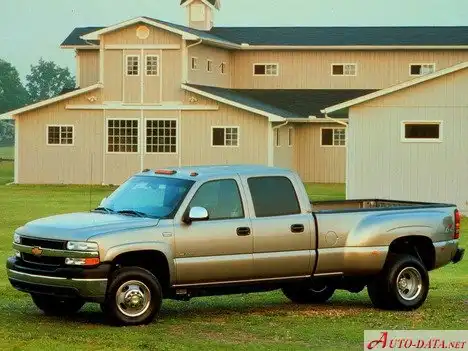
The Chevrolet Silverado 1500 IV Crew Cab Standard Box 2.7 Turbo, produced from 2018 to 2021, represents a significant entry point into the fourth generation of Chevrolet’s full-size pickup truck. Positioned as a more fuel-efficient alternative to the larger V8 engines offered in the lineup, this variant aimed to attract buyers prioritizing everyday usability and towing capacity without the expense of premium fuel or the complexity of more advanced powertrains. It was a key component of Chevrolet’s strategy to broaden the Silverado’s appeal in a competitive segment. The Silverado 1500 IV generation (often referred to as the “NM” platform) marked a substantial redesign, focusing on weight reduction, improved interior space, and enhanced technology.
Technical Specifications
| Brand | Chevrolet |
| Model | Silverado 1500 |
| Generation | Silverado 1500 IV Crew Cab Standard Box |
| Type (Engine) | 2.7 Turbo (310 Hp) Automatic |
| Start of production | 2018 |
| End of production | 2021 |
| Powertrain Architecture | Internal Combustion engine |
| Body type | Pick-up |
| Seats | 5 |
| Doors | 4 |
| Fuel consumption (urban) | 11.8 l/100 km (19.9 US mpg) |
| Fuel consumption (extra urban) | 10.2 l/100 km (23.1 US mpg) |
| Fuel Type | Petrol (Gasoline) |
| Weight-to-power ratio | 7 kg/Hp, 142.4 Hp/tonne |
| Weight-to-torque ratio | 4.6 kg/Nm, 217.3 Nm/tonne |
| Power | 310 Hp @ 5600 rpm |
| Power per litre | 113.7 Hp/l |
| Torque | 473 Nm @ 1500-4000 rpm (348.87 lb.-ft. @ 1500-4000 rpm) |
| Engine layout | Front, Longitudinal |
| Engine Model/Code | L3B |
| Engine displacement | 2727 cm3 (166.41 cu. in.) |
| Number of cylinders | 4 |
| Engine configuration | Inline |
| Cylinder Bore | 92.25 mm (3.63 in.) |
| Piston Stroke | 102 mm (4.02 in.) |
| Compression ratio | 10:1 |
| Number of valves per cylinder | 4 |
| Fuel injection system | Direct injection |
| Engine aspiration | Turbocharger, Intercooler |
| Valvetrain | DOHC, VVT DI |
| Engine oil capacity | 5.7 l (6.02 US qt | 5.02 UK qt) |
| Coolant capacity | 11.8 l (12.47 US qt | 10.38 UK qt) |
| Kerb Weight | 2177 kg (4799.46 lbs.) |
| Max. weight | 3129 kg (6898.26 lbs.) |
| Max load | 952 kg (2098.8 lbs.) |
| Fuel tank capacity | 91 l (24.04 US gal | 20.02 UK gal) |
| Permitted trailer load with brakes (12%) | 4173 kg (9199.89 lbs.) |
| Length | 6127 mm (241.22 in.) |
| Width including mirrors | 2063 mm (81.22 in.) |
| Height | 1914 mm (75.35 in.) |
| Wheelbase | 3987 mm (156.97 in.) |
| Drivetrain Architecture | Rear wheel drive |
| Number of gears and type of gearbox | 8 gears, automatic transmission Hydra-Matic |
| Front suspension | Independent coil spring |
| Rear suspension | Rigid axle suspension, Leaf spring |
| Front brakes | Ventilated discs, 330×30 mm |
| Rear brakes | Ventilated discs, 345×20 mm |
| Steering type | Steering rack and pinion |
| Power steering | Electric Steering |
| Tires size | 255/70 R17; 265/70 R17; 265/65 R18 |
| Wheel rims size | 8.0J x 17; 8.5J x 18 |
Introduction
The 2018-2021 Chevrolet Silverado 1500 Crew Cab with the 2.7-liter turbocharged four-cylinder engine and eight-speed automatic transmission offered a compelling blend of capability and efficiency. This configuration was positioned as the base engine option for the Crew Cab, offering a more affordable entry point into the Silverado lineup compared to the 5.3L and 6.2L V8 engines. It aimed to appeal to buyers who didn’t require the maximum towing or hauling capacity of the larger engines but still desired the comfort and space of a Crew Cab. The 2.7L turbo was a relatively new engine for Chevrolet at the time, representing a shift towards smaller, more efficient powertrains in the full-size truck segment.
Powertrain & Engine Architecture
The heart of this Silverado variant is the GM L3B 2.7-liter turbocharged inline-four engine. This engine utilizes direct injection and variable valve timing (VVT) to optimize performance and fuel economy. The turbocharger, coupled with an intercooler, provides a significant boost in power and torque compared to naturally aspirated engines of similar displacement. The engine’s aluminum block and cylinder head contribute to weight savings. The eight-speed Hydra-Matic automatic transmission, a staple in GM vehicles, is well-tuned for both everyday driving and towing. It features a wide gear ratio spread, allowing for both efficient highway cruising and strong acceleration. The transmission’s programming is optimized to work seamlessly with the 2.7L turbo’s torque curve, providing smooth and responsive shifts.
Driving Characteristics
The 2.7L turbo Silverado delivers a surprisingly capable driving experience. While not as immediately powerful as the V8 options, the engine provides ample torque from low RPMs, making it well-suited for daily driving and light to moderate towing. The eight-speed automatic transmission helps keep the engine in its optimal power band, minimizing turbo lag and providing smooth acceleration. Compared to the 5.3L V8, the 2.7L turbo feels less effortless when accelerating with a full load, but it offers a noticeable improvement in fuel economy. The gear ratios are well-matched to the engine’s characteristics, providing good responsiveness in both city and highway driving. The rear-wheel-drive configuration provides a traditional truck feel, while available four-wheel drive enhances traction in inclement weather or off-road conditions.
Equipment & Trim Levels
The 2.7L turbo engine was typically offered on the base Silverado 1500 trims, such as the LS and LT. Standard features generally included air conditioning, a basic infotainment system with a touchscreen display, and cloth upholstery. Higher LT trims added features like upgraded infotainment systems, keyless entry, and power windows and locks. Optional extras included a trailer package, upgraded audio systems, and various convenience features. Interior materials were generally durable and functional, reflecting the truck’s work-oriented nature. The Crew Cab configuration provides ample space for passengers in both the front and rear seats.
Chassis & Braking
The Silverado 1500 IV utilizes a fully boxed frame constructed from high-strength steel, contributing to its rigidity and durability. The front suspension features independent coil springs, while the rear suspension employs a traditional leaf spring setup. This configuration provides a comfortable ride while maintaining good load-carrying capacity. Braking duties are handled by ventilated disc brakes on all four wheels. ABS (Anti-lock Braking System) is standard. The braking system is adequately sized for the truck’s weight and provides confident stopping power in most driving conditions. Steering is rack-and-pinion with electric power assist, offering a responsive and precise feel.
Market Reception & Comparison
The 2.7L turbo Silverado received mixed reviews. Critics praised its fuel efficiency and surprisingly strong torque output, but some found it lacking the refinement and power of the V8 engines. Compared to the 5.3L V8, the 2.7L turbo offered significantly better fuel economy, particularly in city driving. However, the V8 provided more effortless acceleration and a more traditional truck feel. The 2.7L turbo was often seen as a good option for buyers who primarily used their trucks for commuting and light-duty tasks. Reliability reports have been generally positive, with the 2.7L turbo proving to be a relatively dependable engine.
Legacy
The 2.7L turbo engine has become a mainstay in the Chevrolet Silverado lineup, undergoing further refinements and improvements in subsequent model years. The powertrain’s combination of efficiency and capability has proven popular with buyers seeking a versatile and practical full-size truck. On the used car market, the 2018-2021 Silverado 1500 2.7T models represent a good value proposition, offering a capable and well-equipped truck at a more affordable price point than the V8-powered variants. The engine’s relatively simple design and proven reliability contribute to its continued appeal in the used truck market.