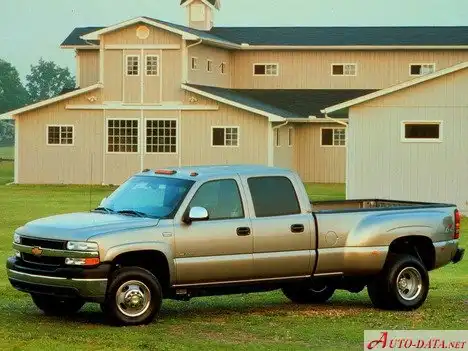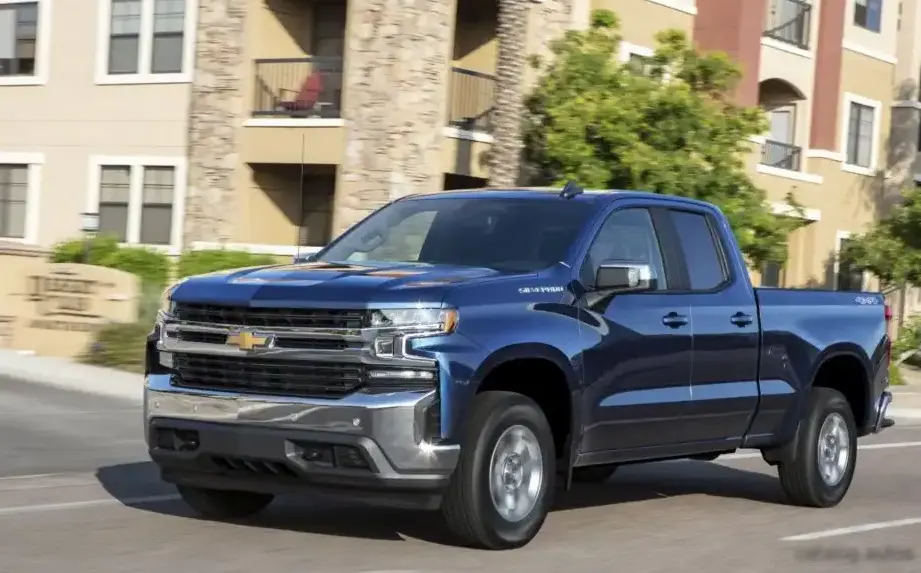
The Chevrolet Silverado 1500 IV Double Cab 2.7 Turbo, produced from 2018 to 2021, represented a significant entry point into the fourth generation of Chevrolet’s full-size pickup truck line. Positioned as a more accessible option within the Silverado 1500 range, this variant offered a blend of capability and efficiency, appealing to buyers who didn’t require the higher towing capacities or performance of the larger V8 engines. It was built on the GMT800 platform, sharing its core structure with the GMC Sierra 1500. This particular configuration – the 2.7-liter turbocharged four-cylinder paired with an eight-speed automatic transmission – aimed to deliver a compelling package for everyday use and light-duty tasks.
Technical Specifications
| Brand | Chevrolet |
| Model | Silverado 1500 |
| Generation | Silverado 1500 IV Double Cab |
| Type (Engine) | 2.7 Turbo (310 Hp) Automatic |
| Start of production | 2018 |
| End of production | 2021 |
| Powertrain Architecture | Internal Combustion engine |
| Body type | Pick-up |
| Seats | 5 |
| Doors | 4 |
| Fuel consumption (urban) | 11.7 l/100 km (20.1 US mpg) |
| Fuel consumption (extra urban) | 10.2 l/100 km (23.1 US mpg) |
| Fuel Type | Petrol (Gasoline) |
| Weight-to-power ratio | 6.9 kg/Hp, 144.8 Hp/tonne |
| Weight-to-torque ratio | 4.5 kg/Nm, 220.9 Nm/tonne |
| Power | 310 Hp @ 5600 rpm |
| Power per litre | 113.7 Hp/l |
| Torque | 473 Nm @ 1500-4000 rpm (348.87 lb.-ft. @ 1500-4000 rpm) |
| Engine layout | Front, Longitudinal |
| Engine Model/Code | L3B |
| Engine displacement | 2727 cm3 (166.41 cu. in.) |
| Number of cylinders | 4 |
| Engine configuration | Inline |
| Cylinder Bore | 92.25 mm (3.63 in.) |
| Piston Stroke | 102 mm (4.02 in.) |
| Compression ratio | 10:1 |
| Number of valves per cylinder | 4 |
| Fuel injection system | Direct injection |
| Engine aspiration | Turbocharger, Intercooler |
| Valvetrain | DOHC, VVT DI |
| Engine oil capacity | 5.7 l (6.02 US qt | 5.02 UK qt) |
| Coolant | 11.8 l (12.47 US qt | 10.38 UK qt) |
| Kerb Weight | 2141 kg (4720.1 lbs.) |
| Max. weight | 3084 kg (6799.06 lbs.) |
| Max load | 943 kg (2078.96 lbs.) |
| Fuel tank capacity | 91 l (24.04 US gal | 20.02 UK gal) |
| Permitted trailer load with brakes (12%) | 3175 kg (6999.68 lbs.) |
| Length | 5886 mm (231.73 in.) |
| Width including mirrors | 2063 mm (81.22 in.) |
| Height | 1921 mm (75.63 in.) |
| Wheelbase | 3745 mm (147.44 in.) |
| Drivetrain Architecture | Rear wheel drive |
| Number of gears and type of gearbox | 8 gears, automatic transmission Hydra-Matic |
| Front suspension | Independent coil spring |
| Rear suspension | Rigid axle suspension, Leaf spring |
| Front brakes | Ventilated discs, 345 mm |
| Rear brakes | Ventilated discs, 360 mm |
| Assisting systems | ABS (Anti-lock braking system) |
| Steering type | Steering rack and pinion |
| Power steering | Electric Steering |
| Tires size | 255/70 R17; 265/70 R17; 265/65 R18 |
| Wheel rims size | 8.0J x 17; 8.5J x 18 |
Powertrain & Engine Architecture
The heart of this Silverado variant is the GM L3B 2.7-liter turbocharged inline-four engine. This engine, introduced in 2018, represented a departure from the traditional V6 and V8 options typically found in full-size trucks. It utilizes direct injection and a twin-scroll turbocharger to deliver a respectable 310 horsepower and 473 lb-ft of torque. The engine features a cast aluminum block and cylinder head, contributing to weight savings. Variable valve timing (VVT) on both intake and exhaust valves optimizes performance and efficiency across the engine’s operating range. The engine is paired with an eight-speed Hydra-Matic automatic transmission, chosen for its smooth shifting and wide gear ratio spread. This transmission allows the engine to operate in its most efficient zone more often, improving fuel economy. The transmission also features a tow/haul mode, optimizing shift points for towing applications.
Driving Characteristics
The 2.7-liter turbo Silverado offered a different driving experience compared to its V8 siblings. While it didn’t possess the raw acceleration of the larger engines, the turbocharger provided a broad torque curve, making it feel responsive in everyday driving situations. The eight-speed automatic transmission helped to keep the engine in its power band, providing adequate performance for merging onto highways and passing other vehicles. However, when heavily loaded or towing, the engine could feel strained, and the transmission would downshift frequently. Compared to the 5.3L V8, the 2.7T offered less overall power and towing capacity, but it provided a smoother, more refined ride due to the lighter engine weight. The gear ratios in the Hydra-Matic transmission were tuned for both fuel efficiency and usability, with a relatively tall final drive ratio.
Equipment & Trim Levels
The 2.7 Turbo engine was typically offered on the base Work Truck (WT), LS, and LT trim levels of the Silverado 1500 Double Cab. Standard features on these trims included air conditioning, a basic infotainment system with a 7-inch touchscreen, Bluetooth connectivity, and a rearview camera. Higher LT trims added features like heated front seats, a leather-wrapped steering wheel, and upgraded interior materials. Optional extras included a larger touchscreen display, navigation, a premium audio system, and various safety features like lane departure warning and forward collision alert. Interior upholstery typically consisted of cloth on lower trims, with leather options available on the LT.
Chassis & Braking
The Silverado 1500 IV Double Cab 2.7 Turbo utilized a body-on-frame construction, providing a robust and durable platform. The front suspension consisted of independent coil springs, while the rear suspension employed a traditional leaf spring setup. This configuration balanced ride comfort with load-carrying capacity. Braking duties were handled by ventilated disc brakes on all four wheels, with the front discs measuring 345mm and the rear discs measuring 360mm. An anti-lock braking system (ABS) was standard. The chassis was tuned to accommodate the lighter weight of the 2.7-liter engine, resulting in a slightly more compliant ride compared to the heavier V8 models. Stabilizer bars were included to reduce body roll during cornering.
Market Reception & Comparison
The 2.7-liter turbo Silverado received mixed reviews. Critics praised its fuel efficiency and smooth power delivery, but some found it lacking in overall performance compared to the V8 options. Fuel economy figures were notably better than those of the 5.3L V8, making it an attractive option for buyers prioritizing efficiency. Reliability reports have been generally positive, with the L3B engine proving to be a relatively durable unit. However, some owners have reported issues with the turbocharger and fuel system. Compared to the 5.3L V8, the 2.7T offered a lower price point and better fuel economy, but at the expense of towing capacity and overall power. The 2.7T was positioned as a value-oriented option for buyers who didn’t require the full capabilities of a traditional full-size truck.
Legacy
The Chevrolet Silverado 1500 IV Double Cab 2.7 Turbo represented a significant step towards offering more fuel-efficient options in the full-size truck segment. While it didn’t become the most popular configuration, it demonstrated Chevrolet’s commitment to innovation and providing a wider range of choices to its customers. On the used car market, these models offer a compelling value proposition, providing a capable and relatively efficient truck at a lower price point than their V8 counterparts. The L3B engine has proven to be reasonably reliable, making these Silverados a viable option for buyers seeking a dependable and affordable pickup truck. The success of the 2.7T paved the way for further development of turbocharged engines in Chevrolet’s truck lineup.