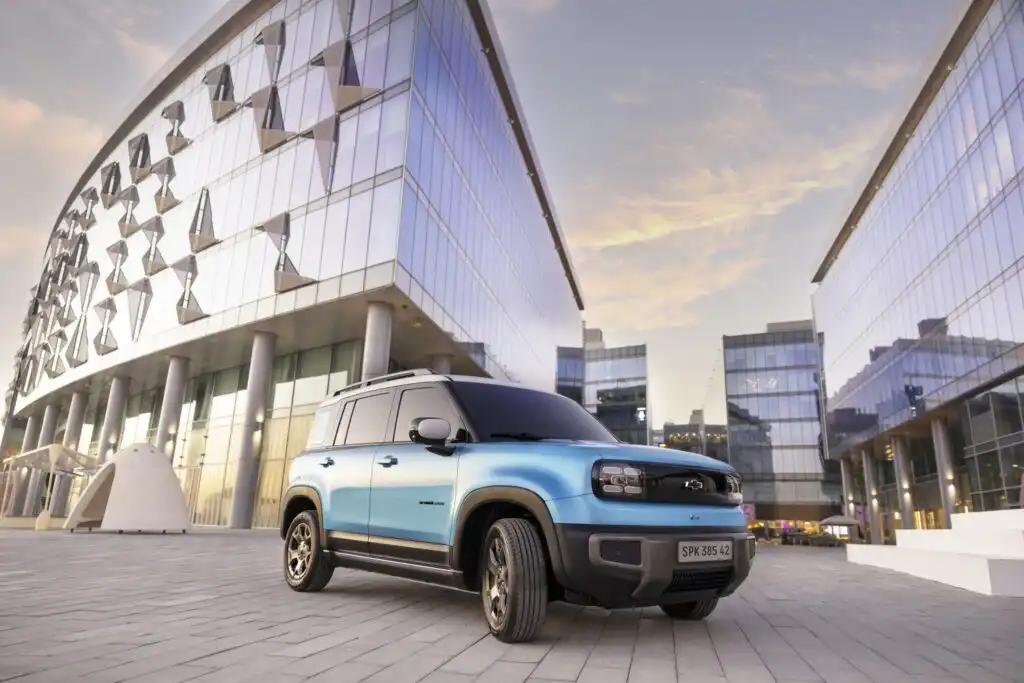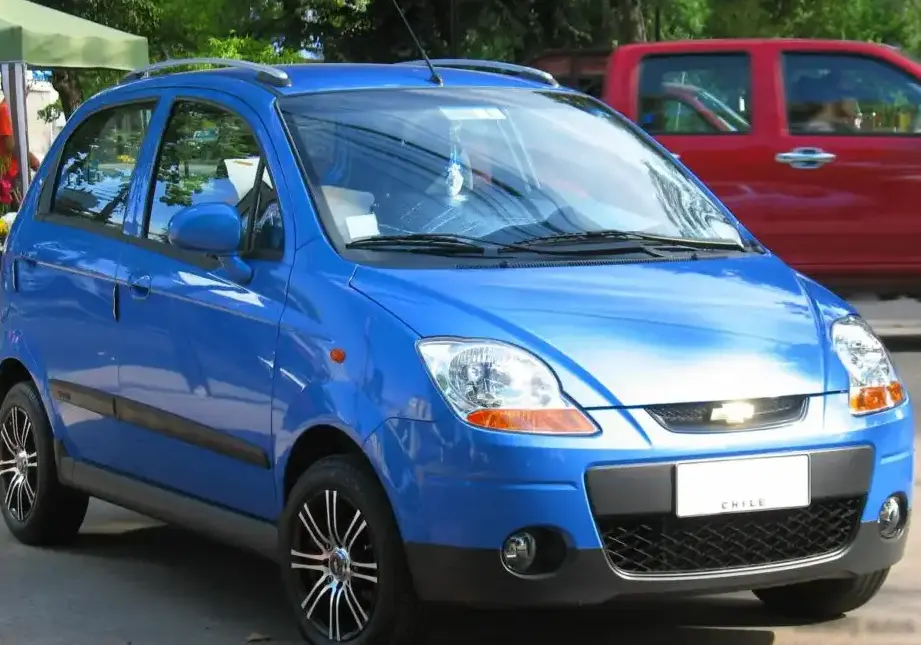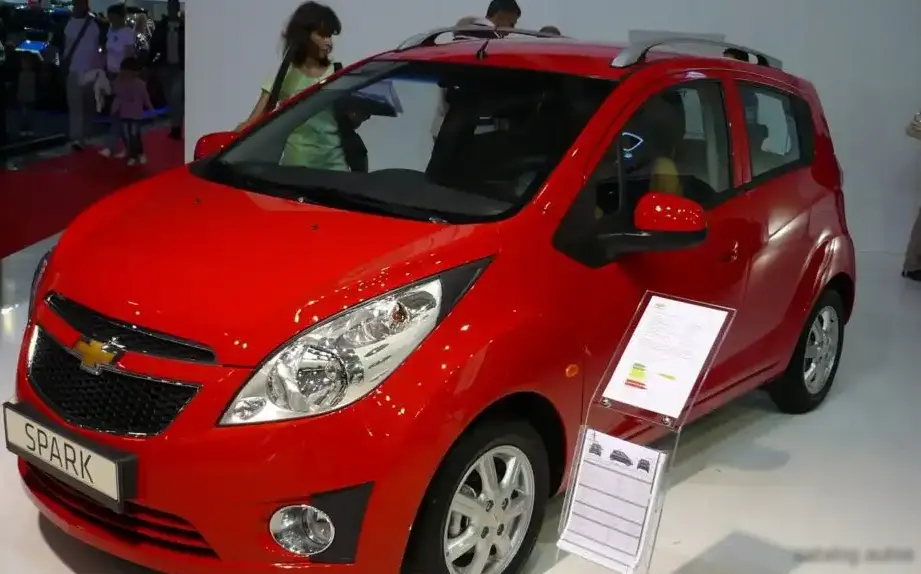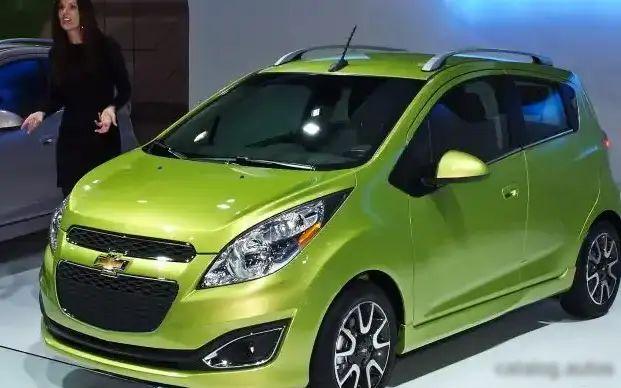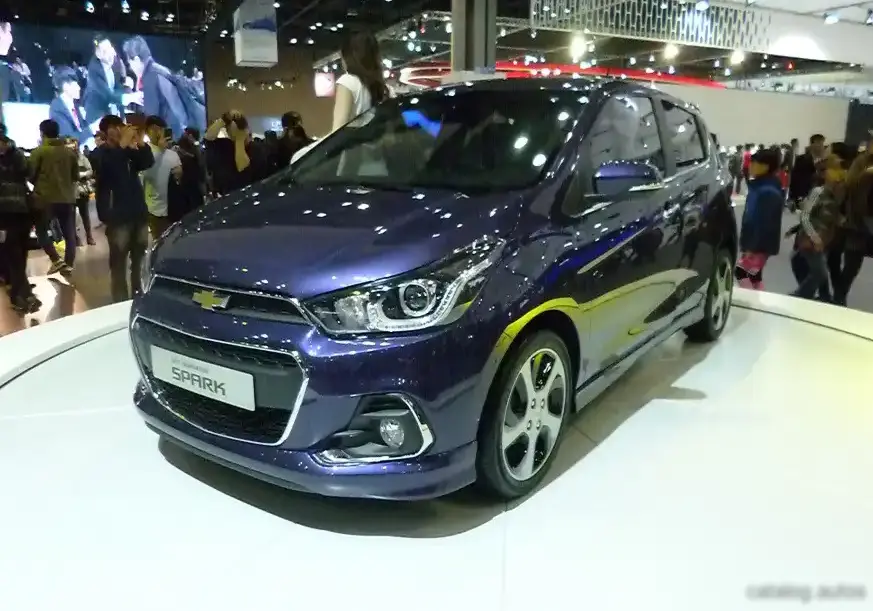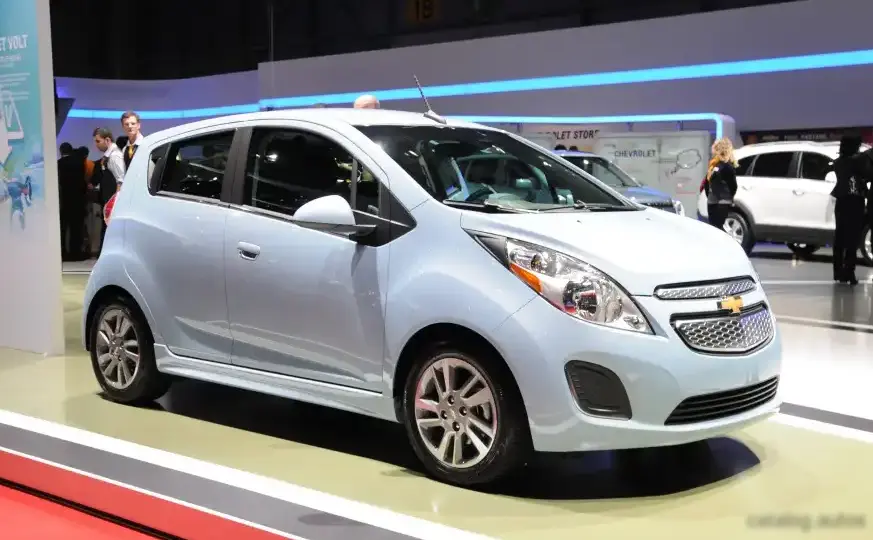
The Chevrolet Spark EV, specifically the 19 kWh (140 Hp) variant, represented Chevrolet’s initial serious foray into the all-electric vehicle market in the United States. Produced from 2014 to 2016, it was primarily sold in California and Oregon, states with stringent emissions regulations and incentives for electric vehicle adoption. The Spark EV was built upon the GM Gamma platform, shared with the gasoline-powered Chevrolet Spark, but significantly modified to accommodate the electric powertrain. This variant occupied the entry-level position within the Spark EV lineup, offering a balance of affordability and range for urban commuters.
Technical Specifications
| Brand | Chevrolet |
| Model | Spark |
| Generation | Spark EV |
| Type (Engine) | 19 kWh (140 Hp) |
| Start of production | 2014 |
| End of production | 2016 |
| Powertrain Architecture | BEV (Electric Vehicle) |
| Body type | Hatchback |
| Seats | 4 |
| Doors | 5 |
| Fuel Type | Electricity |
| Acceleration 0 – 60 mph | 7.2 sec |
| Maximum speed | 90.1 mph (145 km/h) |
| Weight-to-power ratio | 9.3 kg/Hp, 107.7 Hp/tonne |
| Weight-to-torque ratio | 2.9 kg/Nm, 341.5 Nm/tonne |
| Gross battery capacity | 19 kWh |
| Battery voltage | 400 V |
| Battery technology | Lithium-ion (Li-Ion) |
| Battery weight | 473.99 lbs (215 kg) |
| Battery location | Under the rear seats, Under the trunk |
| All-electric range | 82.02 mi (132 km) |
| Average Energy consumption | 119 MPGe, 5.7 km/kWh, 3.5 mi/kWh, 17.6 kWh/100 km, 28.32 kWh/100 mi |
| Electric motor power | 140 Hp |
| Electric motor Torque | 327.48 lb.-ft (444 Nm) |
| Electric motor location | Front axle, Transverse |
| System power | 140 Hp |
| System torque | 327.48 lb.-ft (444 Nm) |
| Kerb Weight | 2866.01 lbs (1300 kg) |
| Trunk (boot) space – minimum | 9.61 cu. ft (272 l) |
| Trunk (boot) space – maximum | 23.41 cu. ft (663 l) |
| Length | 146.46 in (3720 mm) |
| Width | 64.02 in (1626 mm) |
| Height | 62.6 in (1590 mm) |
| Wheelbase | 93.5 in (2375 mm) |
| Front track | 55.51 in (1410 mm) |
| Rear (Back) track | 54.8 in (1392 mm) |
| Front overhang | 31.1 in (790 mm) |
| Rear overhang | 21.85 in (555 mm) |
| Drag coefficient (Cd) | 0.326 |
| Minimum turning circle | 33.79 ft (10.3 m) |
| Drivetrain Architecture | One electric motor drives the front wheels. |
| Drive wheel | Front wheel drive |
| Number of gears | 1 |
| Type of gearbox | automatic transmission |
| Front suspension | Independent type McPherson, Transverse stabilizer |
| Rear suspension | Torsion |
| Front brakes | Ventilated discs, 256 mm |
| Rear brakes | Disc, 258 mm |
| Assisting systems | ABS (Anti-lock braking system) |
| Steering type | Steering rack and pinion |
| Power steering | Electric Steering |
| Front tires | 185/55 R15 |
| Rear tires | 195/55 R15 |
| Front wheel rims | 6J x 15 |
| Rear wheel rims | 6.5J x 15 |
Powertrain & Engine Architecture
The Chevrolet Spark EV utilized a permanent magnet synchronous motor producing 140 horsepower and 327 lb-ft of torque. This motor was directly coupled to a single-speed automatic transmission, delivering instant torque to the front wheels. The 19 kWh lithium-ion battery pack was a key component, positioned under the rear seats and trunk floor to optimize weight distribution. The battery employed active thermal management to maintain optimal operating temperatures. The Spark EV featured a 3.3 kW onboard charger, allowing for charging from a standard 120V or 240V outlet. DC fast charging capability was also included, enabling an 80% charge in approximately 30 minutes with a compatible charging station.
Driving Characteristics
The 19 kWh Spark EV offered surprisingly brisk acceleration for its size and class, achieving a 0-60 mph time of around 7.2 seconds. The instant torque delivery of the electric motor provided a responsive and engaging driving experience, particularly in urban environments. While the single-speed transmission simplified operation, it lacked the gear ratios found in conventional automatic transmissions, which could result in slightly less efficient operation at highway speeds. Compared to the gasoline-powered Spark, the EV variant offered a significantly quieter and smoother ride. The lower center of gravity, due to the battery pack’s placement, also contributed to improved handling and stability.
Equipment & Trim Levels
The Spark EV 19 kWh typically came standard with features such as air conditioning, power windows and locks, a touchscreen infotainment system with Chevrolet MyLink, and Bluetooth connectivity. Safety features included ABS, stability control, and multiple airbags. Higher trim levels added features like a premium audio system, heated front seats, and a rearview camera. The interior upholstery was typically cloth, with optional leatherette available on some trims. The dashboard layout was similar to the gasoline-powered Spark, but with unique EV-specific gauges and displays showing battery charge level and energy consumption.
Chassis & Braking
The Spark EV utilized a McPherson strut front suspension and a torsion beam rear suspension. The suspension was tuned to provide a comfortable ride while maintaining reasonable handling characteristics. The front brakes were ventilated discs, while the rear brakes were solid discs. The ABS system helped to maintain control during emergency braking situations. The steering was electric power-assisted, providing light and precise steering feel. Tire sizes were typically 185/55R15 for the front and 195/55R15 for the rear.
Market Reception & Comparison
The Chevrolet Spark EV was generally well-received by critics, who praised its peppy acceleration, comfortable ride, and relatively affordable price. However, its limited range of 82 miles was a common criticism, particularly compared to some of its competitors. Fuel economy, measured in MPGe, was excellent at 119 MPGe combined. Compared to the gasoline-powered Spark, the EV variant offered significantly lower running costs, but a higher initial purchase price. The Spark EV’s primary competitors included the Nissan Leaf and the Fiat 500e.
Legacy
Although production of the Chevrolet Spark EV was relatively short-lived, it played an important role in Chevrolet’s early efforts to develop and market electric vehicles. The powertrain technology and battery management systems developed for the Spark EV paved the way for future Chevrolet EVs, such as the Bolt EV. On the used car market, the Spark EV remains a relatively affordable and practical option for urban commuters seeking an electric vehicle. The longevity of the battery pack is a key consideration for potential buyers, but many Spark EVs have demonstrated good battery health even after several years of use. The Spark EV’s simplicity and relatively low maintenance requirements contribute to its continued appeal.