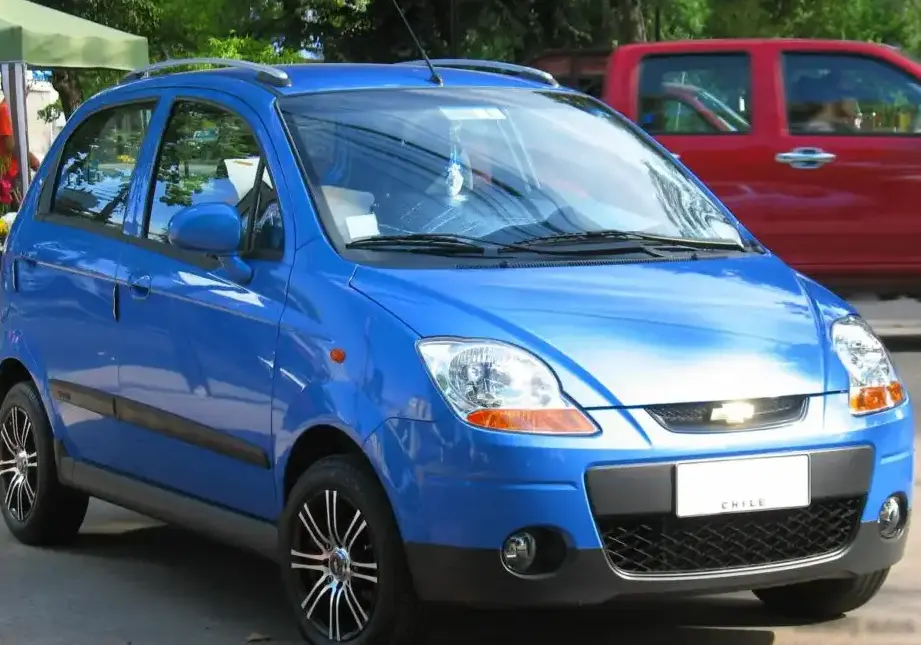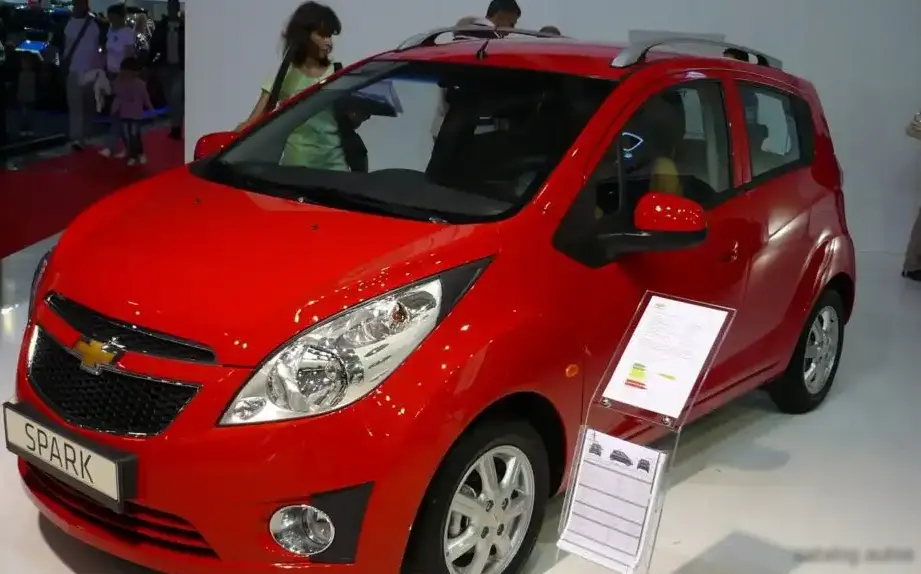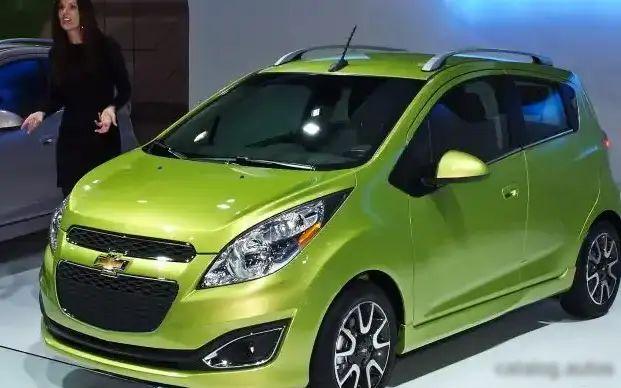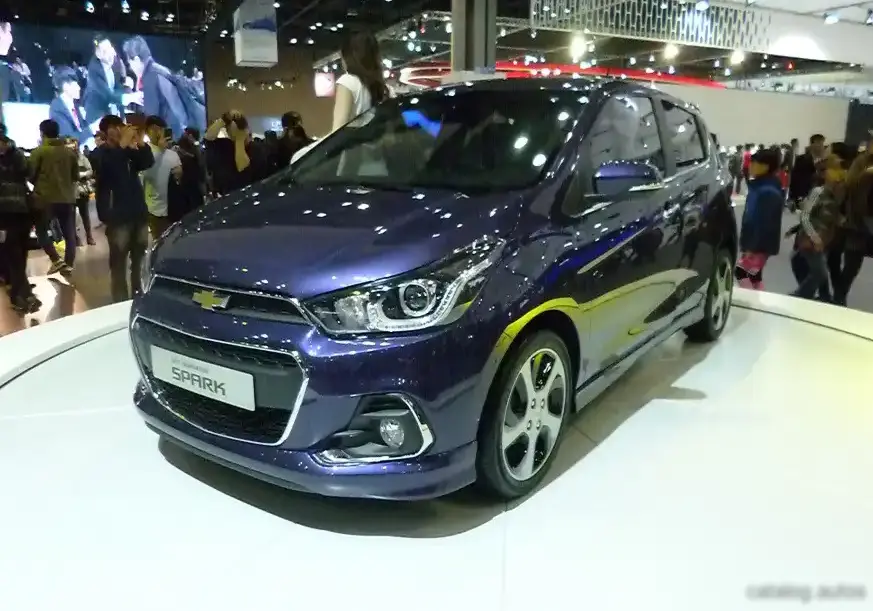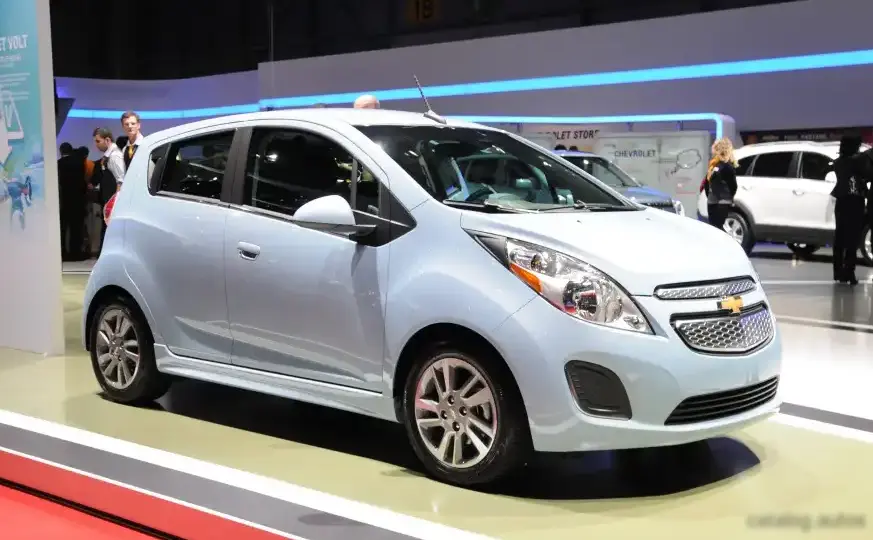
The Chevrolet Spark EV, specifically the 21 kWh (140 Hp) variant, represented Chevrolet’s initial foray into mass-market, fully electric vehicles in the United States. Produced for the 2013 and 2014 model years, it was primarily sold in California and Oregon, states with stringent emissions regulations and incentives for electric vehicle adoption. The Spark EV was built upon the existing second-generation Spark platform (M300), but distinguished itself with a fully electric powertrain, offering a compelling alternative to gasoline-powered subcompacts. It played a crucial role in demonstrating Chevrolet’s commitment to electrification and gathering valuable data for future EV development.
Technical Specifications
| Brand | Chevrolet |
| Model | Spark |
| Generation | Spark EV |
| Type (Engine) | 21 kWh (140 Hp) |
| Start of production | 2013 |
| End of production | 2014 |
| Powertrain Architecture | BEV (Electric Vehicle) |
| Body type | Hatchback |
| Seats | 4 |
| Doors | 5 |
| Fuel Type | Electricity |
| Acceleration 0 – 60 mph | 7.6 sec |
| Maximum speed | 90.1 mph (145 km/h) |
| Weight-to-power ratio | 9.6 kg/Hp, 104 Hp/tonne |
| Weight-to-torque ratio | 2.5 kg/Nm, 402.7 Nm/tonne |
| Gross battery capacity | 21 kWh |
| Battery technology | Lithium-ion (Li-Ion) |
| Battery weight | 559.97 lbs (254 kg) |
| Battery location | Under the rear seats, Under the trunk |
| All-electric range | 80.78 mi (130 km) |
| Average Energy consumption | 119 MPGe, 5.7 km/kWh, 3.5 mi/kWh, 17.6 kWh/100 km, 28.32 kWh/100 mi |
| Electric motor power | 140 Hp |
| Electric motor Torque | 399.76 lb.-ft (542 Nm) |
| Electric motor location | Front axle, Transverse |
| System power | 140 Hp |
| System torque | 399.76 lb.-ft (542 Nm) |
| Kerb Weight | 2967.42 lbs (1346 kg) |
| Trunk (boot) space – minimum | 9.61 cu. ft (272 l) |
| Trunk (boot) space – maximum | 23.41 cu. ft (663 l) |
| Length | 146.46 in (3720 mm) |
| Width | 64.06 in (1627 mm) |
| Height | 62.6 in (1590 mm) |
| Wheelbase | 93.5 in (2375 mm) |
| Front track | 55.51 in (1410 mm) |
| Rear (Back) track | 54.76 in (1391 mm) |
| Front overhang | 31.1 in (790 mm) |
| Rear overhang | 21.85 in (555 mm) |
| Drag coefficient (Cd) | 0.326 |
| Minimum turning circle (turning diameter) | 33.79 ft (10.3 m) |
| Drivetrain Architecture | One electric motor drives the front wheels. |
| Drive wheel | Front wheel drive |
| Front suspension | Independent type McPherson, Transverse stabilizer |
| Rear suspension | Torsion |
| Front brakes | Ventilated discs, 256 mm |
| Rear brakes | Disc, 258 mm |
| Assisting systems | ABS (Anti-lock braking system) |
| Steering type | Steering rack and pinion |
| Power steering | Electric Steering |
| Front wheel tires | 185/55 R15 |
| Rear wheel tires | 195/55 R15 |
| Front wheel rims | 6J x 15 |
| Rear wheel rims | 6.5J x 15 |
Powertrain & Engine Architecture
The Chevrolet Spark EV’s powertrain centered around a permanent magnet synchronous electric motor producing 140 horsepower and a substantial 399.76 lb-ft of torque. This motor was transversely mounted at the front of the vehicle, driving the front wheels. Power was delivered via a single-speed reduction gear. The heart of the system was the 21 kWh lithium-ion battery pack, strategically positioned under the rear seats and in the trunk floor to optimize weight distribution. The battery utilized a sophisticated thermal management system to maintain optimal operating temperatures. The Spark EV employed a 3.3 kW onboard charger, allowing for charging from a standard 120V or 240V outlet. DC fast charging capability, utilizing the SAE Combo connector, was also available, enabling an 80% charge in approximately 20 minutes at a compatible charging station.
Driving Characteristics
The 21 kWh Spark EV offered surprisingly brisk acceleration, achieving 0-60 mph in approximately 7.6 seconds. The instant torque delivery characteristic of electric motors provided a responsive and engaging driving experience. While not designed for long-distance highway cruising due to its limited range of 80.78 miles, the Spark EV excelled in urban environments. The single-speed transmission meant there were no gear changes, resulting in smooth and seamless acceleration. Compared to the gasoline-powered Spark, the EV variant offered significantly quieter operation and a more refined driving experience. The weight distribution, aided by the battery placement, contributed to stable handling. However, the added weight of the battery pack (559.97 lbs) did slightly impact the car’s overall agility compared to its gasoline counterpart.
Equipment & Trim Levels
The Spark EV was offered in two primary trim levels: 1LT and 2LT. The 1LT trim included standard features such as air conditioning, power windows and locks, a Chevrolet MyLink infotainment system with a 7-inch touchscreen, and Bluetooth connectivity. The 2LT trim added features like heated front seats, a premium audio system, and keyless entry. Both trims featured a unique instrument cluster with displays for battery charge level, energy consumption, and power output. Optional extras included a DC fast charging port and various cosmetic enhancements.
Chassis & Braking
The Spark EV retained the basic chassis and suspension layout of the gasoline-powered Spark, but with some modifications to accommodate the added weight of the battery pack. The front suspension utilized an independent McPherson strut design with a transverse stabilizer bar, while the rear suspension employed a torsion beam setup. The braking system consisted of ventilated discs at the front and solid discs at the rear. Anti-lock brakes (ABS) were standard. The steering system was an electric power-assisted rack and pinion setup, providing light and precise steering feel. Tire sizes were 185/55 R15 for the front and 195/55 R15 for the rear.
Market Reception & Comparison
The Chevrolet Spark EV received generally positive reviews from automotive critics. It was praised for its peppy acceleration, quiet operation, and relatively affordable price. However, its limited range and availability were frequently cited as drawbacks. Compared to other electric vehicles available at the time, such as the Nissan Leaf and Fiat 500e, the Spark EV offered a more engaging driving experience and a lower price point. Its fuel economy, expressed as 119 MPGe, was competitive with other EVs in its class. Reliability proved to be generally good, with few reported issues related to the electric powertrain.
Legacy
Although production of the Chevrolet Spark EV was relatively short-lived, it served as an important stepping stone for Chevrolet in the development of electric vehicles. The lessons learned from the Spark EV informed the design and engineering of subsequent EVs, such as the Bolt EV and Bolt EUV. Today, used Spark EVs remain a relatively affordable entry point into electric vehicle ownership. While the battery range is limited by modern standards, the Spark EV’s robust powertrain and relatively simple design contribute to its continued reliability. It represents a significant early effort in bringing electric mobility to a wider audience.