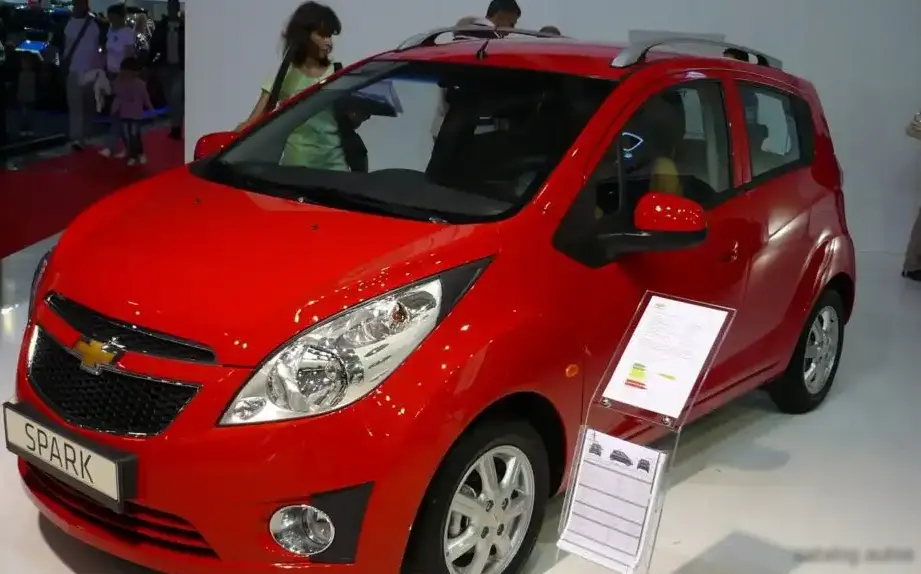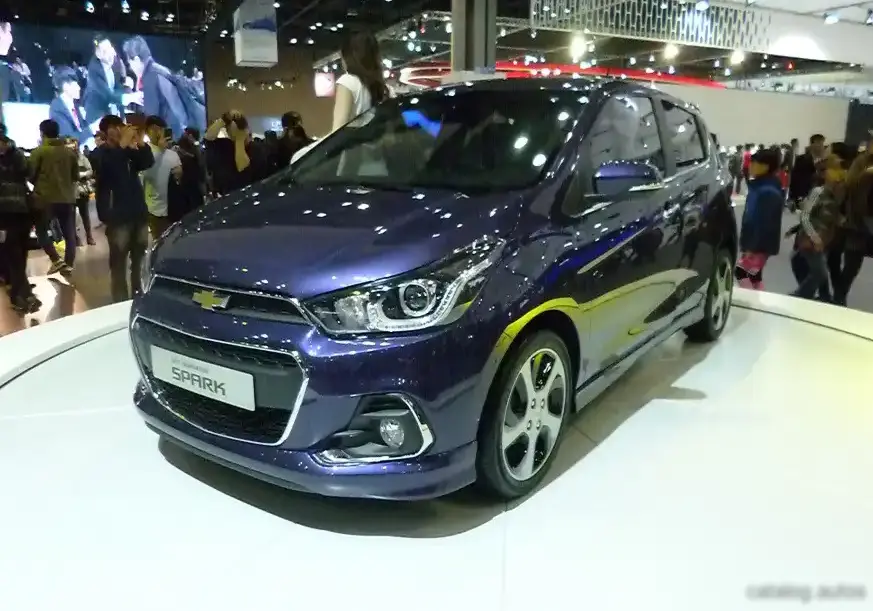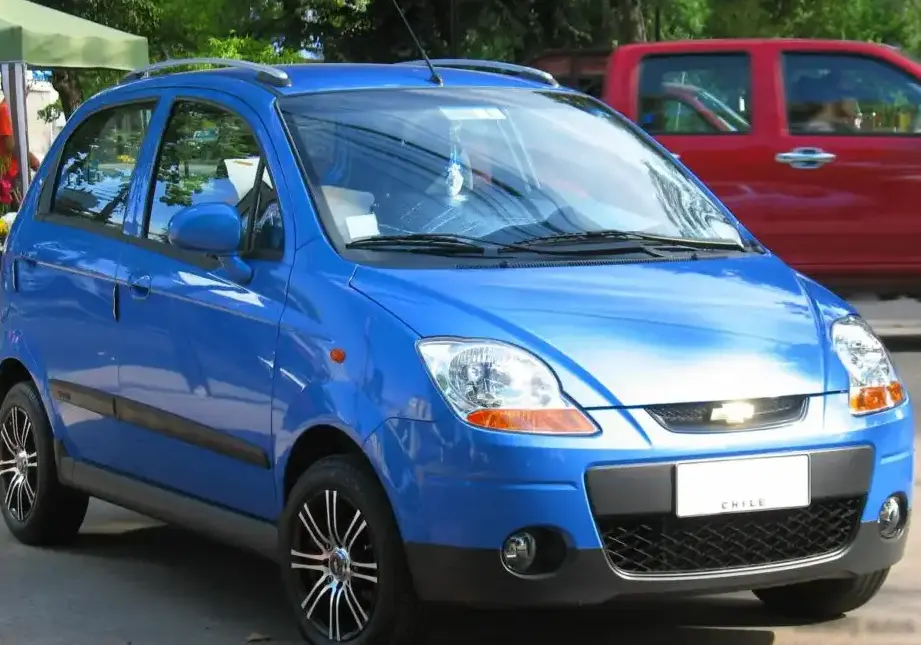
The Chevrolet Spark II 0.8 i Automatic, produced between 2005 and 2009, represented the entry point into the second generation of Chevrolet’s subcompact hatchback. Designed primarily for European and Asian markets, the Spark II (also known as the Daewoo Matiz in some regions) aimed to provide affordable and efficient transportation in crowded urban environments. This particular variant, equipped with the 0.8-liter engine and a four-speed automatic transmission, was positioned as the most accessible option in the Spark II lineup, prioritizing ease of use over outright performance. It was a key model in Chevrolet’s strategy to offer a diverse range of small cars globally.
Technical Specifications
| Brand | Chevrolet |
| Model | Spark |
| Generation | Spark II |
| Type (Engine) | 0.8 i (52 Hp) Automatic |
| Start of production | 2005 |
| End of production | 2009 |
| Powertrain Architecture | Internal Combustion engine |
| Body type | Hatchback |
| Seats | 5 |
| Doors | 5 |
| Fuel consumption (urban) | 7.6 l/100 km (30.9 US mpg) |
| Fuel consumption (extra urban) | 4.6 l/100 km (51.1 US mpg) |
| Fuel consumption (combined) | 5.7 l/100 km (41.3 US mpg) |
| Fuel Type | Petrol (Gasoline) |
| Acceleration 0 – 100 km/h | 18.2 sec |
| Acceleration 0 – 62 mph | 18.2 sec |
| Acceleration 0 – 60 mph | 17.3 sec |
| Maximum speed | 145 km/h (90.1 mph) |
| Weight-to-power ratio | 14.9 kg/Hp |
| Weight-to-torque ratio | 11.2 kg/Nm |
| Power | 52 Hp @ 6000 rpm |
| Torque | 69 Nm @ 4600 rpm (50.89 lb.-ft. @ 4600 rpm) |
| Engine layout | Front, Transverse |
| Engine Model/Code | LQ2, LBF |
| Engine displacement | 796 cm3 (48.57 cu. in.) |
| Number of cylinders | 3 |
| Engine configuration | Inline |
| Cylinder Bore | 68.5 mm (2.7 in.) |
| Piston Stroke | 72 mm (2.83 in.) |
| Compression ratio | 9.3:1 |
| Number of valves per cylinder | 2 |
| Fuel injection system | Multi-port manifold injection |
| Engine aspiration | Naturally aspirated engine |
| Valvetrain | OHC |
| Engine oil capacity | 2.7 l (2.85 US qt | 2.38 UK qt) |
| Coolant capacity | 4 l (4.23 US qt | 3.52 UK qt) |
| Kerb Weight | 776 kg (1710.79 lbs.) |
| Max. weight | 1210 kg (2667.59 lbs.) |
| Max load | 434 kg (956.81 lbs.) |
| Trunk (boot) space – minimum | 145 l (5.12 cu. ft.) |
| Trunk (boot) space – maximum | 830 l (29.31 cu. ft.) |
| Fuel tank capacity | 38 l (10.04 US gal | 8.36 UK gal) |
| Length | 3495 mm (137.6 in.) |
| Width | 1495 mm (58.86 in.) |
| Height | 1485 mm (58.46 in.) |
| Wheelbase | 2340 mm (92.13 in.) |
| Front track | 1315 mm (51.77 in.) |
| Rear track | 1280 mm (50.39 in.) |
| Minimum turning circle | 9.2 m (30.18 ft.) |
| Drivetrain Architecture | Front wheel drive |
| Number of gears | 4 |
| Gearbox type | Automatic transmission |
| Front suspension | Spring Strut |
| Rear suspension | Coil spring |
| Front brakes | Disc |
| Rear brakes | Drum |
| Assisting systems | ABS (Anti-lock braking system) |
| Steering type | Steering rack and pinion |
| Tires size | 145/70 R13; 155/65 R13 |
| Wheel rims size | 4.5Jx13 |
Powertrain & Engine Architecture
The heart of the Spark II 0.8 i Automatic is the LQ2 or LBF engine code, a 796cc inline three-cylinder petrol engine. This engine utilizes a multi-port fuel injection system, a relatively simple setup designed for cost-effectiveness and reliability. The engine features an overhead camshaft (OHC) valvetrain with two valves per cylinder. Its naturally aspirated design means it relies solely on atmospheric pressure to draw air into the cylinders, contributing to its modest power output. The four-speed automatic transmission was a key feature of this variant, offering a convenient driving experience, particularly in stop-and-go city traffic. This transmission, while providing ease of use, was not known for its responsiveness or efficiency compared to manual counterparts.
Driving Characteristics
The 0.8-liter engine paired with the automatic transmission resulted in a decidedly unhurried driving experience. Acceleration was slow, with a 0-60 mph time of around 17.3 seconds. The automatic transmission’s gear ratios were optimized for fuel economy rather than performance, meaning the engine often felt strained during acceleration or when climbing hills. Compared to the manual transmission version, the automatic suffered a noticeable performance penalty. Higher-spec Spark II models, equipped with larger engines (like the 1.0-liter), offered significantly more power and a more engaging driving experience. However, the 0.8i Automatic excelled in low-speed maneuverability and ease of driving, making it well-suited for urban environments.
Equipment & Trim Levels
The 0.8 i Automatic trim level was typically the base model, focusing on essential features. Standard equipment generally included power steering, central locking, and basic audio system. Interior upholstery was typically cloth, and the dashboard featured a simple, functional design. Optional extras, depending on the market, could include air conditioning, power windows, and upgraded audio systems. The emphasis was on providing a basic, affordable package, with buyers able to add features as desired.
Chassis & Braking
The Spark II 0.8 i Automatic utilized a relatively simple chassis design. Front suspension consisted of MacPherson strut springs, while the rear employed a coil spring setup. Braking was comprised of disc brakes on the front wheels and drum brakes on the rear, a common configuration for vehicles in this price segment. Anti-lock Braking System (ABS) was often included as standard, enhancing safety. The relatively light weight of the vehicle (776 kg / 1710.79 lbs) helped to mitigate the effects of the modest braking performance.
Market Reception & Comparison
The Chevrolet Spark II 0.8 i Automatic was generally well-received as an affordable and practical city car. Critics praised its fuel efficiency and ease of driving, but noted its lack of performance. Compared to other trims in the Spark II lineup, the 0.8i Automatic offered the lowest price point but sacrificed performance and refinement. Against competitors like the Fiat Panda and Toyota Aygo, the Spark II offered a competitive price and a reasonable level of equipment, but often lagged behind in terms of driving dynamics and overall build quality.
Legacy
The Chevrolet Spark II 0.8 i Automatic, while not a performance icon, proved to be a reliable and economical vehicle. The LQ2/LBF engine, despite its small displacement, is known for its durability when properly maintained. In the used car market, these Sparks are often sought after as inexpensive and practical transportation options. However, potential buyers should be aware of the limitations of the automatic transmission and the relatively slow acceleration. The Spark II, in its various forms, helped establish Chevrolet as a player in the European and Asian small car segments, paving the way for future models like the current-generation Spark.