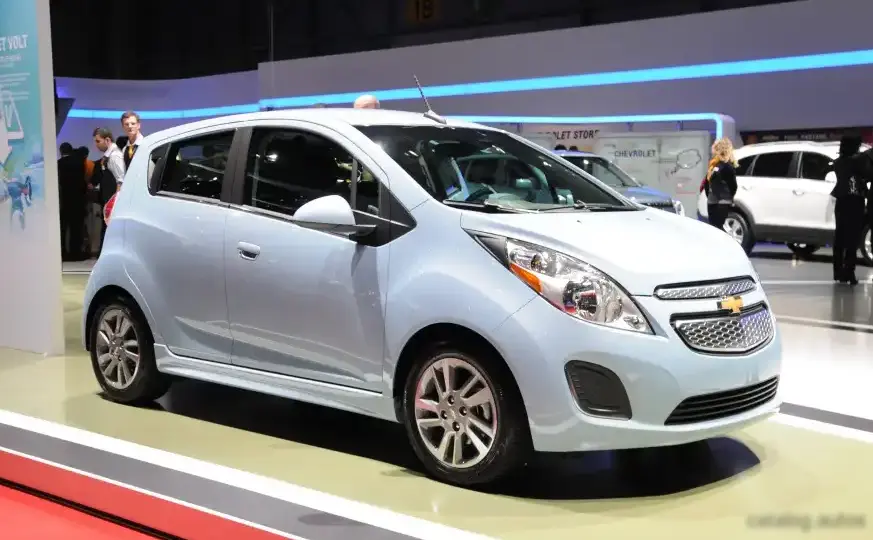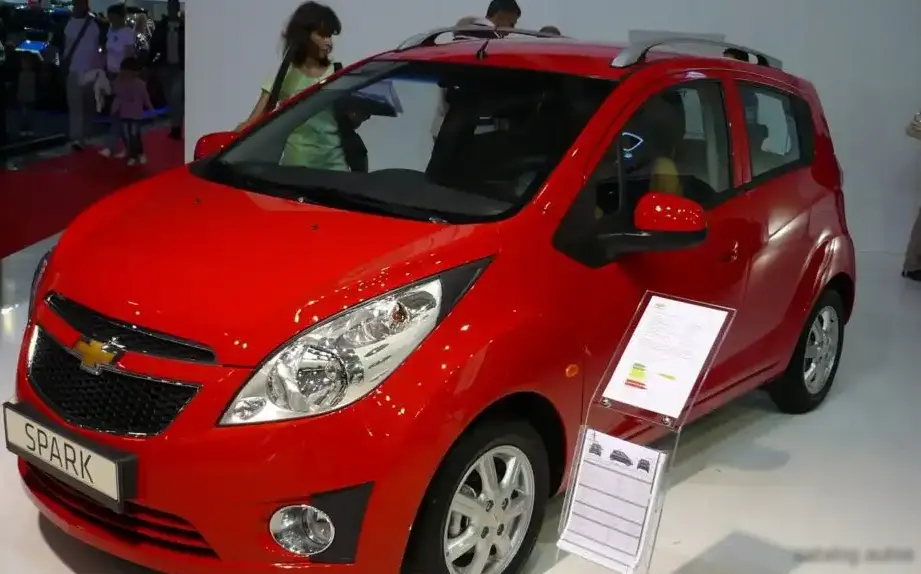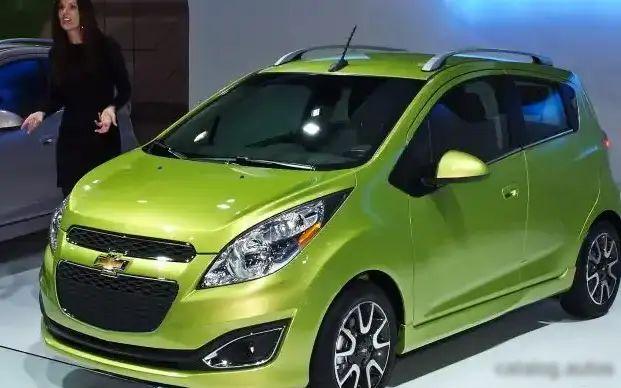
The Chevrolet Spark III (facelifted in 2013) 1.2-liter, 82 horsepower variant was a key offering in Chevrolet’s subcompact car lineup during its 2013-2015 production run. Positioned as an entry-level option, this Spark aimed to provide affordable and efficient transportation, particularly in urban environments. It represented the third generation of the Spark, a model originally introduced to cater to the growing demand for small, fuel-efficient vehicles, especially in markets outside of North America where smaller cars are more prevalent. This facelift brought styling updates and minor mechanical refinements to the existing third-generation platform.
Technical Specifications
| Brand | Chevrolet |
| Model | Spark |
| Generation | Spark III (facelift 2013) |
| Type (Engine) | 1.2 (82 Hp) |
| Start of production | 2013 |
| End of production | 2015 |
| Powertrain Architecture | Internal Combustion engine |
| Body type | Hatchback |
| Seats | 5 |
| Doors | 5 |
| Fuel consumption (urban) | 6.6 l/100 km (35.6 US mpg, 42.8 UK mpg, 15.2 km/l) |
| Fuel consumption (extra urban) | 4.1 l/100 km (57.4 US mpg, 68.9 UK mpg, 24.4 km/l) |
| Fuel consumption (combined) | 5 l/100 km (47 US mpg, 56.5 UK mpg, 20 km/l) |
| CO2 emissions | 118 g/km |
| Fuel Type | Petrol (Gasoline) |
| Acceleration 0 – 100 km/h | 12.7 sec |
| Acceleration 0 – 62 mph | 12.7 sec |
| Acceleration 0 – 60 mph | 12.1 sec |
| Maximum speed | 164 km/h (101.9 mph) |
| Emission standard | Euro 5 |
| Weight-to-power ratio | 12.7 kg/Hp, 78.5 Hp/tonne |
| Weight-to-torque ratio | 9.4 kg/Nm, 106.3 Nm/tonne |
| Power | 82 Hp @ 6400 rpm |
| Power per litre | 68 Hp/l |
| Torque | 111 Nm @ 4800 rpm (81.87 lb.-ft. @ 4800 rpm) |
| Engine layout | Front, Transverse |
| Engine Model/Code | LL0 |
| Engine displacement | 1206 cm3 (73.59 cu. in.) |
| Number of cylinders | 4 |
| Engine configuration | Inline |
| Cylinder Bore | 69.7 mm (2.74 in.) |
| Piston Stroke | 79 mm (3.11 in.) |
| Compression ratio | 9.8:1 |
| Number of valves per cylinder | 4 |
| Fuel injection system | Multi-port manifold injection |
| Engine aspiration | Naturally aspirated engine |
| Engine oil capacity | 3.75 l (3.96 US qt | 3.3 UK qt) |
| Coolant capacity | 4.8 l (5.07 US qt | 4.22 UK qt) |
| Kerb Weight | 1044 kg (2301.63 lbs.) |
| Max. weight | 1367 kg (3013.72 lbs.) |
| Max load | 323 kg (712.09 lbs.) |
| Trunk (boot) space – minimum | 170 l (6 cu. ft.) |
| Trunk (boot) space – maximum | 873 l (30.83 cu. ft.) |
| Fuel tank capacity | 35 l (9.25 US gal | 7.7 UK gal) |
| Length | 3595 mm (141.54 in.) |
| Width | 1597 mm (62.87 in.) |
| Height | 1522 mm (59.92 in.) |
| Wheelbase | 2375 mm (93.5 in.) |
| Front track | 1410 mm (55.51 in.) |
| Rear track | 1417 mm (55.79 in.) |
| Drivetrain Architecture | Front wheel drive |
| Number of gears | 5 |
| Gearbox type | Manual transmission |
| Front suspension | Independent, McPherson with coil spring and anti-roll bar |
| Rear suspension | Torsion |
| Front brakes | Ventilated discs |
| Rear brakes | Drum |
| Assisting systems | ABS (Anti-lock braking system) |
| Steering type | Steering rack and pinion |
| Power steering | Hydraulic |
Powertrain & Engine Architecture
The 1.2-liter LL0 engine powering this Spark variant is a naturally aspirated, inline-four cylinder gasoline engine. It utilizes a multi-port fuel injection system, a common setup for engines of this class during its production period. The engine’s 9.8:1 compression ratio represents a balance between efficiency and performance. The 82 horsepower output is achieved at 6400 rpm, while peak torque of 111 Nm (81.87 lb-ft) arrives at 4800 rpm. This engine is known for its relatively simple design, contributing to its reliability and ease of maintenance. The Spark III 1.2 was paired with a five-speed manual transmission, offering a straightforward driving experience. While an automatic transmission was available in some markets, the 1.2L engine was more commonly found with the manual gearbox.
Driving Characteristics
The 1.2-liter engine, coupled with the five-speed manual transmission, provided adequate, though not exhilarating, performance. Acceleration from 0 to 60 mph took approximately 12.1 seconds, and the top speed was around 101.9 mph. The engine felt most comfortable in the mid-range, making it suitable for city driving and highway cruising at moderate speeds. The manual transmission allowed drivers to maximize the available power, but the relatively low horsepower meant that spirited driving required frequent downshifting. Compared to potential higher-output variants (which weren’t widely available on the Spark in the US market), this 1.2L version prioritized fuel economy over outright performance.
Equipment & Trim Levels
The 1.2-liter Spark typically came with a basic level of standard equipment. This included air conditioning, power windows and locks, and a basic audio system. Safety features such as ABS and airbags were also standard. Higher trim levels offered options like alloy wheels, upgraded audio systems, and a rear spoiler. Interior upholstery was typically cloth, and the dashboard featured a simple, functional design. The focus was on providing essential features at an affordable price point.
Chassis & Braking
The Spark III utilized a front-wheel-drive layout with an independent McPherson strut suspension in the front and a torsion beam suspension in the rear. The front brakes were ventilated discs, providing adequate stopping power, while the rear brakes were drums. This configuration was typical for subcompact cars of this era, balancing cost and performance. The relatively lightweight nature of the Spark (around 1044 kg or 2301.63 lbs) helped to compensate for the modest braking system.
Market Reception & Comparison
The Chevrolet Spark III 1.2 was generally well-received as an affordable and fuel-efficient city car. Critics praised its nimble handling and compact size, making it easy to maneuver in urban environments. However, the engine’s limited power was a common criticism. Compared to other subcompacts available at the time, the Spark offered a competitive price point and a decent level of standard equipment. Its fuel economy of around 47 US mpg combined was a significant selling point. Reliability was generally considered good, with the simple engine design contributing to its longevity.
Legacy
The Chevrolet Spark III 1.2, while not a performance icon, established itself as a reliable and economical choice for budget-conscious buyers. On the used car market, these Sparks are often sought after for their low running costs and ease of maintenance. The LL0 engine is known for its durability, and parts availability remains relatively good. While not particularly collectible, well-maintained examples continue to provide affordable transportation for many years. The Spark’s legacy lies in its role as a practical and accessible entry point into car ownership.